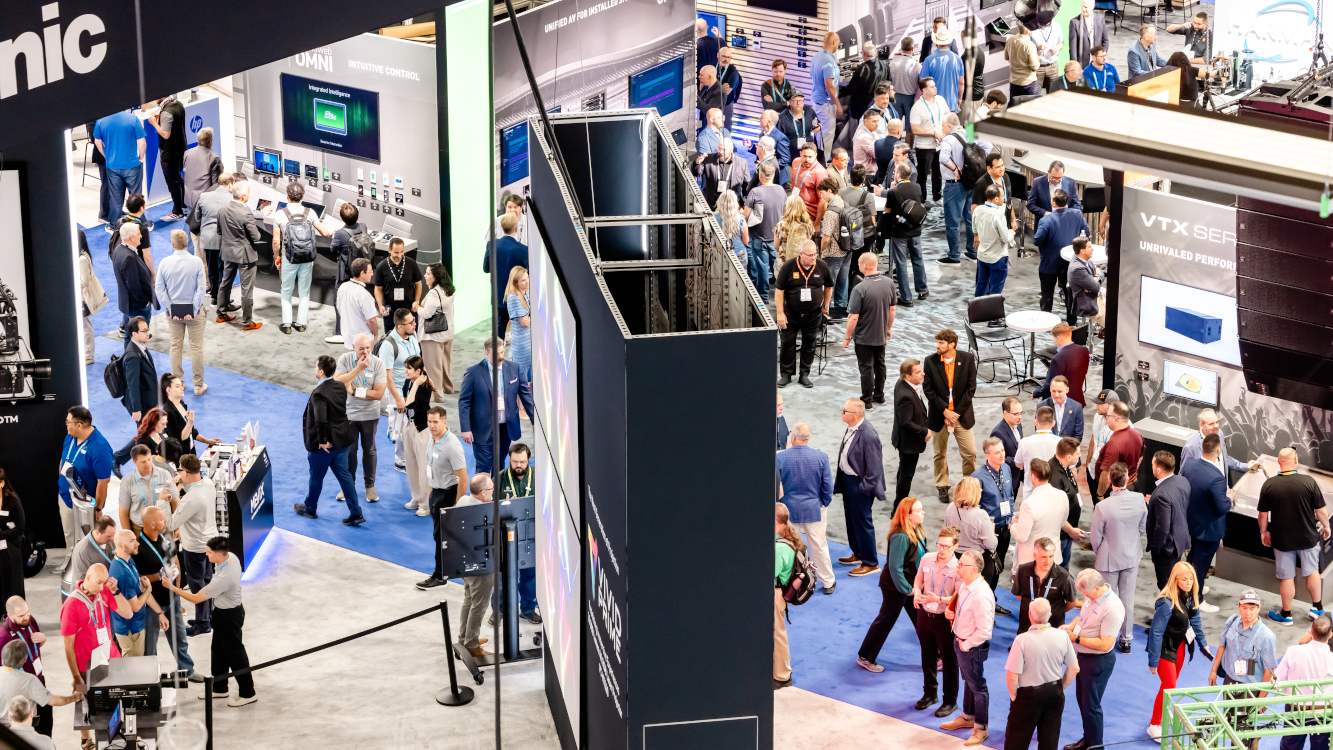
Las Vegas | Infocomm 2026 showed a market in transition: while classic hardware innovations were limited, new concepts like Digital Humans, 3D display add-ons and AI-powered platforms are pushing the industry forward. Beyond the mainstream, niche technologies from e-paper to MicroLED revealed where the next wave of digital signage innovation is taking shape.
Infocomm 2026: From Digital Humans to 3D Pop-Outs
While remote device management solutions were nearly ubiquitous across the show floor, true hardware innovation remained comparatively scarce. Yet those willing to navigate the crowded halls of Infocomm still discovered a number of standout concepts beyond the mainstream.
E-paper: From E Ink to Dynascan
For the first time, e-paper pioneer E Ink exhibited with its own booth at Infocomm. The steady evolution of the technology was clearly visible – from flexible displays that move with airflow to increasingly large-format indoor and outdoor modules.
Major display manufacturers also showcased e-paper solutions, typically based on E Ink films. However, pricing remains the key barrier to scaling adoption. The industry consensus is clear: e-paper will complement, rather than replace, LCD and LED.
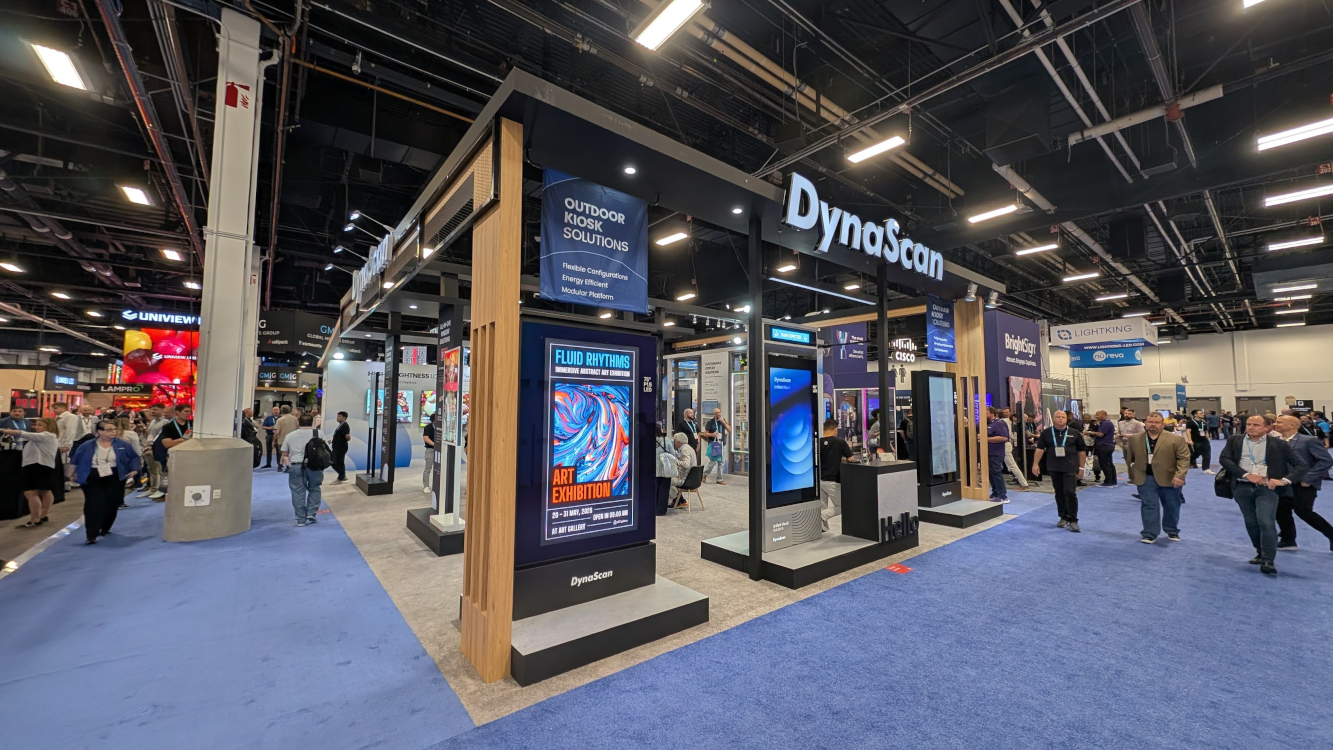
An alternative approach came from Dynascan, presenting ChLCD-based displays for transit applications. ChLCD stands for “cholesteric liquid crystal display” is a reflective, full-color technology that relies entirely on ambient light. Extremely energy-efficient and bistable, it consumes power only when content changes. Its excellent readability in direct sunlight makes it particularly suited for outdoor deployments – and, importantly, it comes at a lower price point than traditional E Ink solutions.
Pixylform: Beyond flat screens
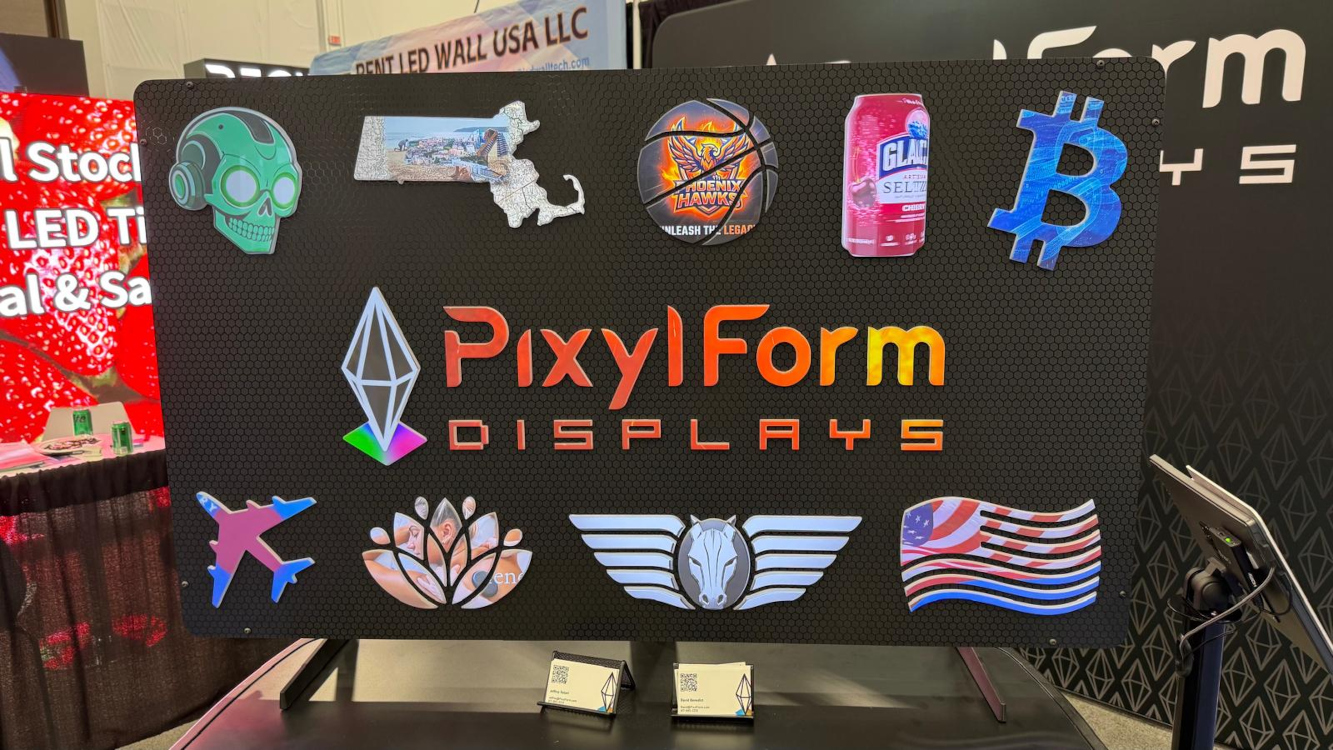
Infocomm remains a hotspot for niche innovation. Among more than 800 exhibitors, Pixylform stood out with an unconventional approach to 3D signage.
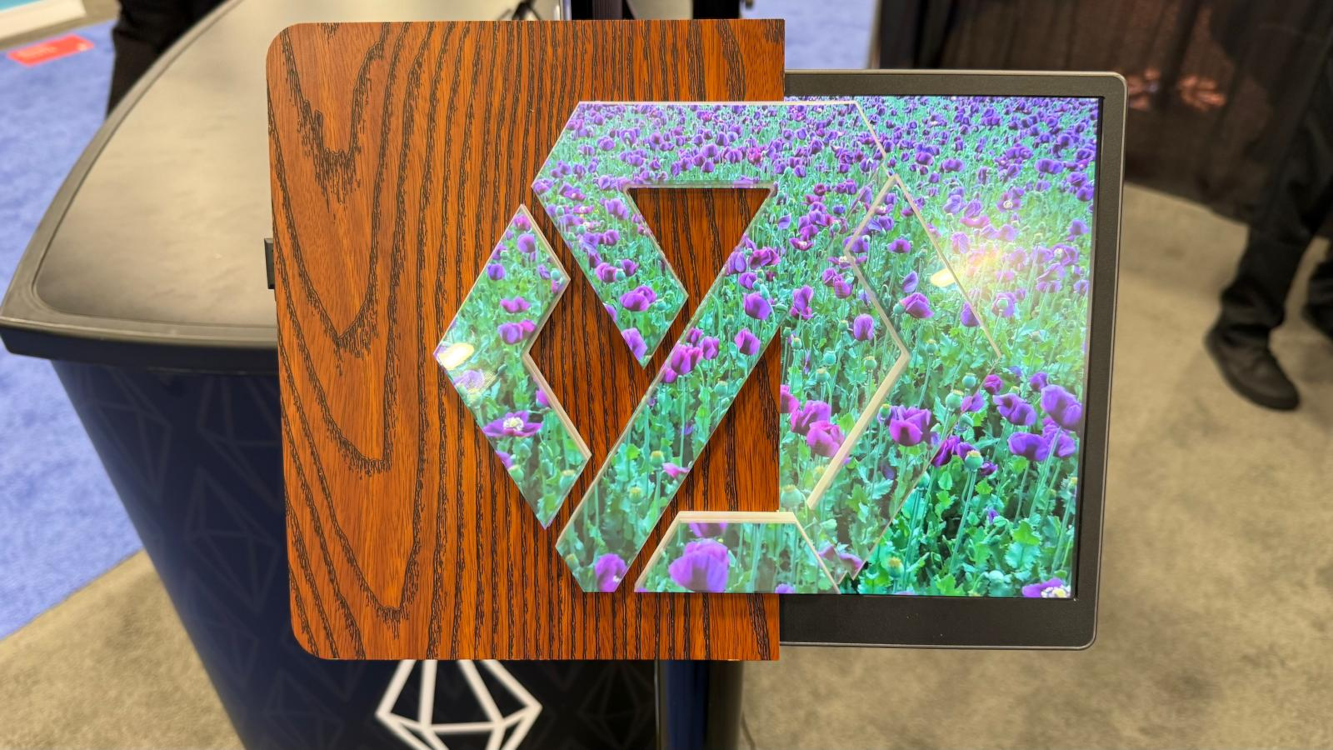
The startup develops custom 3D forms using polymer-based light guides, placed directly onto standard displays. These forms capture and redirect light from the underlying screen, transforming flat content into three-dimensional visuals. The non-dispersive polymer enables sharp and striking 3D logos that appear to float above the display surface. A niche concept – but a refreshing take in an otherwise commoditized display market.
Digital Humans: From concierge to telepresence
AI continues to reshape the digital signage landscape, primarily by optimizing operations and content creation. However, the search for compelling customer-facing use cases remains ongoing. One of the most visible trends at Infocomm 2026: Digital Humans.
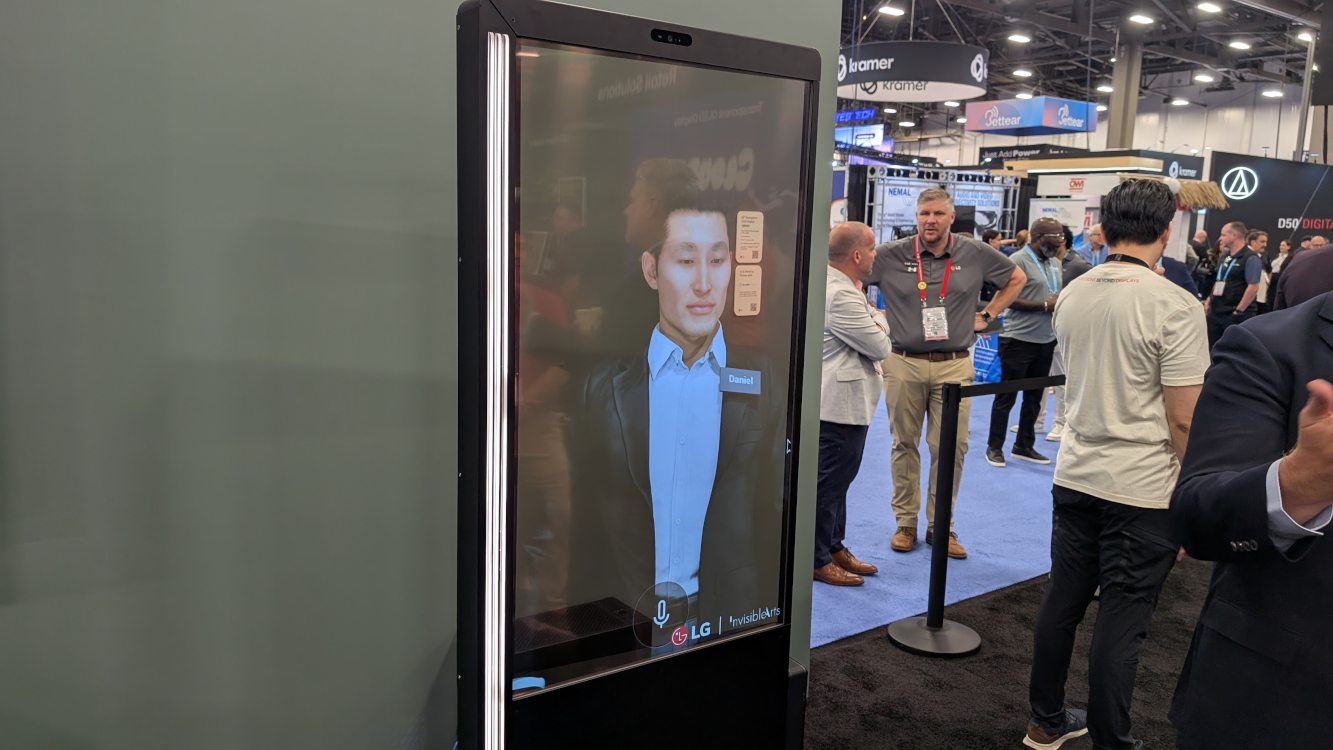
From keynote stages to exhibition booths, AI-driven avatars were everywhere. LG, in partnership with Glass-Media, presented a transparent concierge solution combining OLED display technology with conversational AI. Designed for hospitality, retail, and entertainment environments, the system aims to deliver immersive, interactive customer engagement.
While visually impressive, the transparent OLED raises practical questions around visibility in bright environments. In addition, the current hardware setup – still based on a relatively large PC – limits deployment flexibility, though integration into the stand is expected in future iterations.
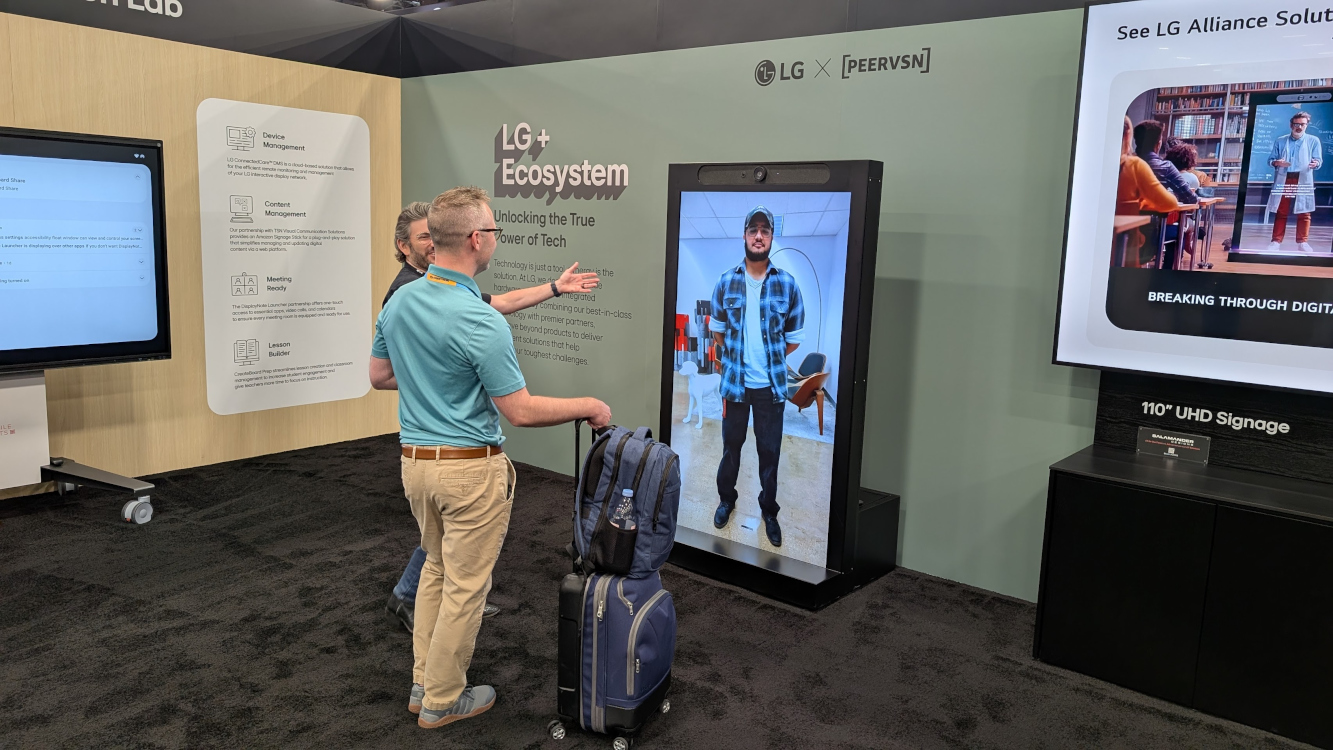
LG and Glass-Media also introduced Peervsn, a telepresence solution developed by Glass-Media founder Daniel Black. The system consists of a life-size mobile totem with integrated display and video conferencing capabilities. Designed for mobility, it offers up to 36 hours of battery operation and can be deployed via Wifi or 5G without complex infrastructure. A companion Studio Kit enables rapid setup in virtually any location. Compared to earlier holographic solutions, PeerVsn focuses on practicality and ease of use rather than visual spectacle.
AI Inside: NPUs enter the display
Unsurprisingly, “AI inside” was one of the dominant themes across the show. Philips used Infocomm to introduce displays with integrated NPUs (neural processing units) for edge AI capabilities. Future Philips professional displays with SoC architectures are expected to include NPUs as standard – although performance will differ between entry-level and premium models.
This development aligns with a broader industry trend: bringing AI processing closer to the display. Brightsign, an early mover in this space, showcased its continued focus on AI and cybersecurity – both in standalone media players and integrated SoC solutions used by partners such as Sharp and Philips. LG, by contrast, integrates Brightsign at the OS level while continuing to rely on its own SoC platform.
LED: Still Room to Grow
Despite ongoing market maturity, Infocomm once again demonstrated that LED technology continues to evolve rapidly.
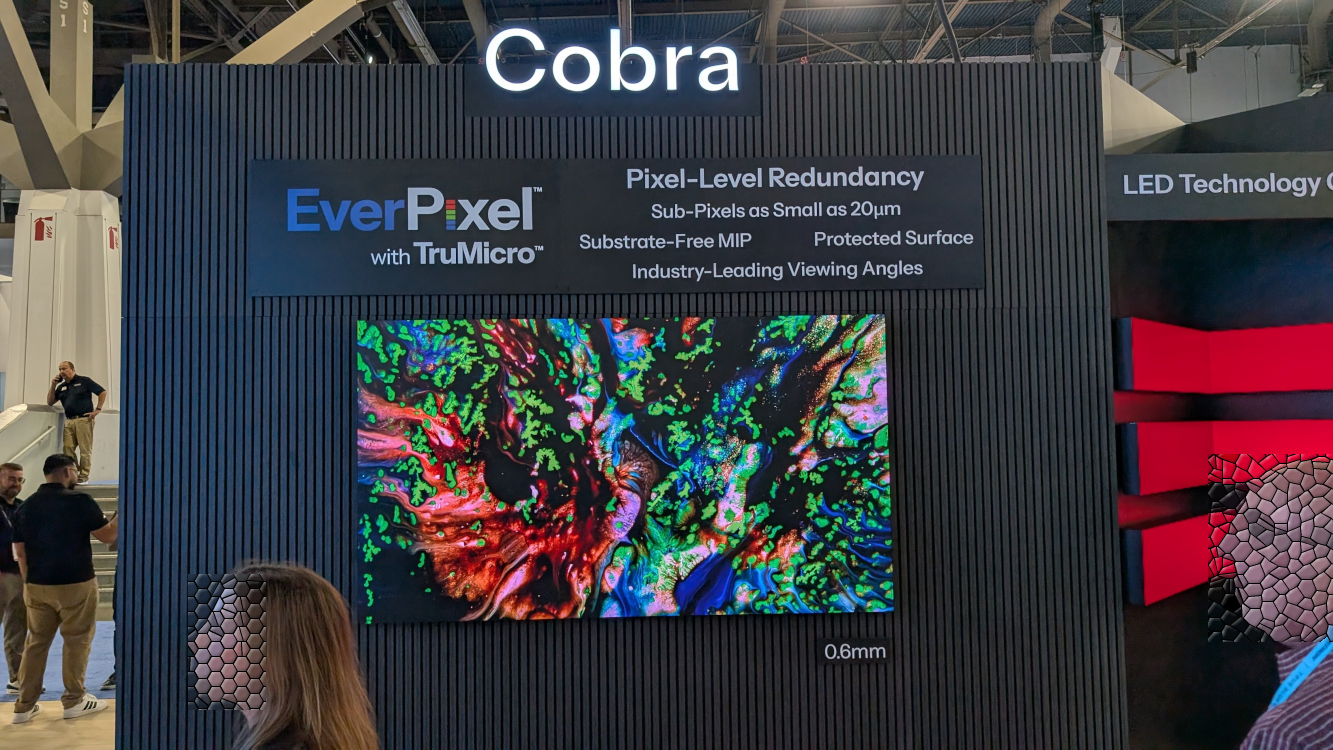
Planar (Leyard Group) presented its Cobra Series – a true MicroLED platform with pixel pitches down to 0.6 millimeters. Key technologies include Everpixel, offering pixel-level redundancy for consistent image quality, and Trumicro, utilizing ultra-small LEDs (down to 20 micrometers) to achieve exceptional precision and color performance.
Transparent LED solutions – once niche – are now offered by a growing number of vendors. At the same time, all-in-one LED systems have become standard across the market. This trend increasingly benefits established global brands, which are gradually gaining share from previously dominant Chinese manufacturers.
Conclusion
Infocomm 2026 highlighted a market in transition. While core technologies such as LED and LCD continue to evolve incrementally, the real momentum is shifting toward integrated, AI-driven ecosystems and new experiential formats. From Digital Humans to 3D display concepts, the industry is actively searching for the next big use case beyond traditional screen deployments. Hopefully we will see more of that at upcoming shows.