
Las Vegas | Philips licensee TPV has kept a relatively low public profile in recent months. Behind the scenes, however, the Taiwanese manufacturer with Dutch brand heritage has significantly sharpened its portfolio – expanding features, platforms and services.
Infocomm 2026: Philips Doubles Down on Software, Supply Chain Edge
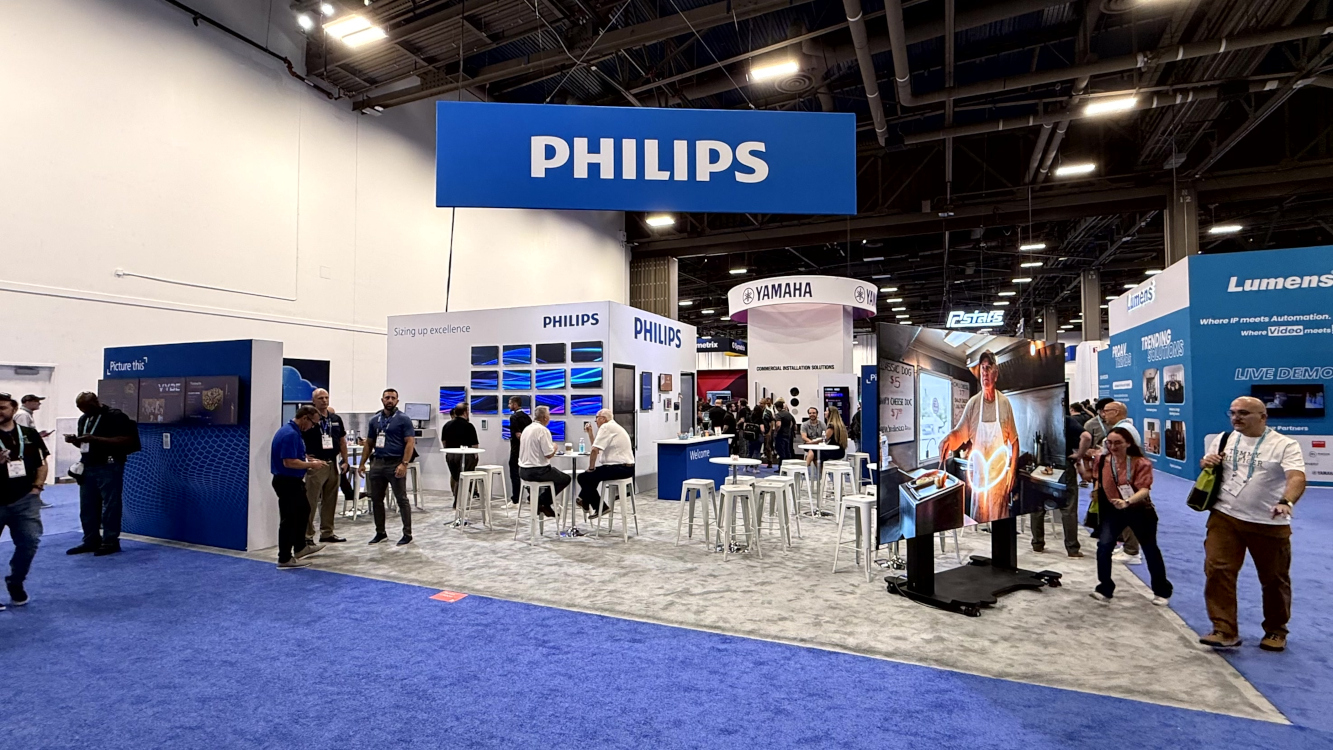
The Philips’ booth at Infocomm reflects a broader industry dynamic: established global visual solution brands are facing mounting pressure from fast-growing Chinese competitors with ever more dominant trade show visibility. Yet Philips remains a heavyweight – not only as a global brand, but also as the world’s largest desktop monitor manufacturer (Philips, AOC) and, as TPV, an important ODM partner for third parties.
Invidis met with PPDS North American Head of Sales Bruce Wyrwitzke to discuss latest trends.
Supply chain as a competitive edge
In North America, PPDS benefits from its own Philips production facility in Mexico – a clear advantage in terms of availability, pricing, and tariff resilience. This local manufacturing footprint enables aggressive, price-sensitive positioning in the US market. At the same time, PPDS leverages its scale to offer global pricing agreements for key accounts, an increasingly decisive factor for multinational customers.
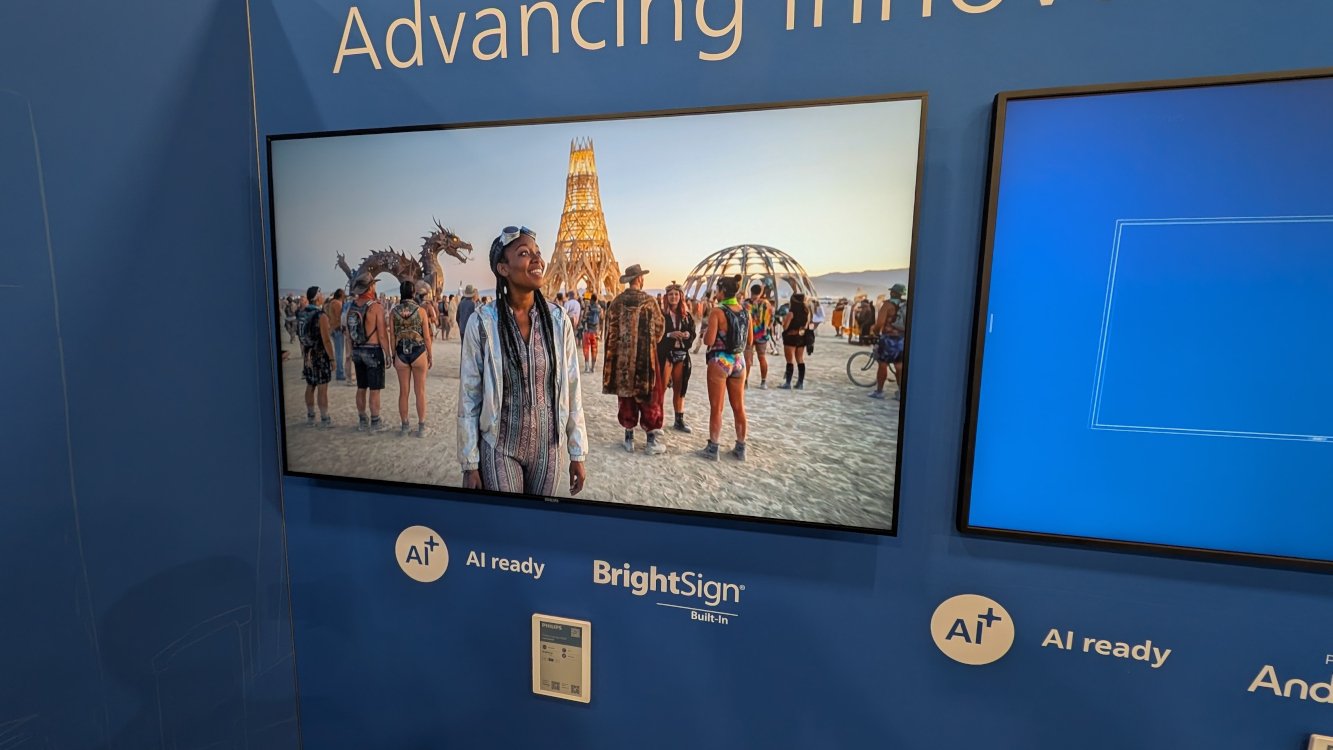
A key product announcement at InfoComm was the first Philips LFD lineup for North America – and EMEA – based on a BrightSign SoC rather than Android. The decision reflects the strong market penetration of BrightSign in the region and underlines PPDS’ pragmatic platform strategy. Instead of relying on a single ecosystem, PPDS is expanding its Philips SoC portfolio to align with customer demand and regional preferences.
TAA compliance and secure production
For government and defense projects, PPDS offers a dedicated TAA-compliant Philips Signage range. These requirements mandate that critical components must not originate from China and that assembly takes place in approved countries. TPV manufactures these units in Taiwan, with a stripped-down configuration: no integrated SoC, Wi-Fi or Bluetooth. This approach ensures full compliance while allowing customers to integrate certified external solutions.
Cybersecurity has become a central pillar across all Philips display lines. The company updates its SoC system firmware – and with it the Android security updates several times per year. In addition, a growing set of device-level security features has been rolled out.
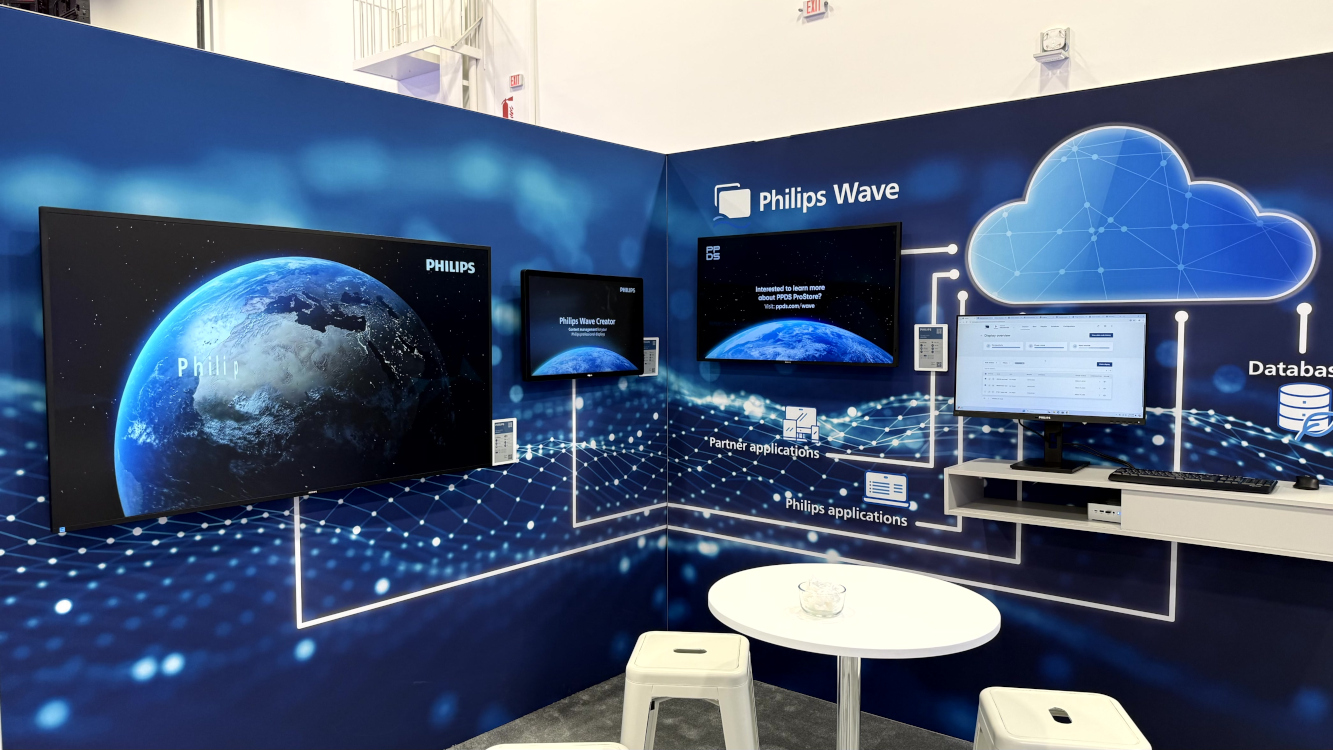
Ports can be locked, unauthorized access limited, and fleets centrally managed via Philips’ proprietary Wave platform. These capabilities are particularly relevant for sensitive verticals such as banking, where compliance and risk mitigation are critical. According to Philips, partnerships such as the one with Telelogos have already led to multiple wins in the financial sector.
AI on the edge
Artificial intelligence is another strategic focus. New Philips displays are equipped with dedicated NPUs, enabling AI processing directly on the device. This edge approach reduces latency, bandwidth usage and cloud dependency while improving energy efficiency. Depending on the product tier, NPU performance ranges from 1 TOPS in its 2000 Series through to 6 TOPS in the ‘Pro AV’ 5000 Series – sufficient for many Ai-on-Edge use cases.
Despite the increasing importance of hardware intelligence, PPDS continues to emphasize its partner ecosystem as a core differentiator. Compatibility with leading CMS providers, analytics platforms and integrators remains central to its go-to-market strategy.
PPDS Philips is playing a disciplined, market-driven strategy for Philips Professional Displays: leveraging supply chain advantages in North America, while expanding flexibility on the software side. The addition of BrightSign alongside Android is a logical step in a fragmented ecosystem landscape. At the same time, investments in security, TAA compliance and edge AI address exactly the areas where enterprise customers are currently prioritizing budgets.
In a market where hardware margins remain under pressure, PPDS’ focus on services, platforms and partnerships is the right response – and likely essential for Philips to stay competitive against increasingly assertive Chinese vendors.
invidis commentary
- Projection Mapping: Factory International Makes The Case For Projection In Immersive Art
- DooH Campaigns: Channel Outdoor And Outfront Join Breast Cancer Awareness Campaign
- Research: Store Locator Boosts DooH Performance
- From Audience Analytics to Audience Simulation
- Times Square and Piccadilly: Samsung’s Global SSD Campaign