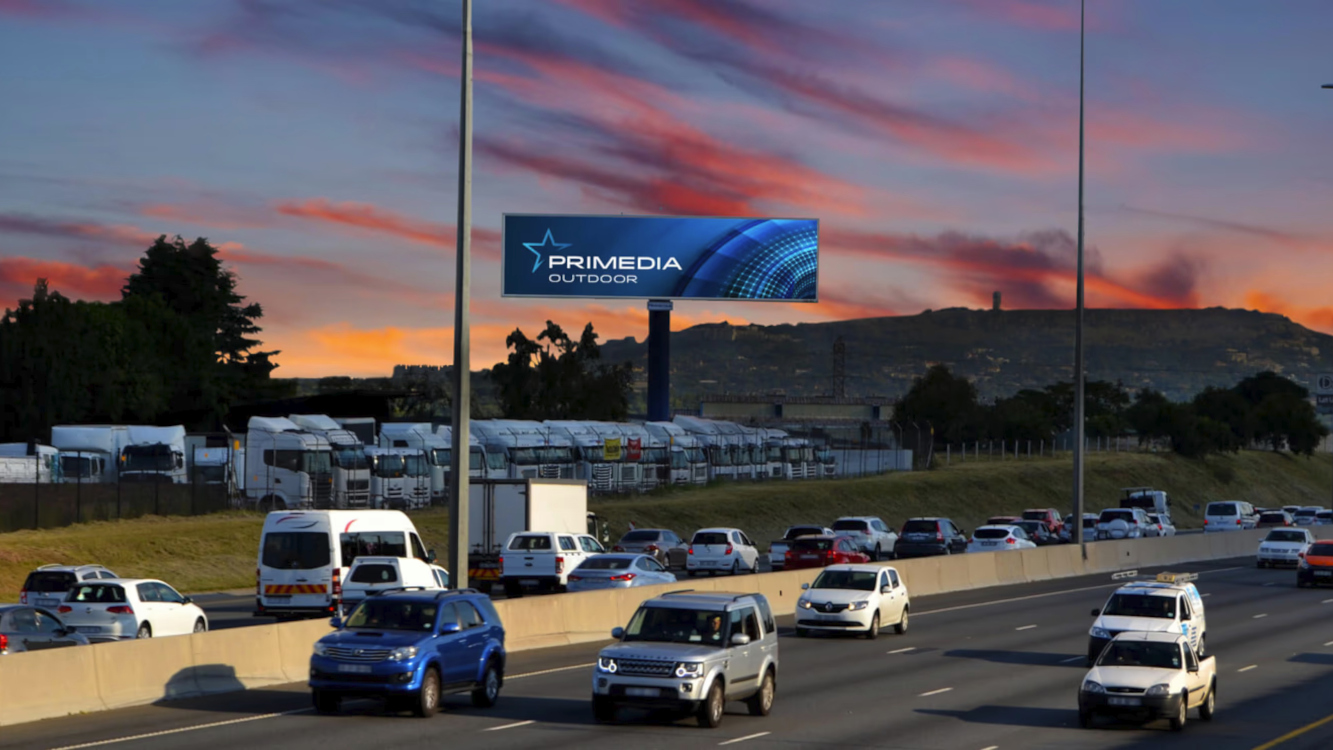
Johannesburg | Power outages remain a persistent challenge in South Africa, often causing traffic lights to fail and intersections to gridlock. In response, Primedia Outdoor has partnered with the Johannesburg Roads Agency (JRA) to help keep traffic flowing during load shedding.
South Africa: Battery-Powered DooH Keeps Traffic Lights Running
As part of the JRA’s Traffic Signals Back-up Power Initiative (TSBPI), the Out-of-Home company is deploying battery-powered digital billboards that can supply electricity directly to nearby traffic signals. The system uses existing billboard batteries to provide uninterrupted power when the grid goes down, ensuring that traffic lights remain operational even during outages.
The impact of failing signals on Johannesburg’s road network is significant. Without functioning lights, busy intersections become congested and unsafe, leading to delays, confusion and a higher risk of accidents. Maintaining signal uptime has therefore become a priority for the city, prompting the JRA to seek support from private partners.
Primedia’s solution is already proving its value at high-traffic locations such as the intersection of Sandton Drive and Winnie Mandela Drive, where up to 16,000 vehicles pass through during peak hours. By keeping signals active around the clock, the system helps stabilise traffic flow and improve road safety.
The partnership has scaled quickly, with more than 113 intersections now supported by backup power. It highlights how DooH infrastructure can go beyond advertising to play a role in urban resilience. In Johannesburg, digital billboards are increasingly becoming part of the city’s critical infrastructure – keeping both screens and traffic moving when the lights go out.
JC Decaux assisting commuters in Africa’s largest city
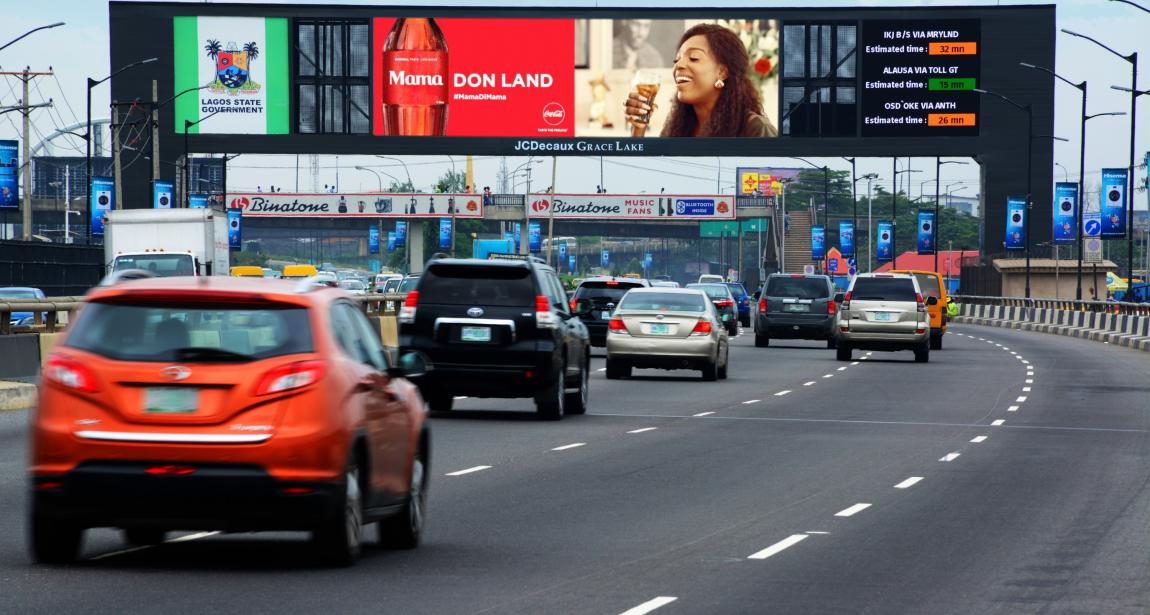
JC Decaux is investing in urban infrastructure to enhance everyday mobility. In Lagos, the company – through its local arm JCDecaux Grace Lake, Nigeria’s leading out-of-home operator – has introduced a digital traffic information system designed to support commuters in one of the world’s most congested urban environments.
The Lagos Traffic Information System (LATIS) comprises a network of large-format digital traffic arches. Each installation spans up to 94 square metres, integrating a 25-square-metre digital screen that combines real-time traffic updates with advertising content. Positioned at key decision points along major arterial routes, the network delivers timely information to drivers while offering high-impact visibility for brands.