
Vertiseit’s rapid-fire acquisition of Scala may look like a bargain - but turning a legacy licensing giant into a SaaS-driven business will be anything but easy. The Swedish digital signage expert now faces its toughest test yet: converting scale, brand, and partners onto a future-proof platform.
Rebuilding Scala: Vertiseit’s Toughest Test Yet
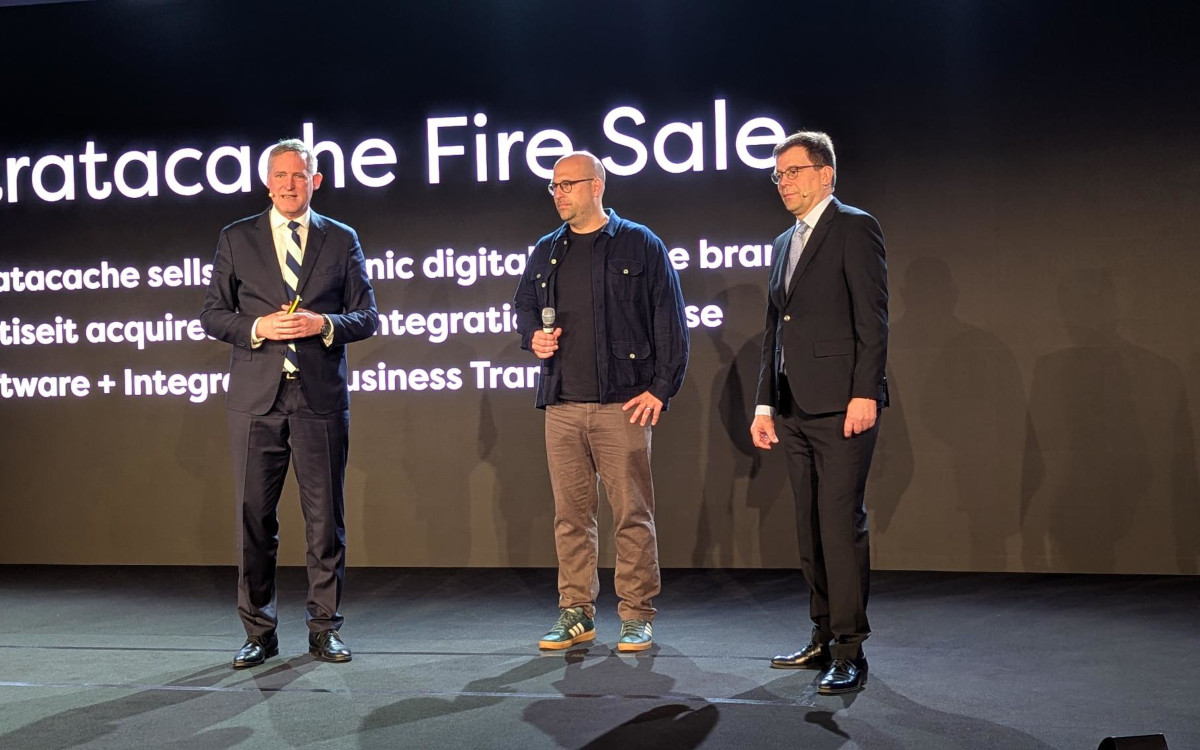
From the second day of The DSS in Munich, one topic clearly dominated all conversations: Vertiseit’s acquisition of Scala. The move comes as a surprise – and a coup. In record time, the Swedish management team around Johan Lind and Jonas Lagerqvist seized a rare opportunity to acquire one of the industry’s most recognised software brands from the increasingly fragile Stratacache organisation.
At a purchase price of €24 million, the valuation appears relatively low. Vertiseit itself confirmed to analysts that, given the deal was signed late Wednesday night / early Thursday morning, insights of the due diligence information were still pending. The speed of execution underlines the exceptional nature of the opportunity – and the company’s willingness to act decisively based on a calculated risk. Greater transparency on the acquired business is expected in the coming days.
The transaction includes the entire European Scala entity including staff, as well as the IP of the full software platform. Outside Europe, however, Vertiseit is only acquiring selected assets, primarily customer contracts, while leaving behind operational entities and employees.
A diminished giant
The business acquired by Vertiseit represents roughly €20 million in revenue, including around €8 million in recurring maintenance income and approximately €12 million from hardware. Current total Scala revenues are believed to be higher.
Notably, Vertiseit declined to disclose the number of active licences when asked by invidis at The DSS in Munich. What is clear, however, is that Scala today is only a shadow of its former self – a stark contrast to the figures communicated by Stratacache as recently as late 2025. Over nearly four decades, four million plus licences may have been sold, but the active installed and maintained base today is likely to be around 150.000. (Correction 26May: We previously estimated “in the range of only a few tens of thousands”)
The root of this decline lies in Scala’s legacy business model. For decades, the platform was sold via perpetual licences, with CMS infrastructure operated by partners. At the time of the acquisition, more than 1,000 servers were still running in partner environments – generating little to no recurring license revenues. Instead newer Scala projects contribute ongoing recurring maintenance income totalling 7.8m Euros annually.
A radical transformation ahead
For Vertiseit, the logic behind the acquisition is clear: the Scala brand, a large installed base of media players, and a historically strong partner ecosystem.
Scala will be integrated into the Dise business under a strict “partner-first, partner-only” strategy. At the same time, the hardware business is expected to be exited rapidly, either through discontinuation or transfer to partners.
The core strategic objective is a full transition to SaaS. Over the next two to three years, Vertiseit aims to convert a significant share of Scala’s installed base and partner network from perpetual licences to subscription-based models.
This transformation will not be without friction. Initial feedback from partners at The DSS in Munich suggests scepticism – particularly given the scale of the transition required. Johan Lind openly acknowledges the challenge and expects partner churn along the way.
Proven playbook – but at scale?
Despite the risks, confidence within Vertiseit remains high. The company has already successfully executed a similar transition following the acquisition of Dise, where customers were effectively migrated from licence-based models to SaaS.
However, Scala represents a fundamentally different scale and complexity. The installed base is larger, the partner landscape more fragmented, and the legacy infrastructure significantly more entrenched.
The coming years will show whether Vertiseit can replicate its Dise playbook – this time with one of the most iconic, yet structurally challenged, platforms in digital signage.
- 55” Signage Display: Amazon Goes All-In on Digital Signage
- Qompose: Navori Launches AI-First Unified CMS Platform
- Integrated Communications: Uniguest Launches Community Hub For Senior Living Communities
- Virtual Production: Brompton Powers New Virtual Production Studio In Germany
- Research: Office DooH Screens Generate 3.4 Times More Attention