
Beijing | As geopolitical pressure divides the global AI market into U.S. and Chinese camps, Chinese AI is quietly expanding beyond its home market. From on‑premise edge-AI solutions to offshore hyperscaler data centers, the digital signage industry shows how AI "Made in China" is finding new paths abroad – where performance and cost increasingly outweigh politics.

Infocomm: China’s AI Is Moving Abroad
Driven in part by the current U.S. administration, the global AI ecosystem is increasingly dividing into two camps: U.S.-dominated platforms and AI Made in China. Washington is urging its allies to choose sides. While U.S. platforms and models remain more widely known, Chinese alternatives – such as Open Claw and others – are not far behind technologically. Even so, AI Made in China remains a hard sell in Europe, North America, and much of the Middle East.
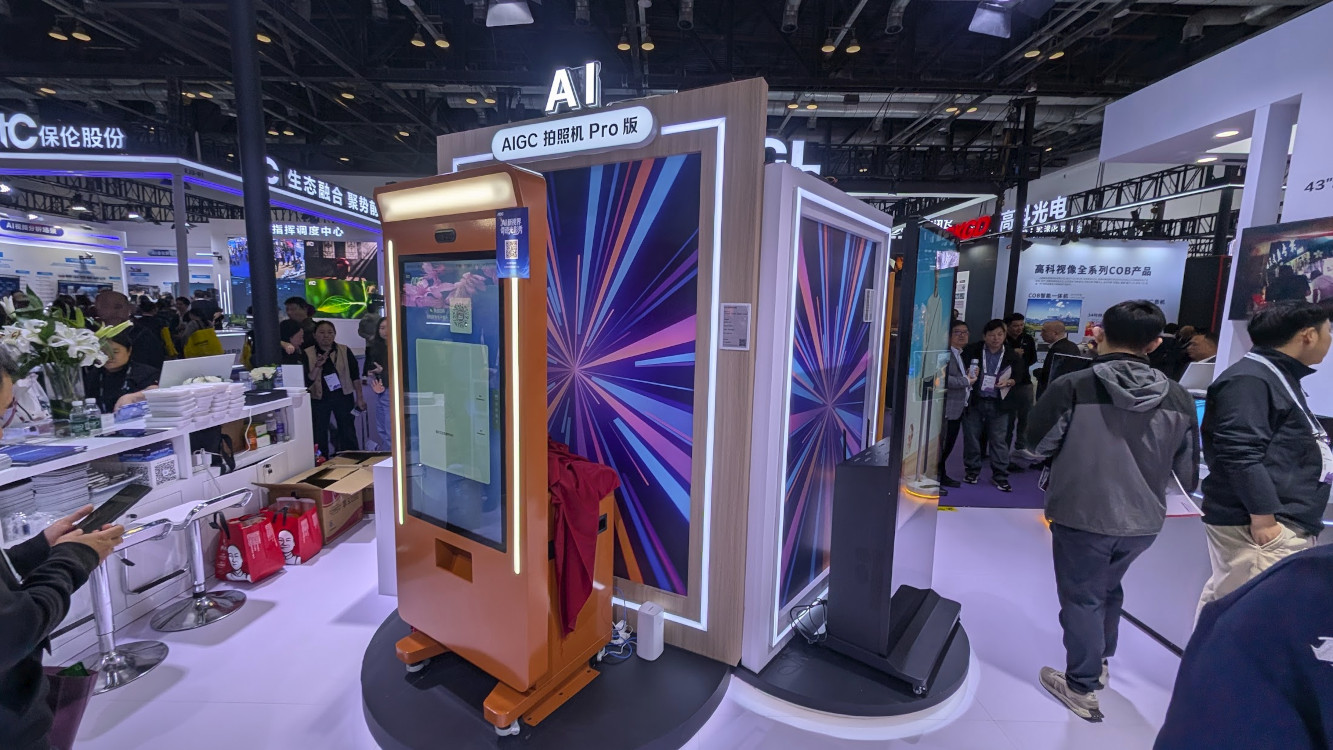

That does not mean Chinese AI is excluded altogether. Several workarounds are gaining traction – some not entirely aligned with U.S. policy, but increasingly popular in the digital signage industry outside Europe. One approach is AI Edge in a Box. Still largely unknown in the West, Chinese manufacturers are offering turnkey edge AI solutions that operate entirely on‑premise. By processing data locally, these systems aim to ease concerns about connections to Chinese AI servers.
Less elegant, but far more scalable, are offerings from China’s globally active hyperscalers. These companies are investing heavily in data centers across Southeast Asia. On paper, this creates AI deployments that are no longer located in China – yet still rely on powerful and significantly lower‑cost Chinese large language models. For many customers, this distinction is sufficient.
Ultimately, integrators and end users must decide whether such solutions are appropriate for a given project. At Infocomm China, we talked to several integrators reporting very positive experiences with Chinese edge AI solutions in digital signage applications. For them, performance, cost efficiency, and local deployment matter more than the geopolitical label attached to the technology.
- New Leadership: Econocom Doubles Down on ProAV
- Projection Mapping: Panasonic brings Hive Players to Prague
- Tysons Corner Center: SNA Displays Adds Outdoor LED Screen
- Proximity Technology: Lisnr Brings Mobile Connection To Samsung VXT
- Retail Architecture: GSTV Appoints Claire Wyatt as New Chief Growth Officer