
Beijing | With more than three million screens, Focus Media dominates China’s DooH landscape - but its real innovation lies in format, not scale. By combining a main screen for TV ads with a secondary bar display for context and calls to action, the Chinese media giant shows how dual‑screen concepts can make DooH smarter, not bigger.
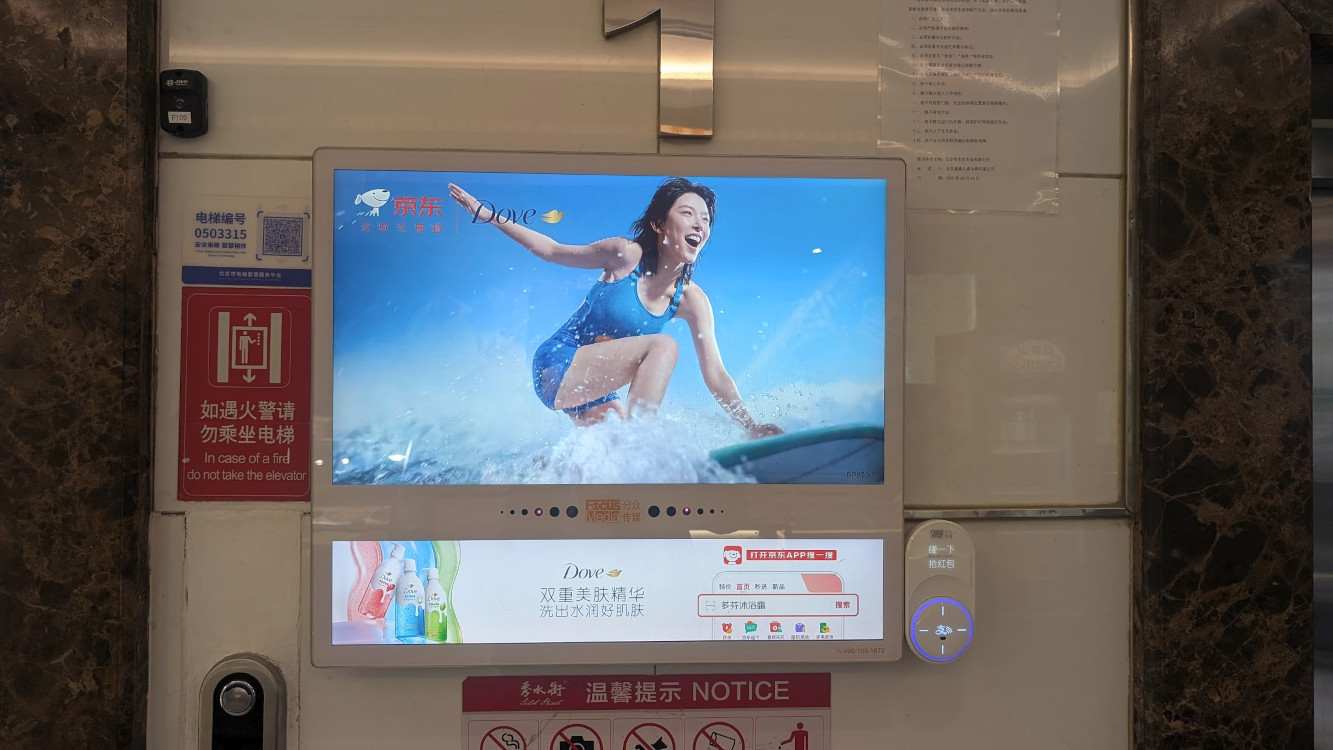
DooH: Are Two Screens the Smarter Solution?
Anyone entering public office buildings or shopping malls in China can hardly miss Focus Media’s digital out‑of‑home screens. The Chinese DooH pioneer claims to operate more than three million screens, making it the largest elevator‑based DooH network in China – and most likely the largest DooH operator worldwide.
The publicly listed media owner reported revenues of around USD 1.7 billion in 2024 and remains omnipresent across China’s urban environments. Focus Media screens are particularly dominant in elevator lobbies and shopping malls. Some prestigious networks – notably airport locations – are no longer part of Focus Media’s portfolio, but the company’s scale and reach remain unmatched.
A Distinctive Dual‑Screen Concept
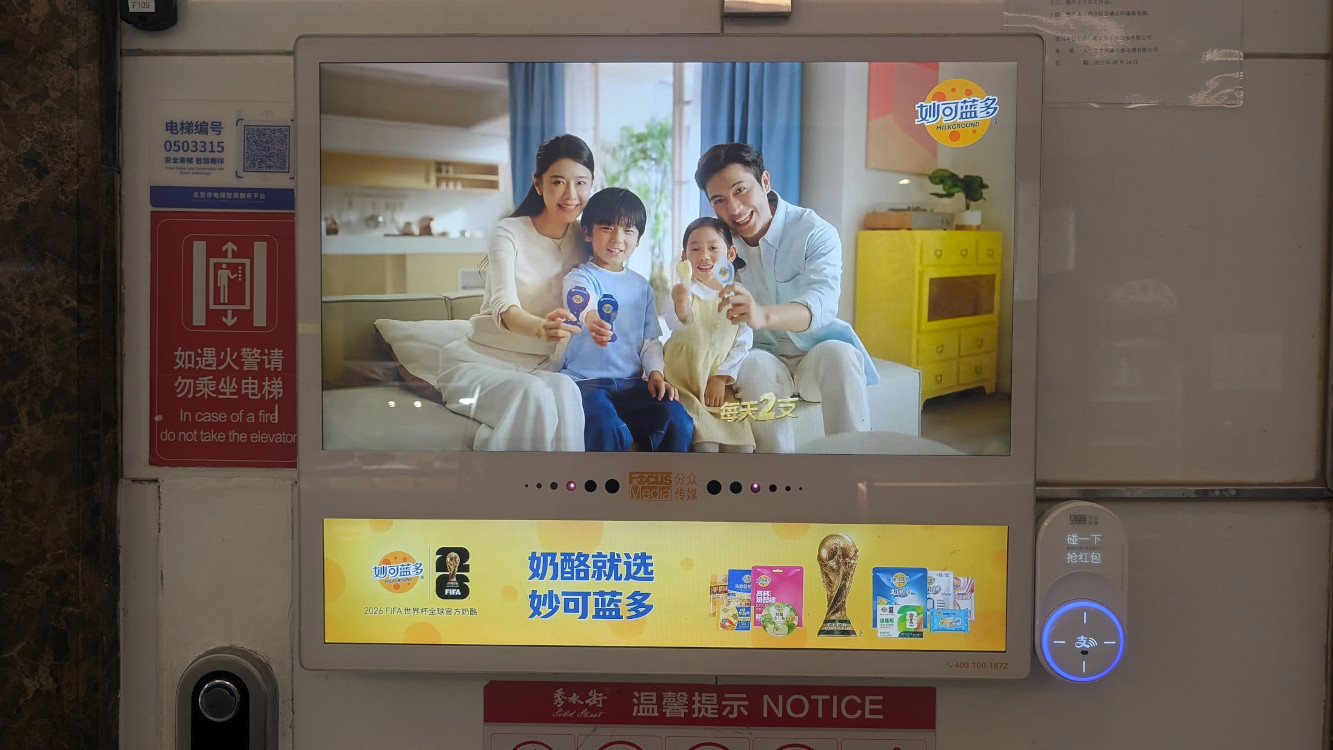
What sets Focus Media apart, however, is not just size but format. With its iconic dual‑screen installations, the company operates one of the more intriguing – and arguably smarter – DooH concepts currently in the market.
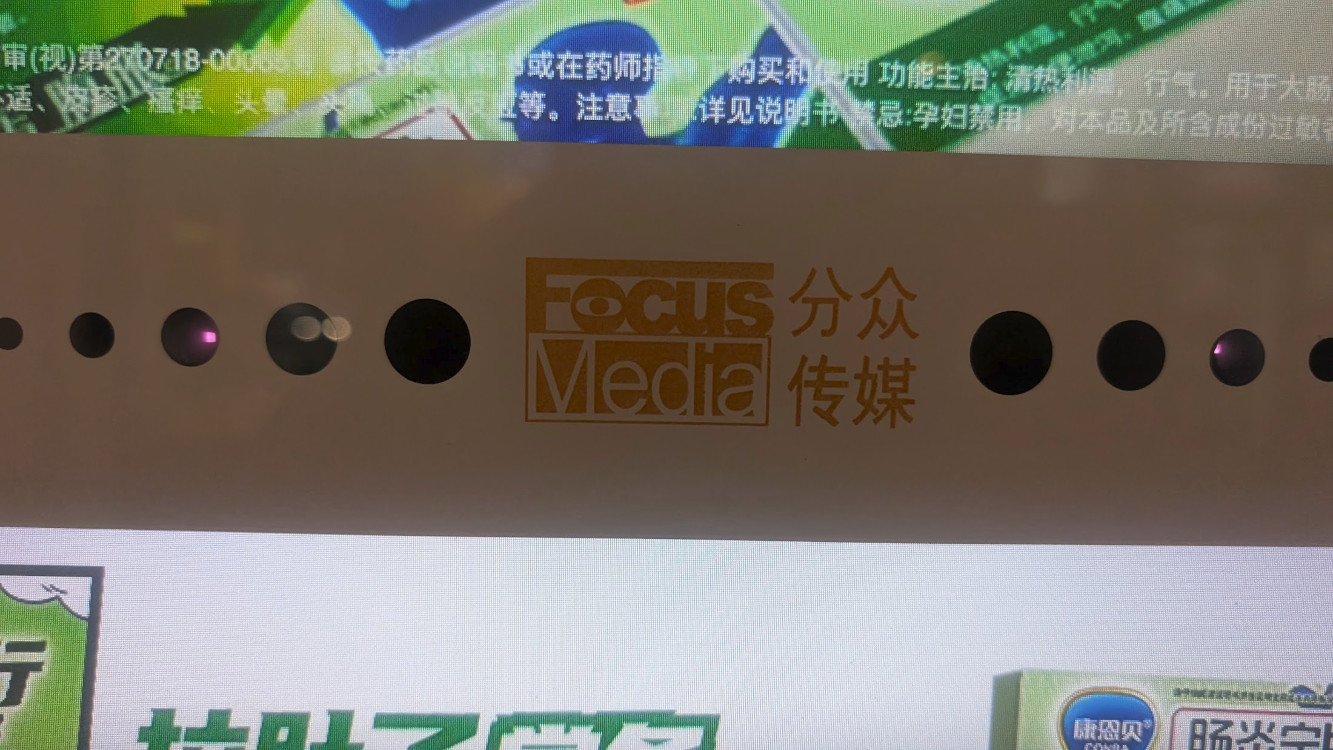
The installations are relatively compact and typically placed in high‑attention waiting situations, such as elevator halls and building entrances. Unlike traditional DooH networks that rely on a single large screen, Focus Media combines a primary display with a secondary bar‑type screen. The housing also integrates 5G modem, speakers and sensors for audience measurement, allowing for both audio messaging and data-driven performance insights.
Reusing TV Ads, Enhancing DooH
The key advantage of Focus Media’s two‑screen approach lies in its simplicity for advertisers. Existing TV commercials can be placed on the main screen without modification, significantly lowering creative barriers. The secondary bar‑type display is then used for logo placements, calls to action, and localized or time‑dependent information.
This separation of roles makes the format particularly attractive: television advertising assets provide emotional impact and familiarity, while the additional screen delivers context, relevance, and immediacy. In effect, DooH becomes a natural extension of TV advertising – enhanced by location, time, and audience proximity.
In a market that often equates innovation with ever-larger LED displays, Focus Media’s dual‑screen strategy demonstrates that format intelligence can be more powerful than sheer size. For environments where attention windows are short but predictable, two screens may indeed be the smarter solution.
- New Leadership: Econocom Doubles Down on ProAV
- Projection Mapping: Panasonic brings Hive Players to Prague
- Tysons Corner Center: SNA Displays Adds Outdoor LED Screen
- Proximity Technology: Lisnr Brings Mobile Connection To Samsung VXT
- Retail Architecture: GSTV Appoints Claire Wyatt as New Chief Growth Officer