
The GCC digital signage market has been under pressure since the outbreak of the Iran conflict six months ago. As the era of headline-grabbing mega-projects evolves, invidis uncovers the next wave of growth opportunities across the region.
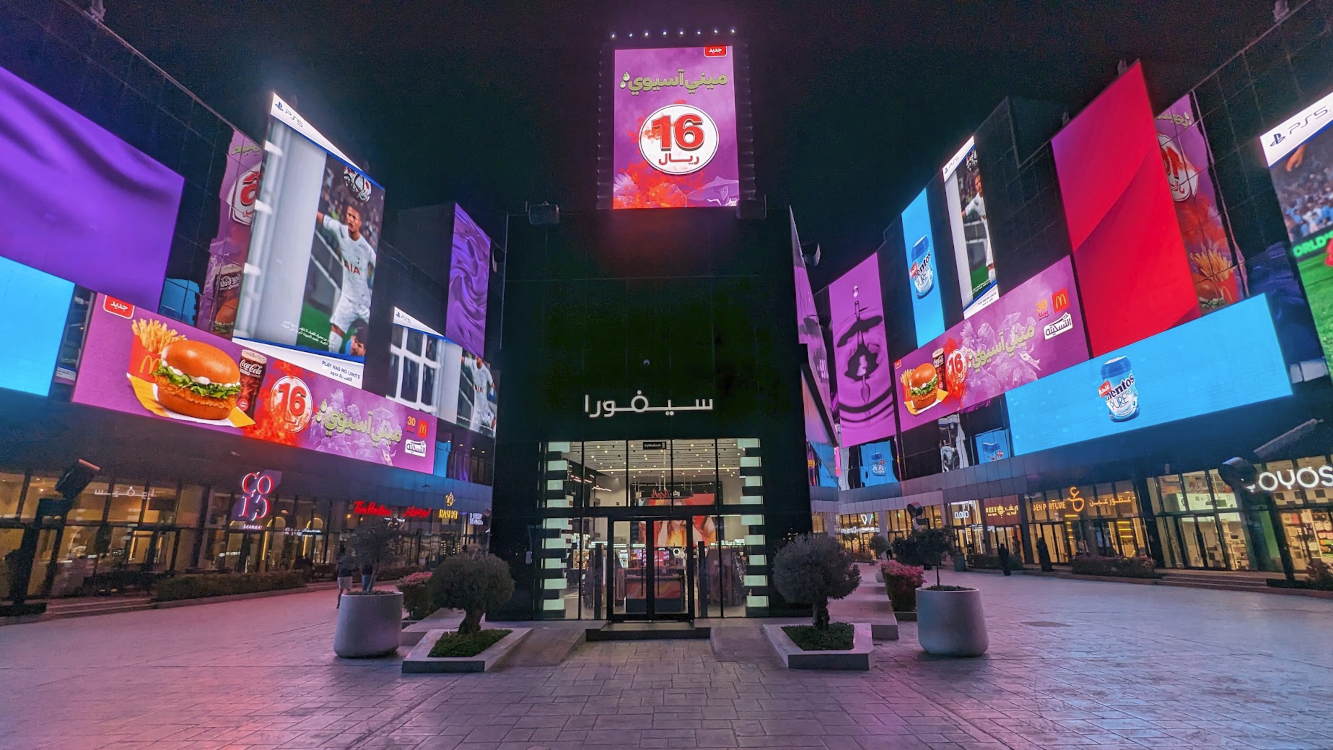
GCC: From Icons to Infrastructure
For the past decade, the Gulf’s digital transformation story has been dominated by giga-projects. Whether it was Saudi Arabia’s Vision 2030 developments, smart cities in the UAE, or landmark tourism destinations across the region, digital signage often followed the cranes.
The industry benefited enormously. Hundreds of LED installations, wayfinding systems, immersive visitor experiences, command & control centers, and retail flagships created a level of demand unmatched anywhere else in the world.
However, maturing markets cannot rely forever on flagship projects. At some point, growth must come from broader adoption rather than a handful of iconic developments. That transition may be now underway.
Digital infrastructure instead of visual spectacles
The next phase of GCC growth will be less about record-breaking LED screens and more about digital infrastructure.
Governments across the region remain committed to modernization. Digital citizen services, smart mobility, tourism development, cashless societies, and AI-driven public services all require communication platforms. Digital signage is increasingly becoming part of that infrastructure.
Public information screens, transportation networks, healthcare facilities, universities, and municipal services all require reliable digital communication. Unlike prestige projects, these deployments create recurring business opportunities for integrators, managed service providers, software vendors, and content specialists.
The winners will not necessarily be those who can deliver the largest LED display by flying in a few experts for installation. They will be those rooted in the region, well connected who develop mid- to longterm client relations. Eventually the Gulf market will also adopt managing signage instead of install and forget.
Government remains the key customer
In uncertain economic environments, government spending becomes even more important.
Across the GCC, public-sector projects have historically provided stability during market downturns. Governments continue to invest because digital transformation remains a strategic priority rather than a discretionary expense.
For digital signage providers, this means adapting business models accordingly. The focus shifts from one-time hardware sales toward managed services, maintenance contracts, content production, cybersecurity, and longer-term operational partnerships.
Many international integrators and MSPs underestimate the importance of local relationships in this process. The Gulf has always been a relationship-driven market. Companies with strong local presence, local talent, and trusted government partnerships will enjoy a significant advantage.
Retail is changing, not disappearing
Some global brands may delay flagship investments amid economic uncertainty. Yet this does not signal midterm weakness in retail signage demand.
The GCC remains one of the world’s most retail-oriented markets. Shopping malls continue to function as social, entertainment, and lifestyle destinations.
Retailers are therefore investing differently. Instead of opening ever-larger stores, brands are focusing on customer experience, operational efficiency, and omnichannel integration. Digital signage sits at the center of that strategy.
DooH is entering a new age
While project-based signage business may fluctuate, DooH advertising is entering a particularly promising phase.
The Gulf’s urban structure is uniquely suited to DooH. Dense city centers, world-class airports, extensive shopping malls, luxury retail destinations, and large-scale entertainment venues create premium advertising environments.
At the same time, advertisers increasingly demand measurable media. Traditional outdoor advertising cannot provide the targeting, flexibility, and analytics available through digital networks.
The region’s high smartphone penetration and advanced telecommunications infrastructure create ideal conditions for programmatic DooH. Campaigns can become more dynamic, contextual, and data-driven than ever before.
The new opportunity for integrators
The coming years will reward a different type of integrator.
Historically, success often depended on executing massive installation projects. Tomorrow’s market will place greater value on software capabilities, cyber security, managed services, content operations, and data integration.
A paradigm shift for the region – customers will expect complete solutions rather than screens alone.
This creates opportunities for local system integrators that understand regional requirements and can provide long-term support. It also creates barriers for companies that enter the market hoping for short-term project revenue without establishing a sustainable local presence.
A market built for growth
Despite short-term economic and geopolitical uncertainties, the long-term fundamentals remain exceptionally strong.
Population growth, urbanization, tourism development, smart-city initiatives, AI adoption, and continued government investment all support future demand for digital signage and DooH.
The era of easy money and spectacular headline projects may be fading. But the next chapter could prove even more valuable for the digital signage industry. Markets become truly sustainable when technology moves beyond iconic showcases and becomes part of everyday infrastructure.