
In a break from summer break, Dave Haynes takes a closer look at the closure of wireless power pionieer Wi-Charge, at the recent layoffs at Samsung USA, and at the newest Stratacache developments.
Haynes Column: Samsung Layoffs, Wind-Down of Wi-Charge, and the Ongoing Stratacache Firesale
It has been a while since I knocked out a guest post, but … it rained all yesterday and it is still raining today. So … no yard work. Cancelled golf game. And doing a kayak paddle on the lake across the lane would be miserable.
So I’m reacquainting myself with my keyboard and screen. Hello, old friend.
Three things to note: an industry giant is shrinking in the US and pissing off customers, a pioneering company suffers the classic fare of many pioneers, and another once big company continues to vanish and liquidate.
Samsung Shrinks
Less than a year ago, Samsung formally opened its flashy new US headquarters in Englewood Cliffs, NJ, across the Hudson River from the upper stretches of New York City. That area had long been head office territory, and this building – formerly Unilever’s main office – was a few miles away from the former head office along the always-lovely NJ Turnpike (but even more of a haul to Newark airport).
Less than a year after ribbons were (maybe) cut, US HQ is being shifted to the Dallas area, and 100s of employees have or are getting bingo’d by Samsung. The formal notice filed to government agencies says 739 employees are being laid off/terminated, start next month. That number represents almost 2/3s of the headcount announced when the new HQ opened.
There are also suggestions out there that other Samsung employees who did not get layoff letters were given the opportunity to relocate – which meant cost and a big disruption to lives. Living in the orbit of NYC is VERY different than Plano, Texas – and observers have suggested this was what’s called a soft layoff.
The lack of corporate income tax in Texas is likely a big stimulant behind the move, but it probably also reflects the state of business for at least the consumer and commercial electronics side of Samsung. The Chinese are kicking their butts on things like TVs and the bigger guys like TCL and Hisense now have B2B products and operations over here. You can get a Brightsign player in a TCL display, for example.
I have seen numerous Linkedin posts from folks I know as Samsung people, working in other parts of the country, that are gone or going. For years, I have had a pile of go-to contacts at Samsung I could ring up or email as needed. Now … I know exactly no one. It’s really strange.
I have also heard directly from Samsung business partners who are VERY annoyed with Samsung end-of-lifing its longtime Magicinfo software and pretty much forcing users who may have substantial networks deployed to cut over to VXT. That means going from the sunk cost of a perpetual license to VXT’s always-on SaaS subscription meter.
Networks that were ticking along nicely – even if Magicinfo software had its warts and boils – no longer work financially because of the piece of the action Samsung wants.
It is complicated – and I am sure Samsung has its side of the story. But who is left to tell me?
Arrows In Backs
There is an old business maxim about old west pioneers taking the arrows, while settlers took the land. I first heard this 30 years ago when I was the guy taking my newspaper online, and the newspaper chain’s charm-deficient new owner explaining why he wasn’t yet enthused or much interested in the World Wide Web.
The guy was mostly right about being an early adopter, but I knew at the time I was going to be right over the long haul. The paper and industry I left two-three years later is just now hanging on in North America.
An Israeli company familiar to a lot of people in the digital signage and ProAV circles put up an announcement in recent days saying it was shutting down – another case of pioneers being a little too early on the scene.
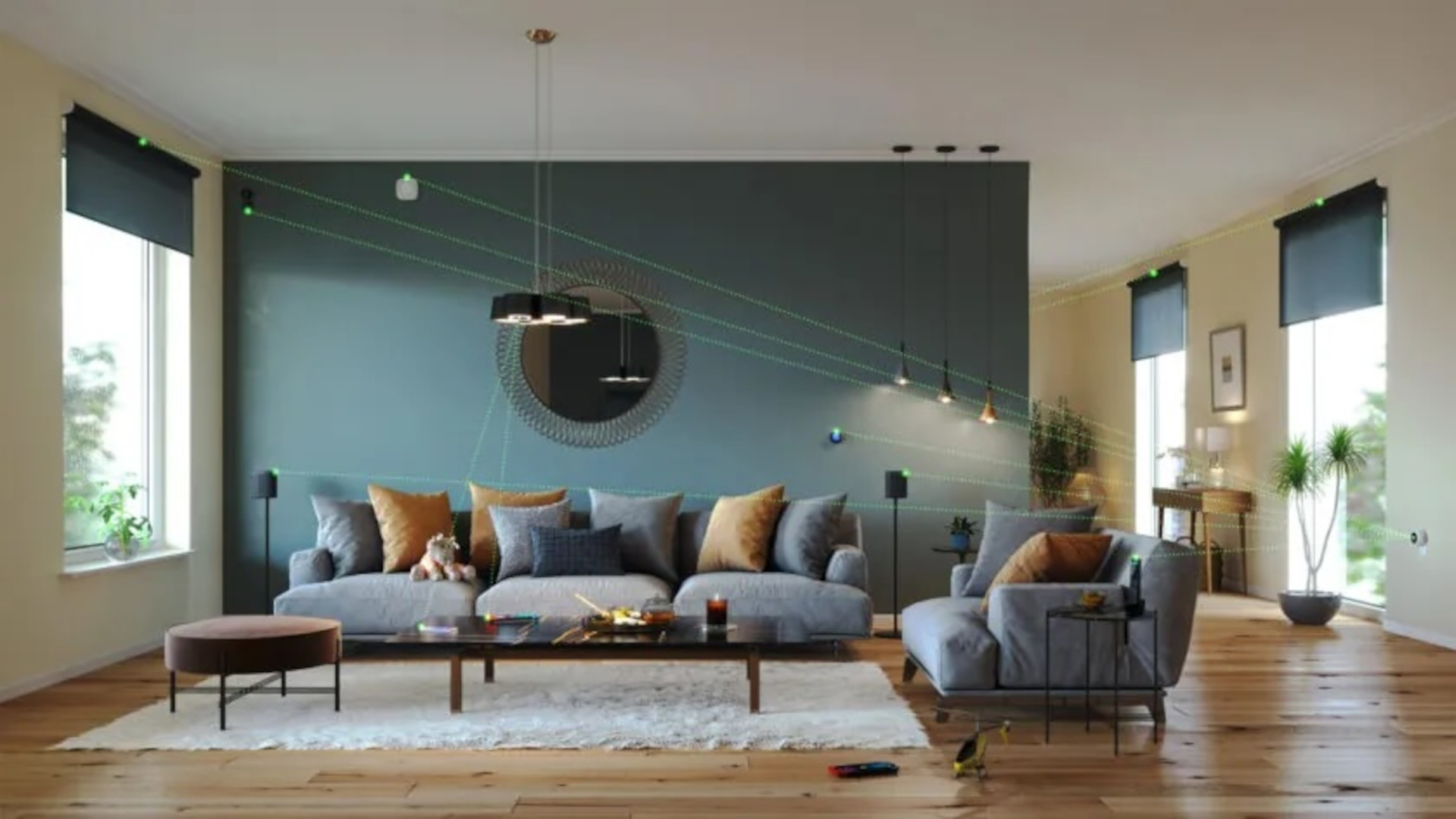
While there have been all kinds of lab and start-up business attempts to power devices across a room without a cord or a reliance on batteries, no one had commercialized a product that could safely, reliably do things like drive a small display using a transmitter and receiver.
Until Wi-Charge came along.
Over some 14 years, the company grew from an idea into shipping commercial product aimed at solving problems with devices that needed to be located in places where corded power was difficult to incorporate, and where batteries were a pain in the butt, because charges wouldn’t last.
But CEO Ori Mor posted on Linkedin the other day:
“After (a) remarkable 14+ years building, breathing Wi-Charge every second of the day, with a heavy heart, yet filled with pride, I share that this chapter reached its end. We started this company with a belief that power should move through the air; no cables, just power, wherever you need it. We didn’t know IF IT COULD BE DONE, but we knew that if it can be done, it will BE DONE by US. And it was. What went well: 1. Wi-Charge is the ONLY COMPANY IN THE WORLD that commercialize room-scale wireless power out of dozens of of startups and tech giants who tried. 2. We pioneered new groundbreaking building blocks. Solved problems that had no textbook to reference. 3. Our products were used by top companies, and consumers across 39 US states. 4. The product gained 90% (!!) take-rate when sold as an OEM bundle and 20%+(!!) when sold online. 5. We proved consumers love room-scale wireless power! Mor went on in his post to explain what didn’t go well. The biggest one: the company did not realize the scale or critical mass needed to be a going concern.“
The main roadblocks, he explained, were that companies like speciality small display manufacturers were open to adding receivers inside their devices, but they needed customers like building operators to install – at some kind of mass – the small, inexpensive transmitters that would be part of the electrical infrastructure.
So when you got a Wi-Charge set-up, both the transmitter and receiver needed to be put in, which meant added capital and labor cost.
The other barrier was that while using rechargeable batteries for things like shelf-level and meeting room displays was a bit of a pain, it was a headache, not a crippling migraine.
I got to know Mor a bit before kinda-sorta-mostly retiring, and did some advisory and introduction work as he and his team tried to get traction in the digital signage sector. Super-nice, genuine guy. You want to cheer on people like Ori.
The great thing is he has wound down Wi-Charge with pride, instead of bitterness.
“We were exactly where we belonged, building magic,” Mor writes. “I believe wireless power is inevitable. Someone will finish the work, and the ground we covered makes the path shorter.”
Florian Rotberg has his own take on this, as well …
Stratacache Fire Sale Continues
I know lots of industry folks didn’t have much or any affection for the blunt, aggressive and sometimes prickly ways of Stratacache CEO/founder Chris Riegel, but I always got along with him and found him incredibly sharp and knowledgeable.
That said, he was VERY Trumpy. So when we chatted, I’d avoid politics.
2026 has seen his digital signage and retail media empires go through a world of pain, with acquired companies like Real Digital Media and X20 shut down and others – most notably Scala – sold off.
invidis Update: Additionally, Perion has bought retail media specialist PRN.
A lot of people were let go, as well, and I’ve been happy to read as folks I know moved on to new gigs – some but not all staying in the industry.
Riegel has stayed well off the radar and I’ve been privately told the rise and fall has been very hard on him, unsurprisingly. He built it. Was its visionary. And lead sales guy.
Over breakfast one time, I think he told me he was on the road 49 weeks a year. He had sales people, but he mostly trusted himself to get deals and other things done.
The indicators that the business troubles are still out there are hinted at by boring stuff like commercial real estate sales. Riegel used tax incentives and crazy-low per square foot sale costs to build something of a property empire around Dayton, Ohio.
But most or perhaps all of those buildings have now been auctioned off or sold.
Given the fire sale state of Stratacache, there is absolutely nothing to suggest the hyper-ambitious, BIG dollar micro LED plant Riegel was setting up in an old semiconductor plant in Eugene, Oregon will ever happen. When I’d ask Riegel for an update, it was always Q1 next year for prototypes, the delays owing to supply chain issues.
I can’t find anything formal, but poking around Eugene news, I found word about an unnamed company – working through lawyers – asking the city about getting the 200-acre site re-zoned as a data center.
Hopefully we’ll see Riegel re-emerge at some point. While I rarely bought in entirely on what he was telling me about his companies’ size and financial fortunes, I never questioned his depth of knowledge and drive.