
At WOO 2026 in London, more than 800 global industry leaders made one thing clear: Out-of-Home has evolved into a central force in modern media, powered by data, digital innovation, and AI. With strong growth, rising relevance, and a unified push for global standards, the medium is entering a decisive new era - no longer alternative, but essential.
WOO 2026: Out-of-Home is Real
More than 800 Out-of-Home global experts gathered in the British capital last week for the World Out of Home Organization (WOO) annual congress. Under the leadership of President Tom Goddard, WOO has evolved from a rather low-profile industry body into a vibrant global platform. This year’s edition may well have been the most successful in the association’s history – both in terms of attendance and relevance.
In conversations on-site, industry leaders – including Germany’s Out-of-Home Association BAM CEO Kai Thäsler – highlighted not only the growing strategic importance of the medium, but also the strong sense of momentum currently driving the sector.
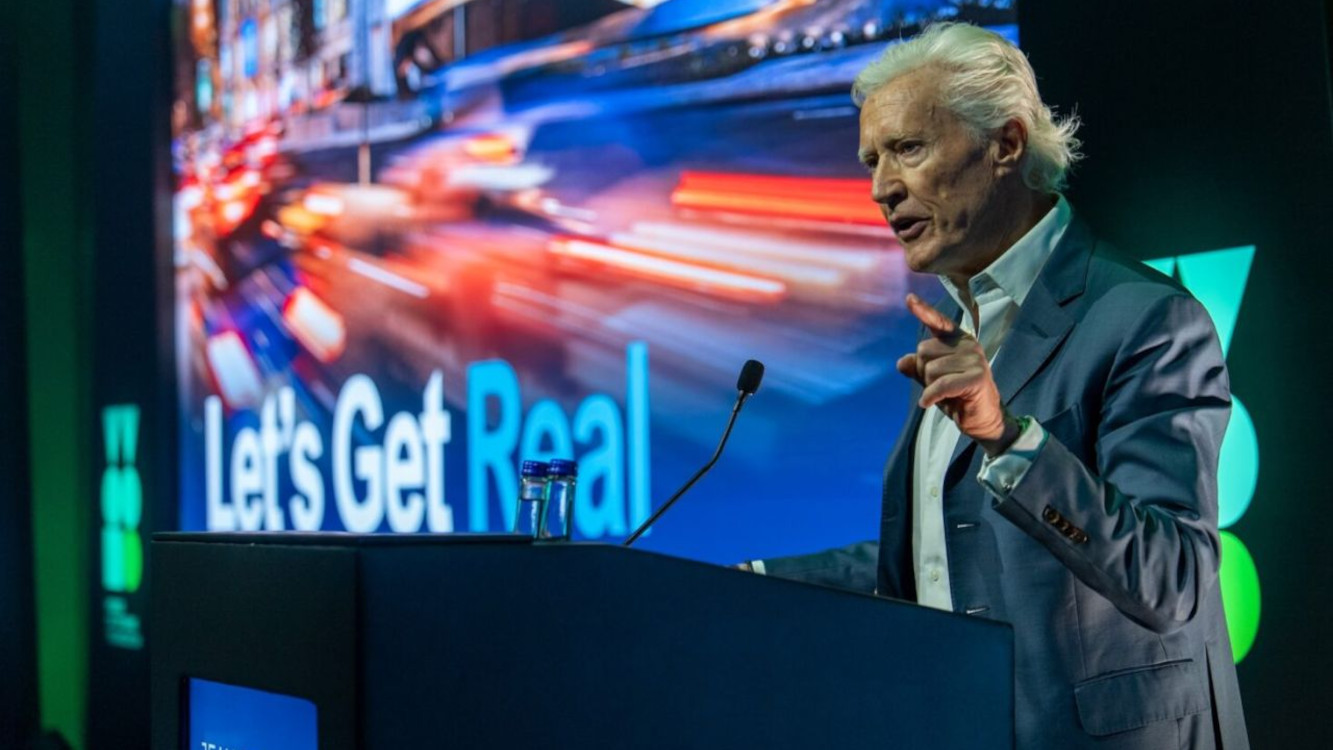
Jean‑François Decaux: “Let’s get real”
One of the undisputed highlights of the event was the keynote by Jean‑François Decaux, CEO and largest shareholder of JC Decaux, the world’s leading OoH provider. Under the title “OoH – Let’s get real”, Decaux outlined four central theses that define the current and future direction of the industry:
- Regulation: OoH has reached a level of relevance that attracts regulatory attention. Policymakers increasingly engage with the medium to understand its societal and economic impact.
- Effectiveness: Measurement and data integration are advancing rapidly, embedding OOH more deeply into media mix modeling and audience analytics.
- Agency to Agentic: AI-driven agents will fundamentally reshape media planning and buying, automating processes and shifting decision-making.
- Long Tail: The future growth of OoH depends on accessibility. Making the medium easy to buy is crucial to unlocking smaller and mid-sized advertisers.
Decaux’s core message was clear: OoH has arrived in the “real world” of modern media planning. Brands demand simplicity and measurability, particularly in urban environments where audience density and impact are highest.
Positive momentum across markets
The atmosphere throughout the conference reflected a broadly optimistic outlook. Globally, OoH has grown a stable media share of over 5 percent, while markets such as Germany have already crossed the 10 percent threshold. This makes Out-of-Home the last remaining true mass medium – combining scale with increasing digital sophistication.
DooH in particular, continues to expand beyond traditional billboard concepts. High-impact formats, premium urban locations, and increasingly immersive installations are turning public spaces into experiential brand environments. The “iconic DooH moment” is becoming a core element of modern campaign strategy.
Data: From challenge to core competency
Data, once considered a weak spot for the industry, has now become a central pillar. Markets like Australia are leading the way with “Move” (Measurement of Outdoor Visibility and Exposure), demonstrating how robust data ecosystems can enhance planning, targeting, and measurement.
The consensus in London was unmistakable: Future brand-building will not be possible with digital online channels alone. Google and Meta may dominate performance marketing, but OoH plays a decisive role in awareness and emotional impact.
As traditional mass media such as TV and print continue to fragment, OoH stands out – not only for its resilience, but also for its growth potential. Double-digit annual growth appears achievable in several markets.
WOO’s transformation and industry unity
WOO itself reflects this transformation. President Tom Goddard now works alongside four directors covering key strategic areas Regulation, Data, Creative and Sustainability
The organization is also actively recruiting a full-time CEO to guide its next phase of development.
A central theme across discussions was the need for industry alignment. From local operators to global players, there is a shared understanding that OOH can only strengthen its position if it speaks with one voice. Global standards, shared best practices, and coordinated lobbying efforts are becoming essential.
Without this alignment, there is a risk that technology platforms – such as Telekom’s Vistar Media – could dominate media buying processes, effectively shifting power away from traditional agencies and media owners. A unified OoH ecosystem is therefore critical to ensuring fair participation in the automated, programmatic future.
AI: The industry’s defining disruptor
If there was one topic that dominated both panels and corridor conversations, it was artificial intelligence.
The role of AI in OoH is rapidly evolving – from campaign optimization to fully automated media buying via AI agents. These systems rely on high-quality, standardized data. The implication is clear: Any market or player unable to deliver reliable data risks exclusion from future media ecosystems.
This is particularly critical as OoH increasingly integrates into cross-channel strategies. The medium has proven its value as a “leverage channel”, amplifying the effectiveness of digital and social campaigns. Its visibility in public space also creates a unique feedback loop – campaign impact can literally be observed in real time.
However, despite progress, the industry must accelerate. Even advanced markets like Germany still face gaps in data standardization and availability. Interestingly, emerging markets benefit from a “late adopter advantage,” allowing them to implement mature frameworks from the outset.
Regulation: preparing for stricter frameworks
Regulation remains a key strategic challenge. Under the leadership of Kai Thäsler, WOO’s Regulation Director, industry stakeholders in London discussed how to better anticipate and respond to upcoming regulatory developments.
Key topics included:
- Stricter policies on advertising for products high in sugar and fat
- Increasing scrutiny around light pollution and environmental impact
- Broader urban policy frameworks affecting public space usage
The takeaway is clear: proactive engagement with regulators will be essential to safeguard the medium’s future growth.
A medium at a turning point
WOO 2026 demonstrated that Out of Home is no longer an “alternative” medium – it is a central pillar of modern media strategy. With strong global growth, increasing digitalization, and a rapidly maturing data ecosystem, OoH is uniquely positioned to bridge the gap between physical and digital worlds.
However, the industry’s next phase will depend on three critical factors:
- Data excellence
- AI readiness
- Global alignment
If these challenges are addressed, OoH has the potential not only to maintain its status as the last true mass medium – but to become one of the fastest-growing channels in the global advertising landscape.
Or, as Jean‑François Decaux put it succinctly in London: OoH – let’s get real.
- 55” Signage Display: Amazon Goes All-In on Digital Signage
- Qompose: Navori Launches AI-First Unified CMS Platform
- Integrated Communications: Uniguest Launches Community Hub For Senior Living Communities
- Virtual Production: Brompton Powers New Virtual Production Studio In Germany
- Research: Office DooH Screens Generate 3.4 Times More Attention