
Las Vegas | At Infocomm 2026, Onsign demonstrated one of the few fully operational AI-powered device management platforms, leveraging edge-based processing on NPUs for real-time monitoring and automation. The solution stands out with practical features such as continuous screen analysis and automated remediation - delivering immediate operational benefits without relying on cloud AI.
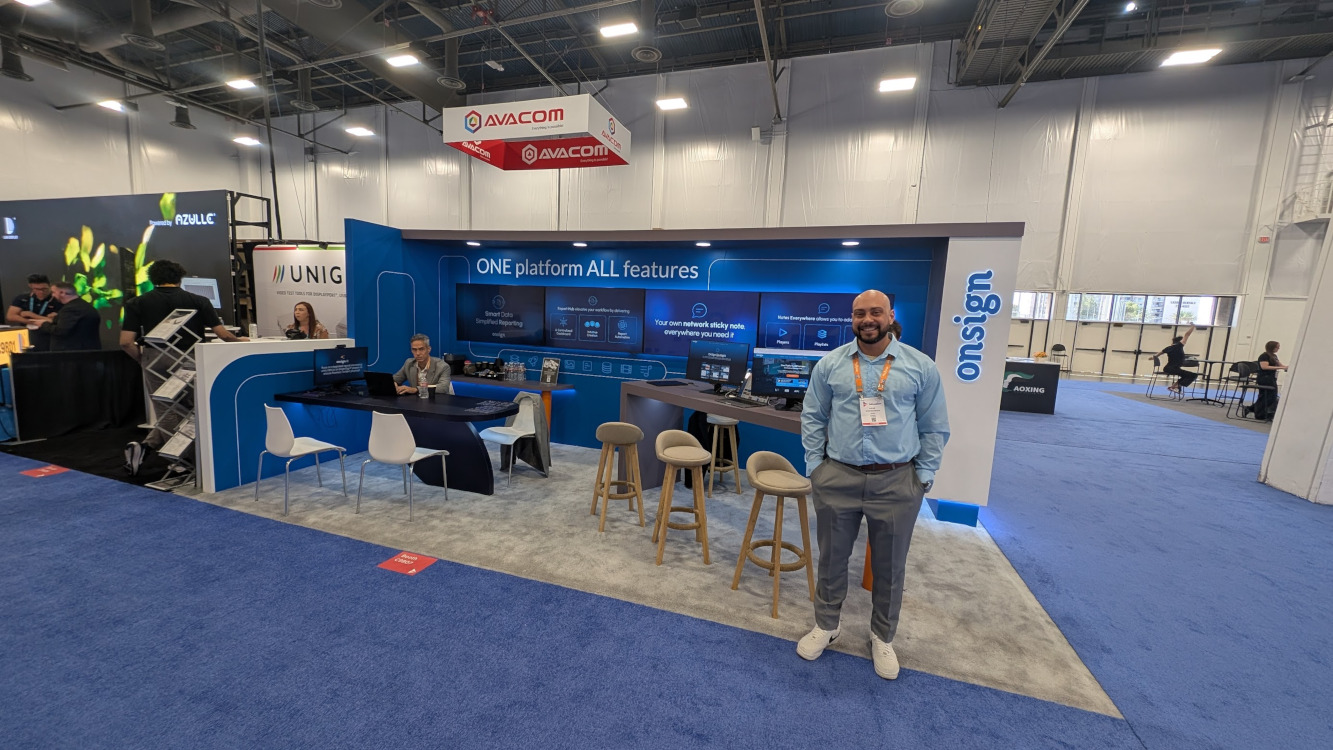
Infocomm 2026: AI That Actually Works – Onsign Leads the Way
Artificial intelligence remains one of the dominant themes at Infocomm 2026, with many vendors showcasing AI-driven CMS and remote device management capabilities. Yet, despite the strong presence of AI in marketing narratives, only a small number of providers are delivering fully operational solutions. Onsign is among those ahead of the curve, presenting a mature and already deployable AI-based device management platform.
What sets Onsign apart is its use of neural processing units (NPUs) embedded in BrightSign media players. These dedicated processors handle AI workloads independently of the CPU, enabling continuous analysis without compromising playback performance. OnSign Edge AI is currently only available on BrightSign players. However, from a technical perspective, similar functionality could potentially be implemented on other media players if they are equipped with a capable NPU. While it is technically possible to run these AI processes on standard CPUs, this approach requires limiting the feature set in order to avoid negative effects on content rendering.
A central pillar of Onsign’s approach is the use of edge-based AI processing. Running AI models directly on the player eliminates dependency on network connectivity and significantly reduces bandwidth usage. At the same time, it avoids the ongoing costs associated with cloud-based AI token consumption. From a security and compliance standpoint, processing data locally also ensures that sensitive visual information does not leave the device, an increasingly important requirement in many vertical markets.
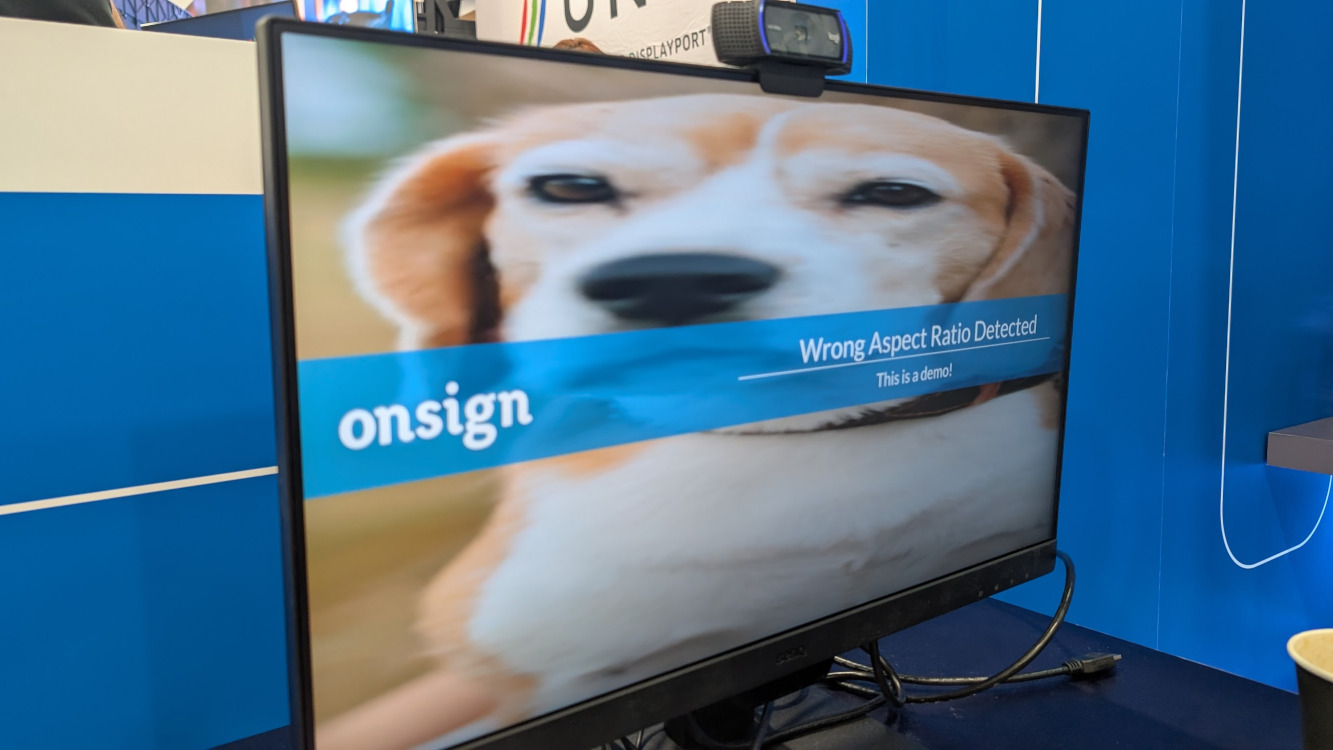
Onsign’s Infocomm demonstration focused on highly practical applications designed to simplify day-to-day operations for network operators. The system continuously captures screenshots directly from the display output at one-second intervals or more frequently and analyzes them locally. This allows the platform to reliably detect common but critical issues such as black or blank screens, frozen images, incorrect resolutions or distorted layouts, as well as pop-up error messages or inappropriate content playback.
Beyond problem detection, the solution is built around automated response mechanisms. Users can define scenarios that are triggered in real time when specific issues occur. These workflows can be configured quickly using prompt-based inputs, making them accessible even for less technical users. In practice, this means that systems can automatically react by sending alerts, switching to backup content, blocking problematic playlists or rebooting the media player. The result is a substantial reduction in manual monitoring effort, particularly in large-scale deployments.
Although Onsign operates more quietly than some of its competitors, the company manages a global base of more than 100,000 active digital signage licenses. Its remote device management capabilities are already well established in business-critical applications, particularly in sectors such as quick-service restaurant menu boards and public transportation systems where reliability is essential. With strong roots in Brazil, Onsign has also expanded internationally, achieving a leading position among transit authorities in the United States, becoming a key provider for convenience store menu board networks in Mexico and in Spain.
The Infocomm showcase underscores a broader industry trend: while AI is widely discussed, fully realized and scalable implementations remain relatively rare. Onsign’s edge-based strategy demonstrates that AI-powered device management is not only feasible today but can deliver immediate operational value when focused on concrete, real-world use cases.
- QSR: Subway Unveils Digital-First Restaurant Concept for EMEA
- AV Monitoring: Axion Tests its Radar Maintenance Platform
- Nowsignage Interview: Retail, QSR and Global Growth
- Deep Dive for Retailers: The Big Retail Media Questions
- With Ocean Projections: Moment Factory Transforms National Geographic Museum