
Google turns Telefónica’s LED cube in Madrid into a multi-sensory AI showcase, blending immersive visuals with Pixel 10 technology. The high-impact installation highlights both the creative potential and the operational limits of LED “cave” experiences in retail.
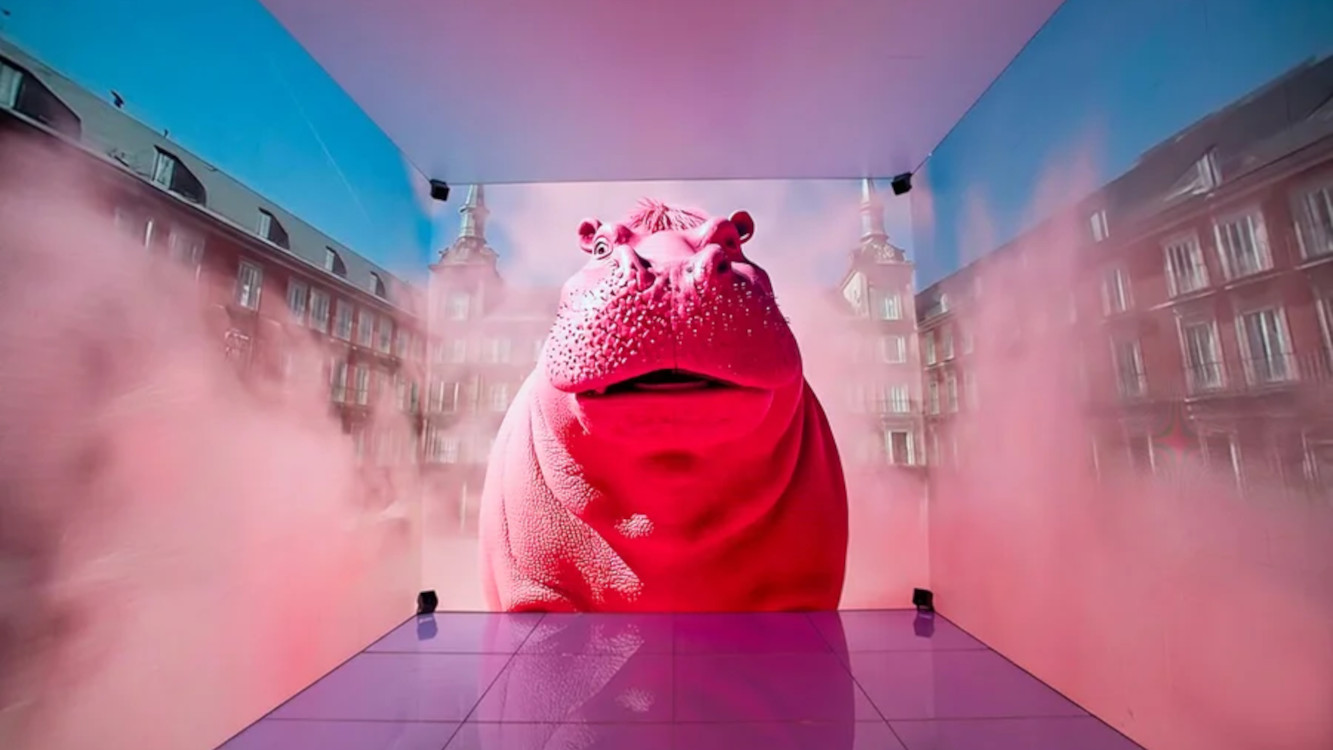
From Screen to Space: LED-Cube Google Experience
Immersive LED cubes – often referred to as “LED caves” – continue to generate buzz in retail and brand experience design. Visually striking and highly shareable, they resonate strongly with consumers and perform particularly well on social media. At the same time, these installations remain cost-intensive and operationally complex, with challenges such as heat dissipation in enclosed LED spaces limiting broader scalability.
Telefónica is one of the few brands investing consistently in this format. At its Madrid flagship Espacio Movistar, the telco has integrated a permanent LED cube into a wider experiential retail concept. The 2,800 sqm venue, located in a historic building, combines Spain’s largest Movistar store with a TV studio, gaming zones, and direct access to the Espacio Fundación Telefónica museum – positioning the location as a hybrid platform for retail, media, and brand storytelling.
While content for conventional digital signage networks can be created and rolled out at scale, immersive environments require a fundamentally different approach. These installations depend on high-end, bespoke content and strong creative partnerships, often turning them into one-off flagship activations rather than repeatable formats.
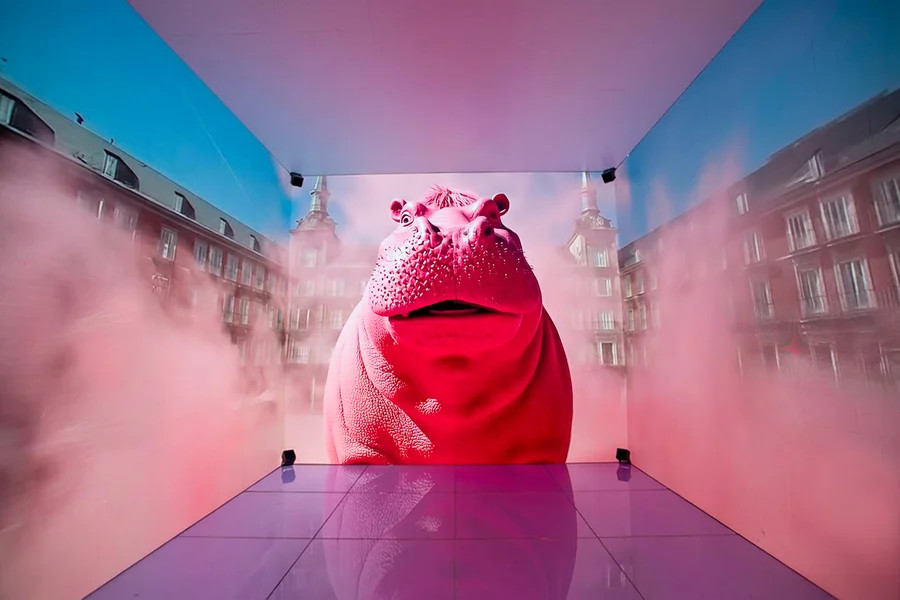
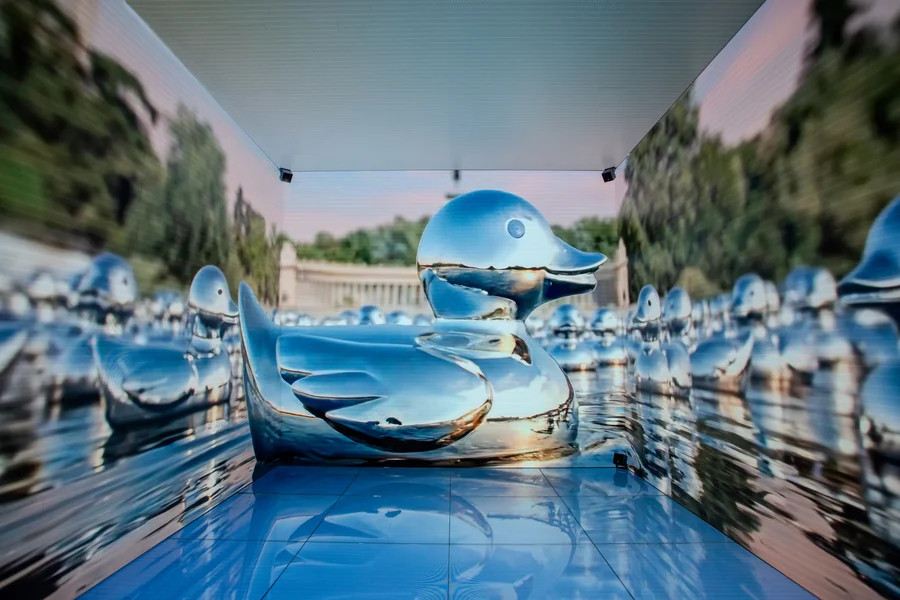
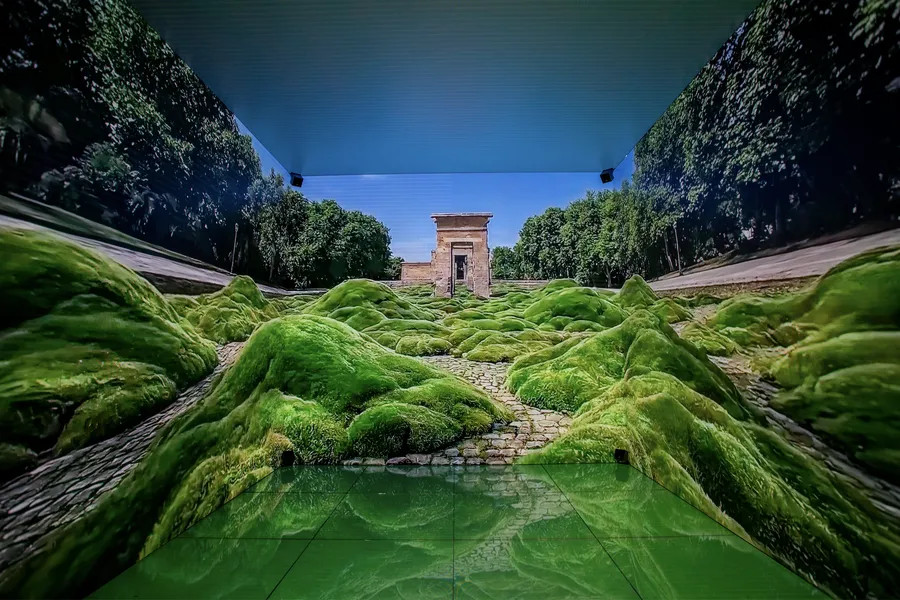
This becomes evident in Telefónica’s latest collaboration with Google. To promote the AI capabilities of the Pixel 10 and its Gemini ecosystem, the tech company partnered with British design agency Dalziel & Pow to stage a week-long immersive activation inside the cube in May 2026. The campaign transforms the space into a fully enclosed, multi-sensory environment, combining LED visuals across walls, floor and ceiling with immersive surround sound.
Visitors entering “The Cube” step into a sequence of AI-generated worlds designed to showcase the smartphone’s imaging and generative capabilities. Real-world footage captured in Madrid using the Pixel 10 is blended with AI-generated content created with Google’s Veo 3.1 model, resulting in surreal reinterpretations of iconic city locations. Landmarks such as Plaza Mayor, the Temple of Debod and Retiro Park are reimagined through playful, visually dense scenarios that merge photography and generative visuals into a continuous spatial narrative.
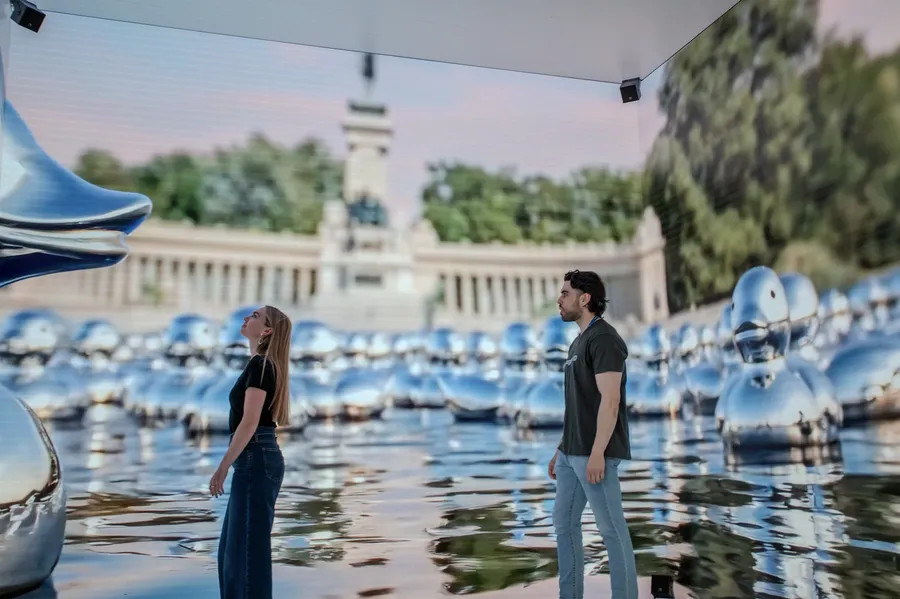
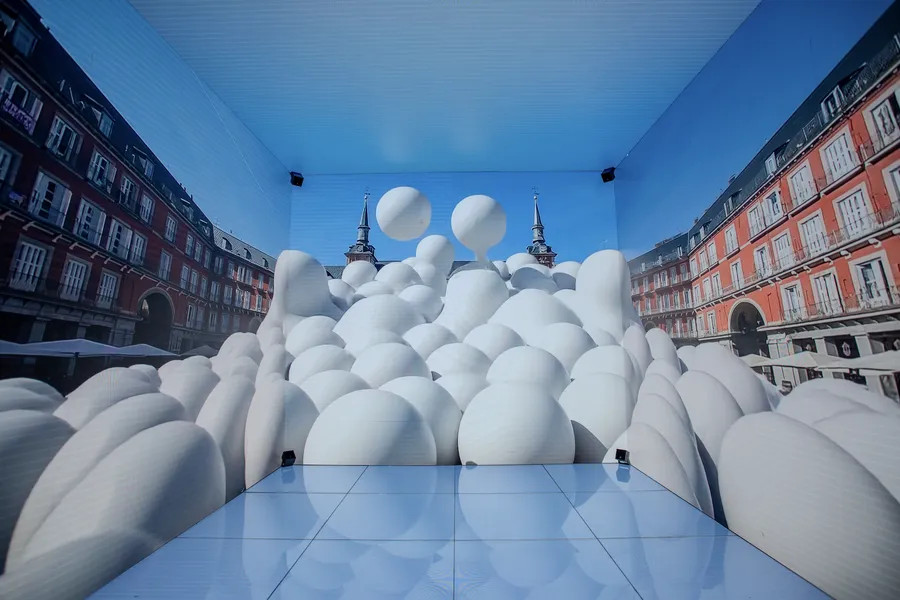
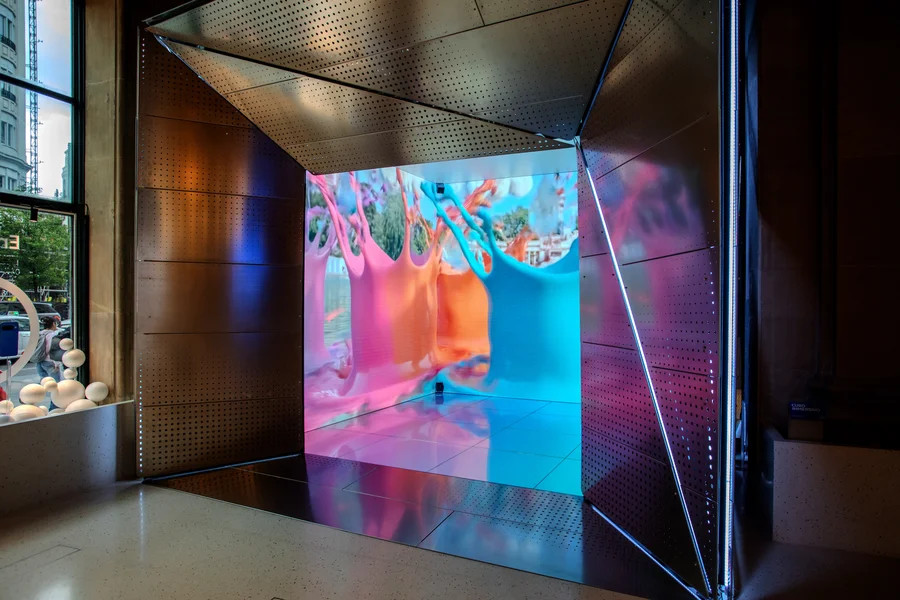
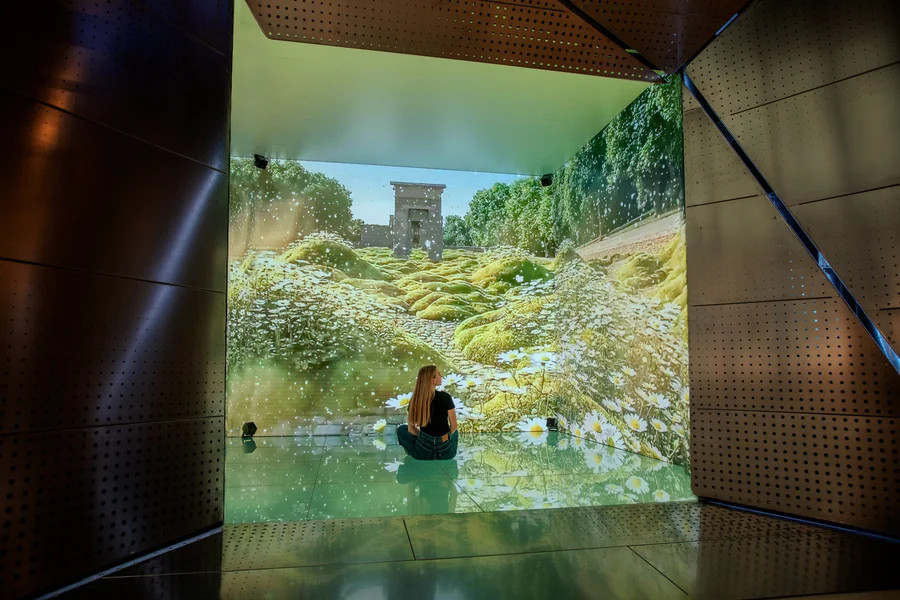
From a technical perspective, the installation is a five-sided LED environment delivering near-360-degree immersion, with only the entrance portal remaining open. The setup uses 1.5 mm pixel pitch LED technology from Spanish manufacturer Alfalite, enabling high-resolution visuals even at very close viewing distances. While this configuration maximises visual impact, it also highlights the inherent complexity of such installations. Covering almost all surfaces with LED significantly increases heat generation and energy consumption, requiring advanced system design and cooling strategies.
Another limitation lies in the temporary nature of these activations. The Pixel 10 experience was limited to just one week, underlining that immersive LED environments are typically deployed as short-term, high-impact highlights rather than permanent content platforms. While they generate strong engagement and brand visibility, their cost structure and production effort make continuous operation challenging.
From a strategic perspective, Telefónica’s LED cube illustrates the growing importance of immersive environments as flagship retail experiences. Rather than scaling across large networks, these formats focus on creating “destination moments” – installations that attract footfall, generate social amplification, and reinforce brand positioning through memorable, technology-driven storytelling.
- QSR: Subway Unveils Digital-First Restaurant Concept for EMEA
- AV Monitoring: Axion Tests its Radar Maintenance Platform
- Nowsignage Interview: Retail, QSR and Global Growth
- Deep Dive for Retailers: The Big Retail Media Questions
- With Ocean Projections: Moment Factory Transforms National Geographic Museum