
Hong Kong | GTA VI has finally launched, and Rockstar Games has turned cities around the world into giant advertising canvases. The blockbuster campaign shows why (D) OoH remains unmatched when brands want to create global cultural moments rather than simply generate awareness.

DooH: GTA VI Takes Over the World’s Screens
The long-awaited launch of Grand Theft Auto VI has finally arrived. Thirteen years after GTA V redefined the gaming industry, Rockstar Games has unleashed what is arguably the most anticipated entertainment release of all time. And while millions of fans have been counting down the days, one thing has become impossible to ignore: GTA VI is everywhere.
From spectacular façade takeovers and landmark activations to wrapped trams, moving billboards, transit networks, and premium digital-out-of-home placements, the launch campaign has transformed cities around the globe into an extension of Vice City. Whether in Hong Kong, Tokyo, London, New York, Paris, Berlin, or Munich, GTA VI dominates public space in a way few brands have ever achieved.
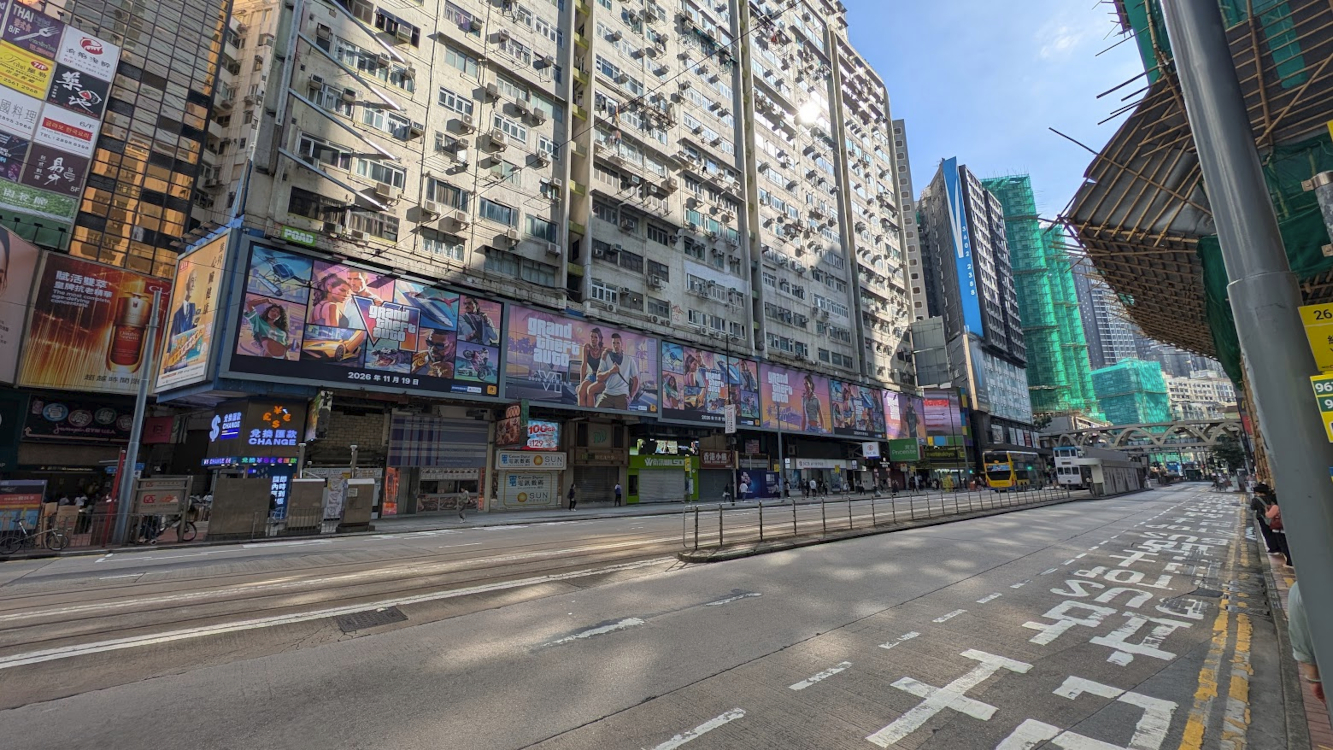
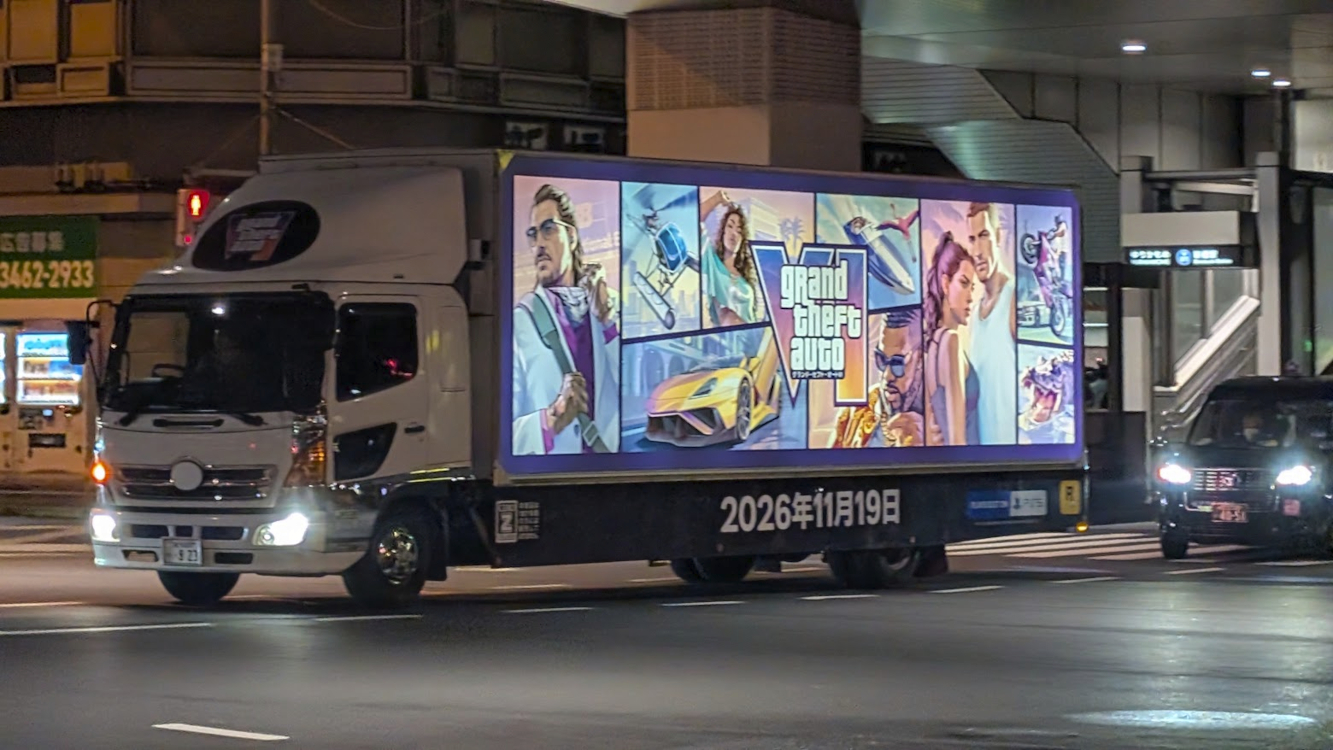
Advertising the product that doesn’t need advertising
On paper, GTA VI should be the easiest product launch in history. Industry estimates place development costs at around USD 1.5 billion, making it one of the most expensive entertainment projects ever produced. According to market intelligence firm Sensor Tower, pre-launch sales had already generated approximately USD 1.54 billion in revenue before the official release.
Every marketer dreams of that kind of demand. Yet Rockstar Games has reportedly invested another USD 150 million to USD 500 million into marketing. The obvious question is: why spend hundreds of millions promoting a product that would probably sell itself?
The answer lies beyond awareness.
As Matthieu Lamoureux, Director at Jellyfish, explains in an insightful analysis for The Drum and much more detailed in his blog, the campaign is not designed to reach gamers. Gamers were already convinced years ago. Instead, Rockstar is leveraging the launch to become a cultural event that extends far beyond the traditional gaming audience.
More than a game launch
The GTA franchise has evolved from a video game into a global pop-culture phenomenon. Much like the launch of a Marvel blockbuster, a Taylor Swift tour, or a FIFA World Cup, visibility itself becomes part of the story. The campaign is designed to create ubiquity.
Consumers encounter GTA VI on their morning commute, on landmark buildings, through social media posts generated by spectacular activations, and on digital screens throughout the day. Every billboard becomes content. Every façade lighting becomes a selfie opportunity. Every DooH placement fuels another wave of online engagement.
This illustrates one of the most important lessons for DooH marketers: the value of a campaign is no longer limited to its physical audience. The real multiplier effect comes when physical activations ideally on iconic DooH screens generate billions of digital impressions across social platforms.
Why DooH remains central
Few media channels are better suited to creating cultural moments than DooH. Premium urban locations deliver scale, while large-format LED installations provide the visual impact required for entertainment launches of this magnitude.
The GTA VI campaign demonstrates how the role of DooH continues to evolve. Rather than serving as a supporting media channel, it becomes the centerpiece around which social media, PR, influencer content, and fan engagement revolve.
For entertainment brands in particular (and also AI companies), public screens offer something digital media cannot: shared experiences in real-world environments. Whether displayed on iconic city landmarks, transit hubs, retail districts, or giant LED façades, the campaign transforms public space into a stage.
A masterclass in cultural marketing
The true genius of Rockstar’s marketing strategy may be that it turns a commercial launch into a global event. The campaign is not selling a game. It is creating a sense of participation in a moment that millions of people feel compelled to witness.
That approach carries important lessons for brands across industries. In an age where consumers are overwhelmed by (AI-generated) content, the challenge is not awareness but cultural relevance. The brands that win are those that create moments people actively want to photograph, share, discuss, and experience together.
GTA VI may already be on its way to becoming the biggest entertainment launch ever. For the digital signage and DooH industry, however, it also represents something else: perhaps the most visible demonstration this year of how physical and digital experiences increasingly merge into one global conversation.