Singapore | As customer journeys shift from counters to kiosks, apps, and drive-thrus, digital menu boards are taking on new roles throughout the QSR environment. Examples from Singapore reveal how next-generation DMB concepts - especially counter-level displays - are redefining menu communication and influencing purchasing decisions in new ways.
QSR: Digital Menus, New Rules
Digital menu boards (DMBs) have been a fixture in quick-service restaurants for more than a decade. In many international burger chains, printed menu panels have virtually disappeared, replaced by dynamic digital displays capable of updating content in real time. Yet adoption remains uneven. Coffee and tea chains -including major global brands – often still operate without a chain-wide fully standardized digital menu board strategy.
The benefits of digital menus are well established. Operators can automatically remove unavailable products, push time-sensitive promotions, and use motion graphics to draw attention to new offers. Many chains also leverage a “total domination” approach, synchronizing campaigns across every customer-facing screen in a restaurant to maximize impact.
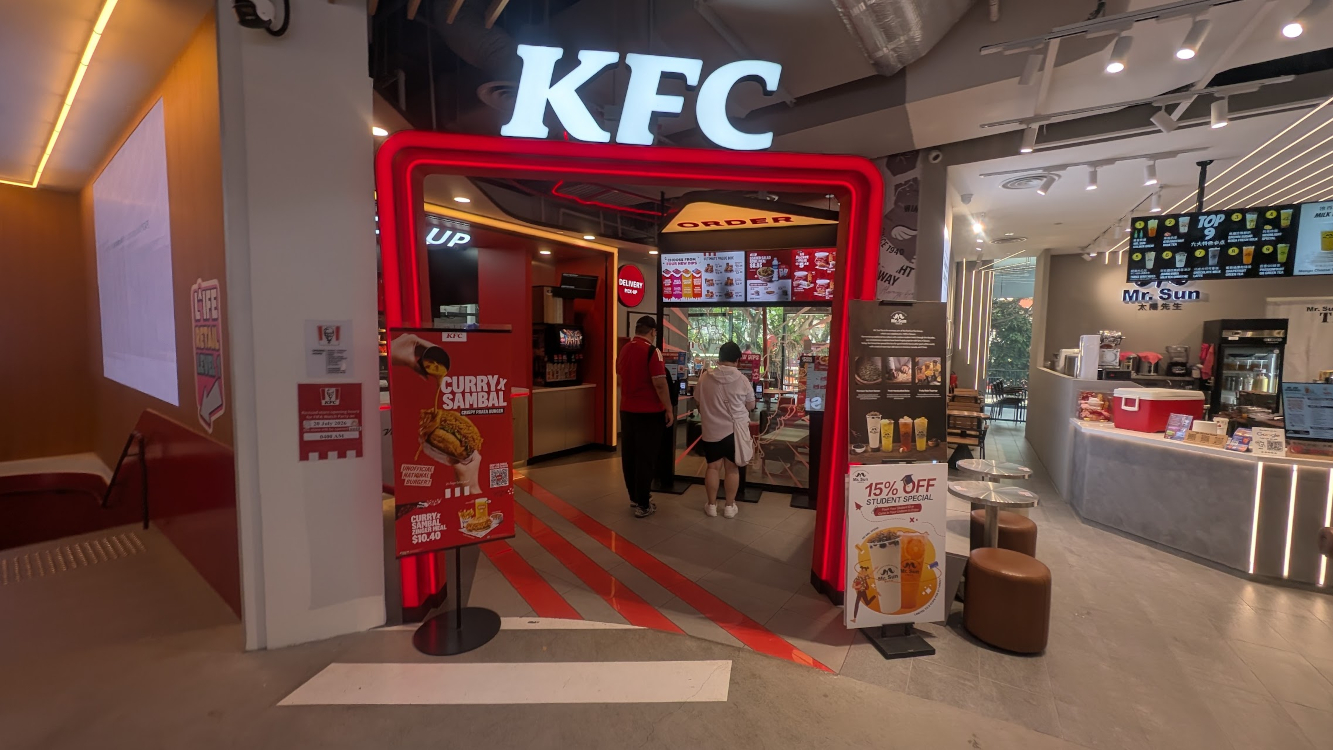
In recent years, digital menu boards have increasingly been positioned above self-order kiosks. The placement is strategic: customers typically spend several moments in front of the screens while waiting or deciding what to order. This creates a valuable opportunity to influence purchasing behavior before the transaction takes place.
Changing Customer Journeys
While the technology itself is mature, the role of the digital menu board is beginning to change. Customer behavior is evolving, forcing QSR operators to rethink how and where menu content is delivered.
The most obvious example is the drive-thru. In North America, drive-thru transactions account for the vast majority of sales at many quick-service chains. Indoor menu boards play little role in these customer journeys. Instead, operators require robust outdoor displays that remain readable in direct sunlight and operate reliably through extreme summer heat and winter cold.
At the same time, mobile ordering is reducing the influence of traditional menu boards. Customers increasingly browse menus and place orders through apps while on the move. The opportunity for last-minute upselling via large in-store displays becomes smaller when purchasing decisions have already been made before arriving at the restaurant.
As a result, many DMB installations are gradually shifting from being sales-driving tools to becoming order information and customer guidance systems.
Asia Leads the Next Phase
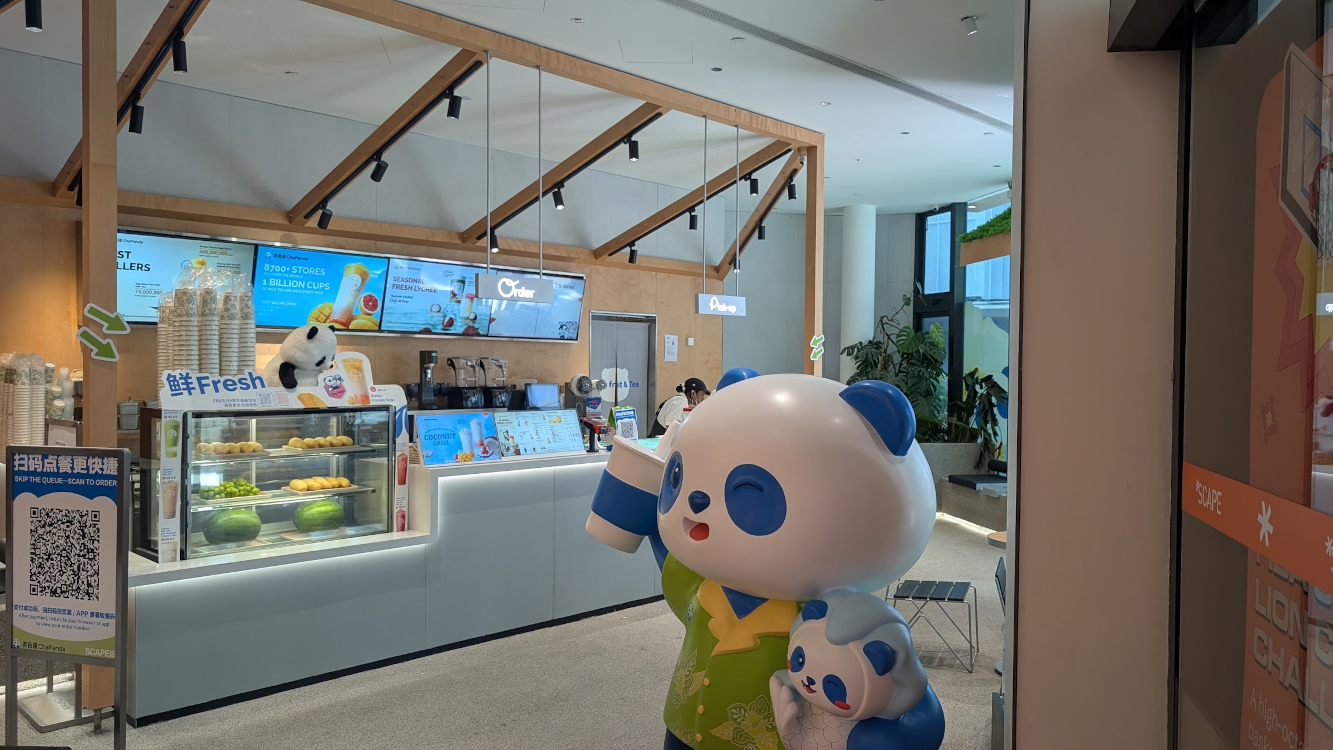
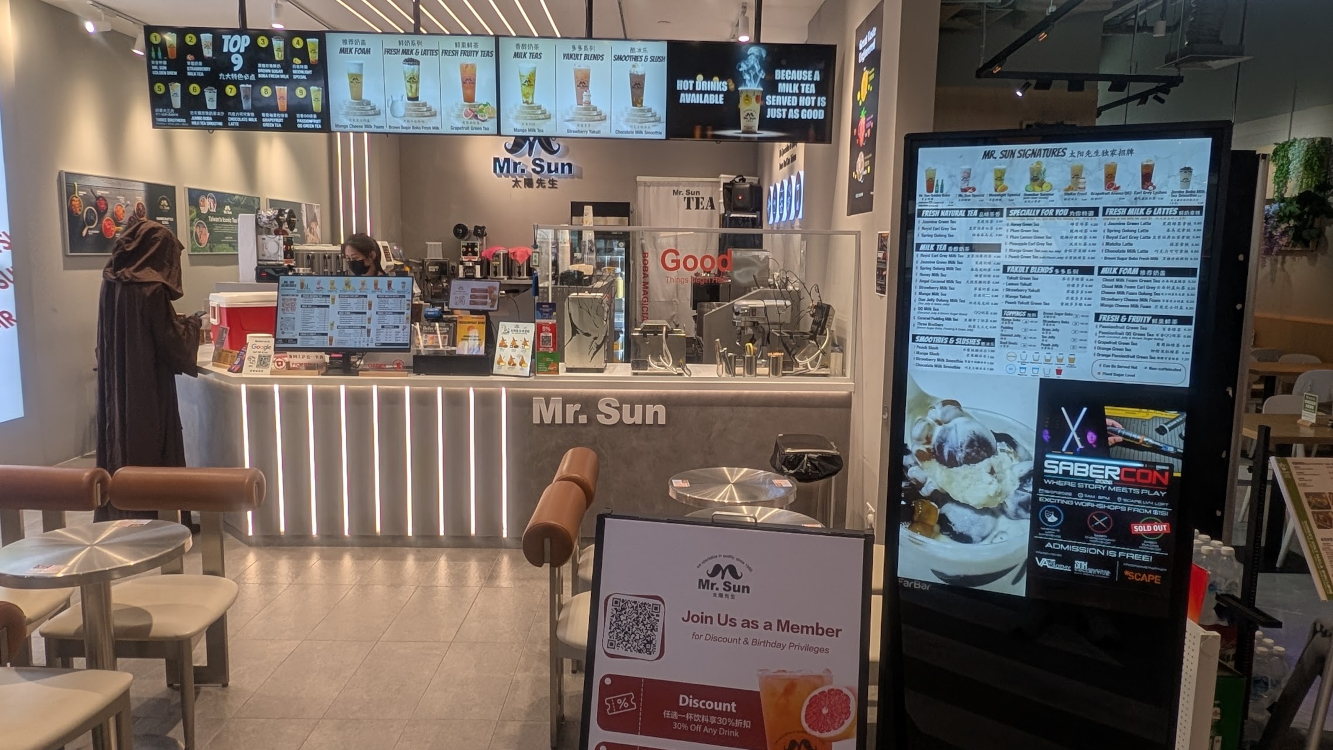
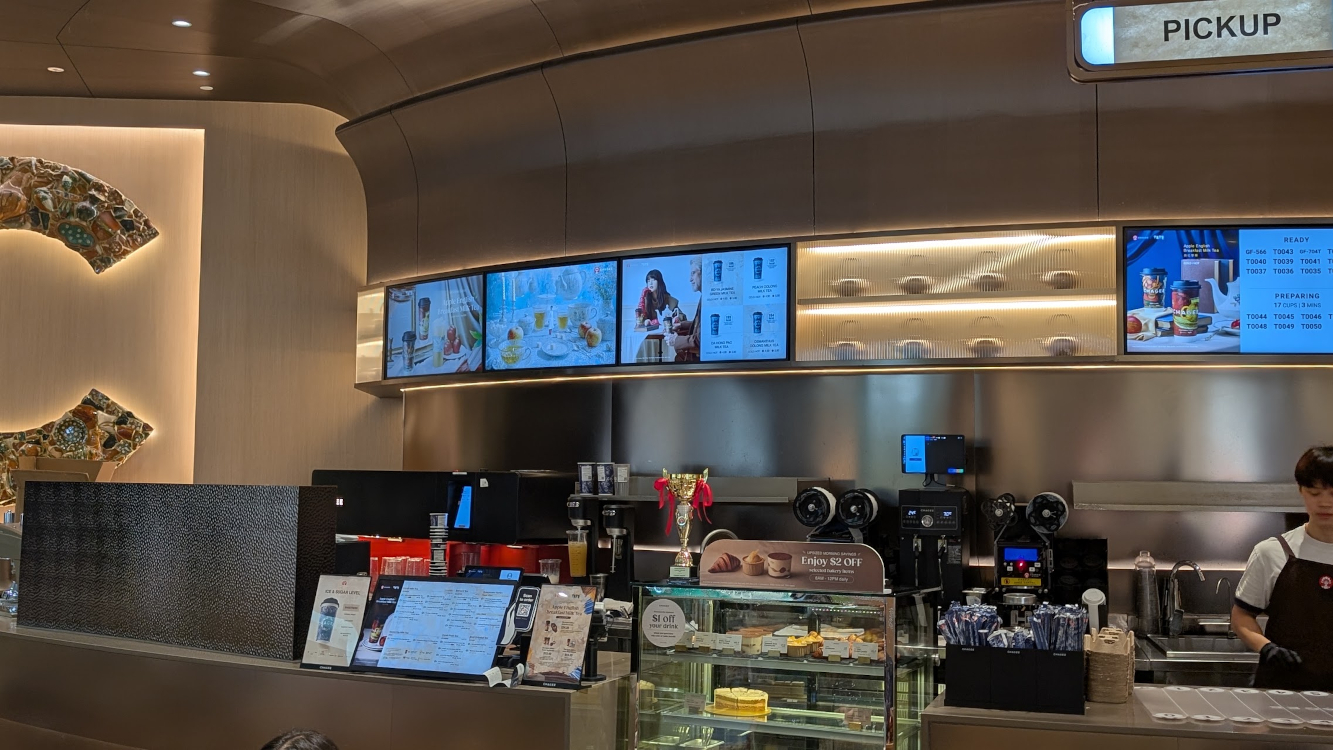
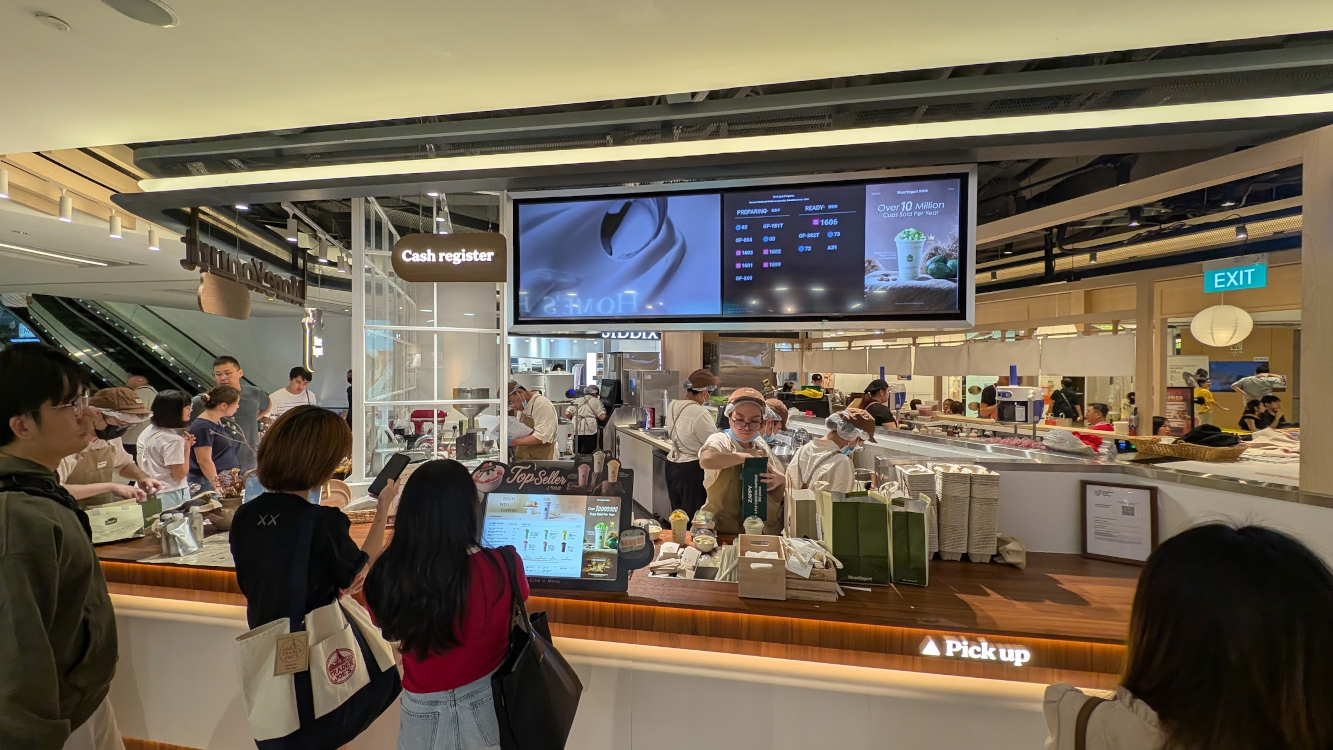
A particularly interesting development can already be observed across Asia. In addition to large ceiling-mounted displays, many QSR operators are introducing smaller digital menu screens directly on the counter beside the point of sale.
These displays target a different customer interaction. Positioned at eye level, they are particularly effective for younger consumers who expect digital touchpoints throughout the purchasing process. Counter-level screens support product discovery and consultation at the moment of purchase, while larger overhead displays increasingly focus on brand communication, promotional messaging, and inspiration.
This division of functions marks an important shift in menu board design.
The large suspended displays continue to deliver awareness and campaign visibility. Product details, pricing information, and nutritional content are increasingly migrated to screens closer to the transaction point, where customers can review information more comfortably.
Beyond the Standard Monitor
The hardware is evolving as well.
Many of the counter-based menu solutions appearing across Asia are no longer built around conventional commercial displays. Instead, manufacturers are introducing professional stretch-format displays and purpose-built countertop menu board screens designed specifically for foodservice environments.
These form factors allow operators to integrate digital signage more naturally into compact counters and service areas where space is limited. While still relatively uncommon in Europe and North America, such solutions are becoming increasingly visible in Asian markets.
Singapore as a Showcase
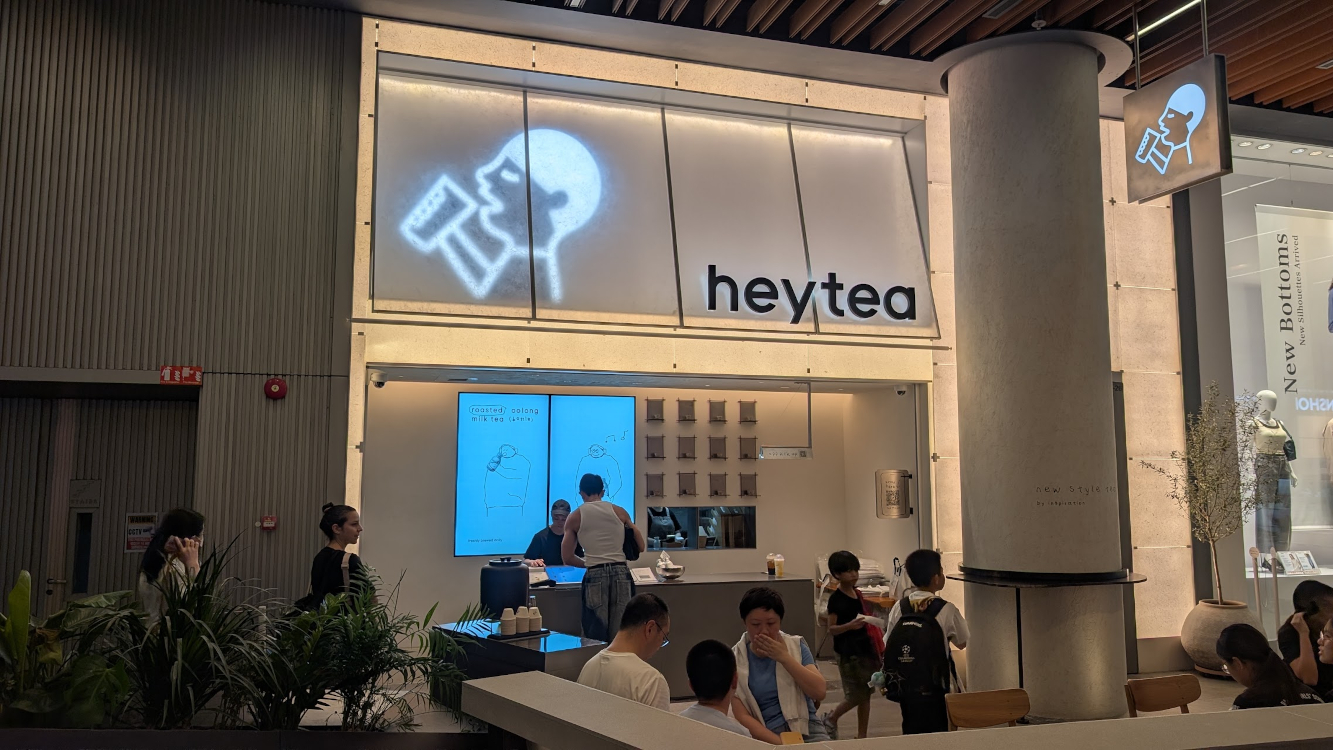
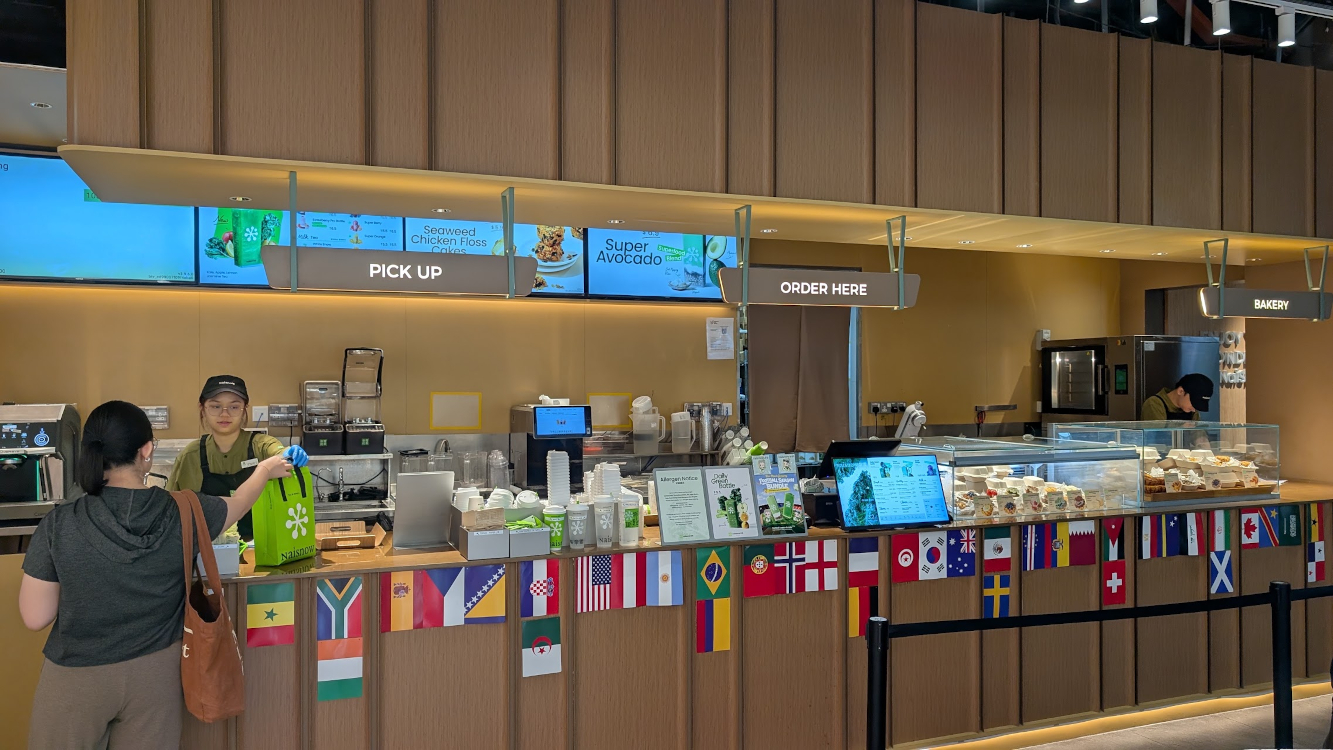
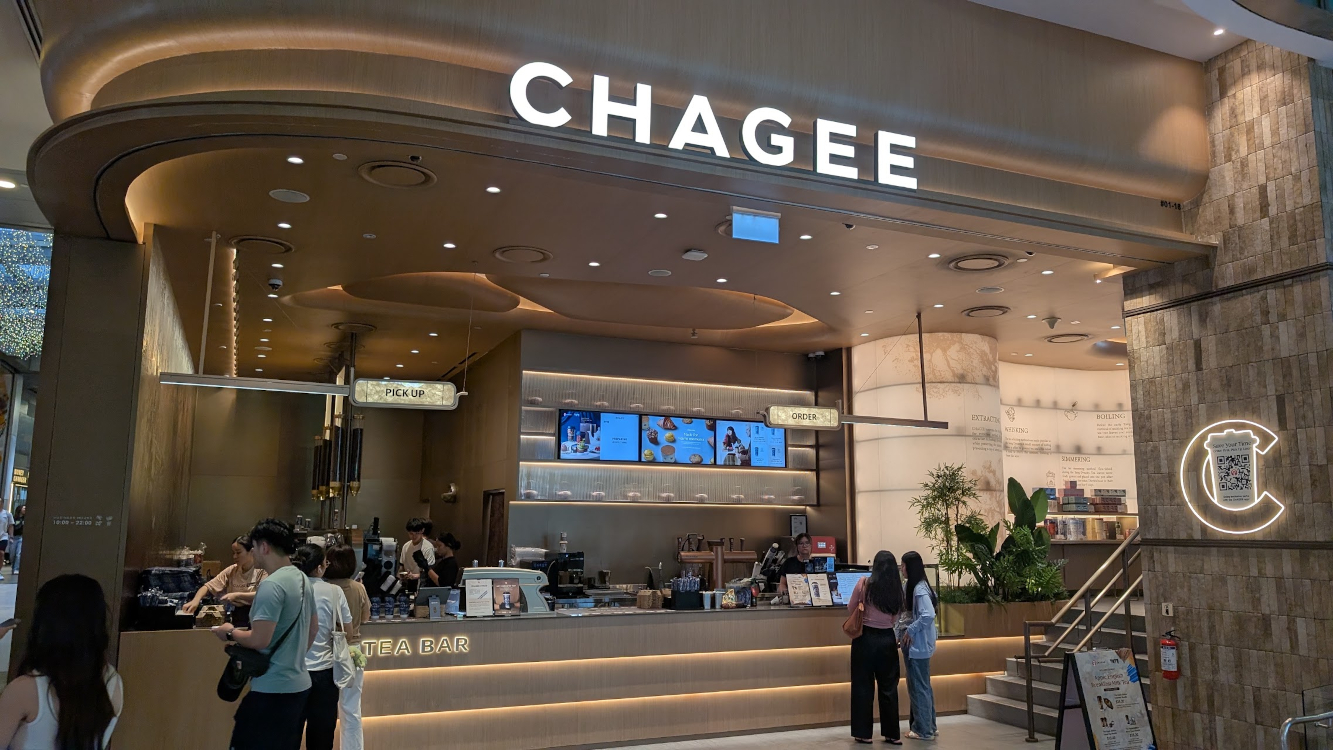
Singapore provides a particularly good snapshot of this emerging trend. Chinese milk tea chains are among the most active adopters, using a mix of large promotional displays and compact counter-level screens to create a layered customer experience.
What began as a strategy among fast-growing Asian beverage brands is now attracting attention from established global QSR operators. The underlying logic is compelling: if customers interact with menus differently than they did five years ago, the displays delivering those menus must evolve as well.
The next generation of digital menu boards is therefore not simply larger, brighter, or higher resolution. Instead, it is increasingly defined by placement, purpose, and customer context. As ordering journeys become more fragmented across apps, kiosks, drive-thrus, and counters, digital menu boards are becoming a network of specialized screens rather than a single display above the register.
Singapore’s latest deployments suggest that the future of QSR menu communication may not be hanging from the ceiling at all – it could be sitting directly on the counter.
Infobox: China’s Tea Giants Drive Digital Innovation
China’s tea chains are reshaping the global QSR landscape. Led by Mixue, the world’s largest foodservice chain by outlet count with more than 60,000 stores, Chinese beverage brands now operate networks that rival or surpass traditional fast-food giants. In comparison, McDonalds operates more than 45,000 stores while Starbucks approximately 41,000 stores.
Leading Tea & Beverage Chains
- Mixue – 60,000+ stores worldwide, including approximately 5,000 international locations across Southeast Asia, Australia, and North America.
- Guming – 10,000+ stores, with a strong presence in China’s lower-tier cities.
- Chagee – 7,400+ stores globally, rapidly expanding across Southeast Asia.
- Heytea – More than 3,900 stores, widely regarded as the pioneer of the premium cheese-tea segment.
- Nayuki – 1,500+ locations, combining premium tea concepts with in-store bakeries.
Why it matters for digital signage
Many of these fast-growing chains are digital-native brands that rely heavily on self-ordering, mobile apps and sophisticated digital menu board concepts. As they expand internationally, they are becoming key drivers of new DMB formats, including counter-top displays, stretch screens and multi-screen customer journeys.
- DooH in Elevators: Vertical City Reaches 10,000 Elevator Screens
- DPAA Summit: American Eagle And Expedia CMOs To Discuss Real-World Connections
- Bstore Australia: Shoes, Screens and a Software Upgrade
- Mobile OoH: Seedtag Sends Robots Through Manhattan In Ad Campaign
- Retail Media: Walmart Connect Takes Streaming Ads Beyond Its Supplier Base