
Bangkok | Self-order kiosks have become a cornerstone of the quick-service restaurant (QSR) industry. The hardware is mature, the workflows are highly standardized, and customer interaction is typically limited to touchscreen inputs. At Infocomm Asia 2026, however, Faytech China, 99Sensors, and Napster are showcasing their vision of the next generation Kiosk: an AI-powered order kiosk that replaces touch-based interactions with natural conversation.
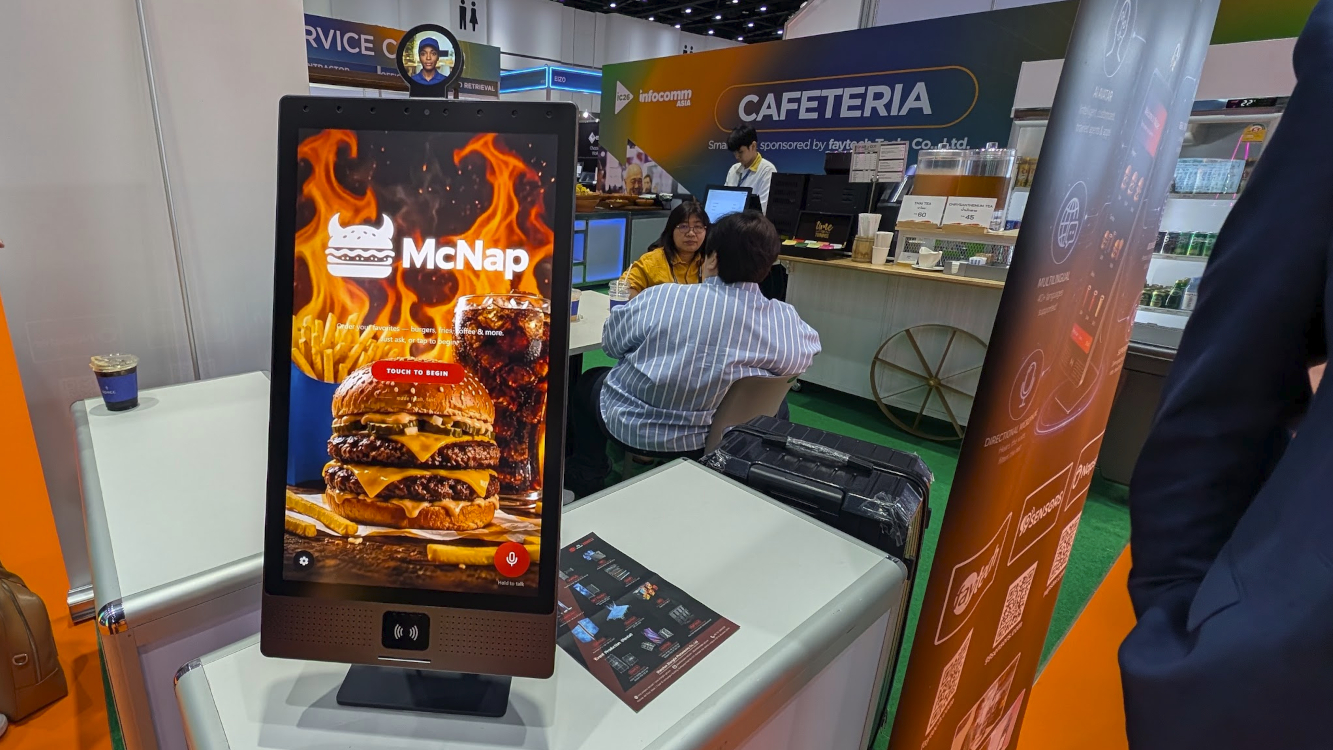
Infocomm Asia 2026: The Kiosk That Can Do It All
The concept is built around a multilingual AI agent capable of conducting ordering dialogues in more than 40 languages. Instead of navigating through menus and submenus, customers can simply speak to the kiosk as they would to a human employee. The system interprets requests, asks follow-up questions and guides users through the ordering process.
A key enabler is audio technology. Faytech integrates an array of directional microphones directly into the kiosk bezel, allowing multiple terminals to operate side by side without interfering with each other. In busy QSR environments, reliable voice capture remains one of the biggest hurdles for conversational interfaces.
For demonstration purposes in Bangkok, the solution includes a Digital Human displayed on a separate circular 3D screen. The animated avatar serves as the visual face of the AI assistant and attracts considerable attention on the exhibition floor. While visually impressive, the additional display concept may prove difficult to justify in cost-sensitive restaurant deployments, where practicality and throughput remain the primary decision factors.
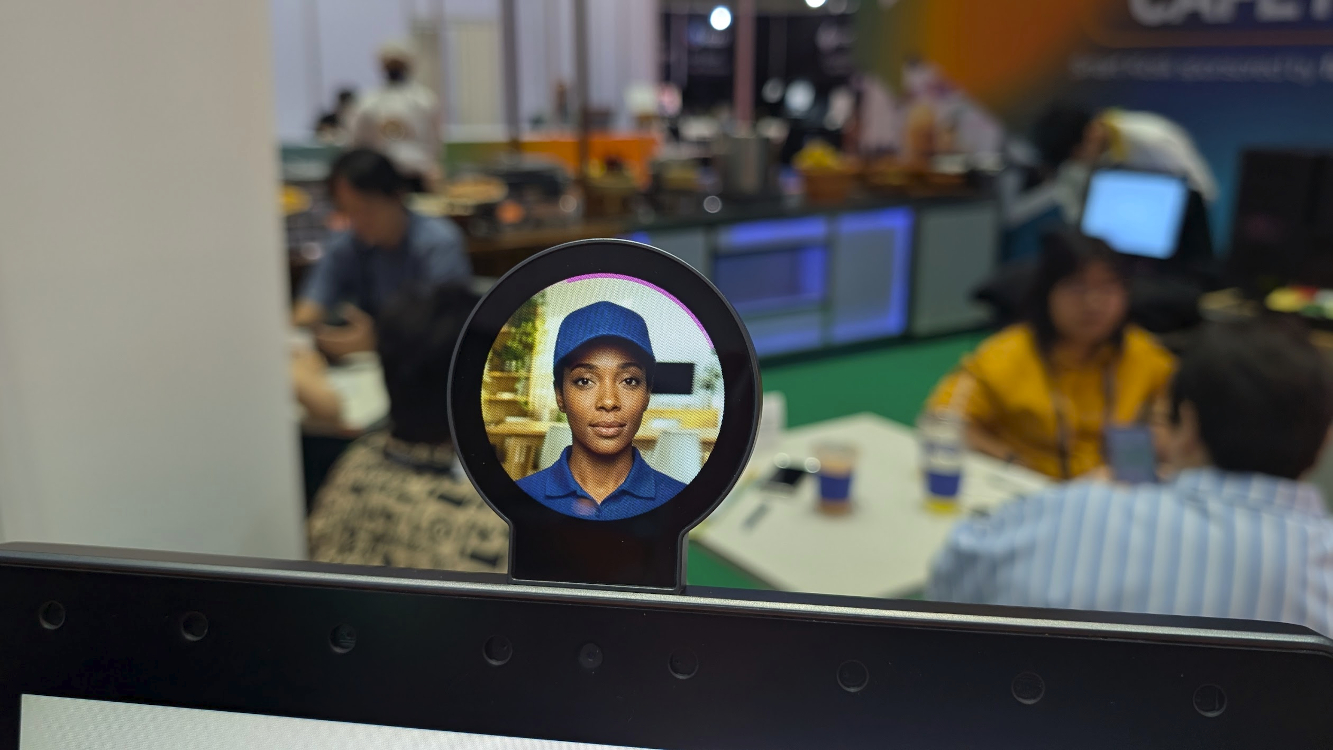
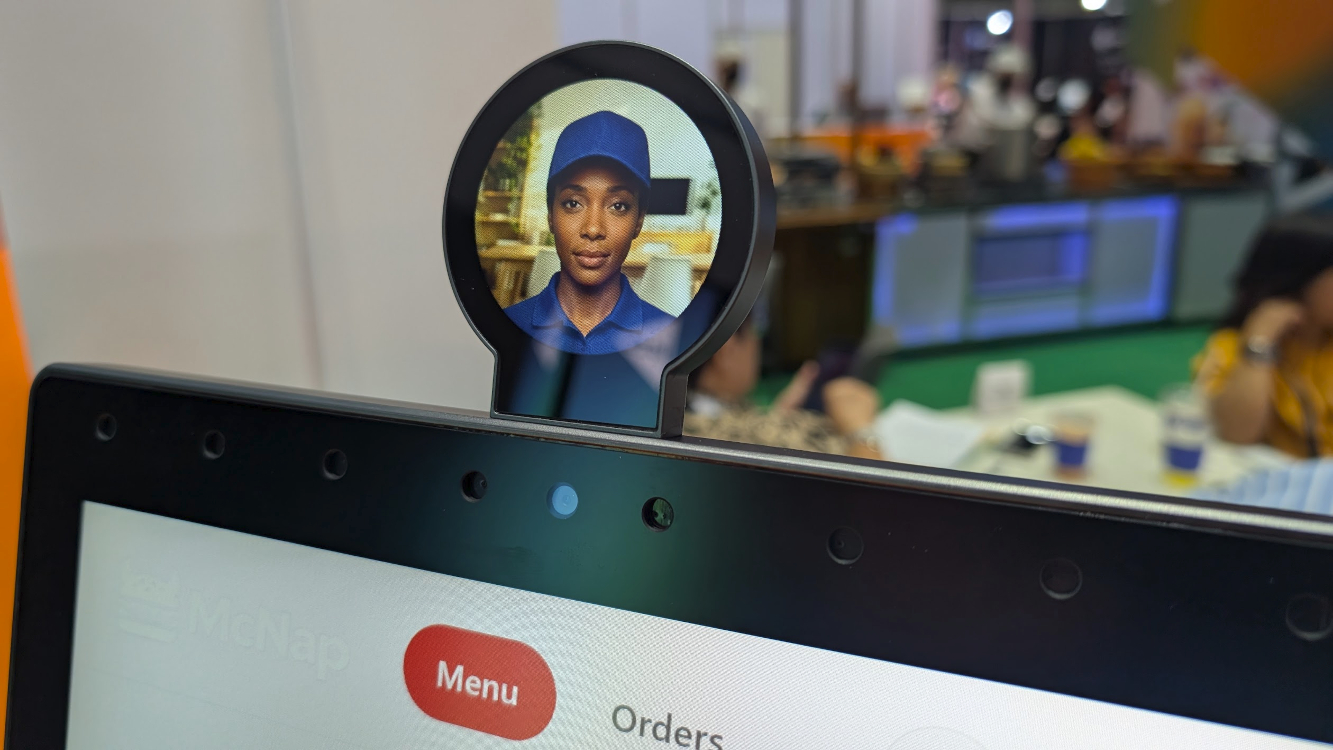
Behind the Digital Human are cloud-based frontier AI models that process conversations and generate responses in real time. According to the companies, an edge AI version is expected within the coming weeks. Running AI locally would reduce dependency on mobile networks and AI tokens while potentially lowering operating costs and improving reliability.
The project brings together several industry players. Faytech International China, formerly associated with the German kiosk specialist Pyramid/Faytech, contributes its expertise in kiosk systems and outdoor displays. Technology partners include 99Sensors, led by Florian Bogeschdorfer, and Napster, which has evolved from its origins as a pioneering MP3 platform into an AI agent platform.
While touchscreen ordering is unlikely to disappear anytime soon, the Bangkok showcase demonstrates that conversational AI is beginning to enter the mainstream kiosk market. If voice interaction can deliver faster service, lower friction and reliable operation in noisy restaurant environments, the self-order kiosk may soon become less of a machine – and more of a digital employee.
- Projection Mapping: Factory International Makes The Case For Projection In Immersive Art
- DooH Campaigns: Channel Outdoor And Outfront Join Breast Cancer Awareness Campaign
- Research: Store Locator Boosts DooH Performance
- From Audience Analytics to Audience Simulation
- Times Square and Piccadilly: Samsung’s Global SSD Campaign