
Johannesburg | KFC is testing a new flagship concept near Johannesburg airport that combines large-format outdoor LED, table service, and transparent OLED self-order kiosks. The result is one of the most unusual QSR digital signage concepts in Africa - innovative inside, highly visible outside, and with clear rollout potential.
KFC: Drive-Thru Meets Wow
With more 1,500 restaurants in 22 sub-Saharan countries, KFC is one of the continent’s QSR heavyweights. Most locations are operated in South Africa, but expansion continues across the region. The Yum! Brands subsidiary regularly tests new formats and adapts its restaurants to local market requirements. For the opening of a new KFC flagship near Johannesburg airport, invidis visited the suburban location.
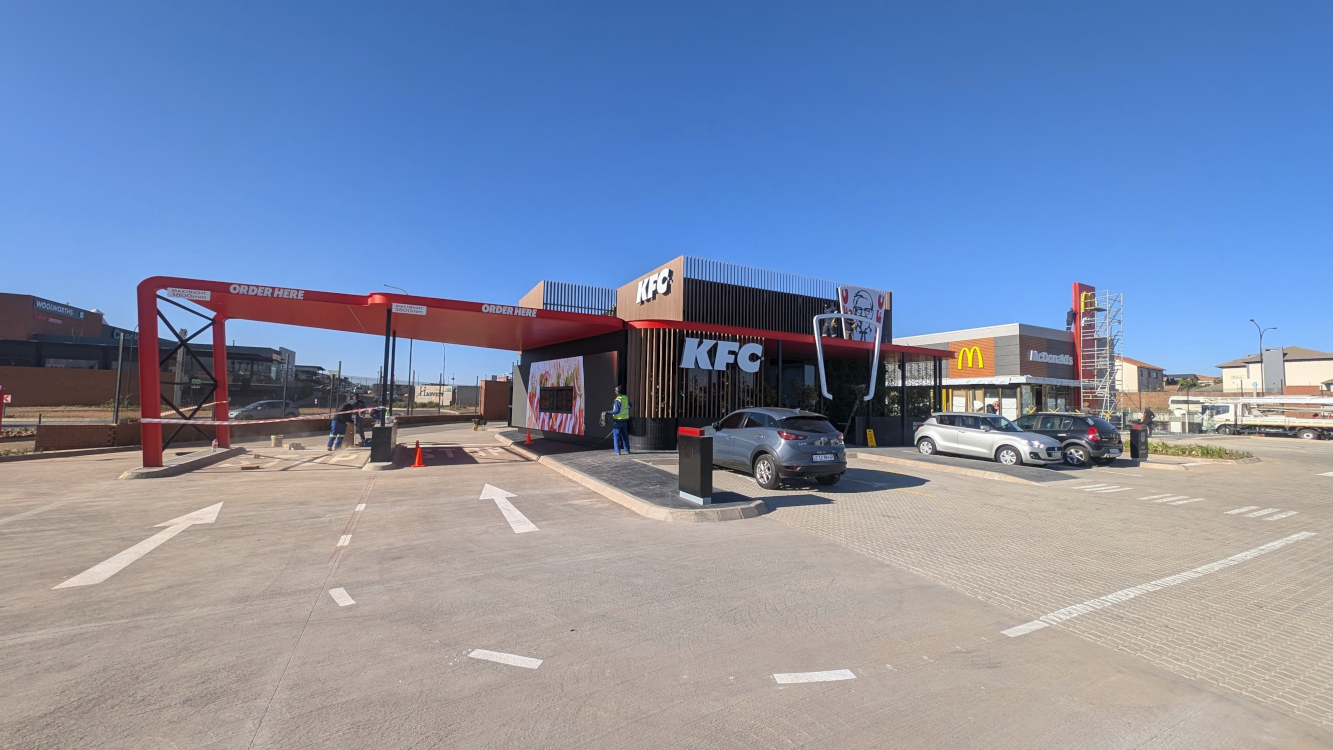
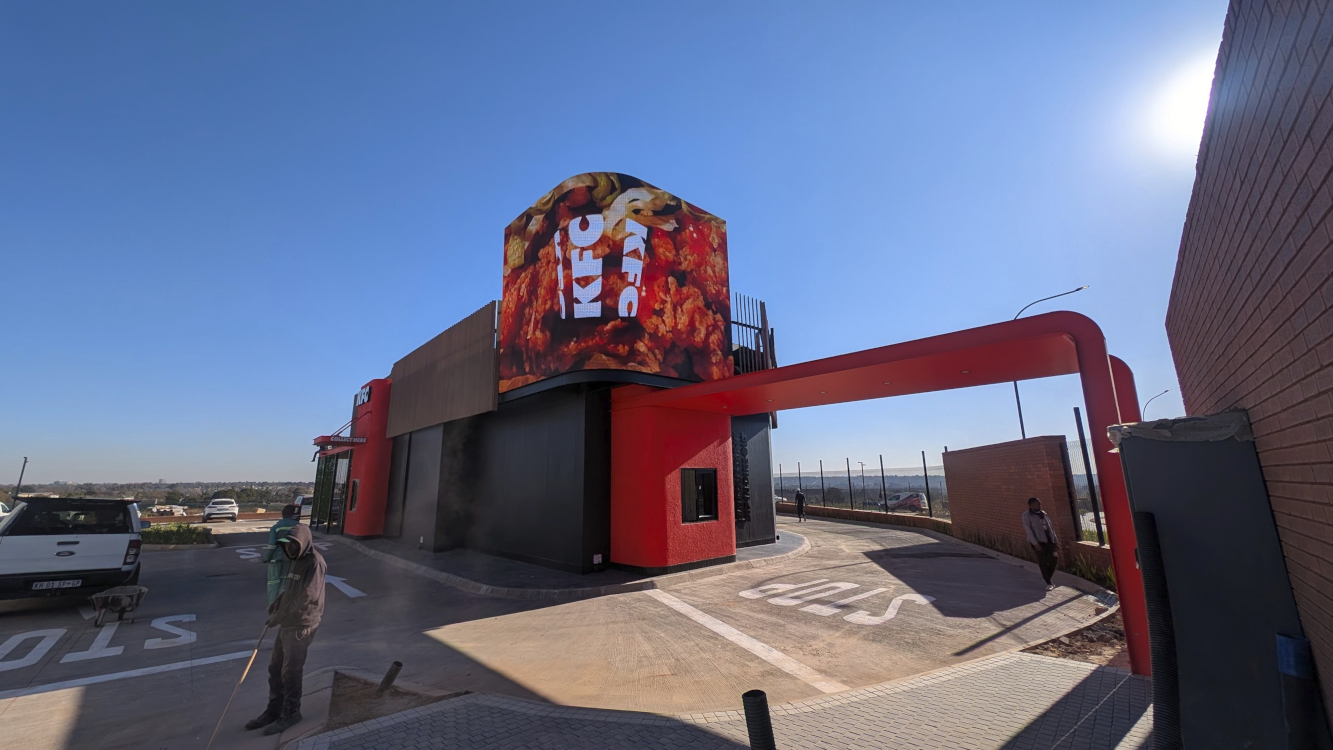
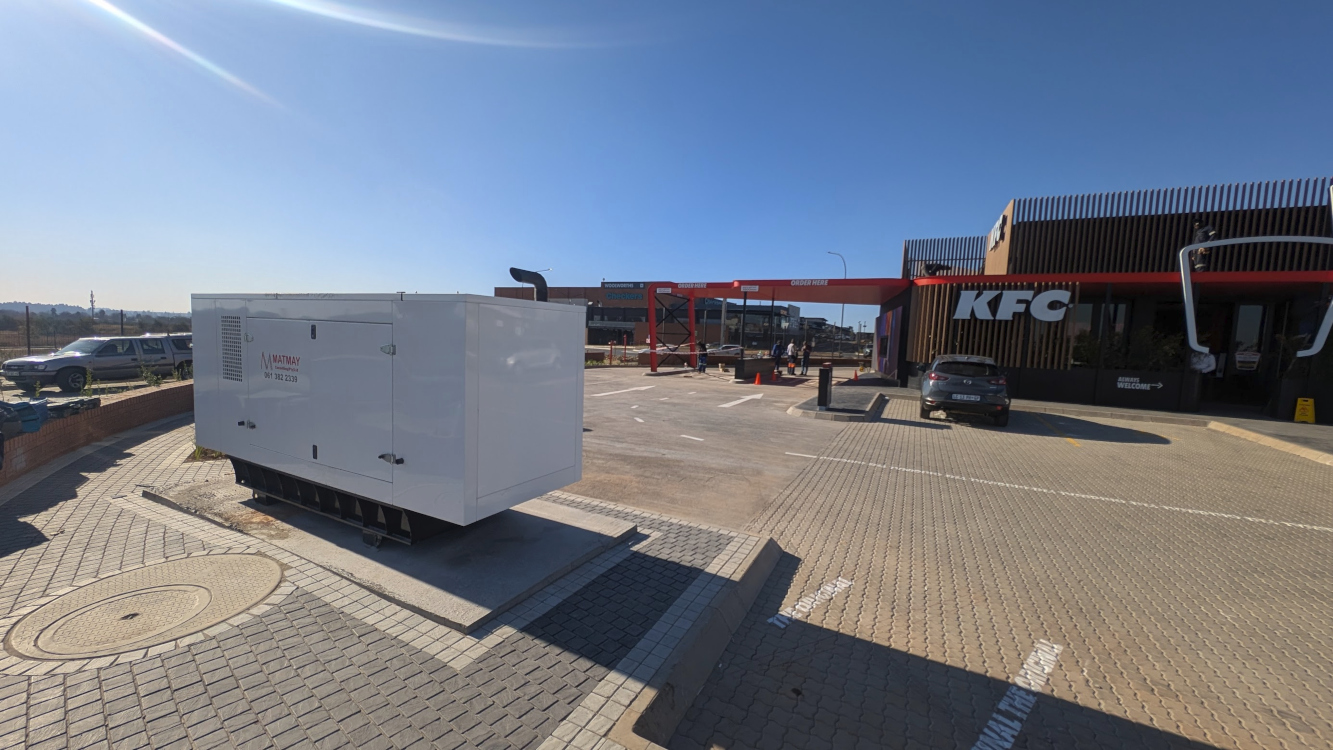
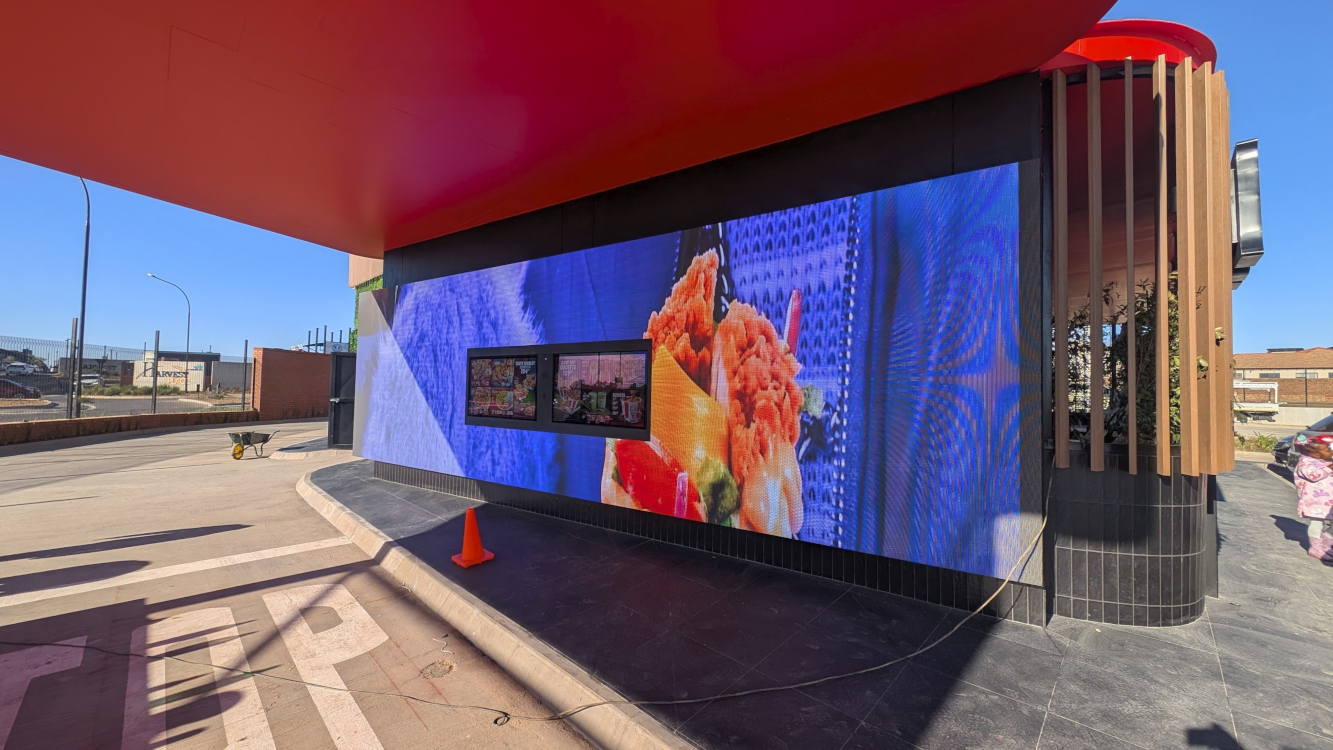
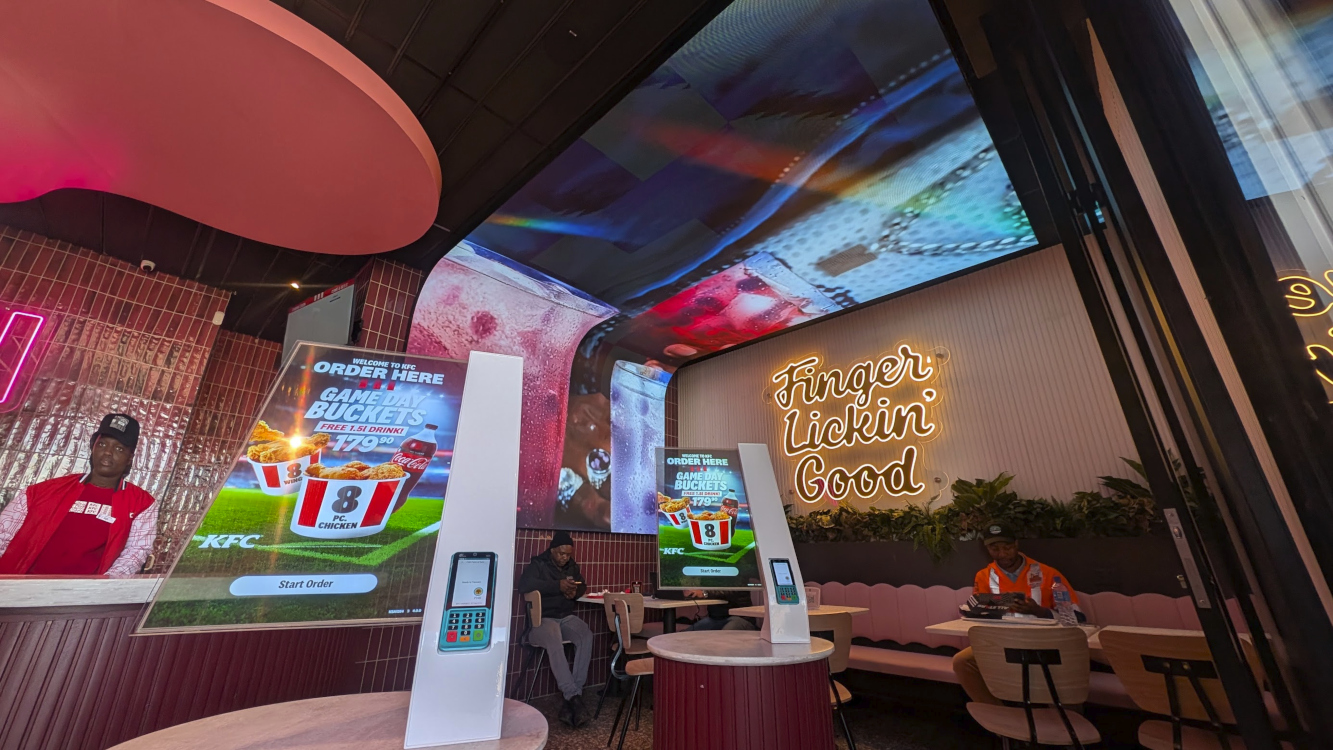
Drive-thru meets table service: KFC is bringing large-format outdoor LED to the order lane, turning the drive-thru order process into a highly visible brand experience. Inside the restaurant, guests encounter an equally unusual setup: instead of standard kiosk hardware, KFC has installed transparent self-order terminals and a room-defining LED screen.
The new restaurant concept is optimized for suburban locations and supports parallel drive-thru ordering in front of a wall-sized LED installation with integrated Samsung OH high-brightness menu boards. Positioned on a hill, the LED façade is visible from a distance. Facing the main road, a semi-circular LED screen on the roof adds another strong visual landmark. At the opening, the drive-thru was not yet fully operational.
The standout feature – and most likely a global first – is the self-order kiosk concept developed in South Africa by PDT, based on transparent OLED technology. The transparent OLEDs appear to float freely on three sides and are mounted on a robust yet flexible touch carrier; the payment terminal is integrated into the support structure. The LG transparent OLEDs are surprisingly bright and responsive, so the transparency does not interfere with the ordering process.
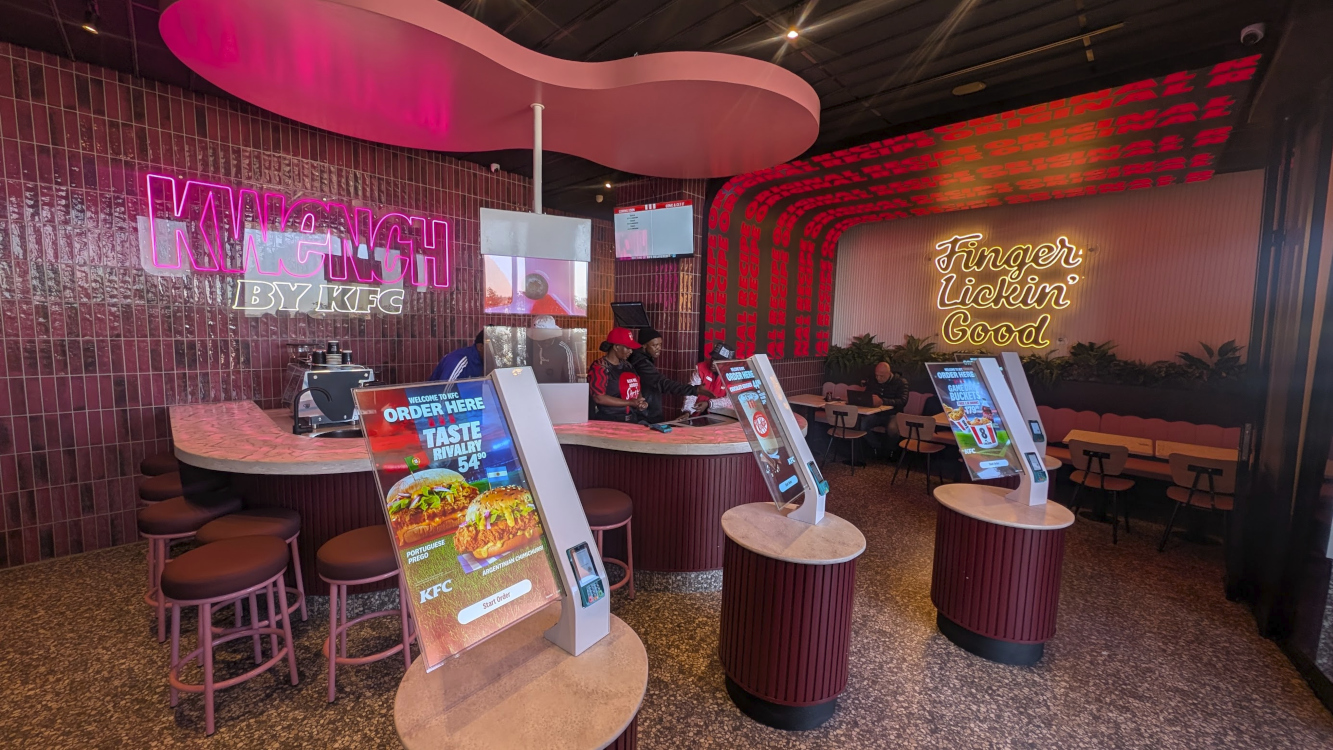
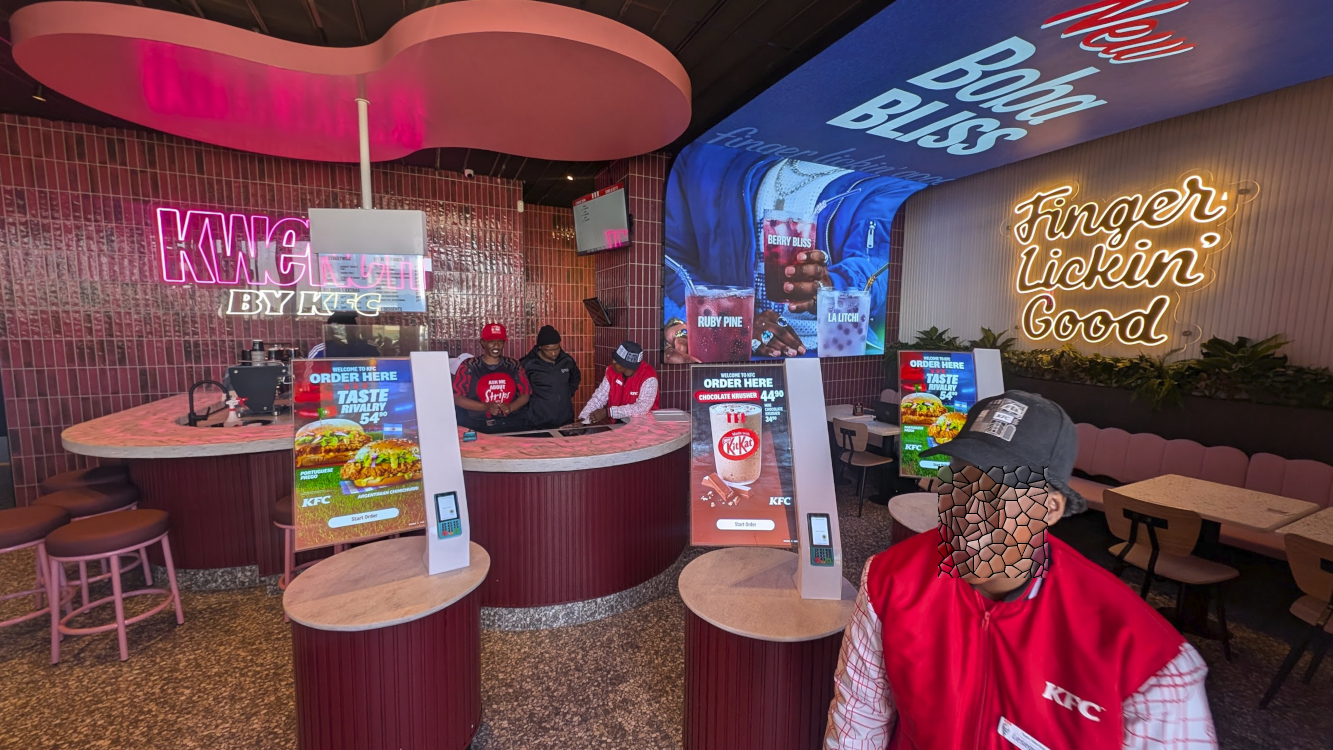
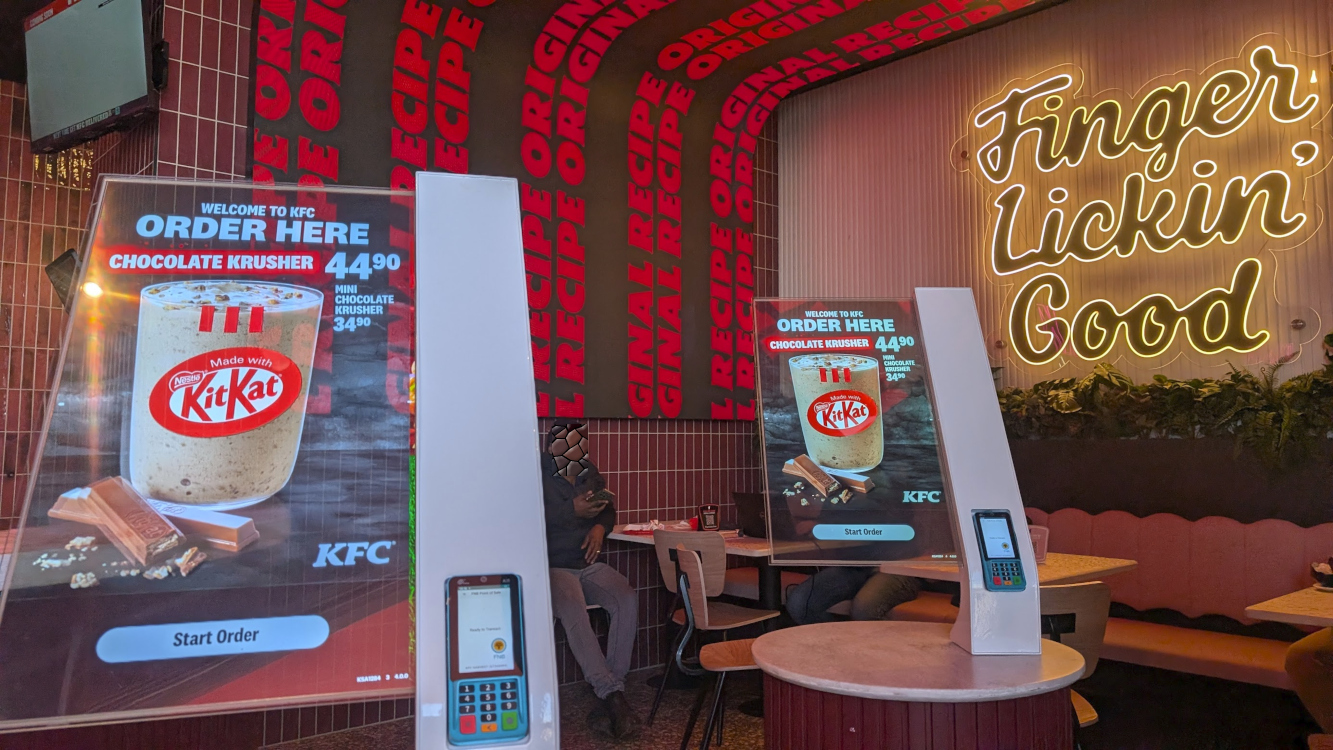
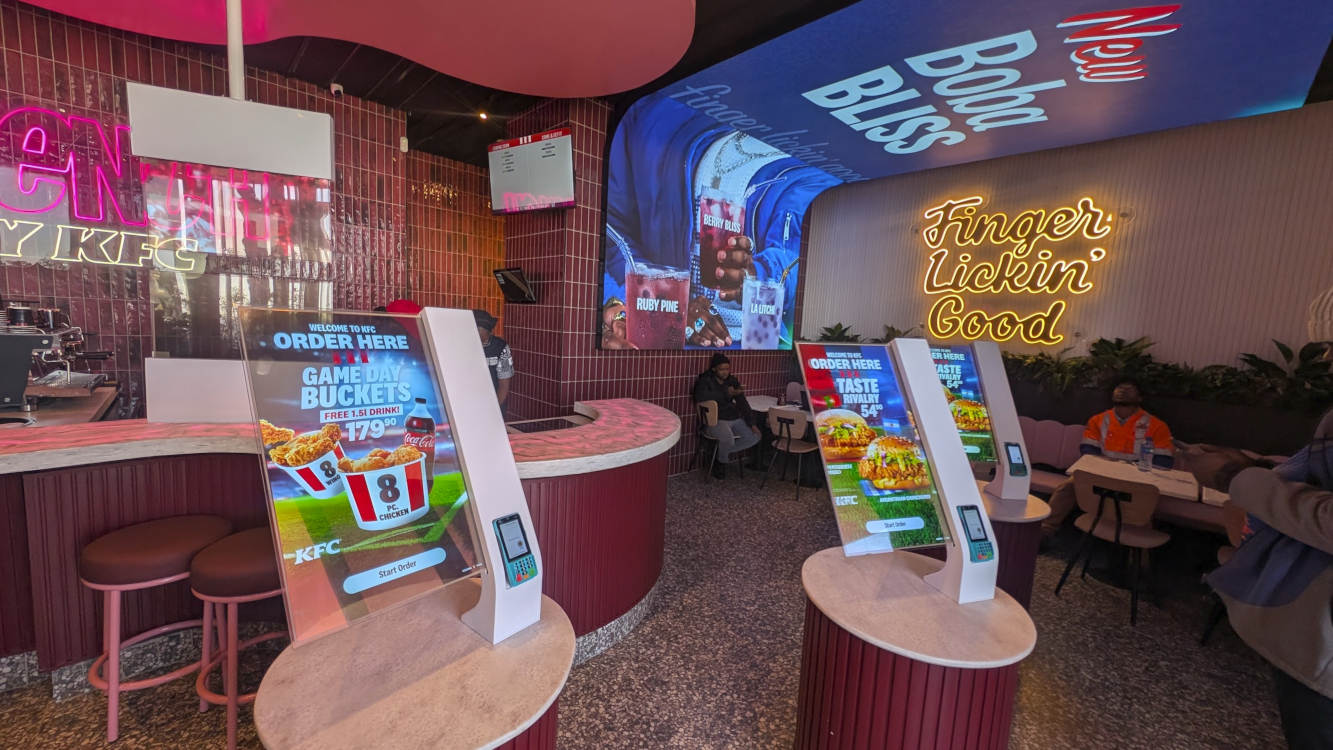
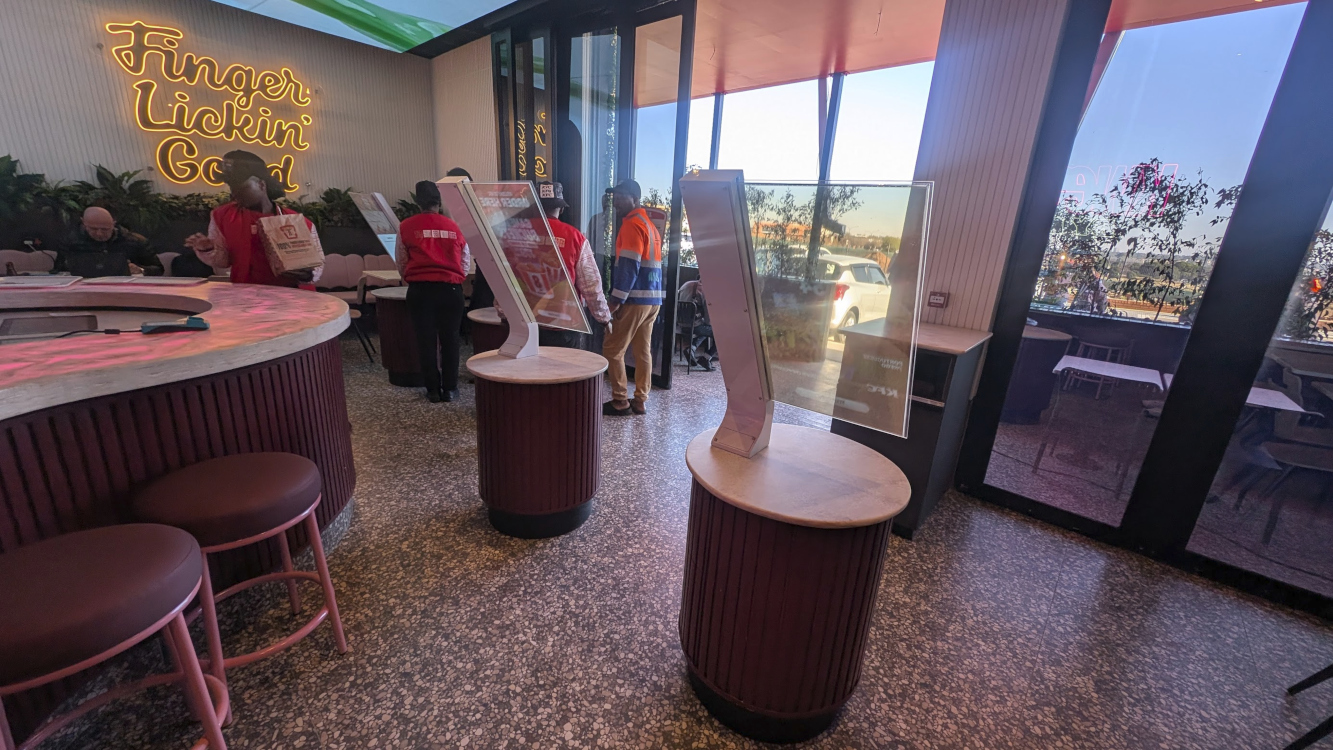
On the contrary: as the order terminals are positioned as islands in the middle of the room, the transparent screens keep the view across the restaurant open. KFC is focusing on table service at this location – the restaurant, including its bar area, is not primarily designed for self-collection. The idea of using transparent screens for digital menu boards, however, did not convince on opening day. In this case, classic displays would be preferable – or the menu boards could be omitted altogether.
That is because the menu boards are not really essential: staff assist and advise guests at the terminals and then serve the orders at the table. The visual highlight inside is a large LED wall installation that brings color, movement, and experience into the space. Together with the 1960s diner look in pastel colors and plenty of greenery, the restaurant offers a surprisingly pleasant dwell-time quality for a QSR environment.
In the highly competitive African QSR market, the new KFC concept delivers an innovative guest experience – both in the drive-thru and inside the restaurant. Right next door, a traditional McDonald’s is opening, which compared to KFC appears conventional and much less inviting.
In South Africa, the new KFC metropolitan concept should have a strong chance of being rolled out further. From a digital signage perspective, that would be welcome: the transparent order kiosks are genuinely innovative. For menu boards, however, KFC should stick with standard displays.
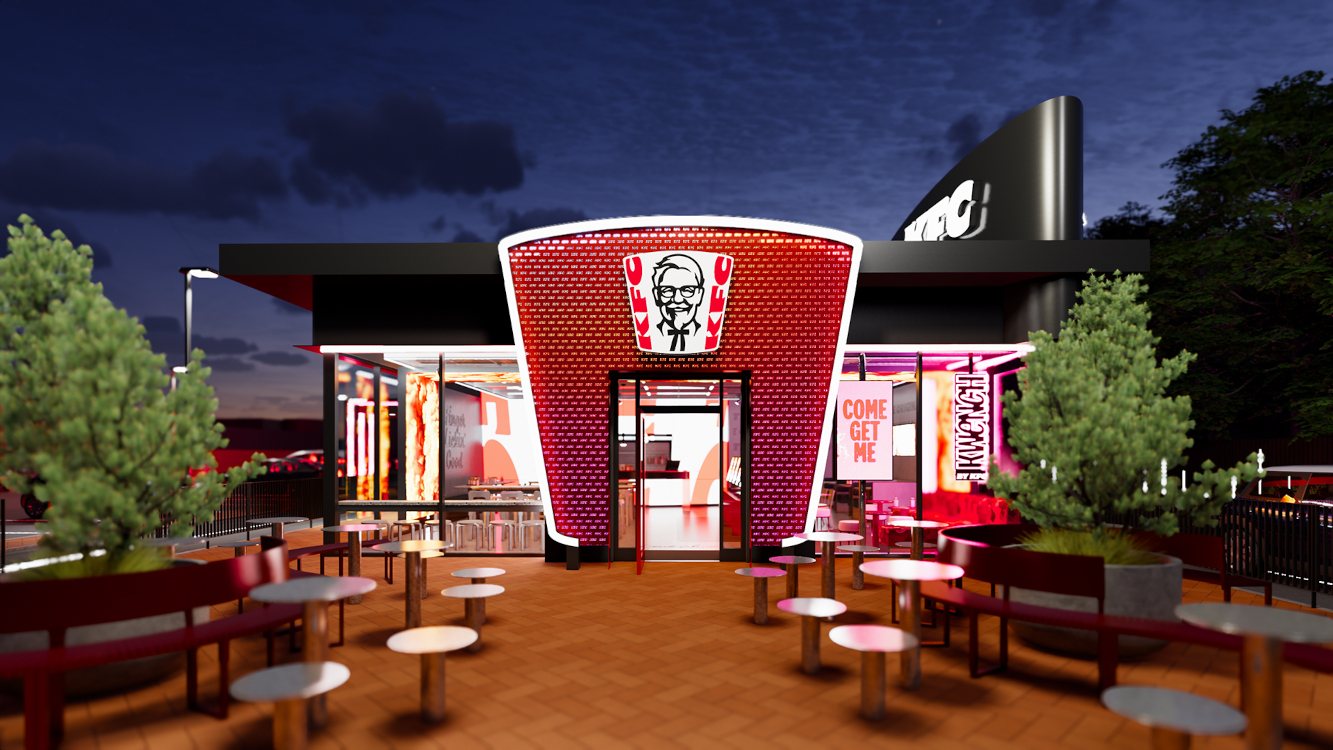
KFC rolls out new Restaurant Design
The Joburg concept is just one of many initiative of a brand refresh. The KFC restaurant experience is supposed feel different. The brand is set to open a “new generation of spaces designed for hospitality, not just efficiency – with environments that feel more dynamic and adapt throughout the day to meet different occasions. These next-gen restaurants are designed to elevate the dining experience and bring KFC’s signature hospitality to life, taking shape across key markets through distinct new formats.”
The first newly designed spaces include an open-concept design in McKinney, Texas, reinterpreting the brand’s heritage with modern energy, expected to open late summer and a fully immersive, two-story restaurant in Dubai, showcasing one of the boldest expressions of the brand’s next-generation design, opening in the fall.
- Hospitality Displays: Samsung’s The Frame Hospitality TV Now Available In The US
- India: Kramer Creates Flexible Meeting Spaces for Sailpoint
- US$18 Million Cost-Cutting Plan: Daktronics to Close Ireland Factory
- Sphere Abu Dhabi: Blue Rhine Wins Exosphere Installation Contract
- Joan Interview: From E-Paper Pioneer to Workplace Platform