
Seven displays, identical conditions, no brand logos: At a shootout in Cologne, Cancom put leading professional display brands head-to-head. The key takeaway: Anyone selecting displays based solely on specification sheets may overlook critical differences that only become apparent in real-world use.
Display Shootout: Why Spec Sheets Alone Are Not Enough
Which professional display is the best? Manufacturer data sheets only provide part of the answer. That was the central lesson from a display shootout that Germany’s largest digital signage integrator Cancom hosted in Cologne at the end of June together with more than 20 enterprise customers.
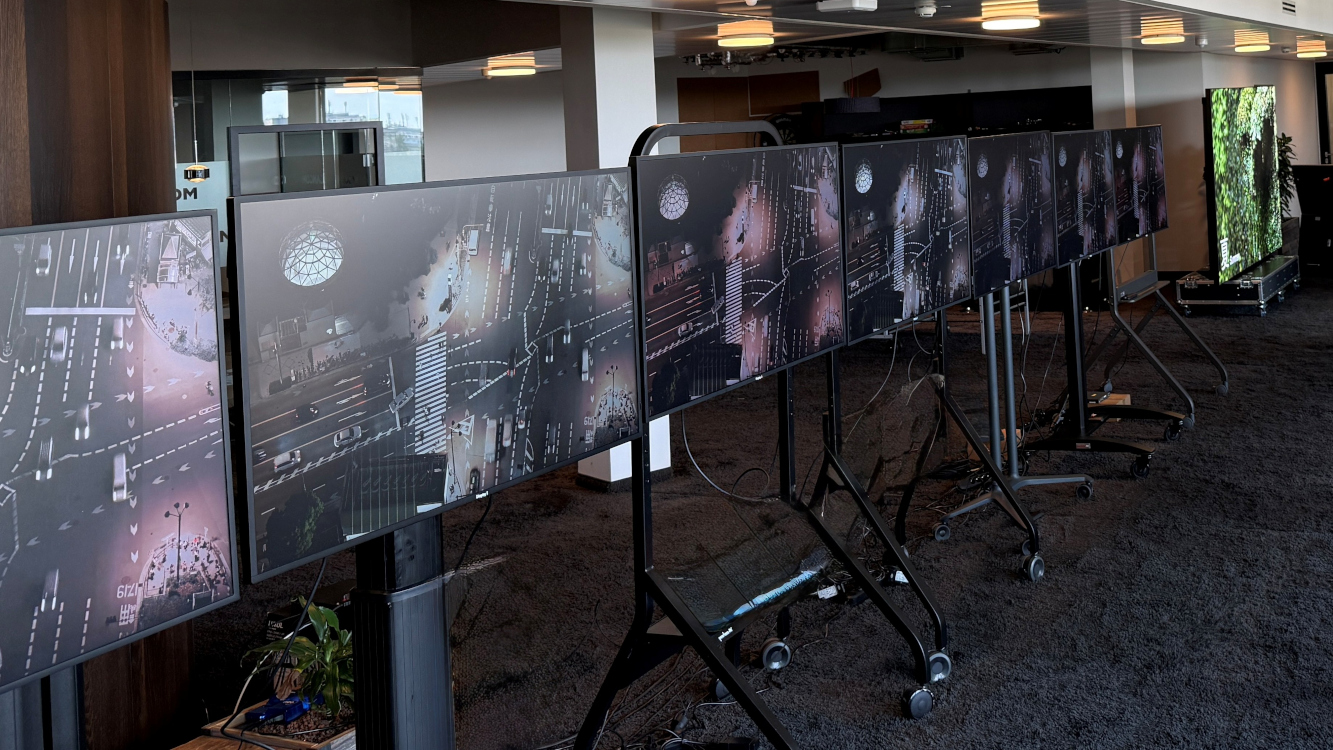
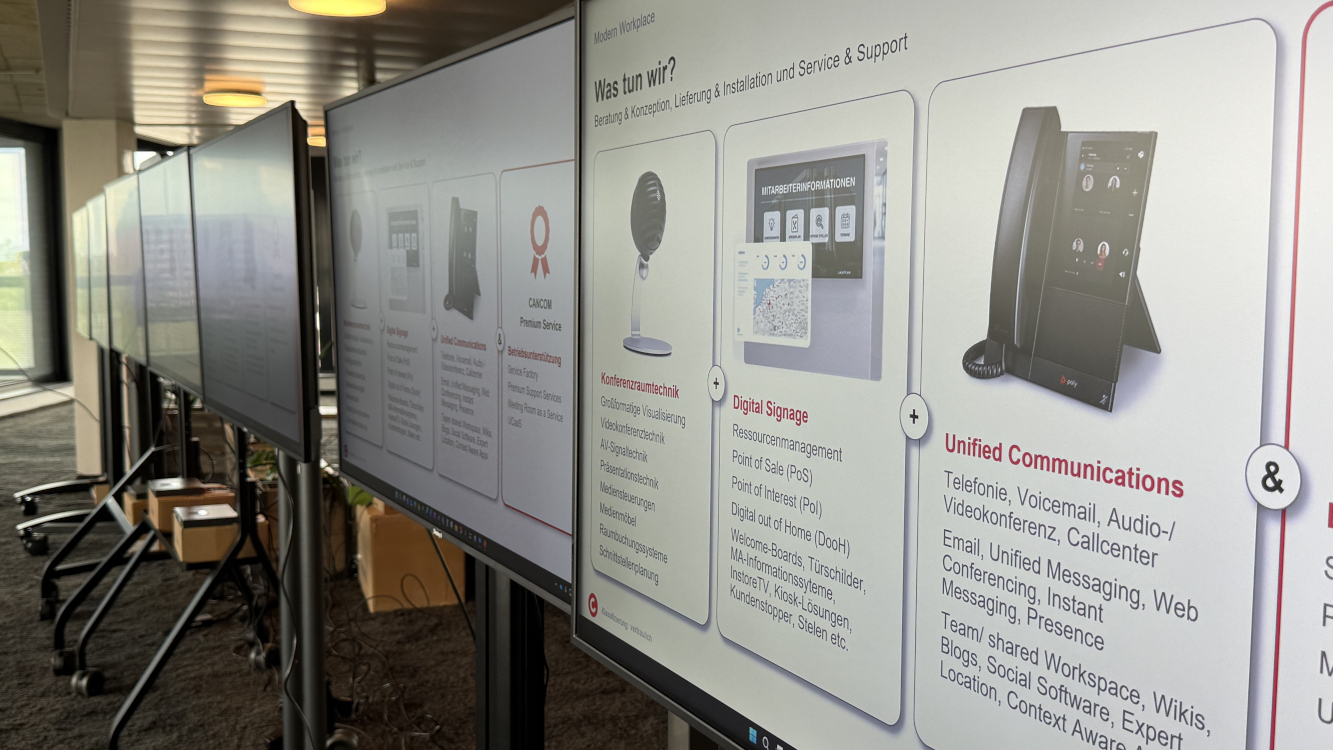
Seven 55-inch displays from Samsung, Philips, Sony, Iiyama, LG, Hisense and Sharp were installed side by side under identical conditions. All screens received the same content, the same settings and the same input signal. To eliminate brand bias, the displays were presented anonymously.
The most important finding from the two-day event was that even products with comparable technical specifications can reveal meaningful differences when evaluated side by side.

Blind Testing Instead of Brand Perception
In many projects, display selection is still largely based on specification sheets, manufacturer demonstrations or longstanding brand preferences. The Cologne shootout deliberately took a different approach.
The anonymous setup allowed participants to assess image quality without knowing which manufacturer they were looking at. Key evaluation criteria included colour reproduction, visual impact, motion performance and suitability for specific applications.
For many attendees, the exercise demonstrated that technical specifications describe only part of a display’s real-world performance. How well a screen performs in practice often depends on the content being shown, ambient lighting conditions and the specific requirements of the project.
Real Customer Content Beats the Spec Sheet
That is precisely where the value of such comparison tests lies. Two displays may offer nearly identical specifications on paper in terms of brightness, resolution or operating life, yet still deliver noticeably different viewing experiences.
From Cancom’s perspective, the shootout confirmed a lesson many integrators have learned through practical project experience: the final display selection should be based on direct comparisons using real customer content whenever possible—not on specifications alone.
Particularly in larger rollouts, differences in perceived image quality, energy consumption and overall user experience can become significant, even if those differences are not immediately obvious from technical data sheets.
Energy Efficiency as an Additional Evaluation Criterion
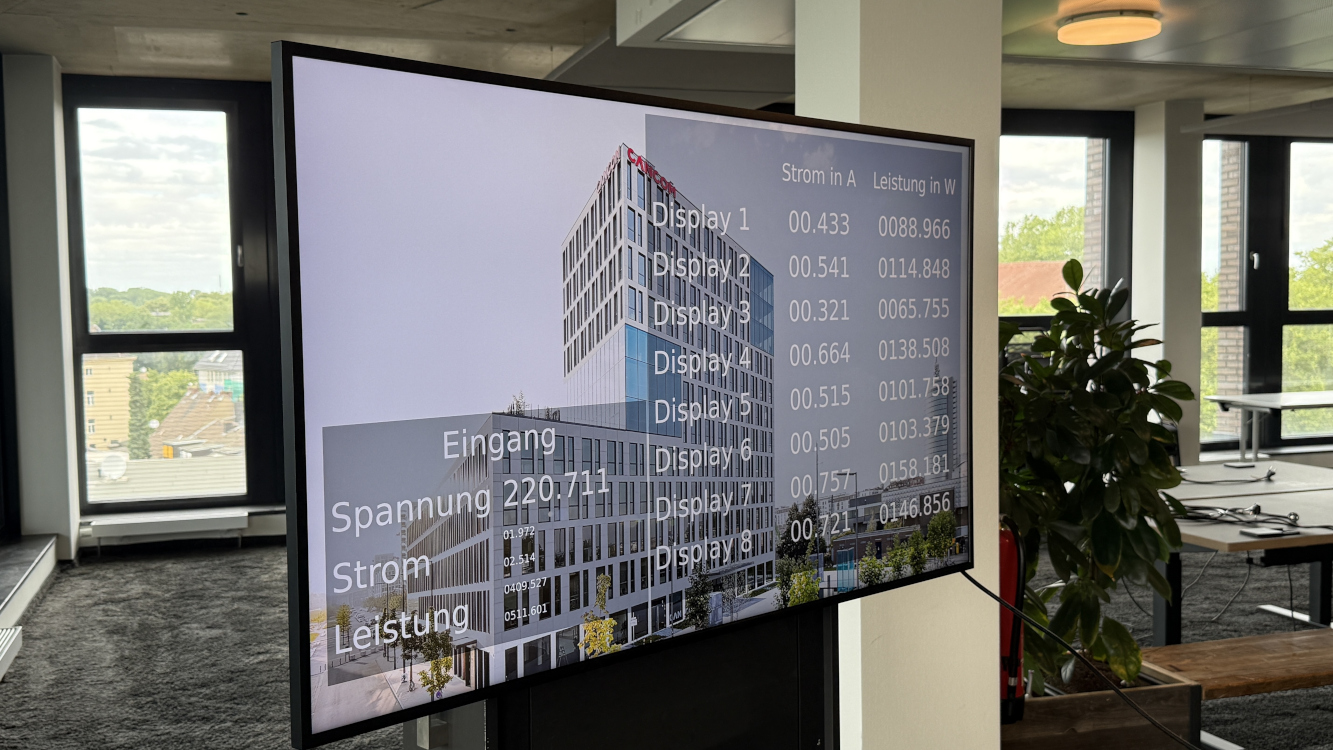
Image quality was not the only area under scrutiny. Energy consumption also played a prominent role throughout the event. Using a combination of Nexmosphere sensors and BrightSign media players, the actual power consumption of each display was monitored and visualised in real time.
This brought another increasingly important factor to the forefront of purchasing decisions: long-term operating costs. Rather than relying exclusively on manufacturer claims, participants were able to compare real power consumption under identical operating conditions.
A Comparison on a Level Playing Field
An AV-over-IP infrastructure provided by Extron ensured identical signal quality across all displays, while Peerless-AV supplied the mounting solutions used for the installation.
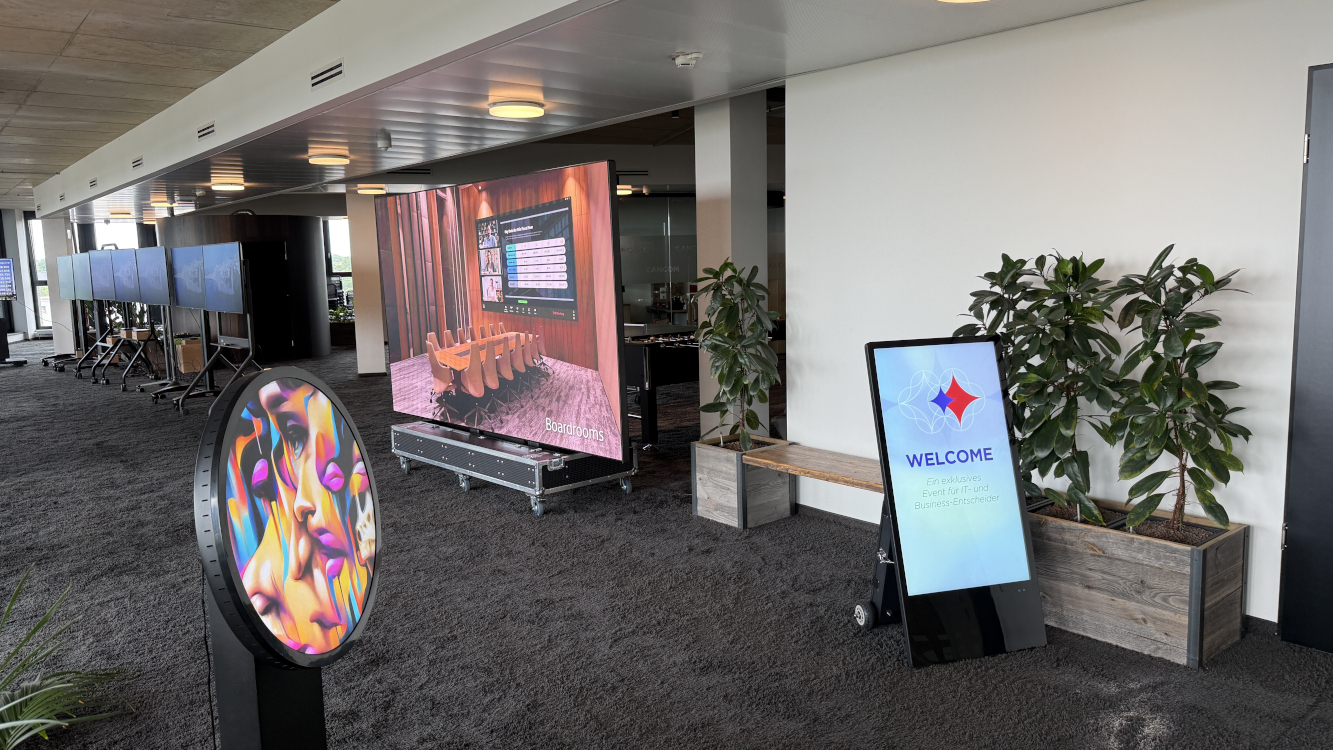
In addition to the shootout itself, technology partners showcased several other innovations, including Sony’s 138-inch S-Series COB LED display, Samsung’s e-paper solution, a round display from Bluefin and a range of technologies for content creation and mobile signage applications.
The Real Lesson from the Shootout
Ultimately, the most interesting aspect of the event was not which manufacturer performed best. No official ranking was published.
The more important conclusion was that professional display selection cannot be based reliably on specification sheets alone. Organisations looking to minimise risk in their investment decisions should evaluate displays under real conditions using their own content whenever possible.
Because in the end, it is not the specification on paper that matters most—it is the display’s performance in the intended environment.