
Las Vegas | Just a few hours to go before Infocomm opens its doors. What will define this year’s show? The fallout from Stratacache, big promises - and still limited substance - around AI in digital signage, and the ongoing question about Infocomm’s future relevance. invidis looks ahead to the topics shaping the days to come.
Infocomm 2026: The Post-Stratacache Era Begins in Vegas
A ten-hour transatlantic flight humbles even the most seasoned traveler. Greenland, seen from above, remains a highlight every time (with the quiet hope that neither Greenland nor Canada will be “annexed” anytime soon), while recurring satellite dropouts over the Atlantic strengthen the wish for faster Starlink rollouts. Beyond the routine of travel, however, thoughts turn to the days ahead: What will Infocomm deliver this year? What’s truly new? Who will surprise – and who will disappoint?
Fewer giants, more challengers
Some visitors may be disappointed to find that neither Samsung nor Sharp will have their own booth presence at Infocomm. A small consolation: LG returns with a proper booth after a year’s absence, albeit on a smaller scale than in the past.
Meanwhile, the growing presence of Chinese manufacturers is impossible to ignore. Vendors such as TCL, Hisense, and others are stepping up their visibility—despite an increasingly complex geopolitical environment. Their momentum continues, especially in price-sensitive segments.
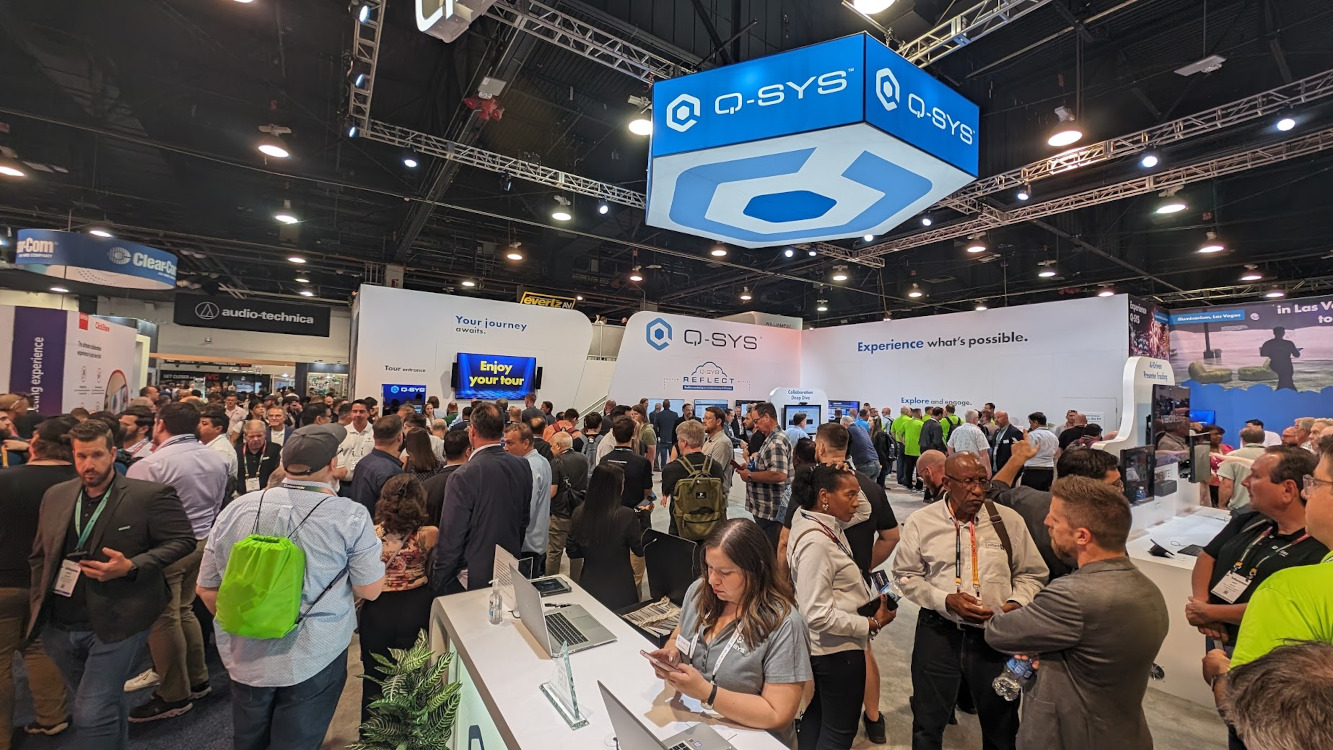
Even though exhibiting at Infocomm – alongside ISE – remains one of the most expensive marketing investments of the year, the show is still unmatched for channel access in North America. In 2025, 30,998 verified visitors attended across 400,100 square feet of exhibition space. Similar numbers are expected this year – despite continued travel frictions and the parallel draw of the Fifa World Cup.
Speaking of soccer/football: organisers have catered to European and South American attendees by streaming matches live on a large LED wall – ensuring that even in Las Vegas, no one misses their national team’s performance.
The Stratacache shockwave
Now to the defining topic of Infocomm 2026 – at least through the lens of the invidis crystal ball: Stratacache.
For the past two months, hardly any other topic has dominated industry conversations. Tariffs have faded into the background – replaced by speculation over which players might acquire parts of the struggling Stratacache empire.
Vertiseit’s acquisition of Scala sent a strong signal. Since then, integrators have turned their attention toward Stratacache’s high-value client segments – particularly QSR networks. While a select few potential buyers have gained insight into the company’s books, the majority of integrators are taking a more direct approach: targeting customers.
Today, it’s difficult to find a Stratacache client that isn’t being approached almost daily by “concerned” integrators, all offering support and “better” alternatives for their networks.
Market rumors suggest that nearly all Stratacache customers are actively exploring alternatives. The mood is reminiscent of a gold rush – rarely have so many A-brand customers simultaneously searched for new digital signage partners.
Only the strongest will benefit
However, not everyone will profit from this upheaval. Experience shows that after the failure of a major service provider, customers gravitate toward financially stable vendors capable of delivering long-term reliability.
This points to a likely outcome: only the well-established players—typically with revenues north of USD 100 million—will capture significant market share.
By autumn, the picture should become clearer: who continues with whom, and which providers emerge stronger from this reshuffle.
AI in digital signage: finally tangible?
A different picture emerges when looking at AI in digital signage.
At last year’s Infocomm, AI was dominated by announcements – few of which translated into tangible solutions. One year later, progress is visible. Several major ISVs have started integrating AI functionalities into their platforms and are now showcasing working solutions.
For integrators and end users, the coming months will be critical, as these capabilities begin to move from demos into daily operations. However, adoption may come at a cost like additional licensing fees, consumption-based pricing via AI tokens or integration of enterprise-owned AI models and subscriptions
The big question remains: will AI finally become practical and measurable in digital signage – or remain largely conceptual?
One thing is clear: AI-driven disruption and cybersecurity requirements will reshape the market. The complexity – and cost – of integrating AI at scale favors larger, well-funded vendors.
Key developments to watch include:
- MCP (Model Context Protocol) interfaces becoming standard
- Deeper integration across the tech stack
- The ability to demonstrate real value-add and efficiency gains
In short: what used to be differentiation is quickly becoming table stakes.
Infocomm remains the marketplace to watch
Despite recurring doubts, Infocomm 2026 once again stands as the key event for the North American digital signage industry – enhanced by a growing number of international players eager to capture a share of the world’s largest signage market.
Tariffs, politics, and macro uncertainties aside, North America remains the market everyone wants to be in. And Infocomm continues to be its central marketplace.
See you Wednesday at 9am at the Las Vegas Convention Center.
P.S. Don’t miss invidis on the big stage from 1:30 pm to 3:00 pm, where we’ll host a free-to-attend mini-DSS session and present the first edition of the invidis Yearbook America – featuring exclusive rankings and insights.
- 55” Signage Display: Amazon Goes All-In on Digital Signage
- Qompose: Navori Launches AI-First Unified CMS Platform
- Integrated Communications: Uniguest Launches Community Hub For Senior Living Communities
- Virtual Production: Brompton Powers New Virtual Production Studio In Germany
- Research: Office DooH Screens Generate 3.4 Times More Attention