
Mumbai | Infocomm India 2026 once again highlighted why India has become one of the most exciting digital signage markets worldwide. At the Infocomm India Digital Signage Conference, presented by invidis, leading Indian market players and international experts gathered to discuss the opportunities, challenges and next growth chapter of the industry.
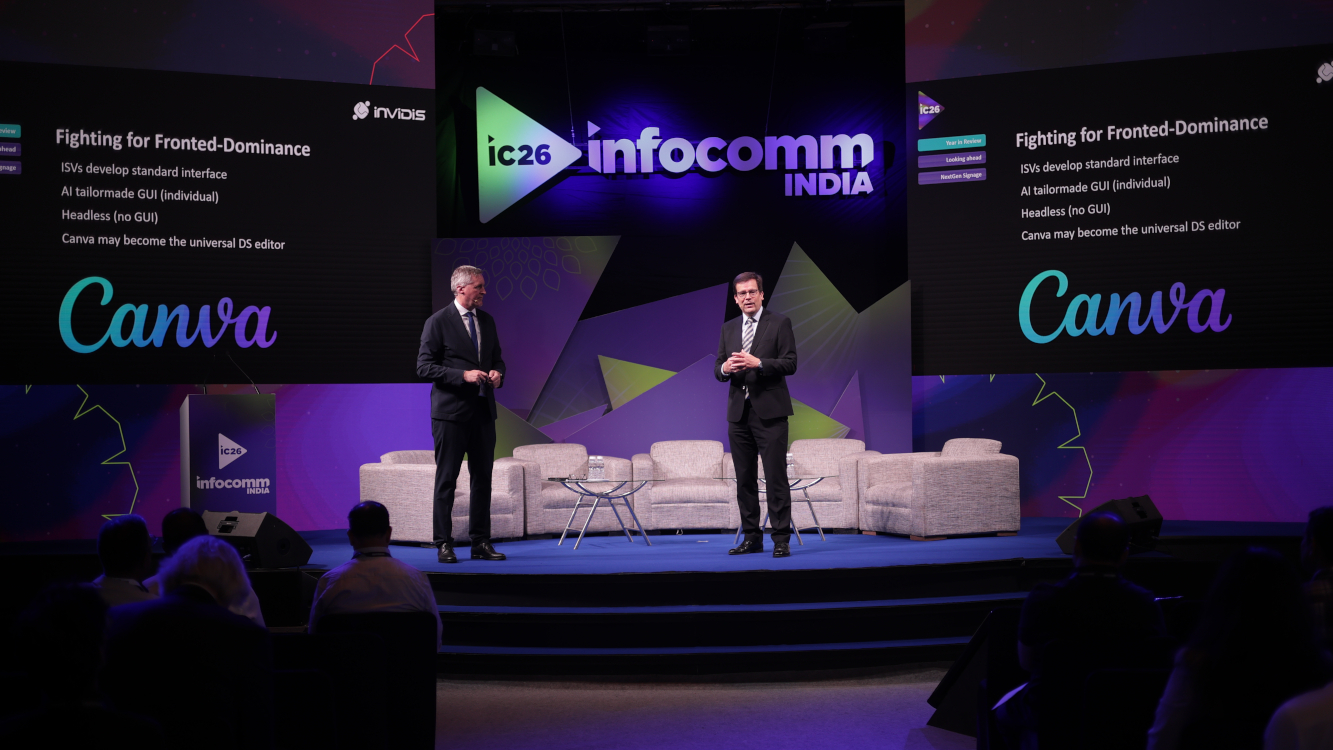
Focus on India: Digital Signage Market Enters a New Growth Phase
While Europe and North America are increasingly characterized by replacement cycles and modernization projects, India remains largely a greenfield market. Digital signage adoption is still in its early stages across many verticals, creating significant room for expansion over the coming years.
A Billion-Dollar Market in the Making
According to the market outlook presented by invidis at the conference, the Indian digital signage market is expected to approach USD 1 billion in annual volume by 2026, representing roughly 20% of the total EMEA market opportunity.
Growth continues to outpace global averages by a wide margin. Annual expansion rates between 12% and 15% make India one of the fastest-growing digital signage markets worldwide, growing two to three times faster than many established regions.
Unlike mature markets where investment often focuses on replacing existing infrastructure, Indian projects are still predominantly greenfield deployments. New stores, office campuses, transportation hubs and public infrastructure projects create fresh demand rather than replacement demand, providing a strong foundation for sustainable growth.
India’s retail industry has evolved into one of the world’s most dynamic and fast-growing sectors, making a significant contribution to the country’s economic development.
According to BCG and the Retailers Association of India, the Indian retail market is projected to reach an impressive USD 2 trillion by 2034, expanding at a compound annual growth rate (CAGR) of 9%. Organised retail currently accounts for around 18% of the market, while the remaining 82% is made up of the vast unorganised sector, comprising millions of small independent shops.
In terms of store count, organised retail represents only a few hundred thousand outlets compared to an estimated 13-15 million unorganised stores. However, the organised segment is expanding rapidly, creating significant opportunities for digital signage and in-store media networks. At the same time, parts of the unorganised sector, particularly larger independent retailers, are beginning to experiment with entry-level signage solutions such as smartphones, tablets, and tabletop displays powered by simple media players.
India remains one of the fastest-growing retail markets globally and is on track to become the world’s third-largest retail market by 2030.
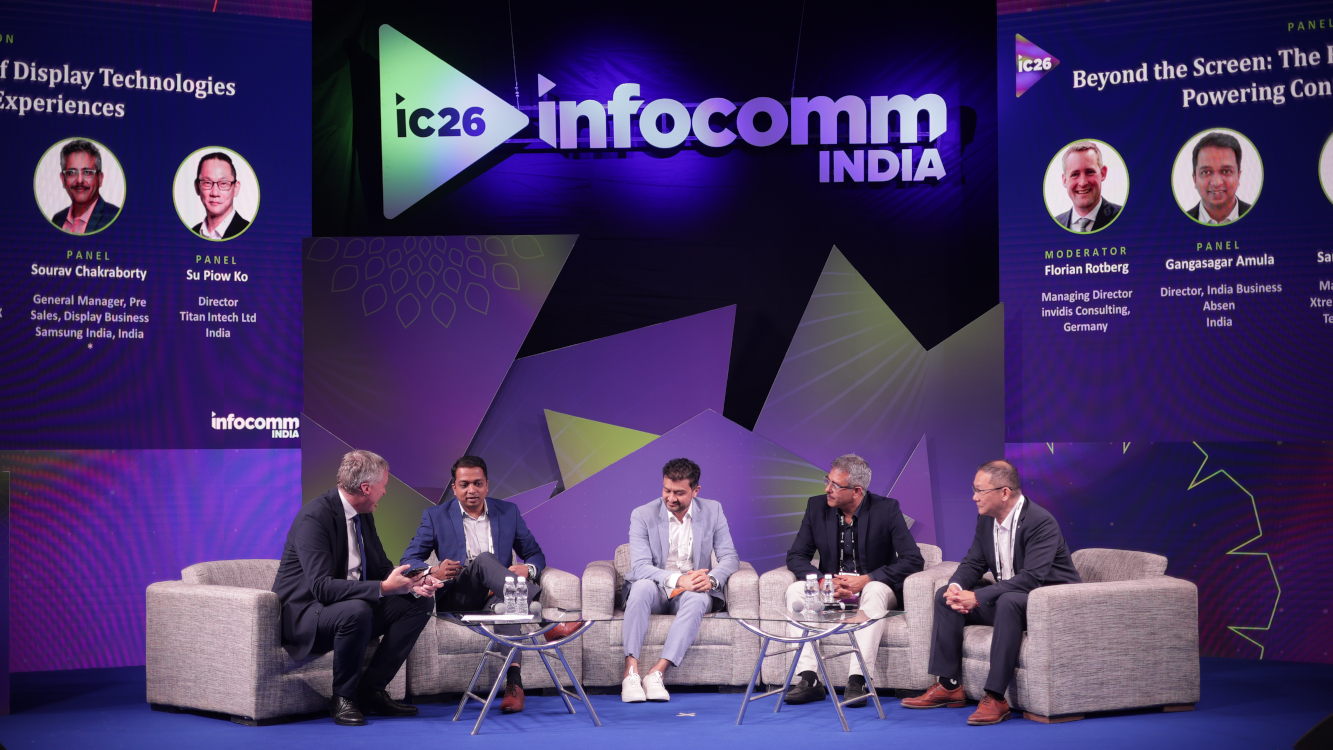


Four Key Drivers Shaping the Market
Industry experts identified four major growth engines behind India’s signage boom.
Organized retail continues to modernize rapidly as national and international brands expand across the country. Modern retail concepts increasingly rely on digital communication, customer engagement and real-time content management.
The second major driver is Digital-out-of-Home and in-store retail media. DooH is booming across India – primarily in large metropolitan areas but increasingly also in 2nd and 3rd tier cities. Retailers are beginning to recognize digital screens as revenue-generating assets rather than purely communication tools. The growing convergence of retail, data analytics and advertising is creating entirely new business models.
A third growth area is the deployment of large-scale LED installations. From landmark projects and corporate headquarters to transportation and public spaces, LED technology has become a highly visible symbol of India’s digital transformation.
Finally, ongoing smart city initiatives continue to generate demand for public information systems, wayfinding solutions and connected digital infrastructure across urban environments.
Digital Signage Becomes Mission Critical
The conference also highlighted how signage strategies in India are evolving.
For many years, digital signage projects were isolated installations with limited connectivity and little business integration. Today, the market is rapidly moving toward fully connected ecosystems integrated into broader enterprise technology landscapes.
As a result, digital signage is increasingly shifting from a “nice-to-have” marketing tool to a business-critical platform. Organizations expect measurable outcomes, operational efficiencies and direct business impact.
The technology journey reflects this transformation: many networks have progressed from simple USB-stick content distribution to cloud-connected platforms and increasingly integrated experiences that connect signage with data, retail systems and customer engagement tools.
Equally important is a mindset shift among end users. Digital signage is no longer viewed solely as a cost center but increasingly as a profit lever, especially in retail media environments where screens directly contribute to advertising revenues and sales performance.
Make in India Creates New Opportunities
India’s rapidly expanding electronics manufacturing sector was another central topic of discussion.
Driven by the government’s “Make in India” initiative and global supply chain diversification, significant manufacturing capacity for display and LED technologies is being built across the country. Companies such as LED display specialist LedX are examples of a growing domestic production ecosystem.
Industry participants also noted increasingly pragmatic trade relations between India and China, helping stabilize component sourcing and manufacturing operations.
At the same time, India is positioning itself as an export hub. A potential future free trade agreement between India and the European Union could further improve market access for Indian-made hardware, software and services, creating new opportunities for global signage vendors and integrators.
India’s Software Ecosystem Comes of Age
The conference also provided valuable insights into India’s software landscape.
While Samsung and LG proprietary CMS platforms still represent the largest installed software base across the country, a growing number of domestic vendors have established strong market positions. Key players include Jio Signage, Pickcel, Wilyer, Xtreme Media and Zeetaminds.
Beyond the domestic market, India has become one of the world’s most important software development centers for the digital signage industry. Many global independent software vendors (ISVs) rely on Indian development teams to build and maintain products deployed worldwide.
Interestingly, several Indian software providers have achieved greater commercial success internationally than within their home market. Low domestic software pricing, where average license fees often remain in the single-digit euro range, continues to create challenges for premium software providers.
At the same time, weakening demand in some Middle Eastern markets has encouraged many Indian software companies to place greater emphasis on opportunities within the rapidly growing domestic market.
India Moves to the Center of the Global Signage Industry
The key message from the Invidis Digital Signage Conference at Infocomm India was clear: India is no longer an emerging side market. It is becoming one of the industry’s most important growth engines.
A unique combination of economic growth, retail modernization, smart city investments, manufacturing expansion and software expertise is creating momentum across the entire digital signage value chain. As global vendors and service providers increasingly look beyond mature markets for growth, India is moving from a market of future potential to a market of present opportunity.