
For many years, 3D displays were primarily used as eye-catching attractions at trade shows and technology showrooms. Increasingly, however, the technology is finding its way into theme parks, festivals, live events, and branded experiences. 3D displays may finally have found their natural home: the experience economy.
Beyond the Wow Factor: 3D Signage for Live Experiences
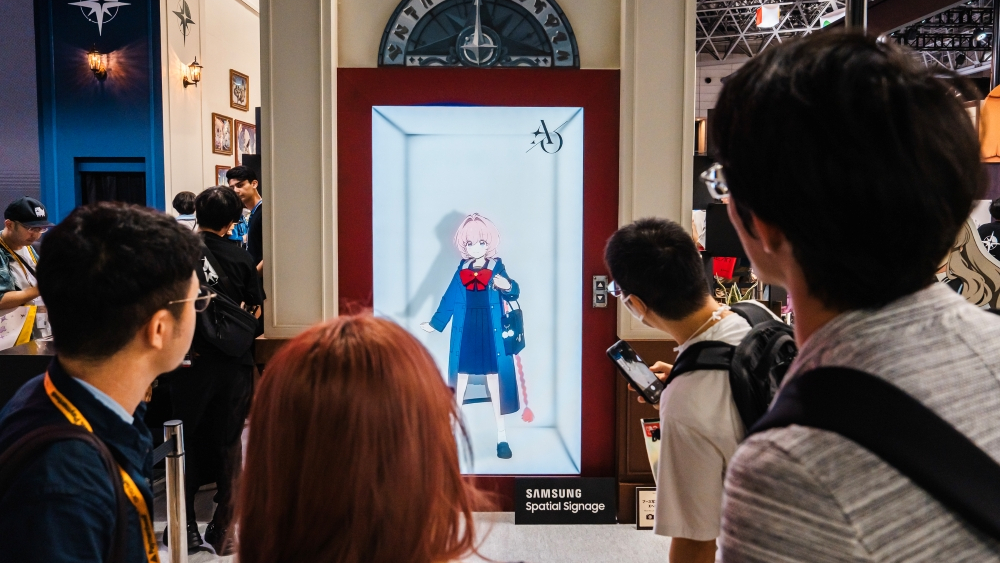
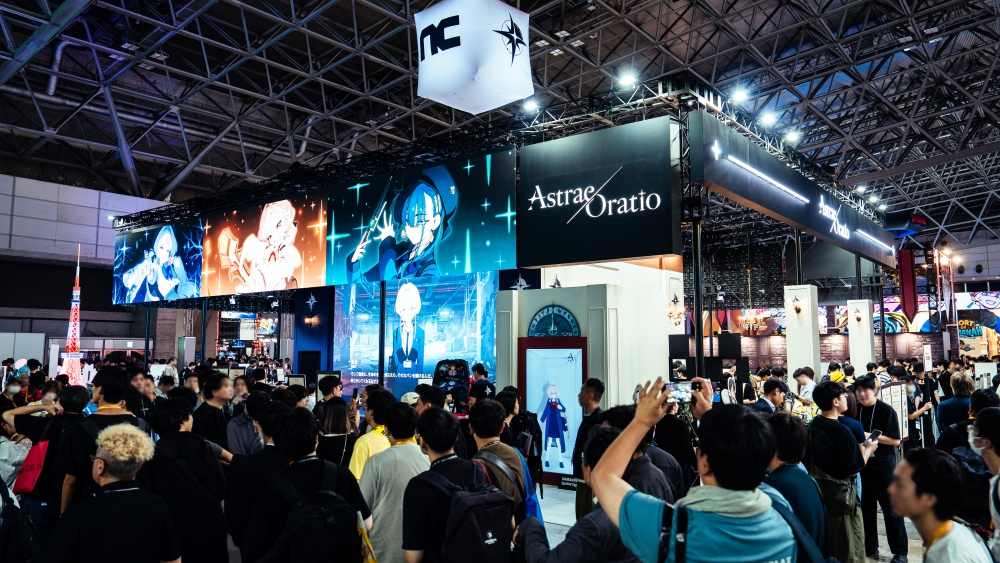
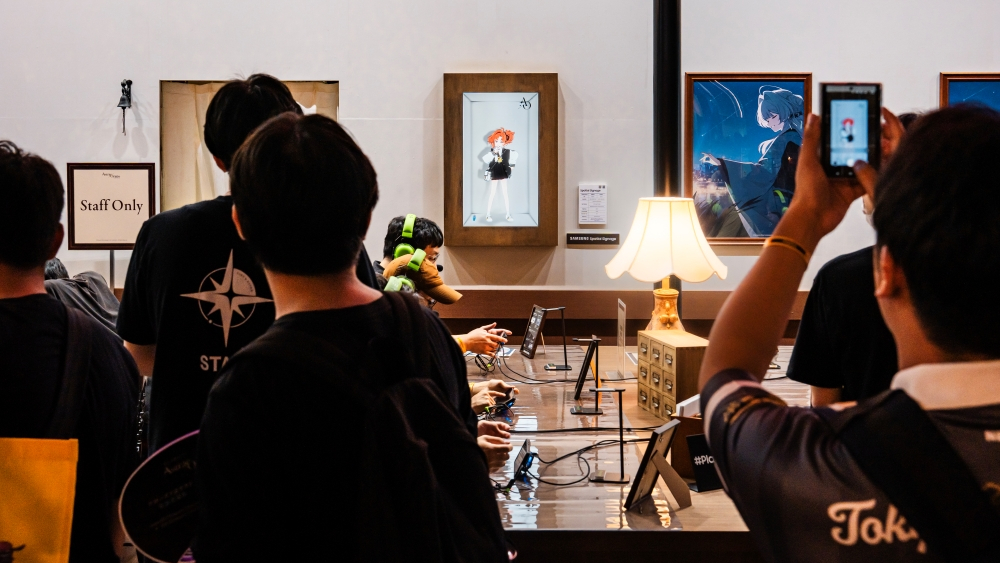
At the Tokyo Game Show 2026, game developer NC used 3D signage not as a standalone attraction, but as an integral part of the visitor journey surrounding the launch of its new urban fantasy role-playing game Astrae Oratio. Samsung’s Spatial Signage transformed the exhibition booth into a physical extension of the game’s digital universe.
Bringing Digital Characters into the Real World
One of the biggest challenges for game publishers and entertainment brands is translating digital characters into physical environments. Posters, LED walls, and traditional digital signage displays can present content, but they rarely create the impression that characters are genuinely present.
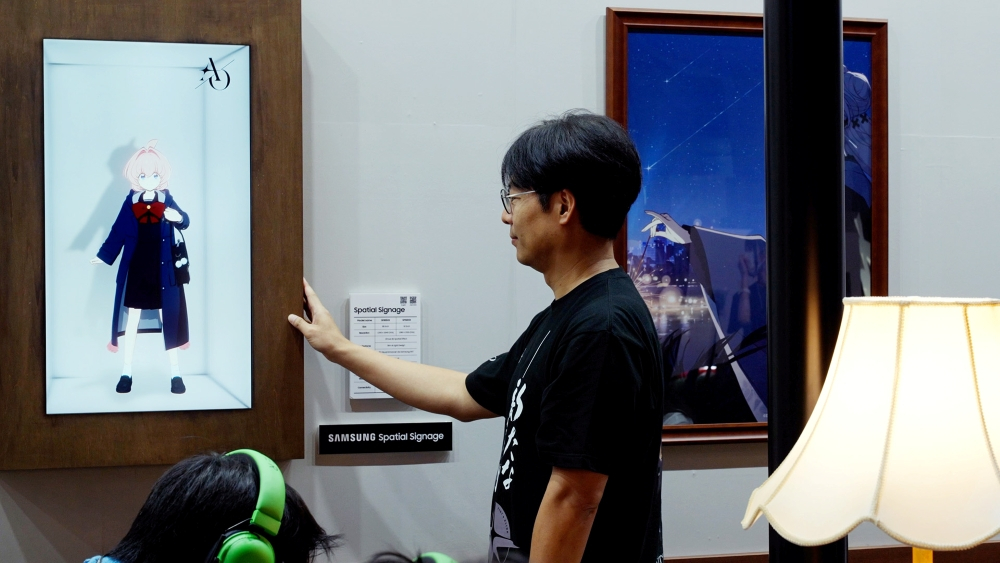
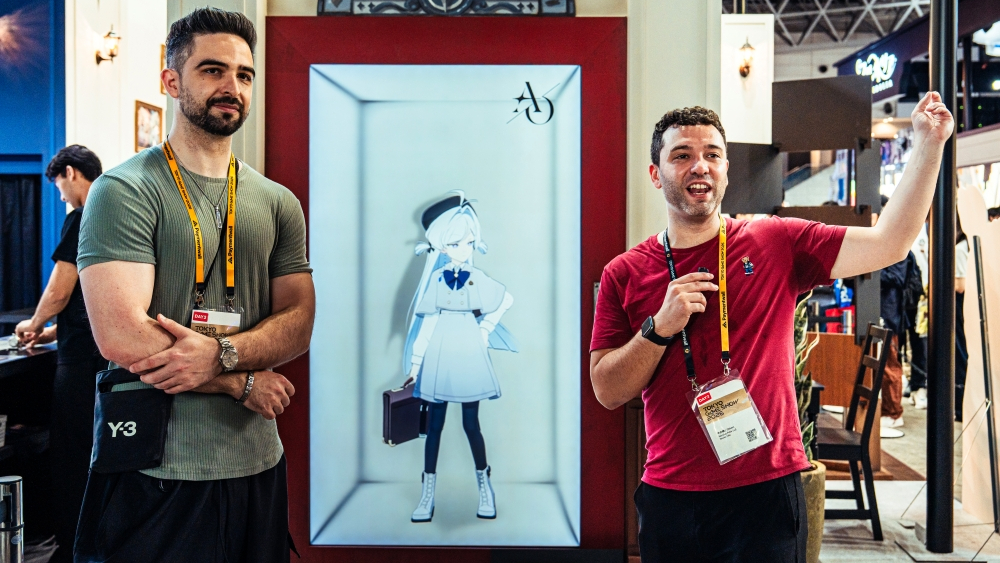
This is where professional 3D displays come into play. Glasses-free 3D technology creates a convincing sense of depth, allowing characters to appear as if they exist behind the display or are stepping out of the screen. At the entrance to NC’s booth, life-sized game characters welcomed visitors within an elaborately designed elevator-themed environment.
The value lies less in the technology itself and more in its emotional impact. Visitors encounter characters almost face-to-face, creating a stronger connection with the content. For entertainment brands, 3D signage becomes a tool for extending storytelling beyond the boundaries of the screen and into the physical world.
Turning Queues into Part of the Experience
Even more interesting than the entrance installation was the use of 3D displays throughout the visitor journey. Multiple 32-inch displays were installed in queue zones and along visitor pathways. Rather than treating waiting lines as a necessary inconvenience, NC turned them into part of the fan experience.
This highlights a new use case for 3D signage. Whether at gaming conventions, theme parks, museums, or sporting events, visitors increasingly spend time in transitional and waiting areas. These spaces often offer little value in terms of visitor engagement.
3D displays make it possible to integrate characters, stories, and branded content into these areas without requiring additional space or large-scale immersive installations. Samsung’s Spatial Signage is particularly suited to such environments thanks to its relatively slim depth, allowing integration even where space is limited. Queue areas often double as evacuation routes, making every centimetre count.
A New Tool for Experience Designers
For years, digital signage projects were primarily evaluated based on brightness, resolution, and screen size. Live experiences demand a different set of metrics: attention, interaction, social media reach, and memorability.
This is precisely where glasses-free 3D signage excels. Visitors stop, engage with the content, record videos, and share them across social platforms. For brands and event organizers, this creates additional value through user-generated content that extends far beyond the event venue itself.
In sectors such as gaming, entertainment, sports, and retail, this effect can be more valuable than simple information delivery.
Is a 3D Comeback on the Horizon?
The digital signage industry has experienced several waves of 3D technology over the past two decades. High costs, limited content ecosystems, and the need for specialized glasses often prevented widespread commercial adoption.
Today’s generation of glasses-free 3D displays benefits from very different market conditions. Brands are investing more heavily in experiential marketing, social media amplification, and visitor engagement. At the same time, game engines, real-time rendering technologies, and AI-powered production tools have dramatically simplified the creation of 3D content.
Perhaps the true sweet spot for 3D signage is not just retail, but environments where emotion, attention, and storytelling matter most: live experiences.
- Research: Office DooH Screens Generate 3.4 Times More Attention
- São Paulo: ON Completes AV Integration For Brazil’s Largest Permanent Immersive Art Space
- Appointments & Promotions: AVI-SPL Promotes Christine Rogers To Lead XTG Division
- Germany: Ströer Company Plans DooH Tunnel
- DooH Advertising: Screenverse Adds Western Union’s 2,600-Screen Network