
New technologies are pushing LED and MicroLED displays into the next phase: COB, COG, and flip-chip promise improved image quality and lower costs. At the same time, standardized solutions enable faster deployment and setup.
LED Technology: Faster, Better, Cheaper
Smaller pixel pitches, better image quality? In some respects, one could say Directview-LED is already a mature technology. But the major changes are not happening on the front surface.
Instead, the real transformation is taking place in LED panel production itself – and major shifts are expected in the coming years. “There will be a shift away from packaged LED, IMD and NIB toward unpackaged COB and COG. We are facing a massive transformation,” said Ted Romanowitz, Head of Professional Displays at market research firm Futuresource Consulting, at DSS ISE 2026.
This transition would make high-quality LED more suitable for mass production and standardization – thereby significantly reducing costs. A first indication of this trend came from TCL in mid-2026, when it sharply reduced prices for its MicroLED products in China.
While this move served strategic market purposes, it is likely to further accelerate the push toward cheaper mass production.
Flip-chip gains majority
At the same time, flip-chip LED technology is gaining ground. According to Futuresource, 2025 marked the first year in which more flip-chip LEDs were sold than traditional LED technologies.
Flip-chip is more efficient, produces less heat, and delivers superior image quality – especially in black levels and resolution. In the long term, flip chip combined with COB (chip-on-board) is expected to become the dominant format in indoor DooH applications. More broadly, MicroLED based on COB – such as Samsung The Wall – or COG is becoming increasingly important, according to Futuresource. By 2029, these technologies are expected to account for 57 percent of the fine-pixel LED market, overtaking the currently dominant SMD technology.
New products on display
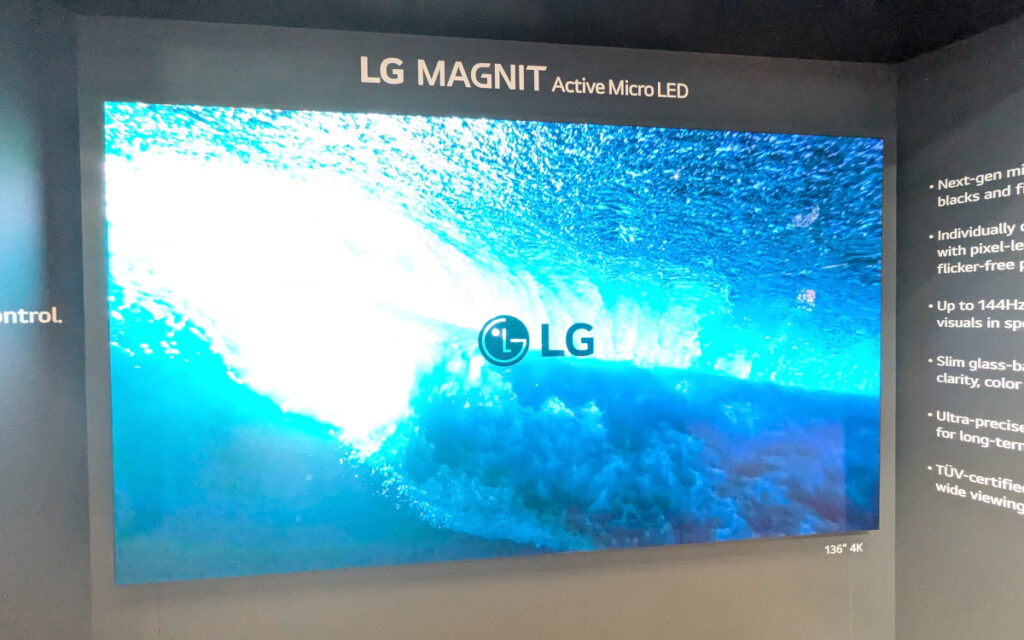
In the MicroLED COG (chip-on-glass) segment, LG showcased what the future could look like at ISE. The company presented a new chip-on-glass Active MicroLED from its Magnit series.
In the 136 inch display, the TFT-based LEDs are individually controlled, enabling flicker-free performance. Combined with a variable refresh rate of 1,444 Hz, the result is an exceptionally smooth image. The thin glass-panel structure also enables very sharp images.
According to LG, the ultra-precise LED transfer process further ensures long-term stability.
Planar showcased new and interesting solutions at Infocomm 2026. The Everpixel and Trumicro technologies are based on a MicroLED-in-package architecture and were developed to improve reliability, efficiency, viewing angles, and pixel density. This is achieved, among other things, through pixel redundancy, although this does drive up the price.
Beyond ProAV
MicroLED is also becoming an increasingly stand ard part of product portfolios across manufacturers. That these high-end solutions extend beyond traditional visual applications is demonstrated by Daktronics.
After acquiring X Display, the company has begun developing its own MicroLED production line in the United States. At ISE 2026, Daktronics presented a concept for a future MicroLED product: a COG display with 0.18-millimeter pixel pitch, 5.1 inches, and LED chips measuring just 13 by 20 micrometers. This opens up new strategic opportunities.
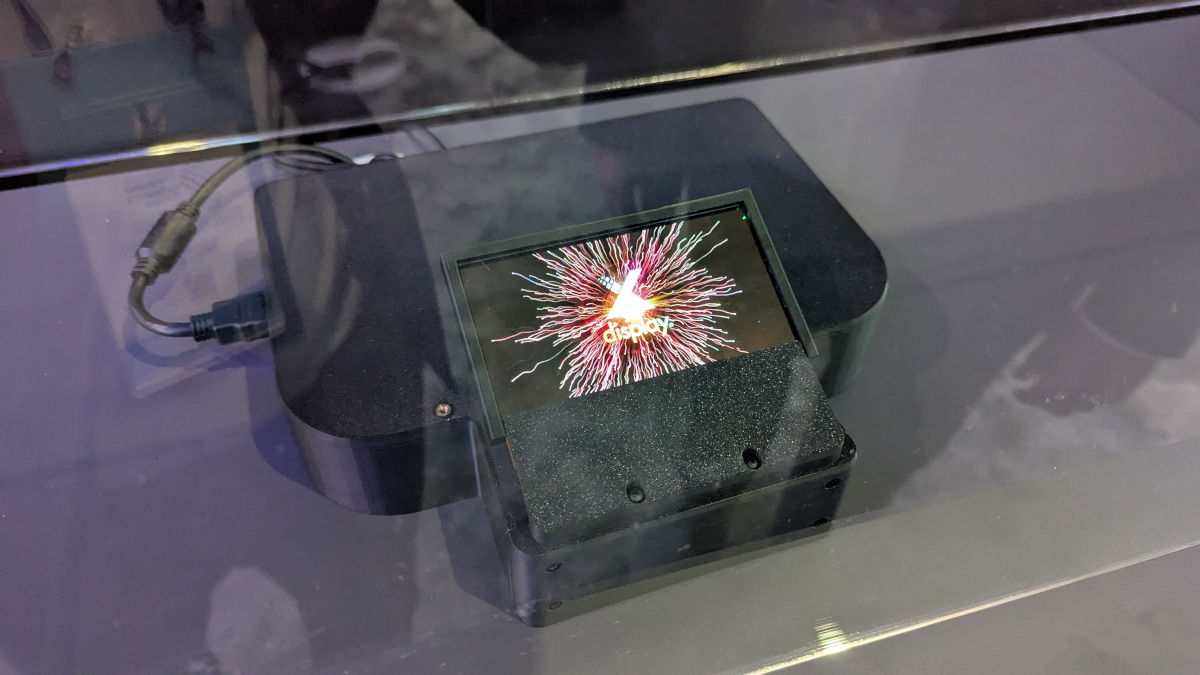
For digital signage, such resolution would be excessive, but other industries offer strong potential – particularly automotive and defense.
All-in-one solutions on the rise
In parallel, preconfigured all-in-one LED systems have been experiencing strong growth for some time. With an average annual growth rate of 42 percent, this segment is expected to reach $1.5 billion by 2029.
The main advantage is fast, simple installation – even for less experienced digital signage integrators. Manufacturers are also introducing tools to simplify deployment. PPDS has launched a new online LED configuration tool for customers and system integrators.
Users enter parameters such as wall size, brightness, pixel pitch, and mounting type, and the system automatically selects suitable products, processors, cabling, and control systems. It then generates a complete technical report and bill of materials.
Rollable MicroLED
There are also attention-grabbing innovations pointing toward entirely new applications. One of the most striking display technologies at Touch Taiwan this year was the rollable MicroLED display from AUO.
The 17.3-inch panel features an extremely tight bending radius, allowing it to be fully rolled up – breaking away from the constraints of flat or curved fixed displays.
In addition to its mechanical flexibility, the rollable MicroLED offers an ultra-thin structure, high brightness, wide color gamut, and low reflectivity.
This new panel architecture is expected to enable entirely new digital signage applications and immersive user experiences – especially where space, mobility, or flexible surfaces are important.
Fresh start for rollable?
Admittedly, rollable displays have had a mixed track record in digital signage. For example, the widely discussed rollable OLED from LG never achieved mainstream adoption in the sector. Still, interest in rollable display technology remains strong – and AUO’s MicroLED approach appears more technologically mature and better aligned with real-world applications.
Overall, the rise of LED technology is set to continue – and may even accelerate further as manufac turing undergoes its next major transformation.
ProAV Technology in the invidis Yearbook
This article is part of the technology chapter in the invidis Yearbook 2026. The “Bible of the Digital Signage Industry” contains numerous other technology analyses, ranging from LCD over e-paper displays to digital signage software. Get the yearbook from our Downloads section.