Singapore | E-paper promises to transform in-store communication, but high costs and limited capabilities continue to slow adoption. In Singapore, supermarket chain Sheng Siong has found a surprisingly effective alternative: compact LCD displays that deliver many of the same benefits at a fraction of the complexity.
Retail: Why A Supermarket Is Skipping E-Paper – for Now
A stopover in Singapore has become a fixed part of many Asia trips for the invidis team. Following Infocomm Asia in Bangkok, a few hours in the city-state offered the opportunity to explore retail concepts beyond the well-known flagship stores. Together with Seoul, Singapore remains one of the most exciting markets for retail innovation in Asia.
One location on the agenda was The Cathay, a shopping mall near Dhoby Ghaut close to Orchard Road. The center is not the newest, but a major redevelopment project has given the property a fresh look and feel. Reopened in 2025 following substantial investment, parts of the building still show signs of a slow leasing recovery, with several upper-floor units remaining vacant. From a digital signage perspective, however, the refurbishment is noteworthy.
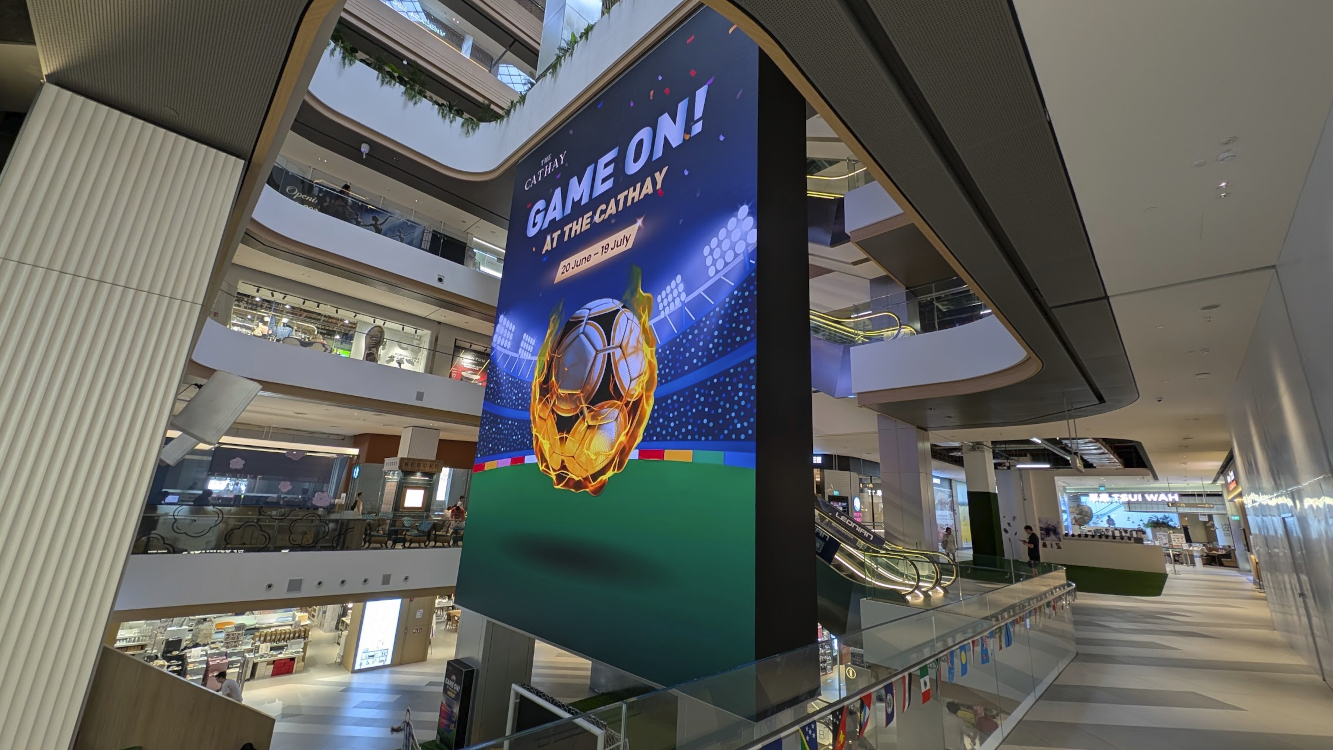
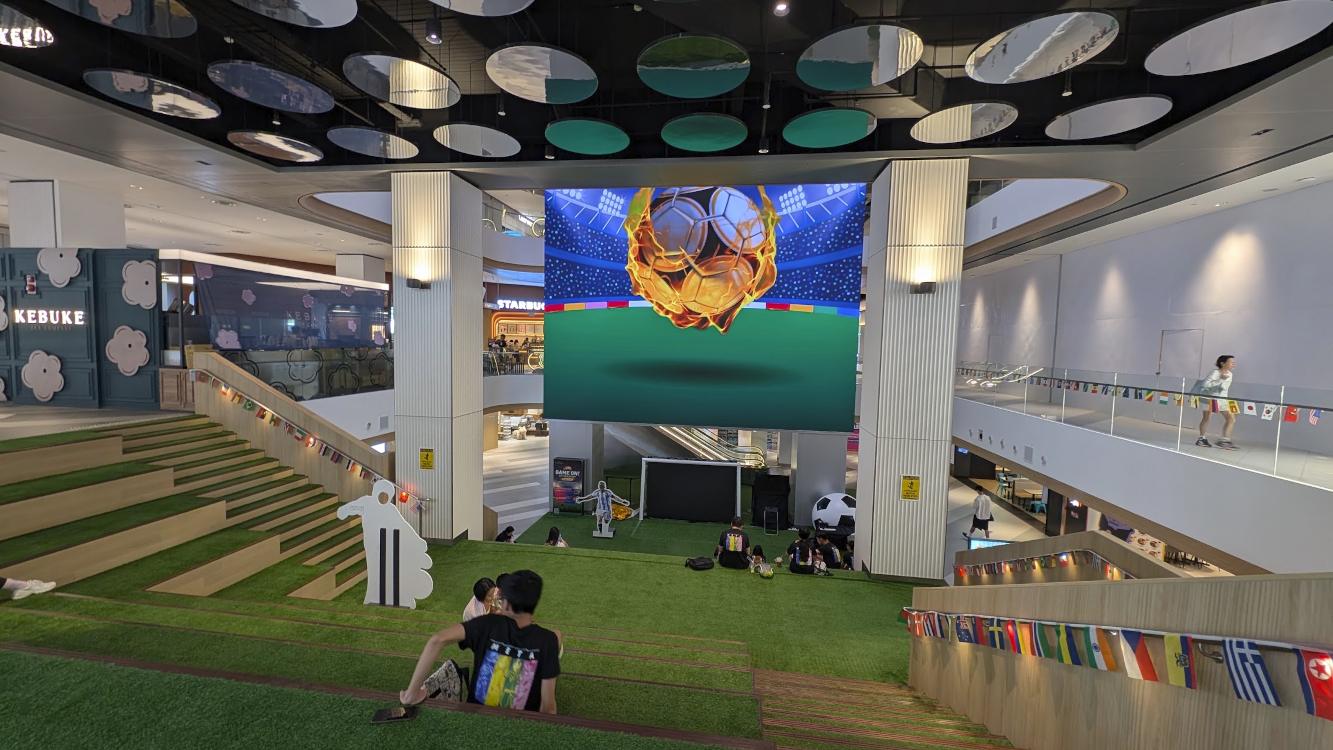
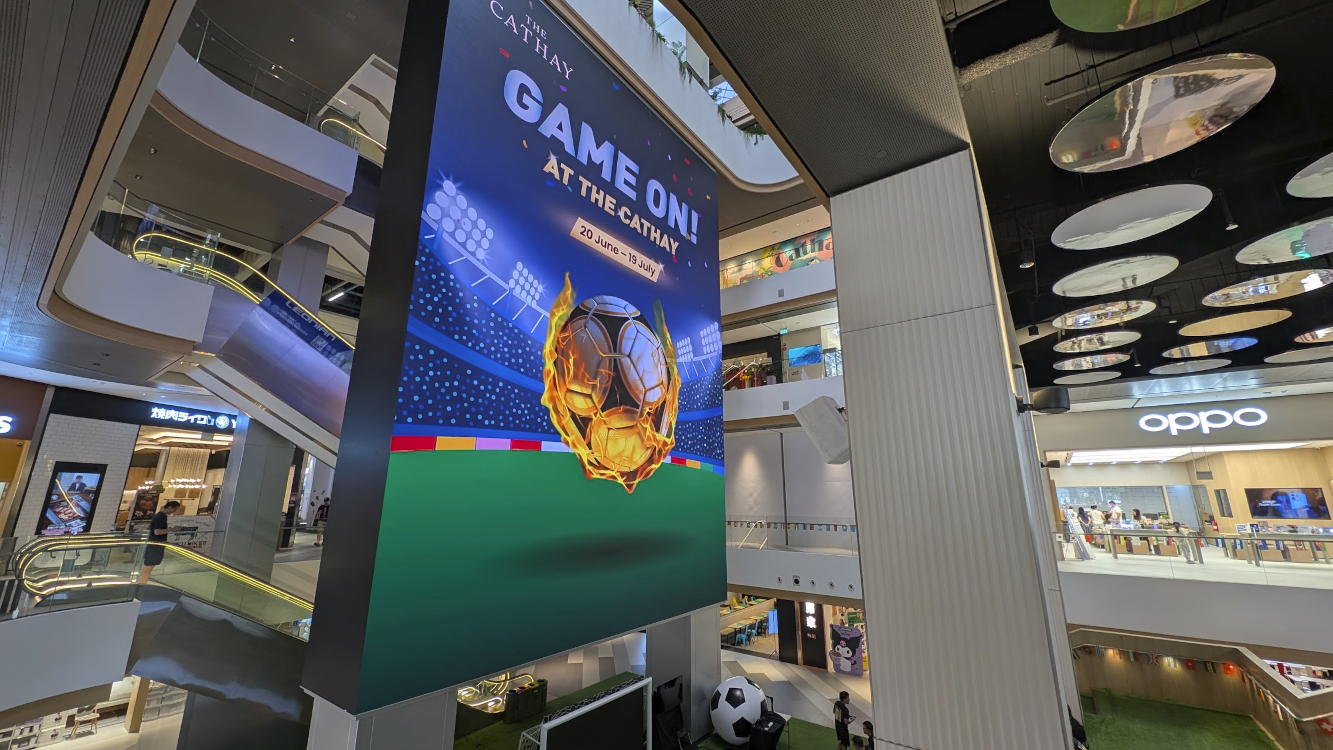
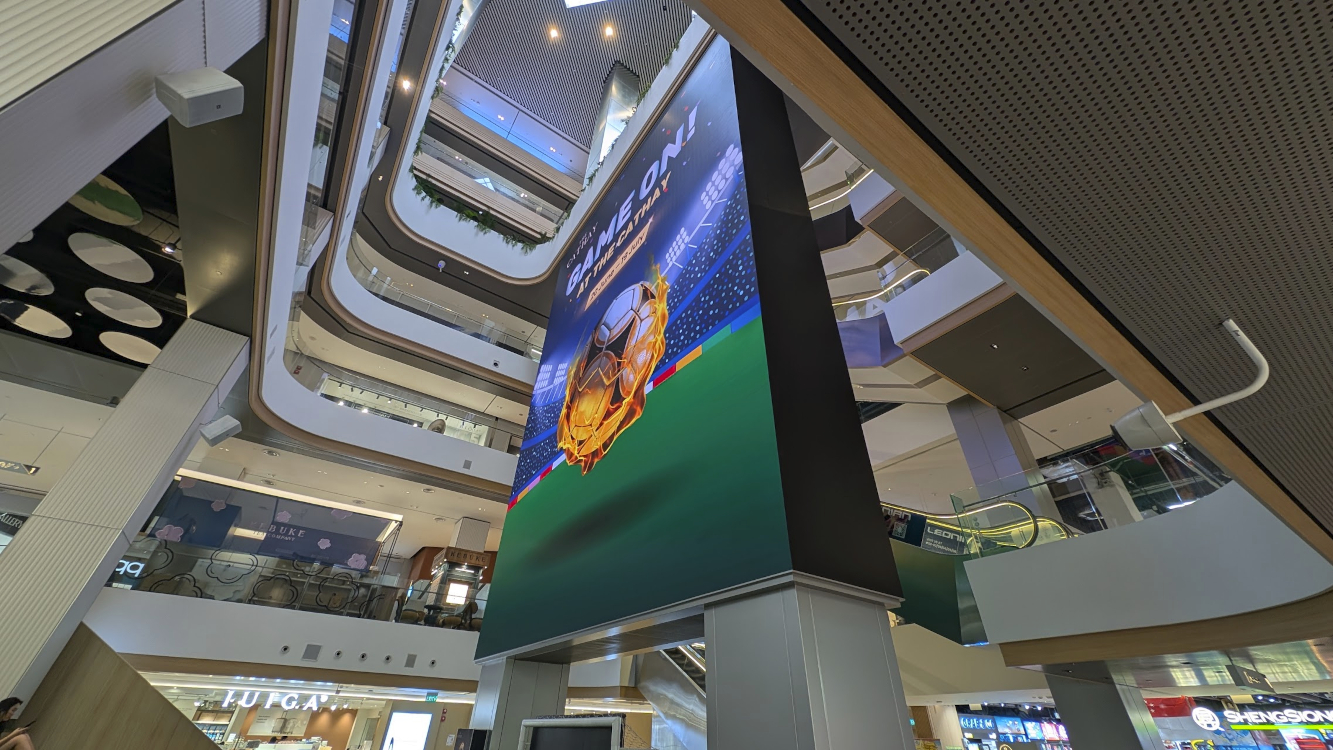
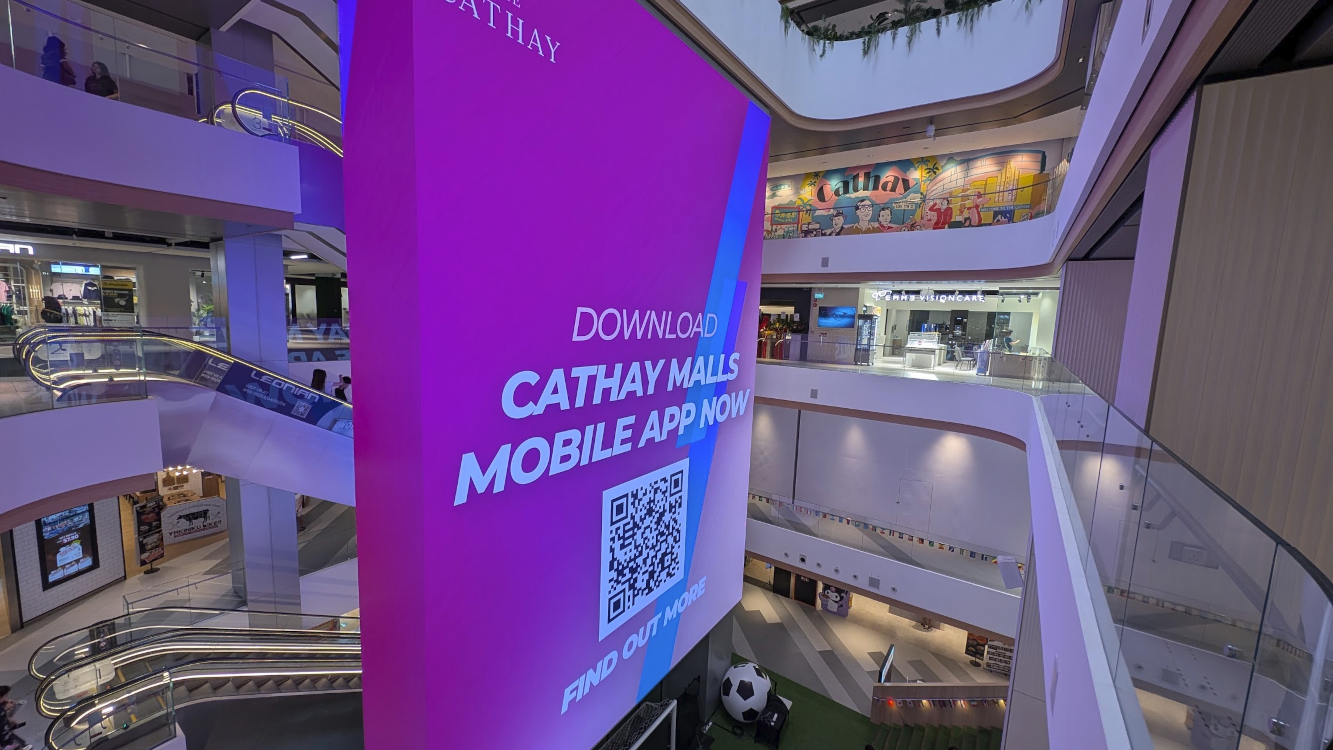
Originally built in 1939 as Singapore’s first air-conditioned cinema, The Cathay’s historic atrium was closed for two years and transformed into a lifestyle-focused retail destination. At its center stands a striking double-sided LED screen extending across three floors. The installation dominates the relatively compact atrium and leaves a strong visual impression. During major sporting events such as the FIFA World Cup, the LED display serves as the focal point for public viewing activities.
The real discovery was in the basement
Singapore supermarket chain Sheng Siong, which operates around 90 stores, recently moved into the basement level. Compared with European supermarket standards, the format feels compact. Space constraints are a fact of life for downtown retailers in Singapore, and Sheng Siong has adopted a highly digital approach to maximize efficiency.
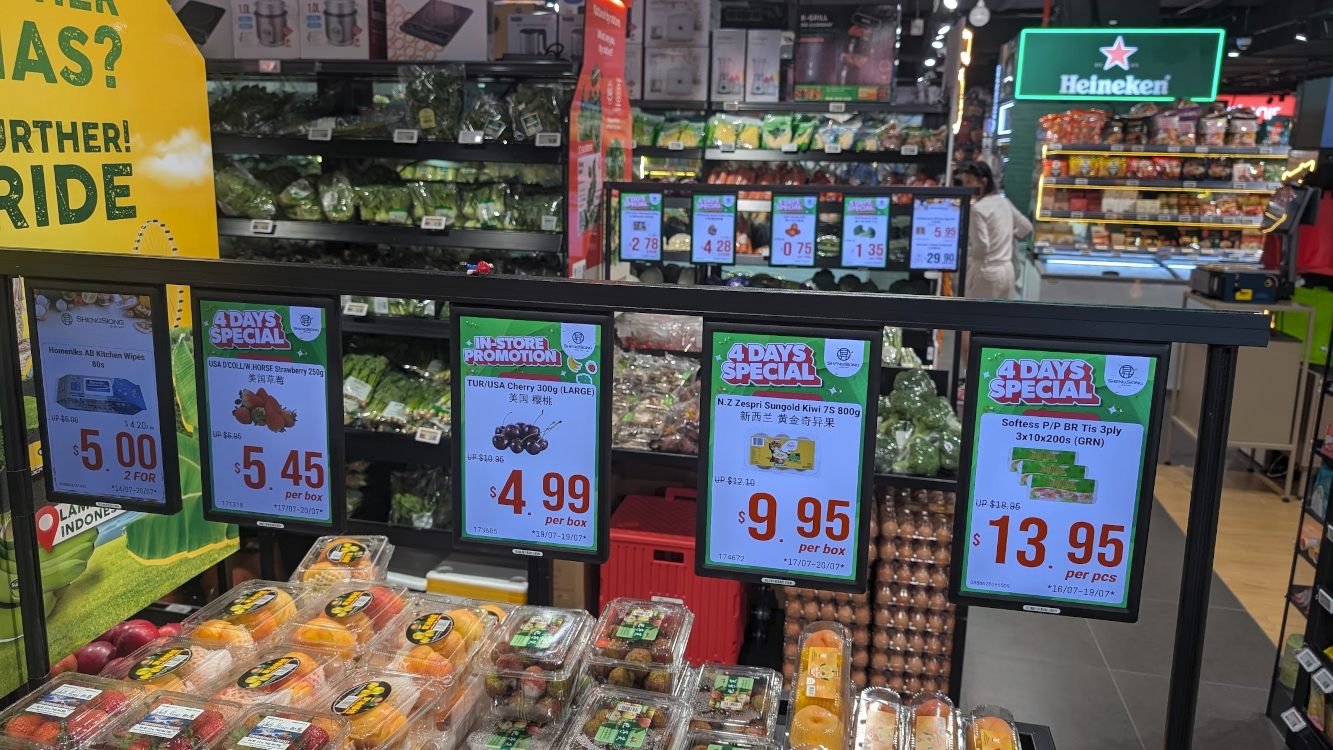
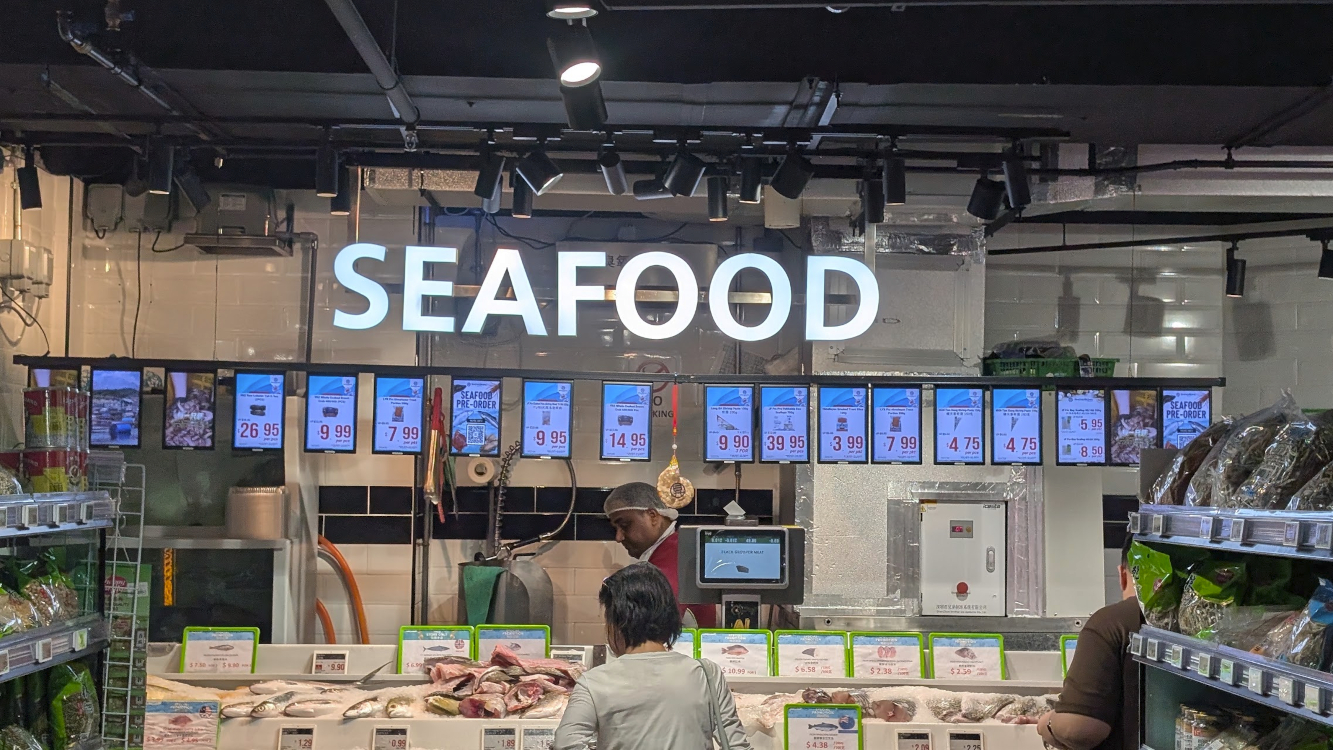
Rather than installing traditional digital signage displays, which would consume valuable shelf and aisle space, the retailer has opted for tablet-sized, double-sided LCD screens. The displays are positioned in promotional areas and above fresh food counters, including meat and seafood sections. Each screen is linked to products and pricing information via barcodes, allowing store staff to quickly assign and update content.
Looking like e-paper, behaving like LCD
At first glance, the solution looks remarkably similar to e-paper. The displays primarily function as digital price indicators and feature only subtle animations in the header area.
A closer look reveals the difference. Animated graphics, backlighting and a relatively substantial mounting bracket with an integrated power supply clearly indicate LCD technology rather than e-paper. The illusion is convincing enough that many shoppers would likely assume they are looking at e-paper displays.
The setup combines some of the visual simplicity associated with e-paper while retaining the flexibility and lower acquisition cost of conventional LCD technology.
The trend toward smaller displays
The concept also highlights an increasingly visible trend in food retail. Similar to approaches previously seen in Amazon’s physical grocery stores, retailers are moving toward smaller, purpose-built displays rather than large-format screens at the shelf edge.
In many supermarket environments, especially where space is limited, conventional digital signage can feel oversized and impractical. Shelf communication requires visibility and flexibility – but not necessarily large screens.
A bridge technology for the future?
The challenge, as always, remains installation complexity. Unlike e-paper, LCD displays still require permanent power and more visible mounting solutions. That limits flexibility and creates additional operational considerations.
Yet until large-format e-paper becomes significantly more affordable – and eventually capable of delivering richer motion content at scale – solutions like Sheng Siong’s may prove to be a practical bridge between today’s digital signage deployments and tomorrow’s e-paper-powered store environment.
- DooH in Elevators: Vertical City Reaches 10,000 Elevator Screens
- DPAA Summit: American Eagle And Expedia CMOs To Discuss Real-World Connections
- Bstore Australia: Shoes, Screens and a Software Upgrade
- Mobile OoH: Seedtag Sends Robots Through Manhattan In Ad Campaign
- Retail Media: Walmart Connect Takes Streaming Ads Beyond Its Supplier Base