
The acquisitions of the past year have shown that publishers and investors are rediscovering DooH. At the same time, new operating models among established players and ongoing adtech consolidation are accelerating the market’s development.
OoH Transformation: Out-of-Home Becomes a Strategic Asset
The signals were already visible more than a year ago, when several high-profile M&A transactions took place. Those developments have since been extended, and clearer trends are emerging that show how the international digital-out-of-home market could consolidate and evolve.
At the beginning of 2025, a British subsidiary of the Bauer Media Group acquired the Nordics business of Clear Channel Outdoor Holdings. With this move, one of Europe’s largest media groups entered the German market. In the following fall, Bauer followed up by acquiring Amscreen, Clear Channel’s exclusive digital signage supplier in Europe. This aligns the company with the integrated operating model used by leading European DooH players, which typically rely on in-house integrators responsible for design, technology, and operations.
DooH in the invidis Yearbooks 2026
This is the introductory article to the DooH Special in the invidis Yearbooks. The special goes even deeper, offering insights into the development of programmatic DooH, in-store retail media, DooH at airports, and much more. Download the invidis Yearbooks 2026 from our download section!
Bauer Media is not the only publishing group investing in digital-out-of-home. It is already well known that Axel Springer owns the scale-up Framen. In Switzerland, another publisher has entered the field: NZZ (Neue Zürcher Zeitung) increased its stake in the leading Swiss outdoor advertising company APG|SGA from 20 to 45 percent. As a result, the country’s two largest out-of-home operators – APG|SGA and Goldbach Neo – are now effectively influenced by its two biggest newspaper publishers: NZZ and TX Group.
These acquisitions underline the growing strategic importance of outdoor advertising in the media business. Established publishers are deliberately investing in scalable, high-reach, and relatively stable advertising environments. While digital platforms face increasing pressure – whether due to opaque supply chains or brand safety concerns – DooH is gaining appeal as a controllable, physical medium.
For publishers, entering DooH is not only a form of diversification, but also a return to a core principle of traditional media: reach in public space.
Investors discover OoH
In parallel, capital from the financial sector is reshaping the industry. Private equity investors and sovereign wealth funds are increasingly treating Digital-out-of-Home as a promising infrastructure asset.
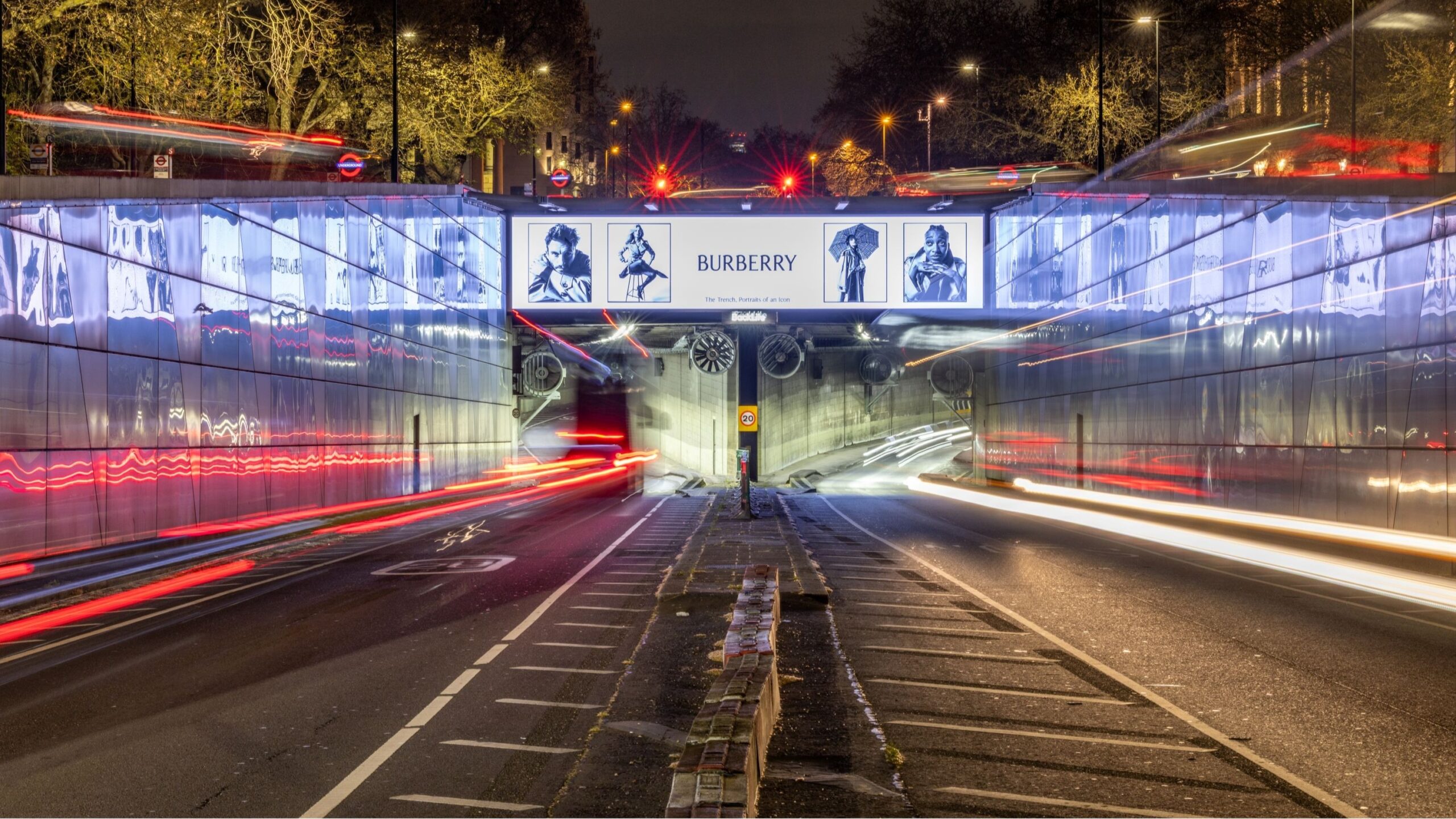
The acquisition of Clear Channel – now focused entirely on the US market after divesting its European operations – by the UAE sovereign wealth fund Mubadala illustrates this trend. At the same time, Out-of-Home investor Wildstone continues to expand its international portfolio. The company has added assets in Australia and Spain and recently signed a new agreement with the UK’s Motor Fuel Group to develop additional DooH sites at petrol stations. In the UK, it also built a large upgraded digital screen in partnership with Backlite, the newest addition are the Chiswick Towers in London. Wildstone is likewise actively seeking new locations in Germany.
New infrastructure-focused companies – often backed by private equity – take over financing, technology upgrades, and long-term site management, while media operators focus on sales and monetization.
Transformation at Ströer
The situation is somewhat different at German outdoor advertising giant Ströer. The company is currently, so far unsuccessfully, seeking an investor for its Out-of-Home business. At the same time, founder Udo Müller has returned as sole CEO and is aiming to fundamentally transform Ströer. Media silos are being dismantled, and the in-development Ströer Ad Manager is being positioned as a central platform to unify offerings across all media channels.
In general, self-service booking is intended to become the new standard. For a traditional-structured outdoor advertiser, this represents the biggest shift since the rise of DooH.
Perhaps the most fundamental change is Ströer’s shift from selling reach to selling outcomes.
Companies such as Google, Meta, and Amazon have built global advertising empires on performance-based models. Ströer now aims to follow this example and hopes the broader German Out-of-Home market will do the same within a relatively short time.
To support this shift, Ströer is working with partners on a standard called the impact layer “Public Mind.” This framework is designed to forecast the impact of campaigns based on KPIs, reflecting advertisers’ growing preference for measurable outcomes over pure reach.
The role of adtech
The growing importance of the adtech layer in DooH – and of a full technology stack – is also evident in further consolidation. The trend began in early 2025 when T-Mobile US acquired Vistar Media, highlighting how strategically important programmatic DooH and audience data have become for telecom and media companies. In addition, the adtech platform Blis was acquired for $175 million. Blis specializes in omnichannel targeting based primarily on geographic rather than personal data.
Broadsign completed its largest acquisition to date with the purchase of the programmatic DooH platform Place Exchange. Beyond expanding its technical capabilities, the deal established New York City alongside Montreal as a second major global hub for Broadsign – underscoring the importance of proximity to key advertising and media ecosystems. Broadsign’s evolution from a CMS provider into a de facto global standard for end-to-end DooH platforms is now unmistakable.
A changing DooH landscape
Taken together, legacy players and new entrants are shaping the future DooH landscape across investors, operators, and adtech providers. Over the coming years, the market is expected to continue shifting toward more data-driven and platform-based structures. Programmatic DooH will grow further in global relevance and become a standard component of digital media plans.
At the same time, competition is intensifying, with large, internationally scalable players gaining an advantage over smaller market participants.