
Since opening ten years ago, Mall of Africa has become one of Johannesburg’s leading shopping destinations - and one of the continent’s most impressive retail environments. With high occupancy, large-format LED, Amazon retail media and flexible digital experience formats, the mall shows where premium retail real estate and digital signage are heading.
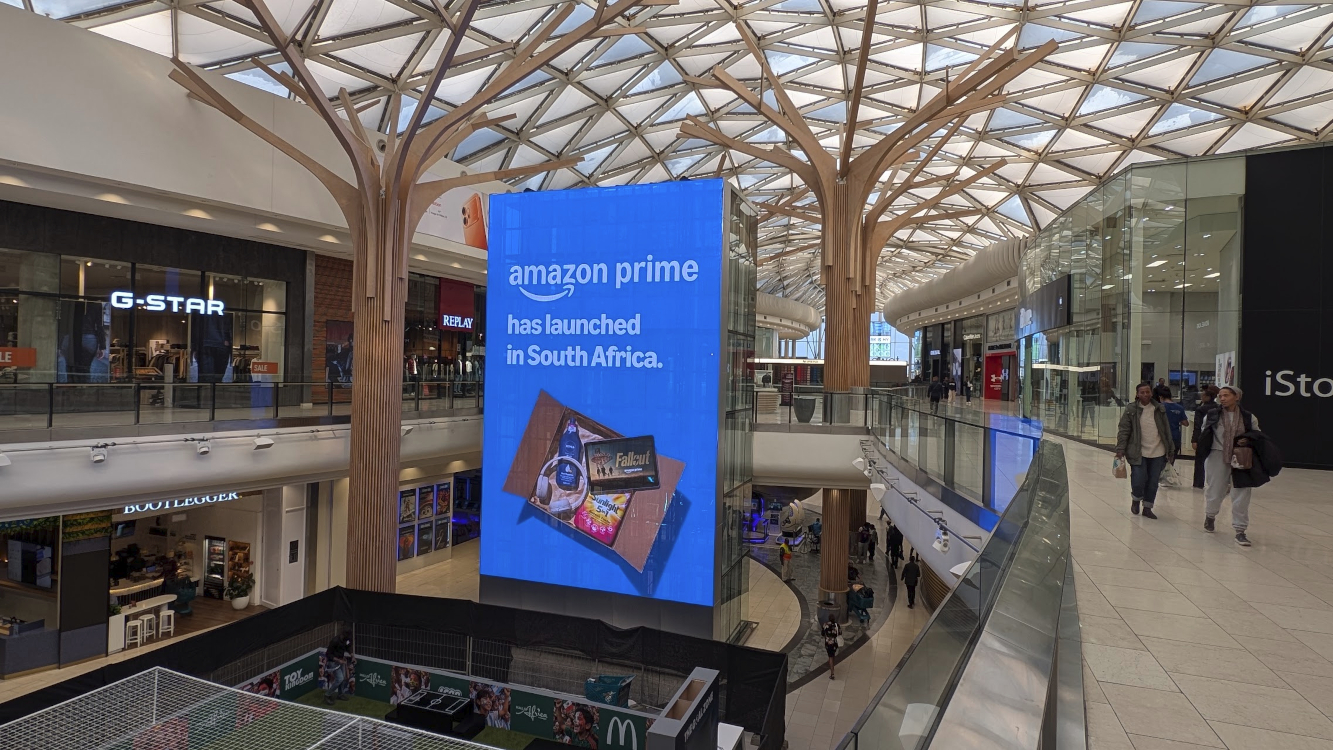
Mall of Africa: Retail Media Meets Retail Reality
Johannesburg | For the past decade, Mall of Africa has ranked among Johannesburg’s leading shopping destinations. The development is more than a mall: around it, an entirely new urban district has emerged, with offices, upscale apartments and a retail offer that would not feel out of place in Madrid, London or Paris.
Architecture is one reason why the mall has become such a strong shopping and entertainment destination in South Africa’s economic capital. The first surprise comes immediately on entering: Amazon is omnipresent as the dominant retail media advertiser. The e-commerce giant only recently introduced Prime benefits in South Africa – a campaign that not every mall tenant is likely to welcome. It is a classic example of non-endemic advertising in a retail environment.
Mall of Africa is also the country’s busiest mall, counting around 15 million visitors annually.
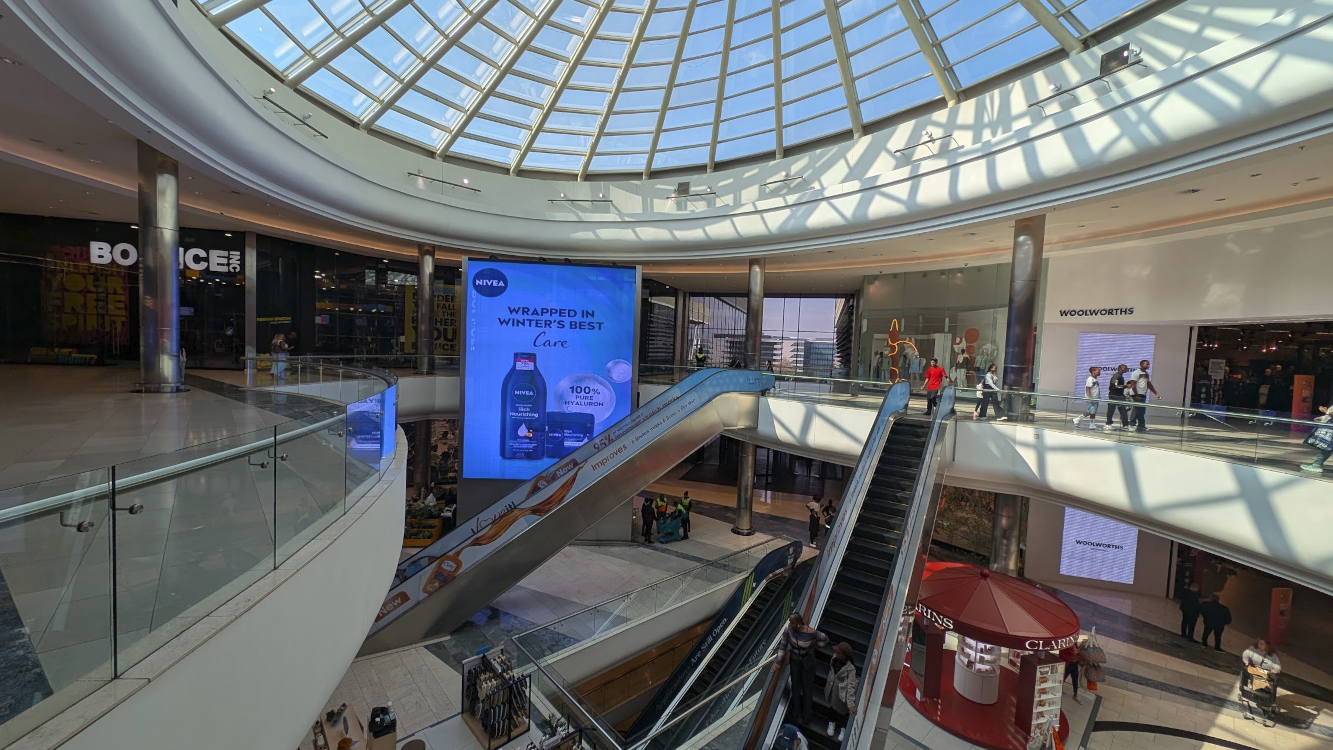
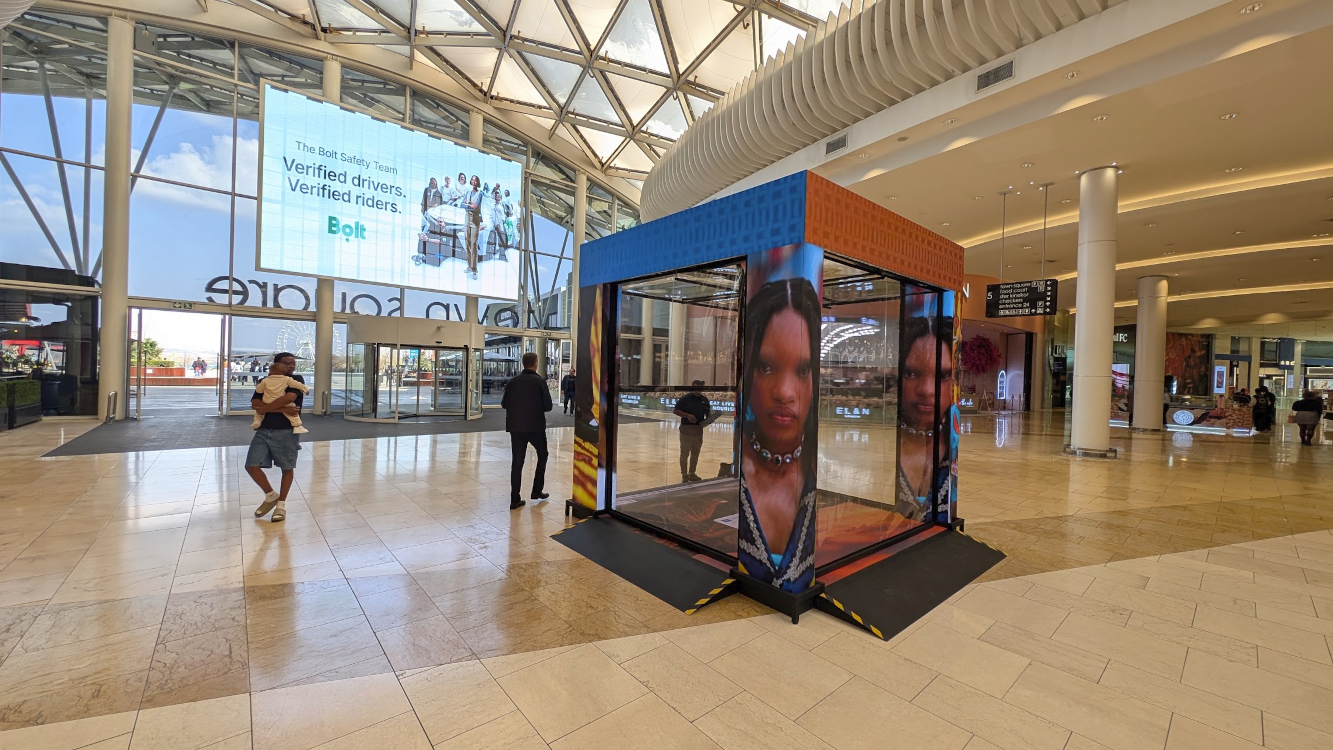
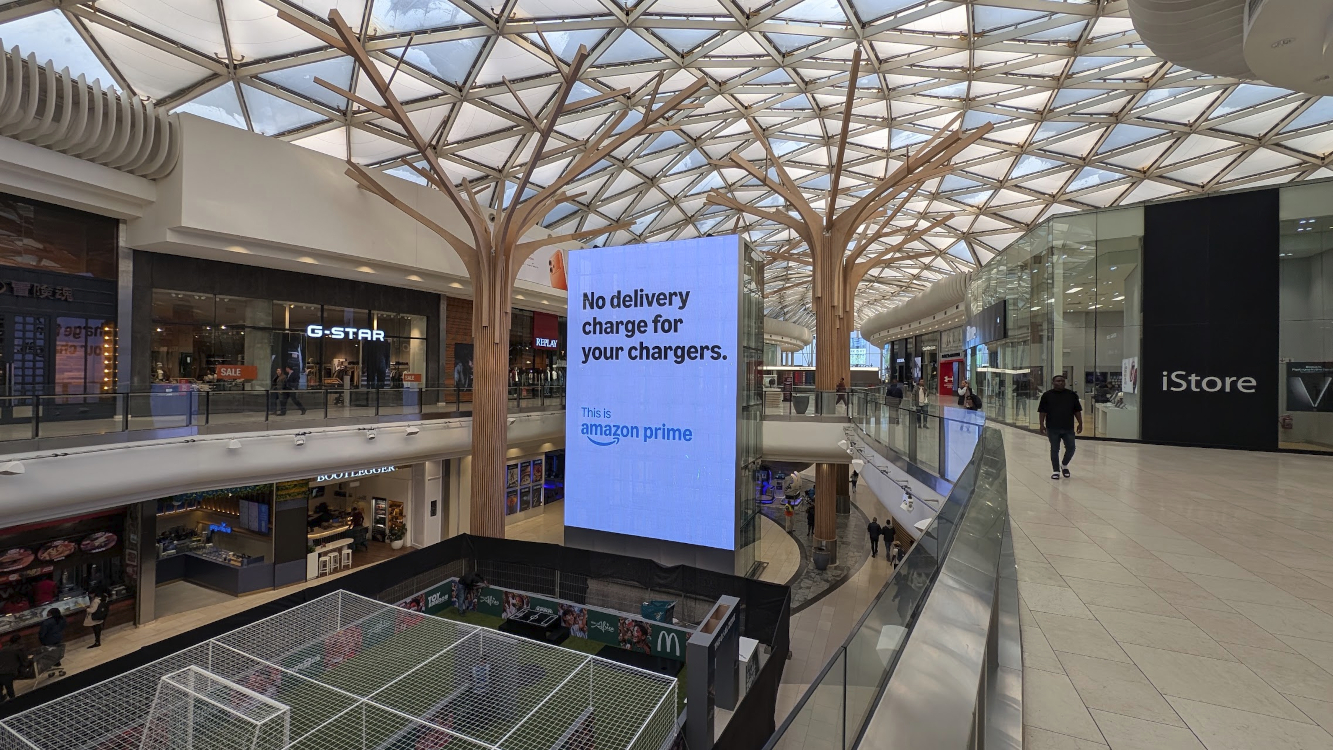
Transparent LED: The Right Technology for Atriums
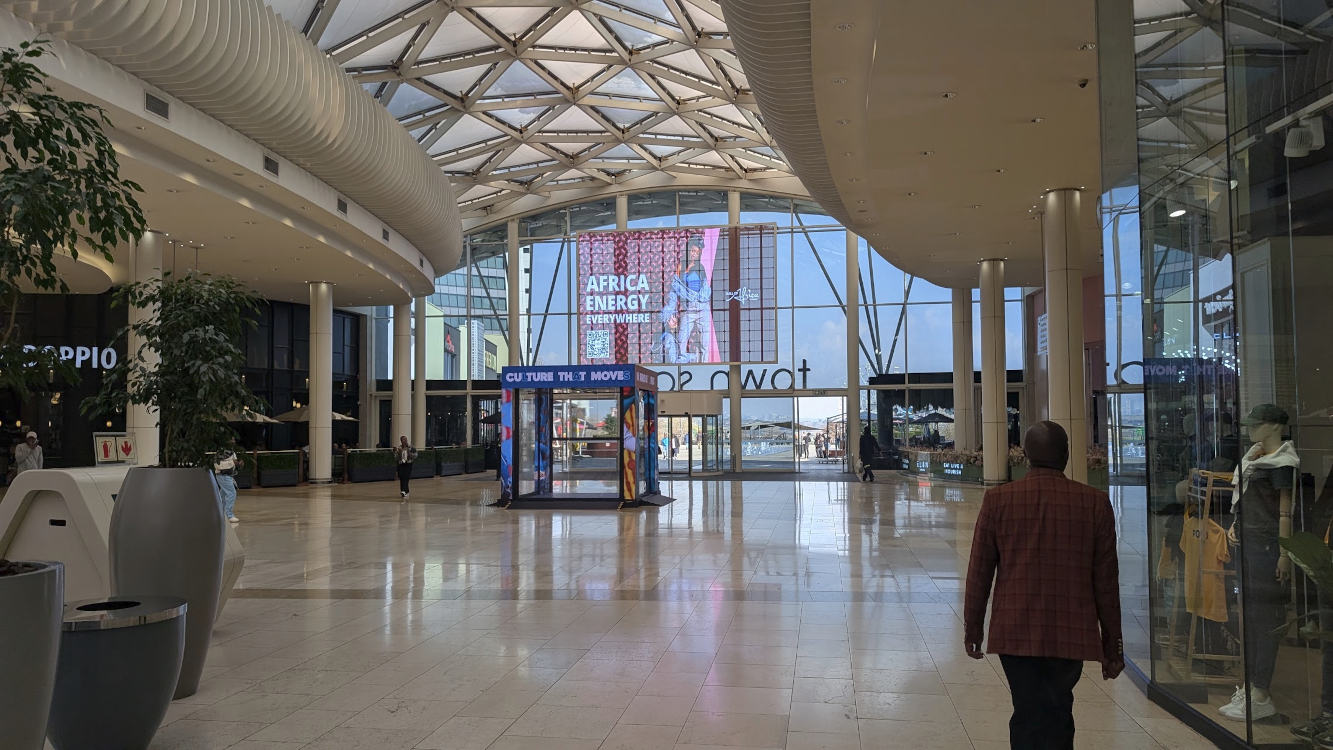
For its large-format LED installations, the mall follows the broader market trend toward transparent LED on freestanding glass elevator shafts and glass façades. The digital signage technology keeps sightlines open from the elevators and forecourt into the mall, while the resolution is good enough because viewing distances are typically large.
Lower weight, reduced power consumption, significantly lower acquisition costs and a lower fire load make transparent LED one of the most attractive options for large atriums and glass façades. In this type of architecture, it is often the smartest choice.
Adidas: Digital Signage on Rails
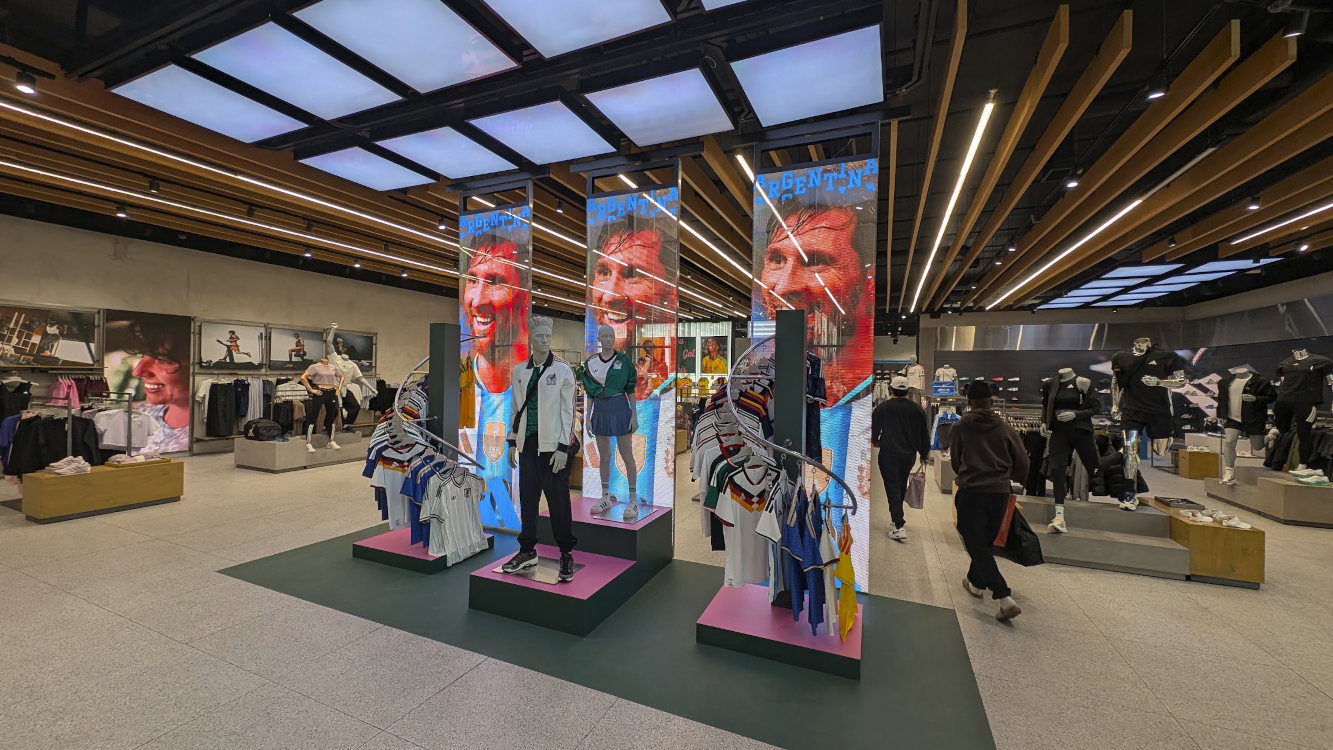
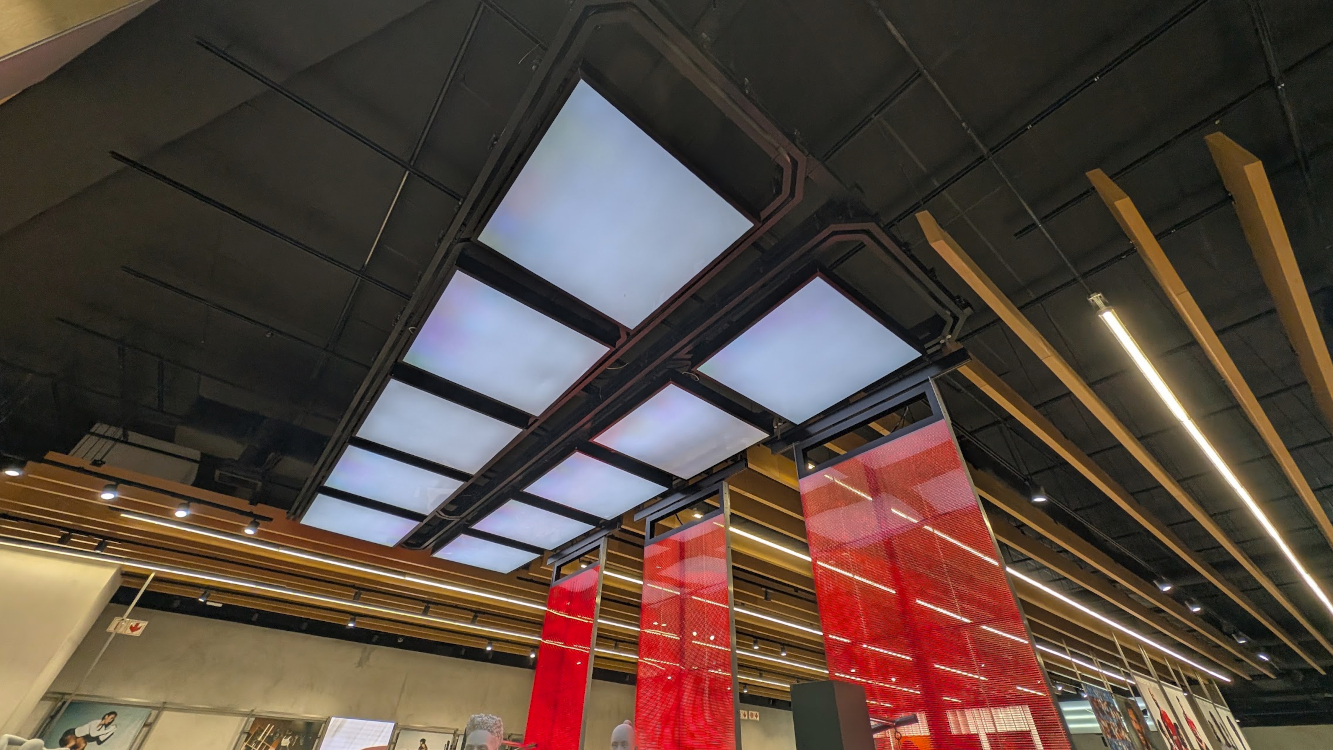
invidis visited the mall together with one of Africa’s leading digital signage architects behind many of its stores. One of the most impressive solutions was the rail system in the entrance area of the Adidas flagship store. Major sports brands use the entrance zones of their large-format stores as stages, with highlight areas that are redecorated at short intervals. Flexibility is essential – and digital signage has to be part of it.
At Adidas, the integrator PDT uses a proven mall technology in a new way: a ceiling-mounted track system normally used for sliding glass doors. Instead of glass panels, transparent LED elements move across the stage area. Power is supplied via a separate cable, but the setup allows the highlight zone to be refurbished within a single evening. A smart idea with real operational value.
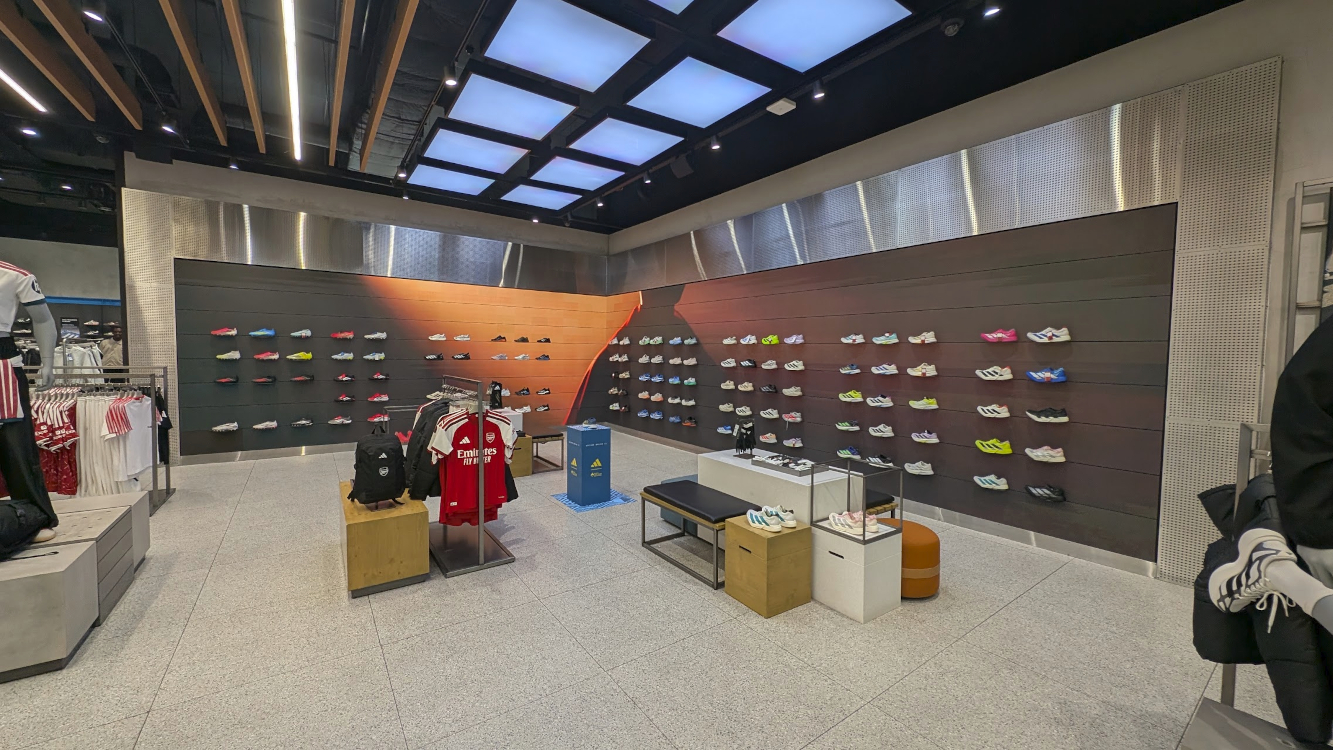
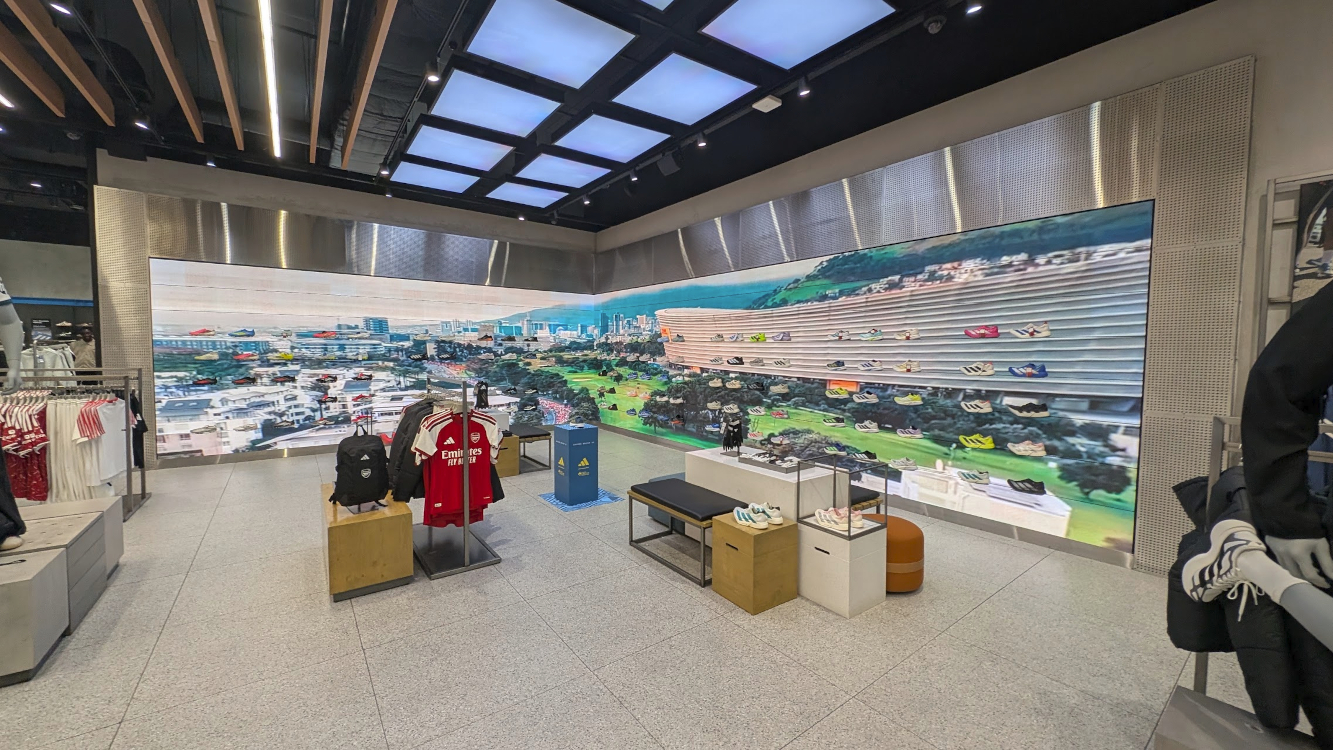
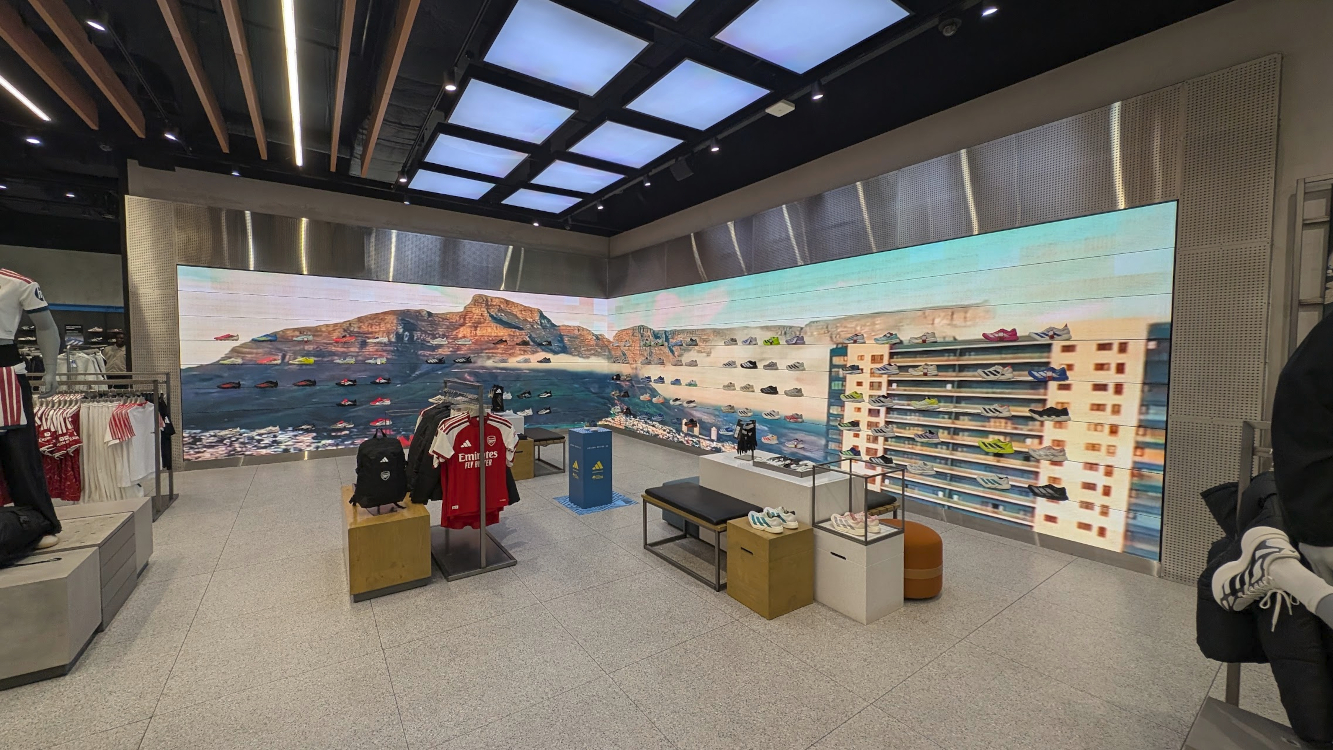
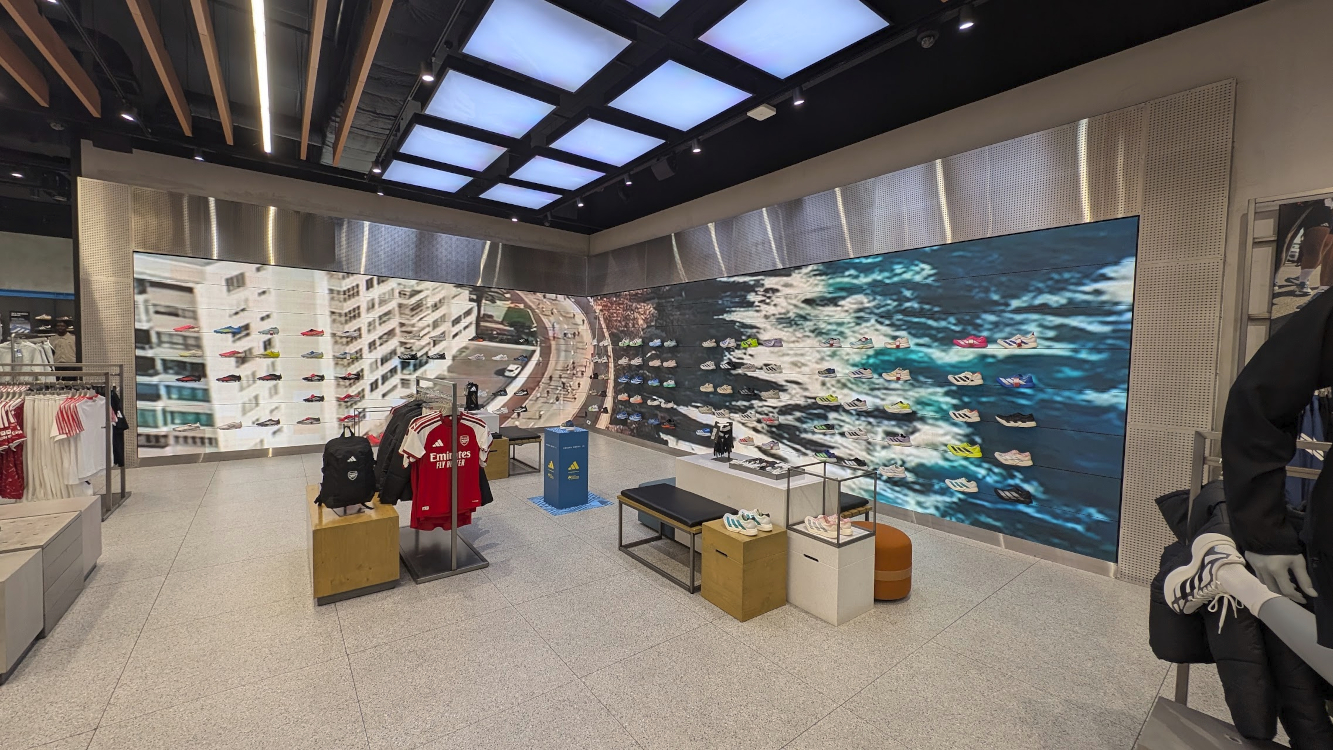
Another standout feature is Adidas’s digital shoe wall, which has become a signature element of the brand’s retail concept. At the Mall of Africa store, the installation wraps around a corner, extending the digital experience and creating a more immersive storytelling environment.
Interestingly, the Johannesburg flagship does without Adidas’s “Lift & Learn” technology, which the brand has trialled in other locations. In those stores, sensors embedded in the shoe holders trigger product information when a shoe is picked up. While the concept enhances product discovery, the LED wall’s relatively low pixel pitch makes it less suitable for displaying detailed specifications and text-heavy content directly adjacent to the footwear.
Pop-up retail, permanently installed
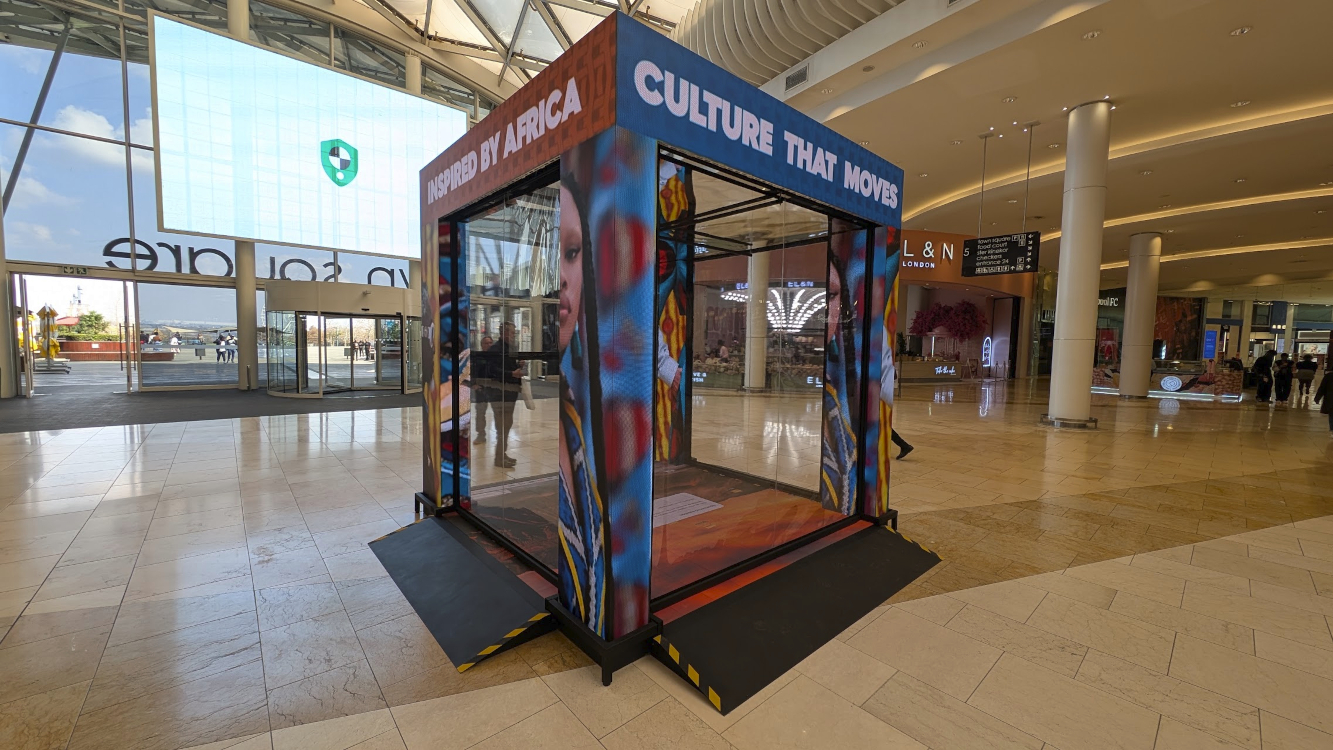
With occupancy above 95%, Mall of Africa offers little room for new tenants. To create opportunities for short-term retail concepts, the mall has introduced permanently installed pop-up spaces that can be activated at short notice. One example is Souq, a plug-and-play retail unit featuring a large LED display integrated into the glass façade as well as digital signage throughout the store. Brands simply move in with their products and content, while the digital infrastructure is already in place.
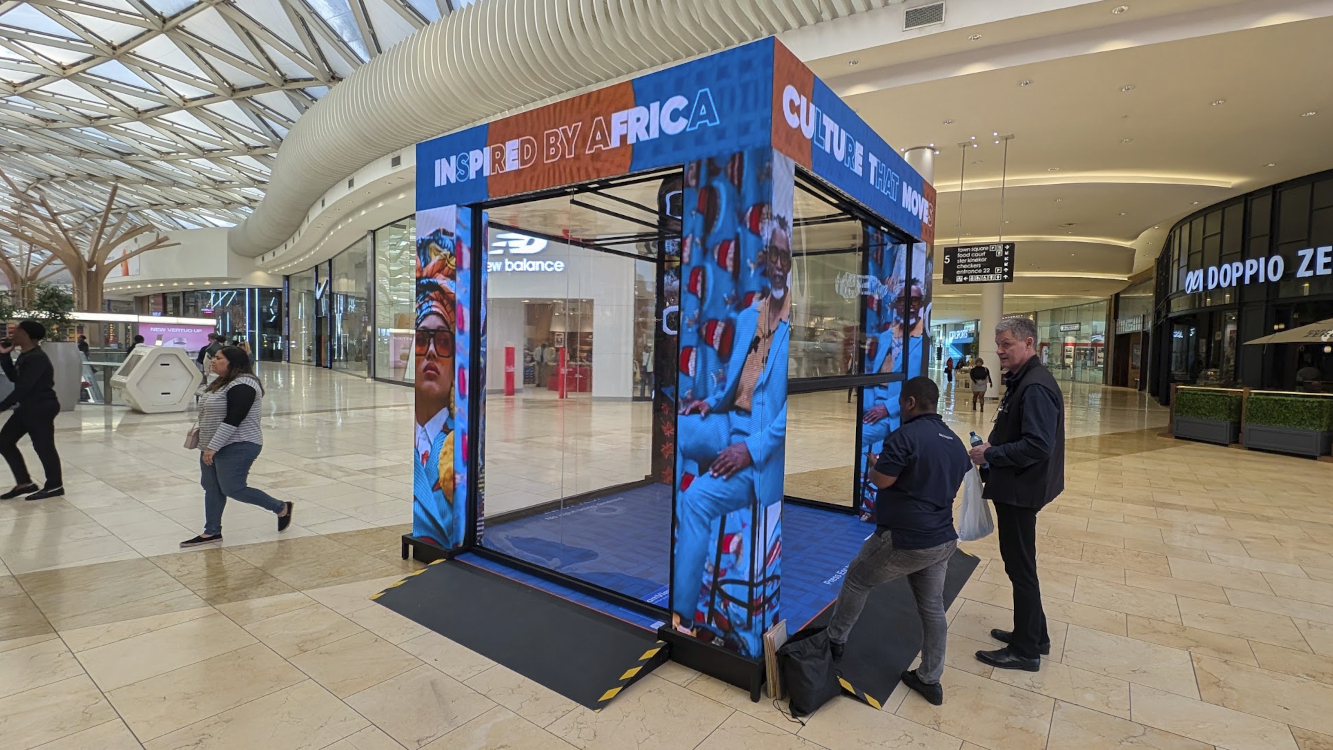
The latest addition is a digital pop-up experience zone located at one of the mall’s main entrances. The freestanding cube combines LED-clad columns and edges with an interactive LED floor, creating an immersive environment designed to maximize visibility and engagement. Pre-installed digital signage experiences enable tenants to quickly customize and brand the space with their own content, making it one of the mall’s most eye-catching activation locations.
Menu boards: ubiquitous, but rarely optimized
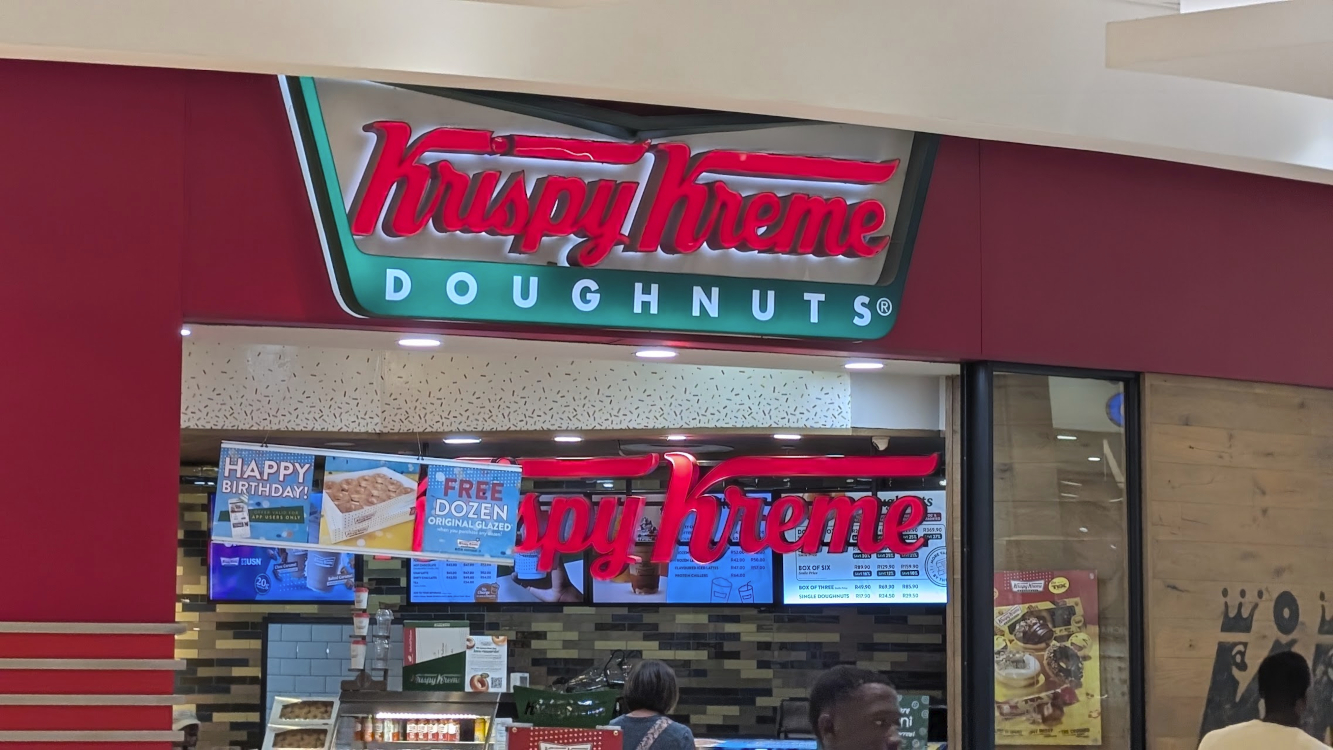
In the mall’s expansive food court, digital menu boards have become the norm. Almost every quick-service restaurant (QSR) operates a digital menu system, with installations and content that would look familiar in food courts around the world – for better or worse. Despite widespread adoption, many operators still struggle to exploit the full potential of digital signage beyond simply replacing printed menus with screens.
Krispy Kreme provides a textbook example of the gap between concept and execution. While the outlet is equipped with digital menu boards, the displays are difficult to see from a distance because they are partially obscured by prominent brand signage and hanging ceiling elements. It is a familiar retail scenario: a concept developed flawlessly at headquarters, only to lose effectiveness during on-site implementation. In the battle for customer attention, even the best digital menu board cannot perform if it is hidden from view.
Content Adoption best practice
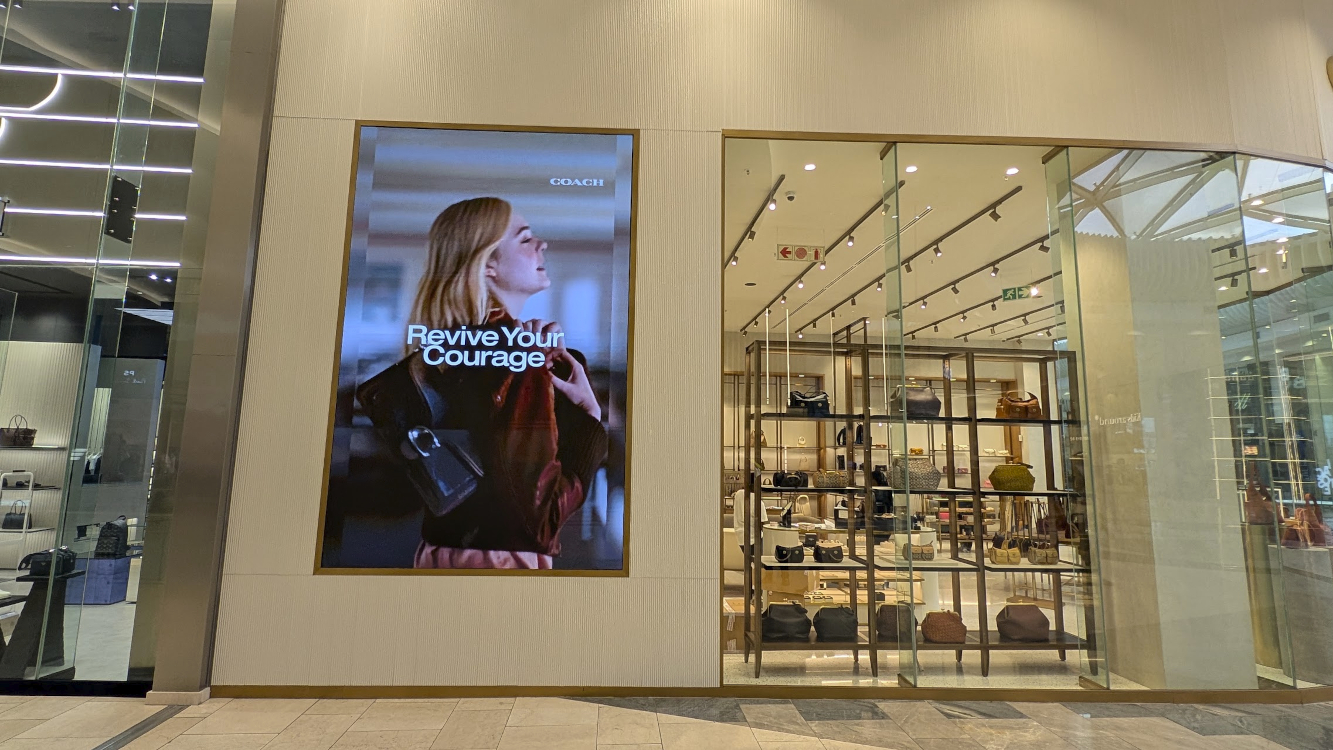
Coach provides a best-practice example. The brand opted for LED instead of LCD, but the corporate content was created in a 9:16 aspect ratio while the LED wall itself is slightly wider – a common challenge in digital signage. Coach did not take the easy route by simply stretching the content to fill the full width. Instead, the agency clearly understood how digital signage should work: the 9:16 content remained intact, while blurred filler visuals on the left and right extended the image across the videowall. This is exactly how it should be done.
- DooH Advertising: Screenverse Adds Western Union’s 2,600-Screen Network
- Smart Offices: Humly and Comeen Integrate Room Displays and Workplace Management
- DCLP: Infinitus Launches New Outdoor Display
- International Distribution: One Equity Partners Acquires Nexora
- Industry Awards: DPAA Names 2026 Leading Women In Digital Media