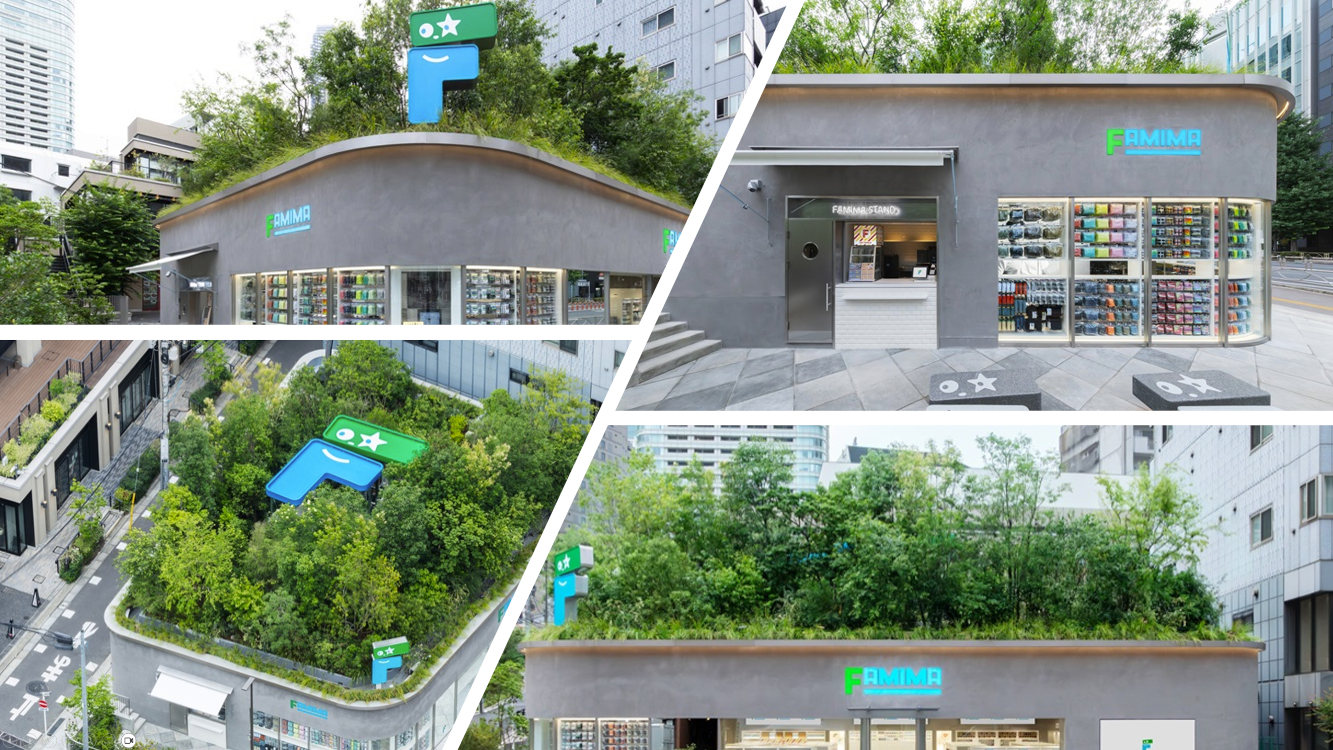
Family Mart has opened one of the most ambitious convenience stores in Japan. Famima Park in Tokyo's Azabudai district combines architecture, retail design, foodservice, and brand experience in a format that challenges many conventions of convenience retail. At 217 square meters, the store remains relatively small. Yet every detail serves a purpose. FamilyMart designed the location as a testbed for future store concepts, with selected elements set to roll out across its national network.
Family Mart: Reinventing the Convenience Store
Convenience stores play a unique role in Japan. Chains such as Family Mart, Lawson, and 7-Eleven (all Japan headquartered) function as essential neighborhood infrastructure. Customers visit daily for food, drinks, bill payments, tax payments, parcel collection, ticketing, and other services.
Most stores maximize every square meter. Product density is high. Digital menu boards and retail media screens are standard. Store designs tend to follow strict formats optimized for efficiency.
Famima Park takes a different approach. The store focuses on customer experience, visual merchandising, and place-making while maintaining the convenience store’s core mission.
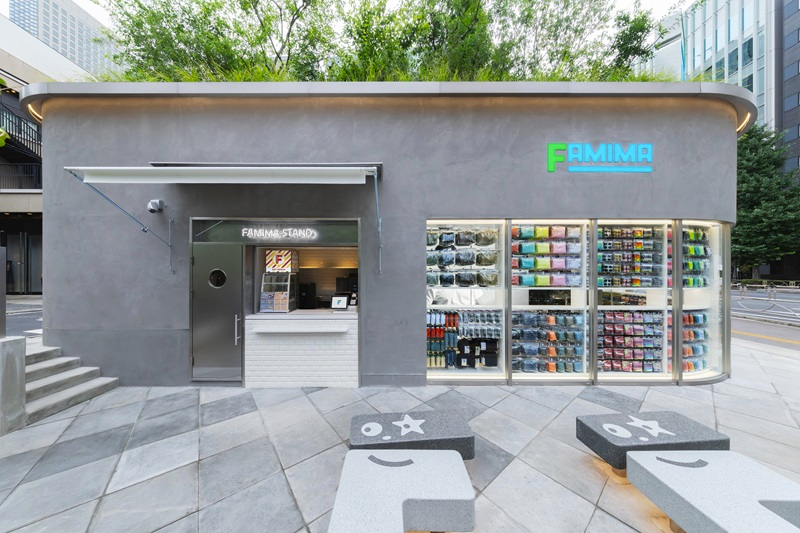
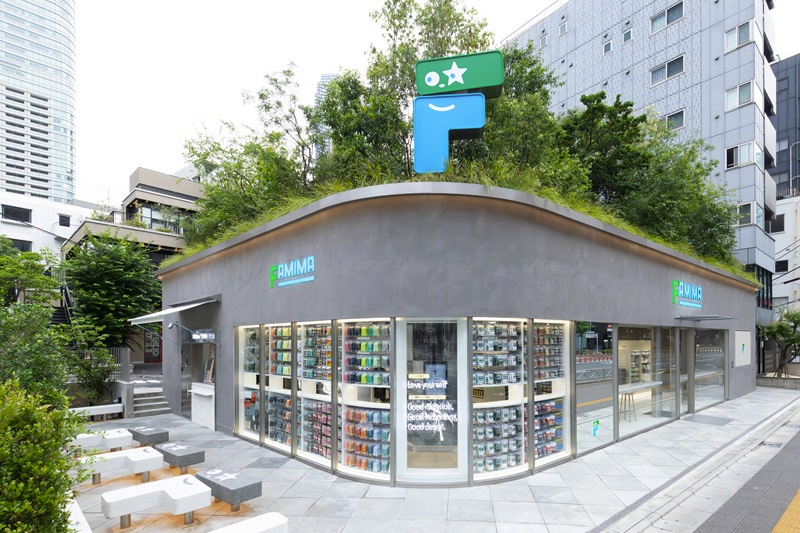
Designed by Nigo
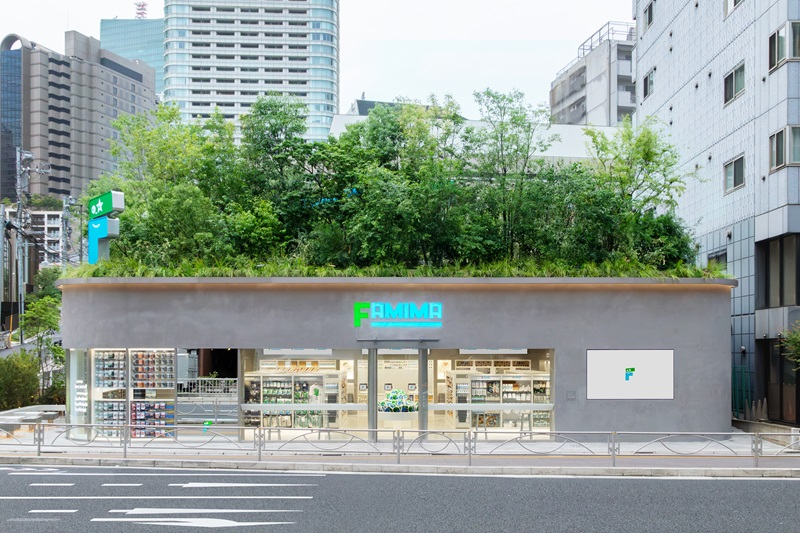
The architectural and retail design carries the signature of Nigo, the Japanese street-fashion designer best known for his work with Kenzo, Louis Vuitton, and A Bathing Ape.
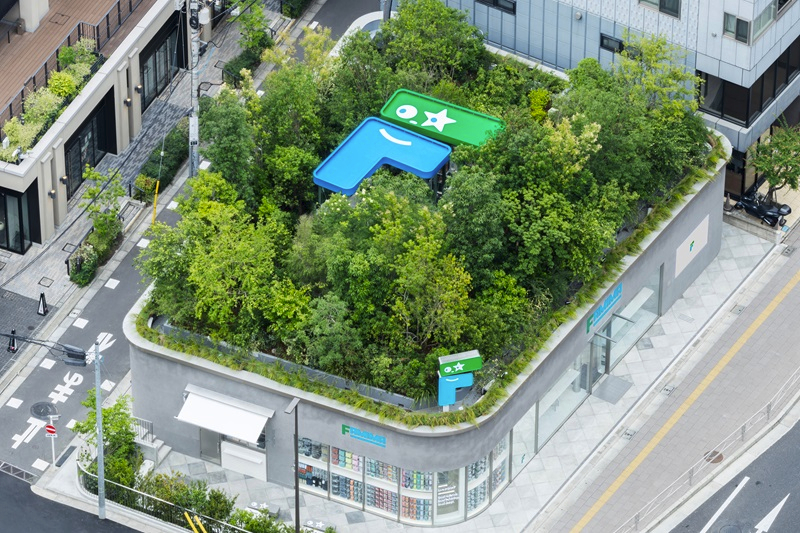
The result looks very different from a traditional FamilyMart convenience store. Most striking is the rooftop forest and the integration of FamilyMart’s mascot into the architecture. Characters appear on rooftop elements and building corners, creating visibility from both street level and neighboring high-rise buildings.
The store aims to become a landmark within the affluent Azabudai Tokyo neighborhood rather than simply another convenience store location.
A rooftop forest in the city
The most distinctive element sits above the store. FamilyMart has created a rooftop forest that reflects the greenery and urban character of Azabudai. Together with outdoor seating and branded benches, the space feels closer to a small public park than a convenience store forecourt.
A takeaway concept called Famima Stand allows customers to purchase food and beverages without entering the store adapting the in the US very popular drive-thru concept to Japan’s needs.
But in contrast to drive-thru, the concept encourages longer dwell times. Visitors can grab a coffee, tea, or FamilyMart’s popular Fami-Chiki fried chicken and stay on site. For a convenience retailer, this represents a significant shift in how physical space supports customer engagement.
Visual merchandising takes center stage
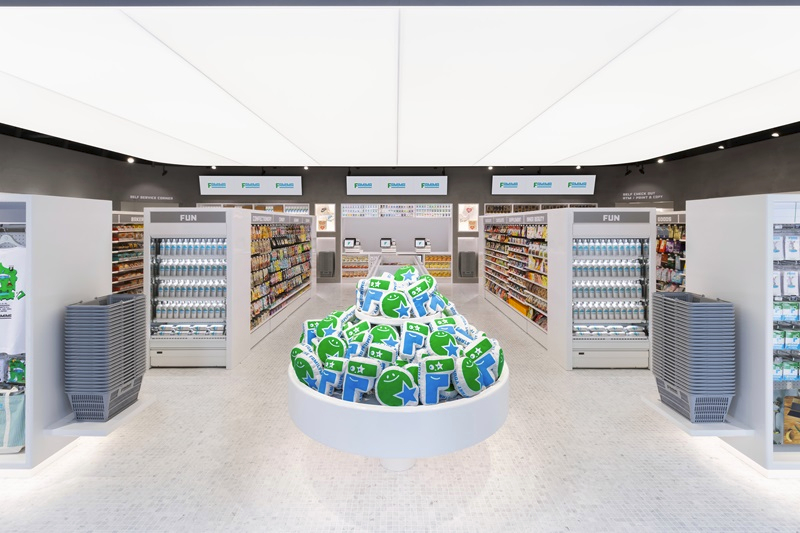
The biggest departure from traditional convenience retail happens inside the store. FamilyMart has rethought visual merchandising from the entrance to the checkout.
A counter seating area runs along the glass façade, making the interior visible from outside and creating activity that attracts passers-by.
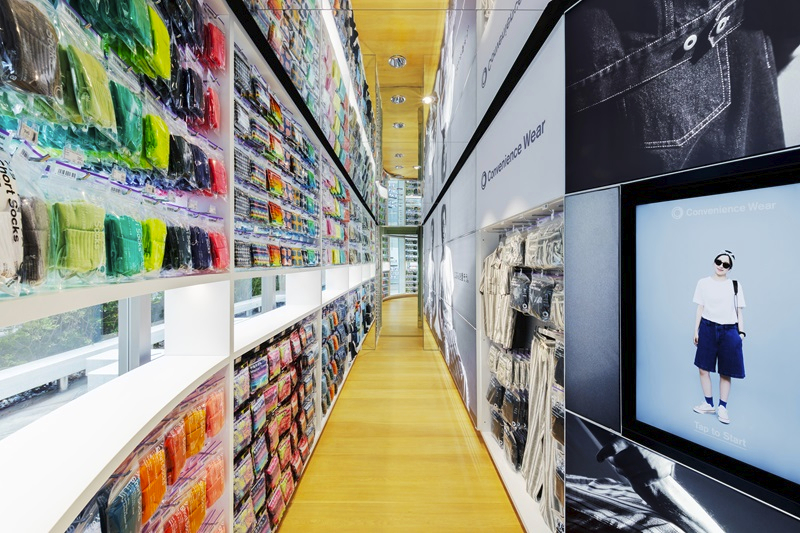
The central merchandising concept focuses on discovery. Iconic FamilyMart products guide customers through the store, creating a shopping experience that feels closer to a branded pop-up store than a typical convenience store.
Several areas stand out:
- A dedicated convenience wear shop-in-shop
- Expanded product presentation zones
- Curated displays featuring key FamilyMart products
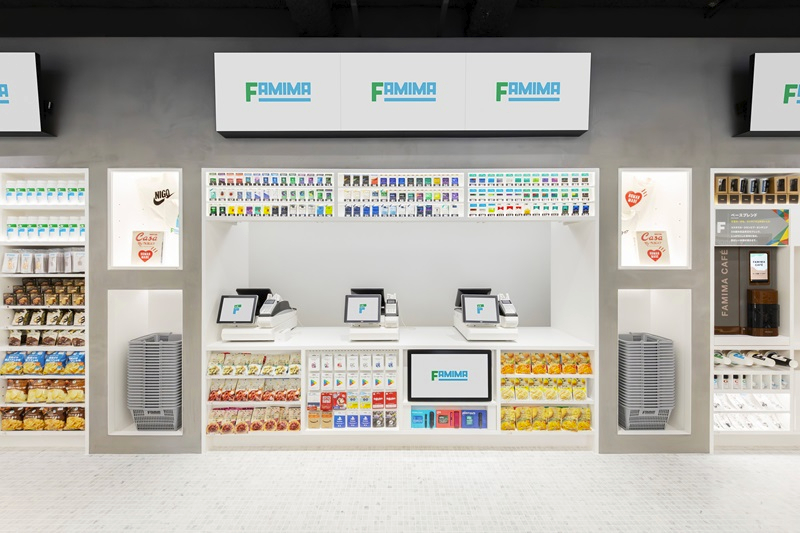
- A kiosk-style checkout area with merchandise integrated into the front wall
The layout encourages browsing and product interaction. Customers encounter key categories throughout their journey rather than only at destination points.
All digital signage screens are LED screens – inside above the check-out – and outside on the facade. The inside LED form factor follows the same aspect ratio as the standard 3×1 LCD based installation Family Mart uses in their regular stores. That makes it easy to reuse existing content.
Human service remains important
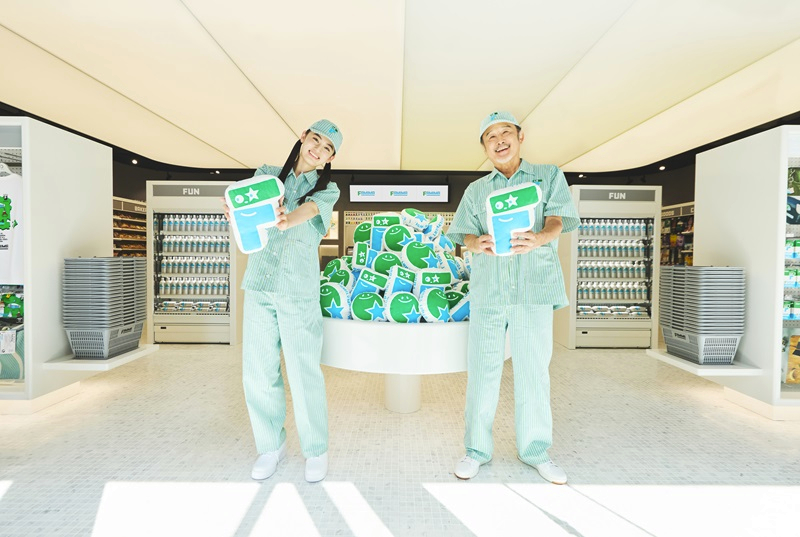
While technology continues to expand across Japanese retail, Famima Park puts equal emphasis on human interaction.
The store includes multilingual support and dedicated product advisors. Lighting, materials, uniforms, and customer service standards form part of a carefully coordinated experience.
FamilyMart wants every touchpoint to support the brand. That includes architecture, merchandising, foodservice, and staff engagement.
What retailers can learn
Famima Park demonstrates how convenience retail can evolve beyond efficiency. Three lessons stand out:
- Architecture can strengthen brand identity and local relevance.
- Visual merchandising remains a powerful tool, even in small-format retail.
- Public space and foodservice can increase dwell time and customer engagement.
For digital signage professionals, the project offers another reminder. Technology alone does not create memorable retail experiences. The strongest concepts combine digital touchpoints with architecture, merchandising, and human interaction.
FamilyMart’s latest concept store shows how a convenience store can become a neighborhood destination while staying true to its everyday role. In one of Tokyo’s most competitive districts, that may be the most important innovation of all.
- OoH/DooH: Wildstone To Digitize Seven Billboards At Sydney Olympic Park
- Experiences: Gulf Expertise for India’s Iconic Projects
- Programmatic DooH: Context Networks Taps Broadsign To Expand Casino Screen Advertising
- Industry Events: Byron Allen To Open DPAA’s Video Everywhere Summit
- Research/Analysis: Cedia Values US Residential Technology Market at US$33.8 Billion