
Digital signage at EV charging stations has not become the advertising gold rush many expected. But a new generation of charging destinations shows where screens, light, architecture, and customer experience can create real value.
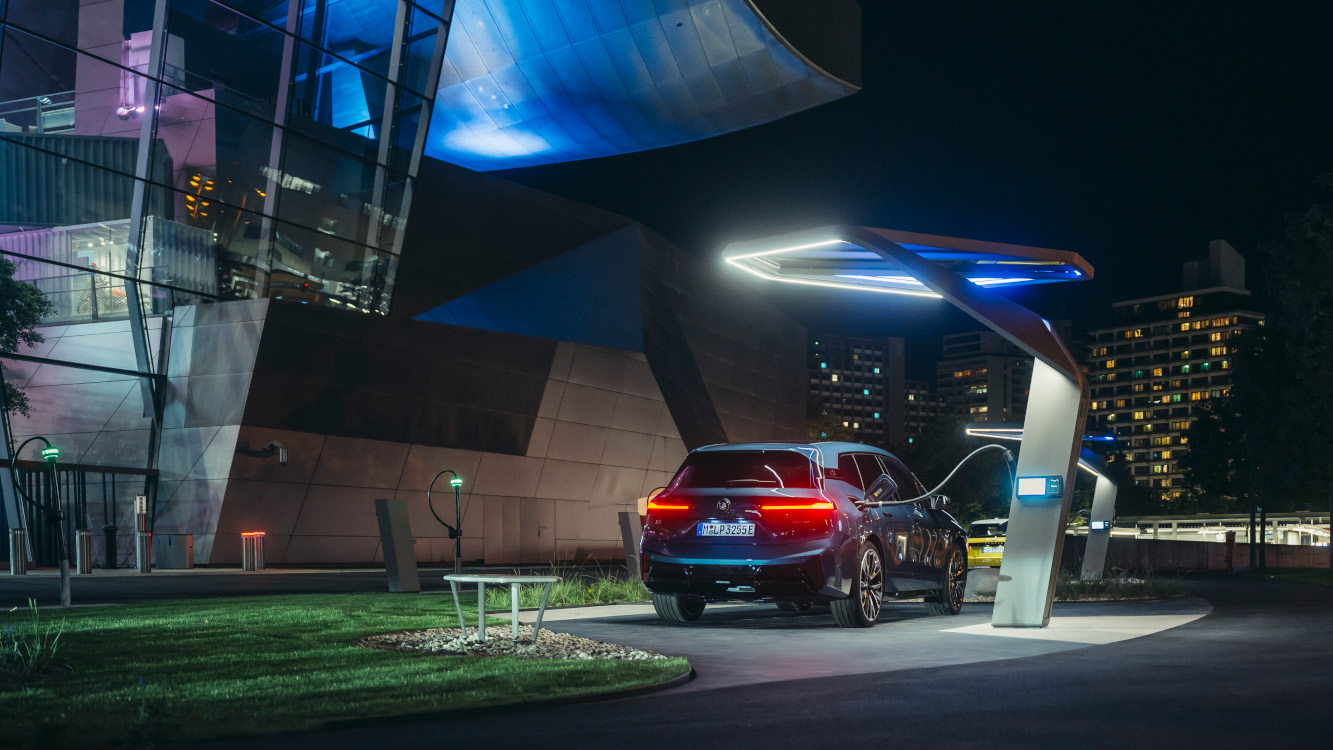
EV Charging: From Functional Stop to Brand Experience
The idea sounded compelling: every charging point becomes a digital touchpoint, every dwell time a media opportunity, every driver a captive audience. For a short while, EV charging looked like the next major frontier for digital-out-of-home.
Reality has been more sober. Apart from selected operators such as Jolt in Australia, the concept of large advertising screens at every charger has not yet scaled. Most EV charging stations remain highly functional infrastructure: useful, necessary, and often poorly visible. But the market is changing. The most advanced operators are no longer designing chargers as isolated hardware. They are designing places.
BMW Welt: Charging as an Urban Oasis
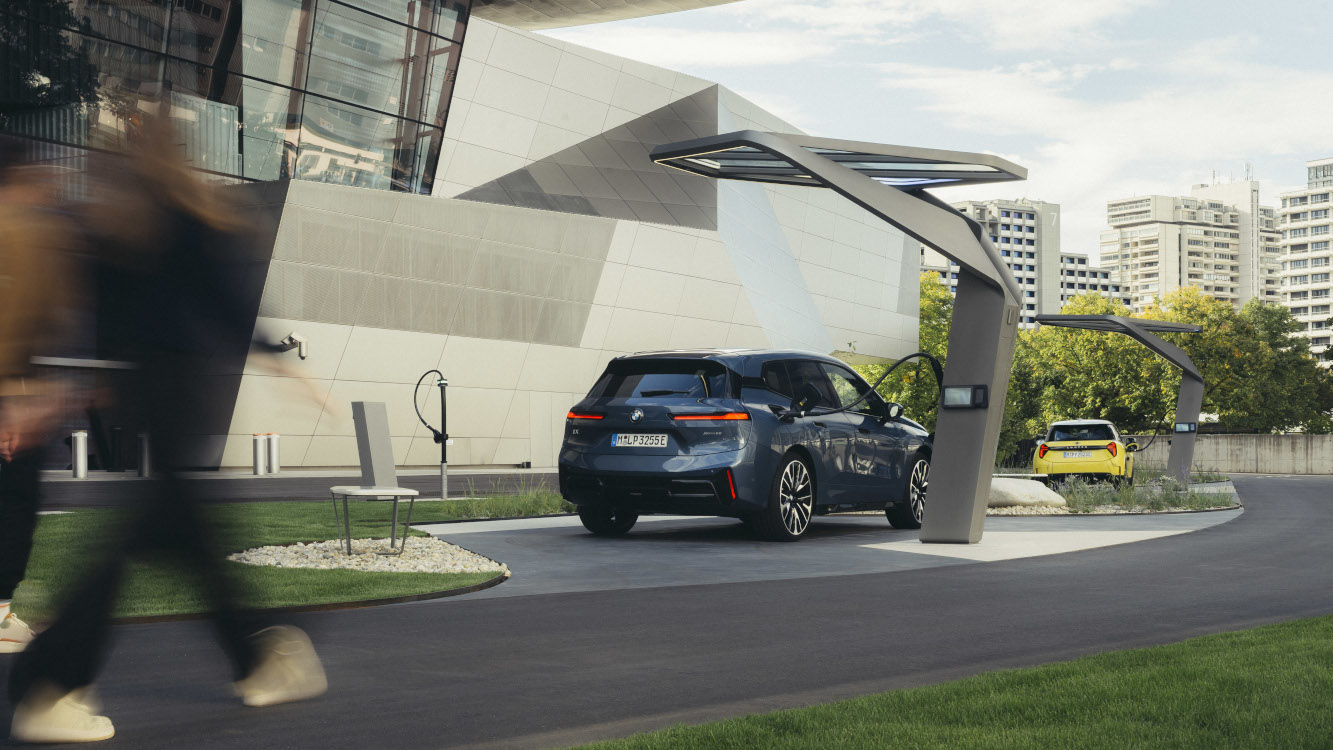
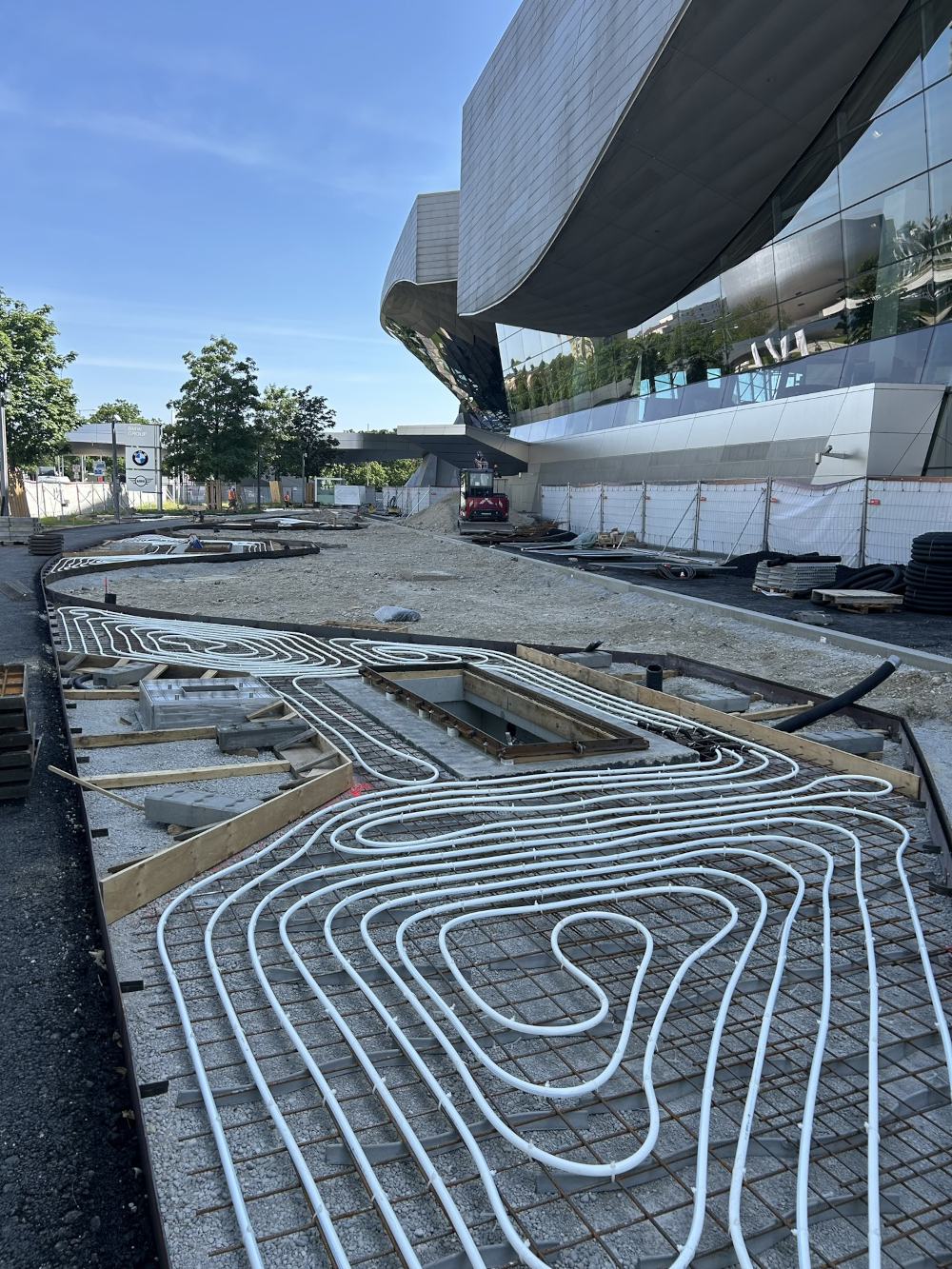
One of the most striking examples can be found directly in front of BMW Welt in Munich. Developed by BMW Group Designworks, the new high-power charging park stages charging as a calm, premium experience in the urban environment.
The design language is deliberately different from the classic petrol station. Instead of pumps and pylons, BMW uses so-called Charging Trees: sculptural, high-power charging elements that rise from the ground and combine protection, orientation, and strong visual identity. The goal is not only to create a place to plug in a vehicle, but a branded experience aligned with the architecture of BMW Welt.
Light plays a central role. Sensors detect approaching vehicles, while LED sequences accompany the driver from arrival to active charging and departure. The station reacts, communicates, and guides. While vehicles can charge at up to 400 kW, drivers are encouraged to pause rather than hurry.
The experience also extends below the surface. A formerly sealed area was transformed into a more open, green, and permeable landscape. Existing trees were integrated, green and gravel areas improve water permeability, and local materials such as natural stone from the Isar and terrazzo connect the project to its surroundings.
Even waste heat from the charging process is used: it is channeled into the ground to help reduce ice and slipperiness in winter. It is a small but telling detail. The charging park is not only about energy transfer; it is about comfort, safety, and atmosphere.
Electra: Visibility, Screens, and Hospitality
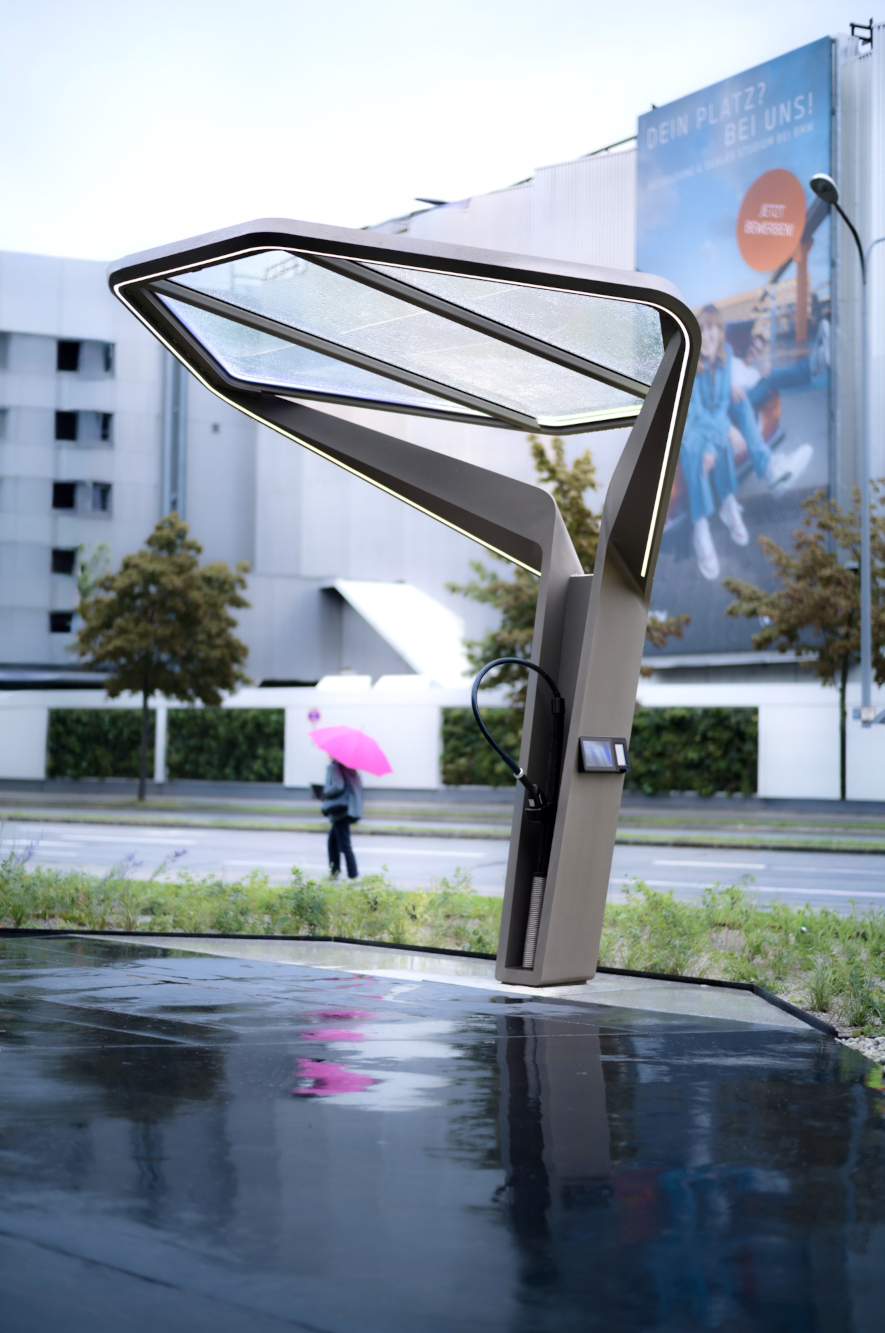
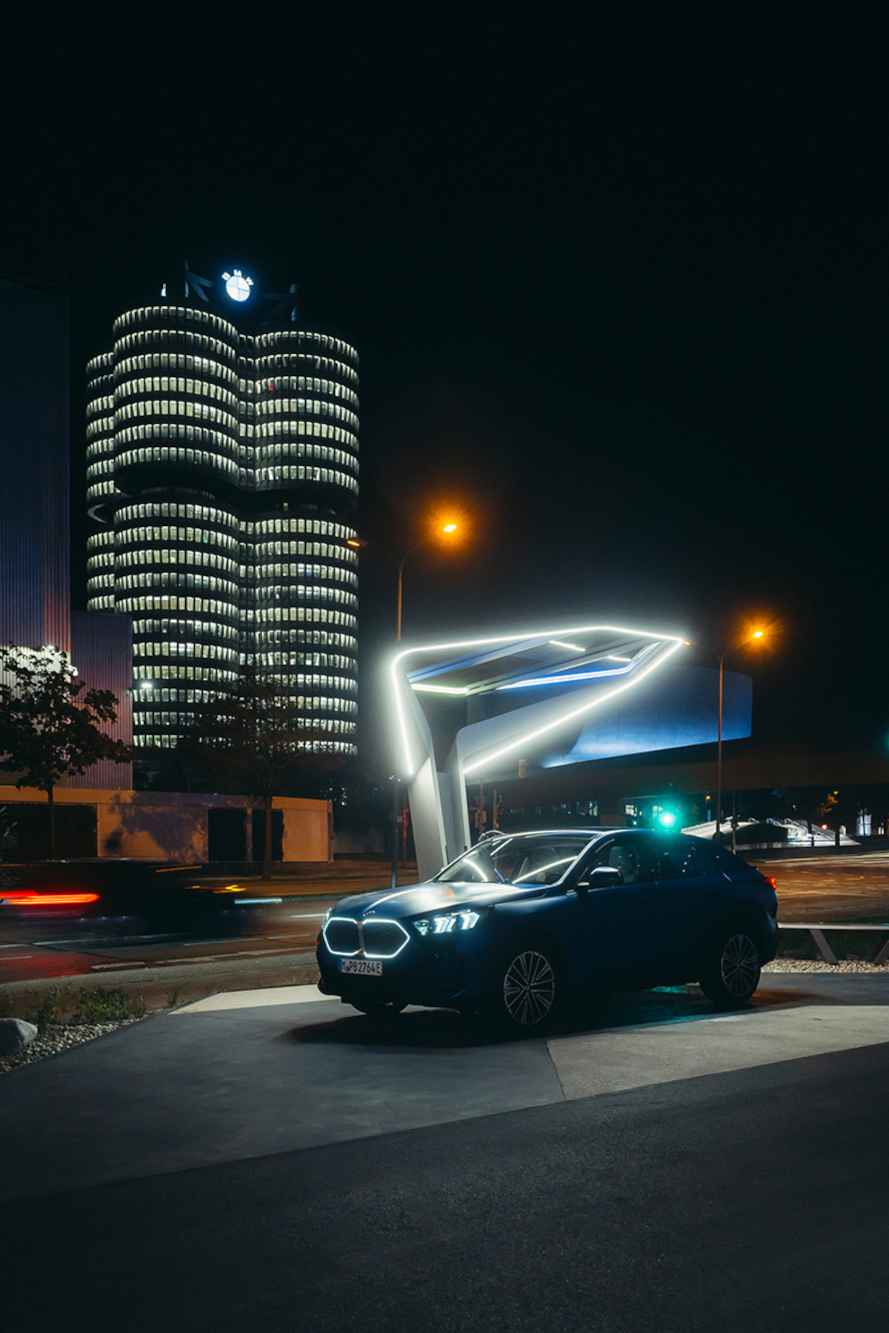
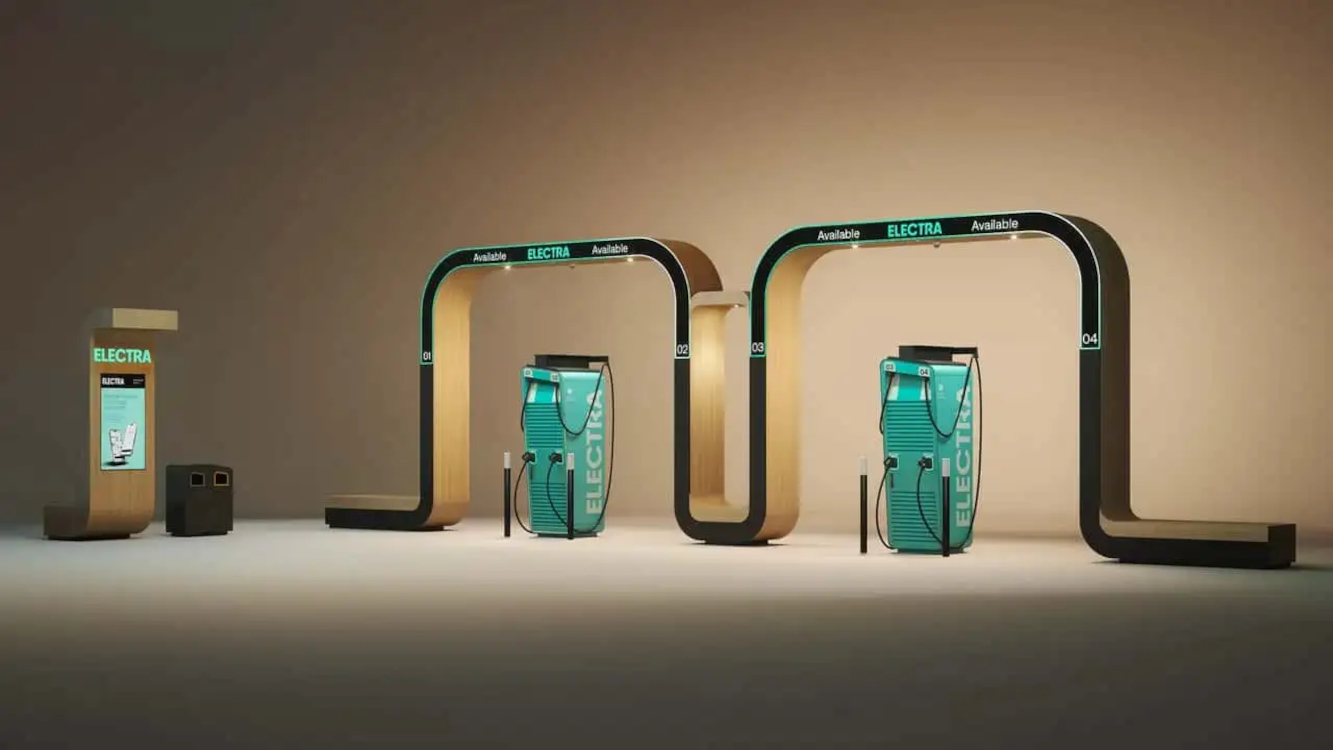
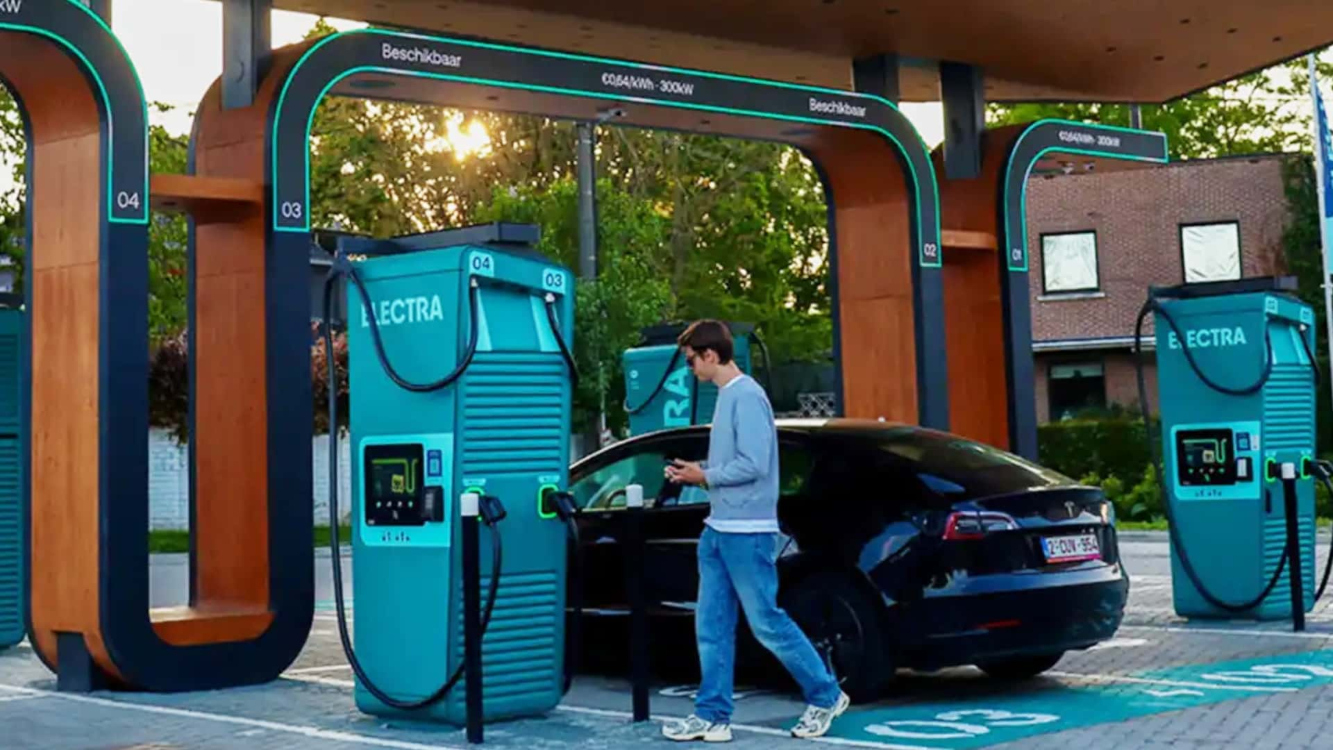
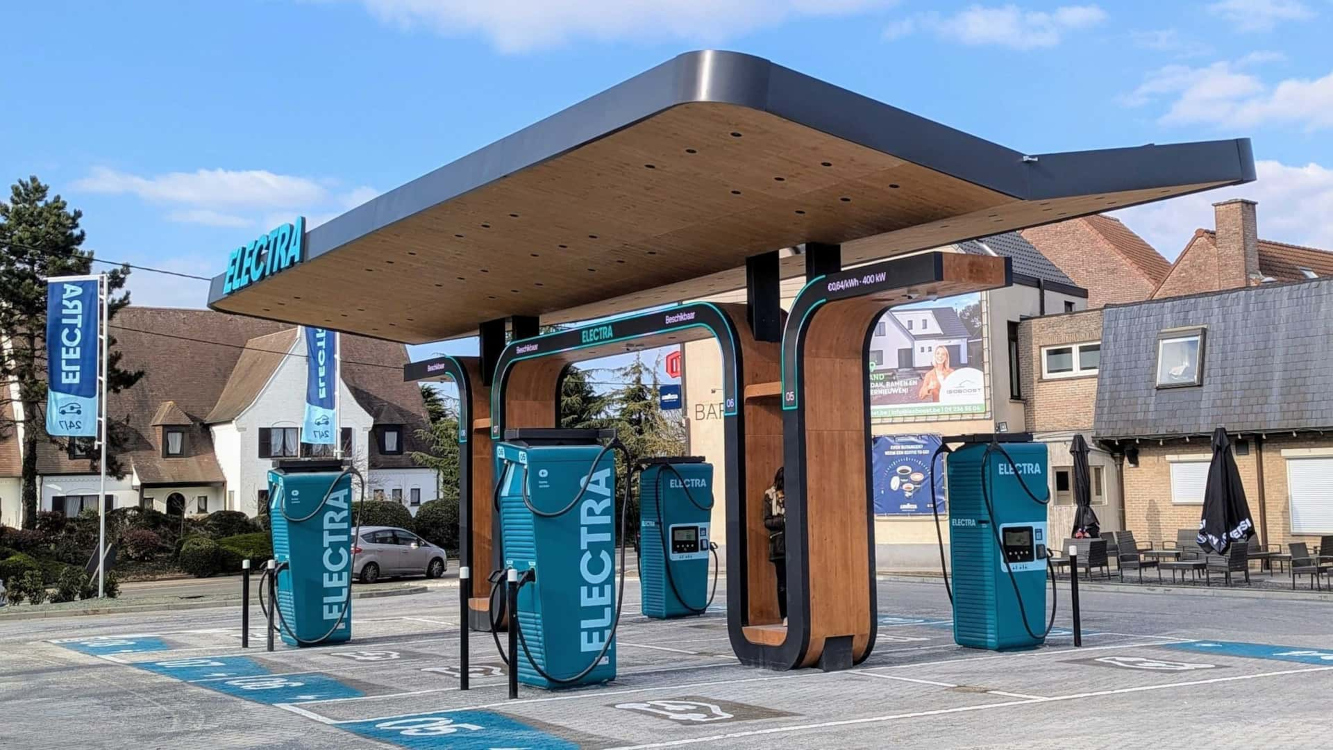
French charge point operator Electra is taking a more explicitly signage-driven approach. With its Electraline concept, the company is turning charging hubs into highly visible destinations that combine canopy architecture, LED communication, and hospitality elements.
The challenge is obvious: unlike petrol stations, many fast-charging hubs are easy to miss. Electra addresses this with LED screens integrated into canopy pillars and totems that display practical information such as price per kilowatt-hour, charger availability, reserved bays, charging status, and power output.
For digital signage, this is a more promising use case than generic advertising. The screens are part of the service journey. They reduce friction, make the station visible from a distance, and provide reassurance during the charging process. In urban environments, where bays are often occupied and drivers are under time pressure, this information has immediate value.
Electra also adds comfort features such as shaded areas, seating, and modular station formats. The ambition is clear: the charging stop should feel less like waiting and more like a short, useful break.
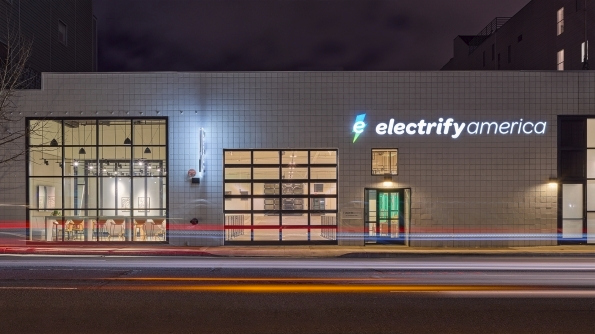
Electrify America: Charging Moves Indoors
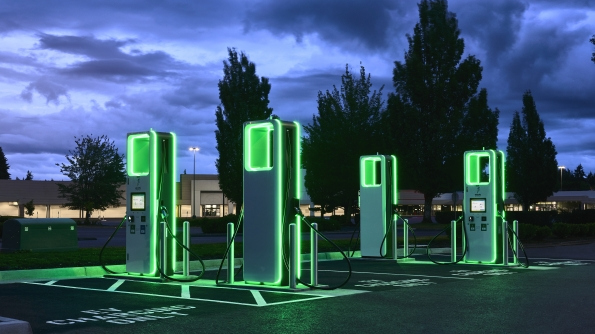
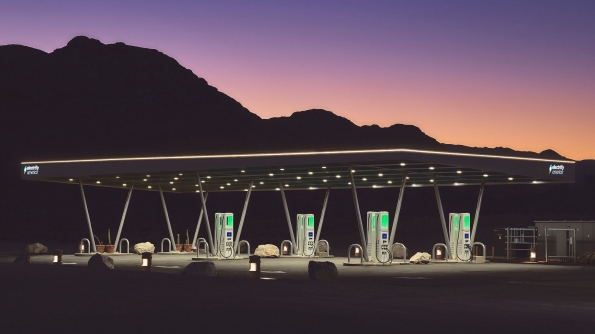
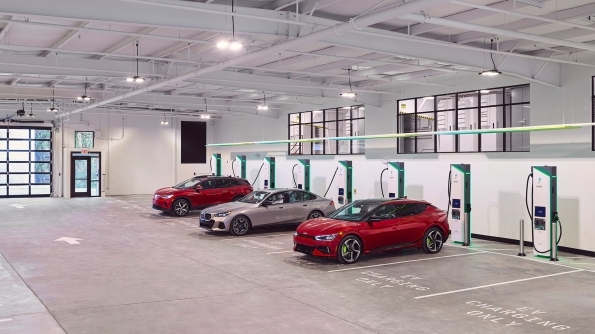
In the United States, Electrify America is experimenting with another model: the flagship charging destination. Its indoor station in San Francisco combines 20 hyper-fast chargers with 24/7 access, monitoring and security, climate-controlled lounges, vending, restrooms, and Wi-Fi.
For dense urban locations, the indoor model solves several pain points at once: safety, weather protection, reliability perception, and customer comfort. It also shows how charging infrastructure is moving closer to retail, mobility hubs, and service environments.

The Signage Lesson: Screens Need a Role
The early digital signage narrative around EV charging was too media-centric. It assumed that dwell time alone would create attention. But charging is not a passive media moment; it is a service moment. Drivers want availability, price transparency, clear instructions, payment confidence, and a safe environment.
The best new charging concepts use signage, lighting, and displays as part of the customer experience. Screens become wayfinding, status communication, brand marker, and reassurance tool. Advertising may still have a role, but only when it does not interfere with the primary task: making charging simple, transparent, and comfortable.
- Hospitality Displays: Samsung’s The Frame Hospitality TV Now Available In The US
- India: Kramer Creates Flexible Meeting Spaces for Sailpoint
- US$18 Million Cost-Cutting Plan: Daktronics to Close Ireland Factory
- Sphere Abu Dhabi: Blue Rhine Wins Exosphere Installation Contract
- Joan Interview: From E-Paper Pioneer to Workplace Platform