
Outfront Media says its OoH network covered about 92 percent of World Cup matches played in the US, with a presence in 10 of the country's 11 host markets.
Branding Opportunities: World Cup Puts OoH in Spotlight Across US Host Cities
The 2026 Fifa World Cup provided brands with a major advertising platform well beyond the stadiums, as millions of fans gathered in host cities and followed the tournament across the US.
Campaigns ranged from massive temporary building wraps in Atlanta and Miami to digital countdowns, transit advertising and market-specific activations designed to reach fans beyond the stadiums.
Outfront Media had a presence in 10 of the 11 US host markets, providing coverage around 92 percent of matches played in the country through digital signage, traditional OoH and experiential activations. The company also partnered with six Fifa host committees.
Building wraps and digital countdowns
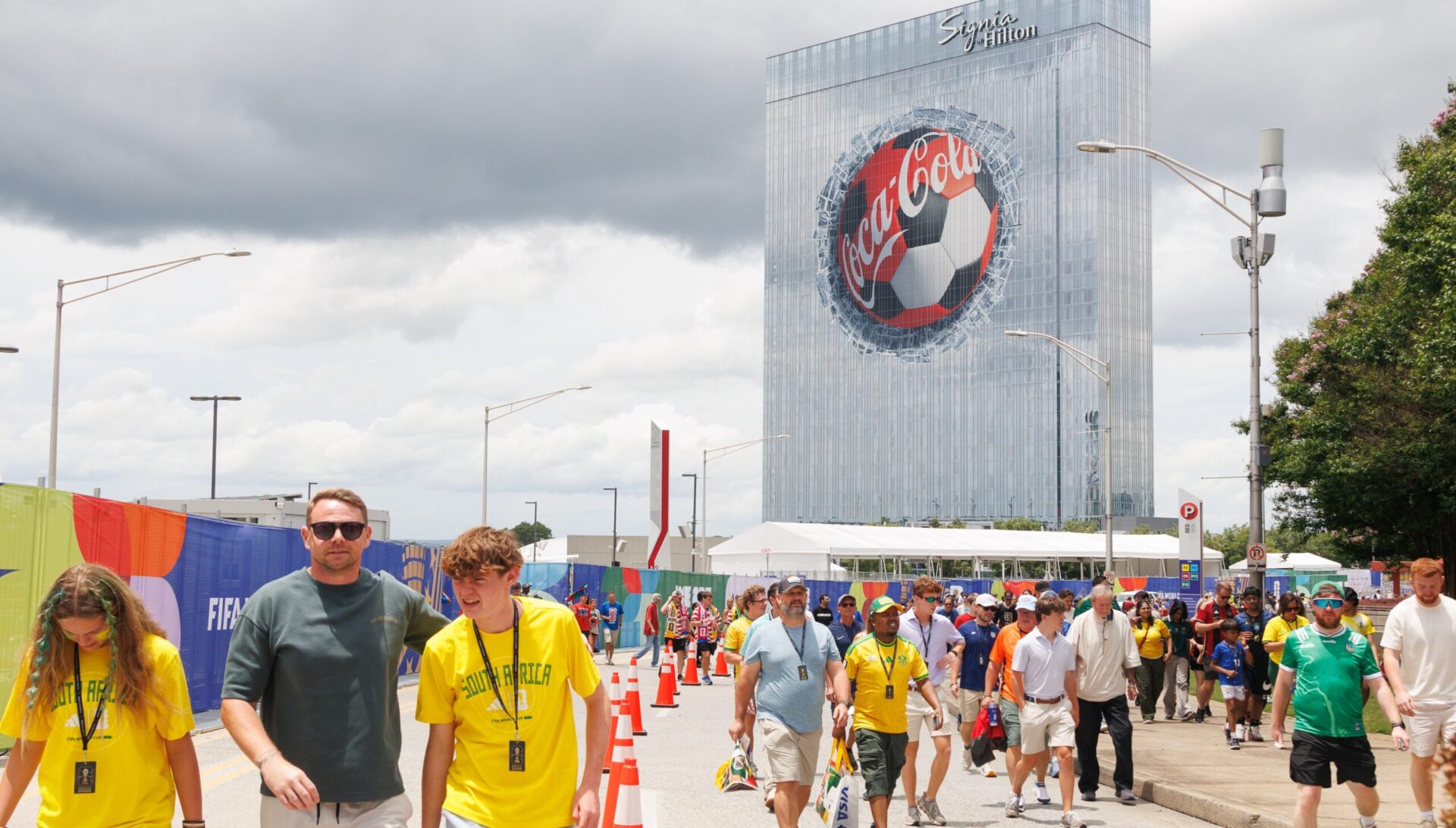
Among the most visible campaigns was a temporary Coca-Cola building wrap on the Signia by Hilton Atlanta, located across from the Home Depot Backyard fan activation near the stadium. The creative depicted a massive soccer ball appearing to have smashed through the hotel’s windows.
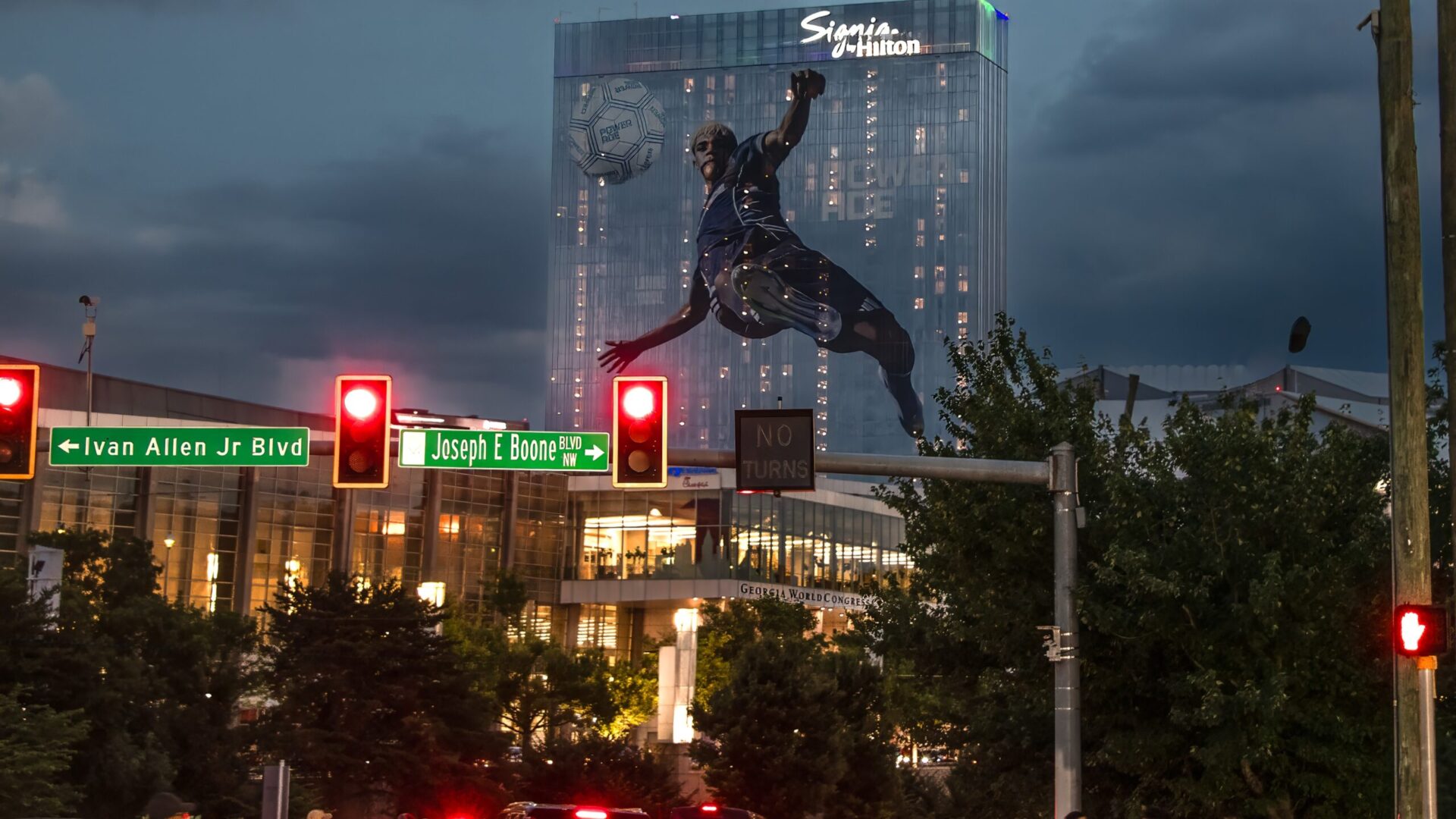
The opposite side of the building featured Spanish star Lamine Yamal kicking a soccer ball as part of a Powerade campaign.
“The campaign had a lot of social and media coverage,” said Chris Mallen, vice president, sports marketing and partnerships at Outfront.
Hyundai also used a temporary building wrap in Miami facing the official Fifa Fan Festival at Bayside Park, putting the campaign directly in front of fans gathering to watch matches.
Digital OoH played a role in more time-sensitive campaigns, such as Fox Sports, which used digital displays for tune-in messaging, including countdowns to game days and individual matches.
While much of the advertising carried similar messaging across multiple U.S. markets, some campaigns were tailored to individual host cities. The New York/New Jersey Host Committee, for example, ran train wraps featuring the teams scheduled to play group-stage matches in the market.
Reaching the 99 percent outside the stadium
For Outfront, the tournament also demonstrated the ability of OoH and DooH — which the company describes collectively as part of “IRL media” — to reach fans who were participating in the World Cup experience without attending the matches.
“While only 1 percent of fans can physically be in the stadium, the broader 99 percent are still just as emotionally engaged,” Mallen said. “Wherever fans went about their game day experience or leading up to game day, there was an OoH touch point through billboards, transit, temporary walls, and more that connected with the fan experience in IRL.”
Mallen noted that the World Cup also demonstrated that OoH and DooH campaigns can operate at scale, even when a major event spans widely separated markets across multiple time zones.
“Creative can be done effectively and uniquely to connect with passionate fans, however they experience the beautiful game,” he concluded.