
DooH and OoH in Cannes: How outdoor advertising anchors an idea where people are actually on the go, and why it’s important to look beyond the boundaries of your own industry. A guest post by Moritz Weischer, CMO of Weischer, and Tobias Hefele, CEO of Weischer OOH.
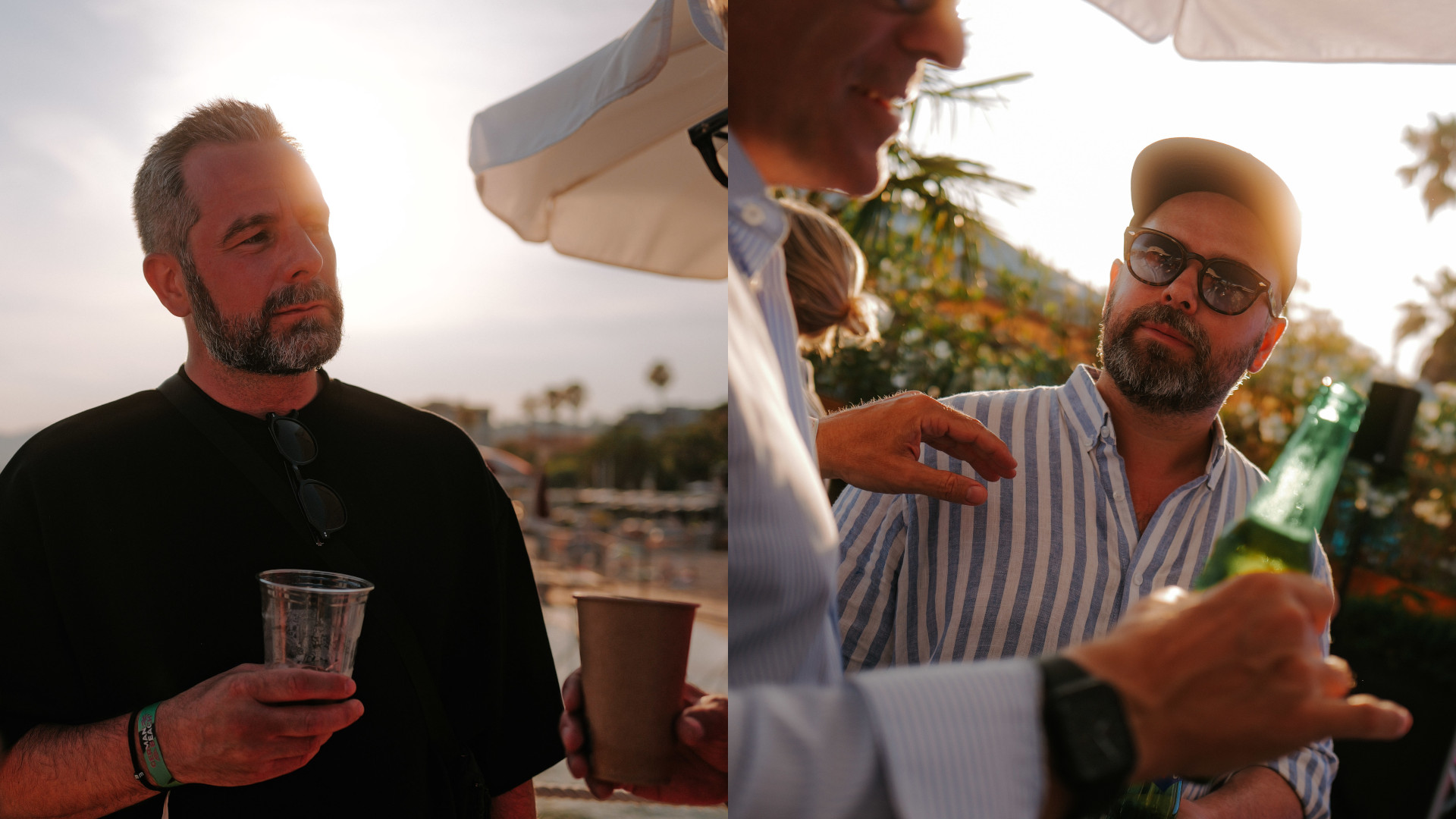
DooH Creativity: What the 2026 Cannes Lions Teach Us About (D)ooH
The Cannes Lions are and will always be the global benchmark for creative excellence. As the official representative for Germany and Switzerland, we follow the festival up close every year. And every year, a simple truth is reaffirmed there: Focusing only on yourself means missing the opportunity to learn from others. This applies to people just as much as it does to brands and media.
Alex Jenkins, Editorial Director at Contagious, sums it up nicely (paraphrasized): The strongest solutions often emerge when companies seek inspiration outside their own core industry and draw analogies from other fields; the broader the perspective, the better.
Our message is therefore: Look beyond the obvious. Stay curious, learn from other markets, and be bold. German campaigns still fall short too often in this regard – not because we lack the resources, but because brands and agencies too often settle for focusing solely on their own industry.
This is primarily a question of mindset. And it starts with how we view our own medium. We’d like to illustrate what we mean by looking specifically at DooH/OoH.
Outdoor doesn’t always mean Outdoor
When asked what role (D)ooH plays in Cannes and at the awards in general, there’s a simple answer: a major one. OoH/DooH is the medium that brings brand experiences to life, both in analog and digital-interactive formats. The scope ranges from spontaneous stunts to data-driven screens. We see this medium featured in many submissions, even if it – outside of the Outdoor Lions and especially when it comes to DooH – rarely takes center stage on its own in a case. Often, it is the building block that takes a campaign from the screen into real life or sets the starting point for a digital extension.
Three strengths keep coming up time and again. First, reach for great creativity: In the outdoor category, the creative takes center stage, and this is exactly where the campaigns emerge that work even as a single image. Second, interactivity: Whether analog or digital, (D)ooH presents brands as an experience, not just a message. And third, format diversity: Hardly any other medium can take on as many forms as outdoor advertising—from mini-posters at newsstands to custom-built installations to the giant screen in Times Square.
Above all, real experiences rather than digital content overload were a strikingly frequent theme throughout the festival week and align well with what outdoor advertising can achieve. A statement by Outdoor jury president Aaron Starkman was particularly telling in this regard: Outdoor is “the last medium not yet affected by AI.” The shift from pure advertising to becoming an “experience provider” (Marcel Marcondes, AB Inbev) and the idea that analog experiences could become the greatest competitive advantage in our hyper-digital everyday lives (Patricia Varella, Polaroid) fit into this picture.
About the Authors
Moritz Weischer is CMO of the agency group Weischer and the Cannes Lions representative for Germany and Switzerland. Tobias Hefele is CEO of Weischer OOH. In its role as representative, Weischer handles various responsibilities, including organizing the Young Lions program, which aims to support up-and-coming creative talent from Germany and Switzerland.
A great example of this strength is Back Market’s “Let’s End Fast Tech” campaign by the Paris-based agency Marcel, which won a Gold award in the Outdoor category: With a “Shot on iPhone” aesthetic, the campaign shows how the environment has suffered between the launches of individual iPhone generations – classic poster craftsmanship, not a single pixel in motion, but an idea that stands entirely on its own.
As the world’s oldest medium, OoH has long been a fixture at Cannes,. But what about the younger medium, DooH? Is it already getting the attention it deserves?
Three DooH examples, one common topic
If you take a closer look at where DooH actually was placed at this year’s awards, a pattern emerges: The medium is rarely the sole hero of an idea, but it’s often the place where the idea becomes tangible.
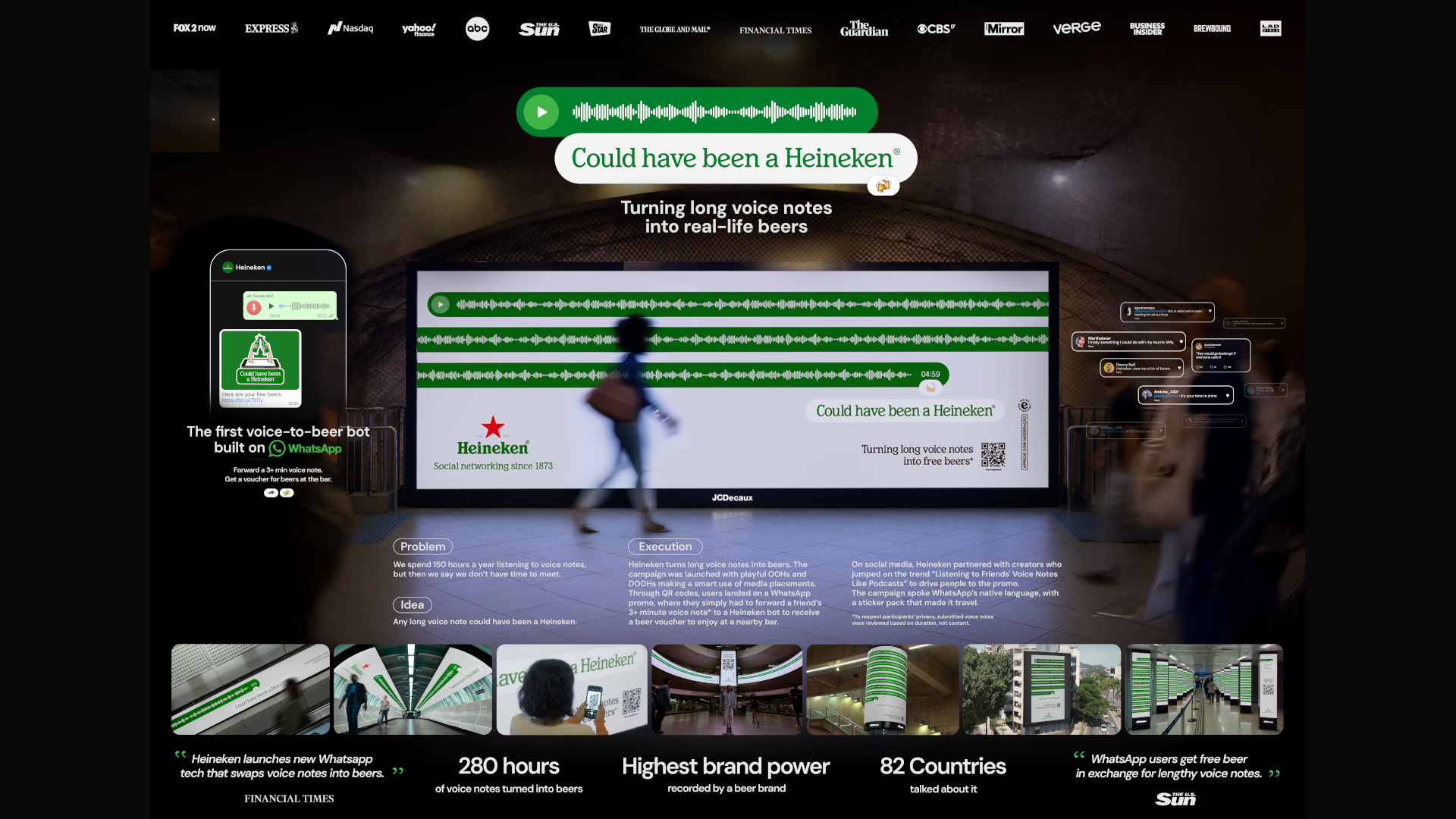
Heineken’s “Could Have Been a Heineken” campaign, created by the Milan-based agency Lepub, is a good example of this. On average, we spend about 150 hours a year listening to voice messages from friends. Heineken’s response was a “Voice-to-Beer” bot on Whatsapp: Anyone who forwarded a voice message longer than three minutes received a free beer at the bar. It was an invitation to swap digital interaction for a real-life meeting. The idea swept the board across all categories, all the way to the Grand Prix at the Social & Creator Lions. While the core of the idea is digital, it was just as firmly rooted in real life. That’s because the campaign also featured various large-format OoH activations, each showcasing the length of the voice messages. What does this case study show? (D)ooH is the channel of choice when digital interactions are to be transformed into real-life experiences.
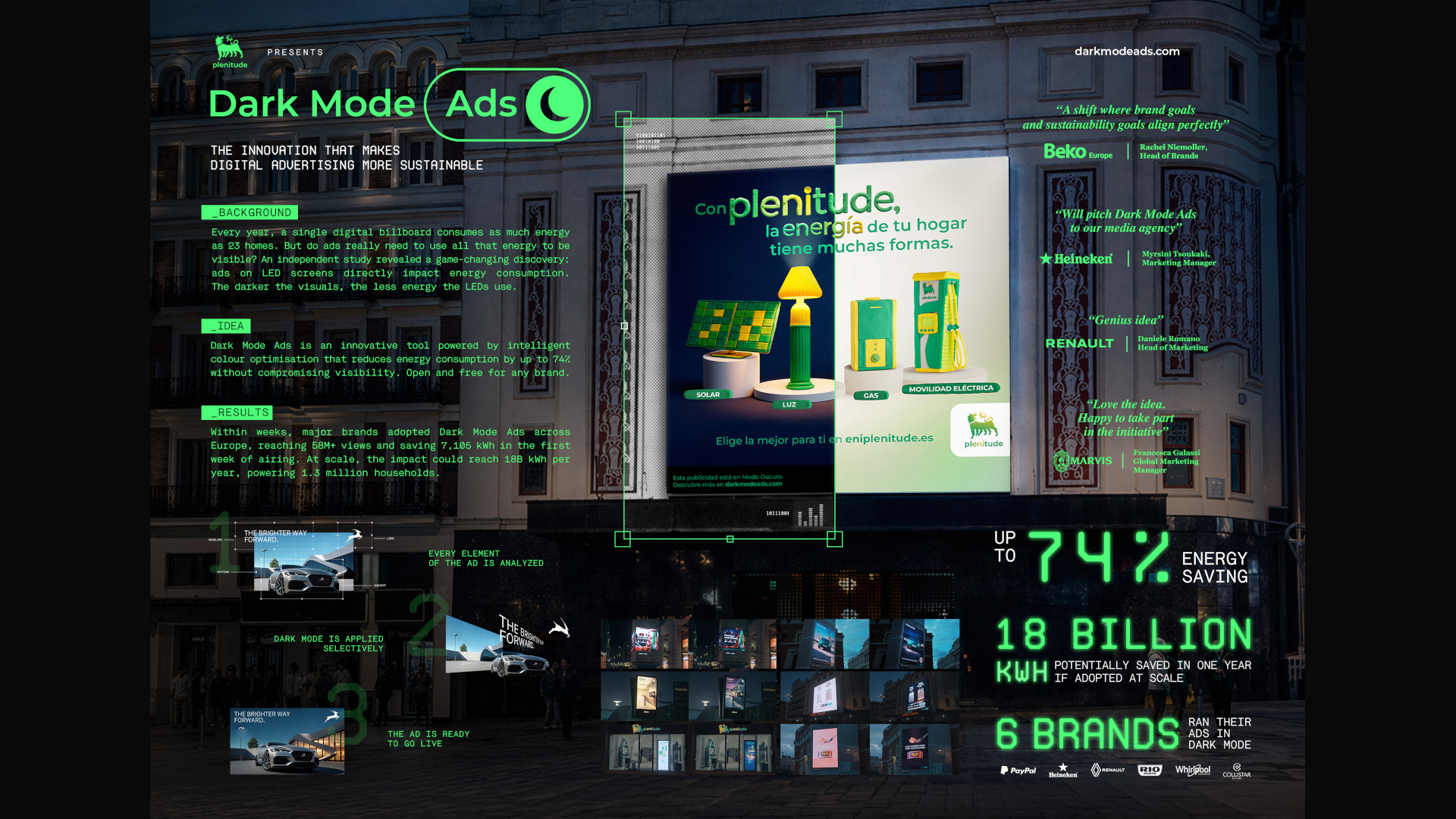
Plenitude’s “Dark Mode Ads” by Lepub Milan also did well this year: Gold in the Media category for Market Disruption, Silver in Outdoor (Standard Site), and two Bronze awards. The idea: Displaying digital outdoor screens in dark mode to save energy without losing impact. The message of the case? How our industry can take responsibility – for the environment and for the sustainability of our own medium – with a good idea. The fact that this was recognized in multiple categories at Cannes shows just how significant the topic and the idea behind it are.
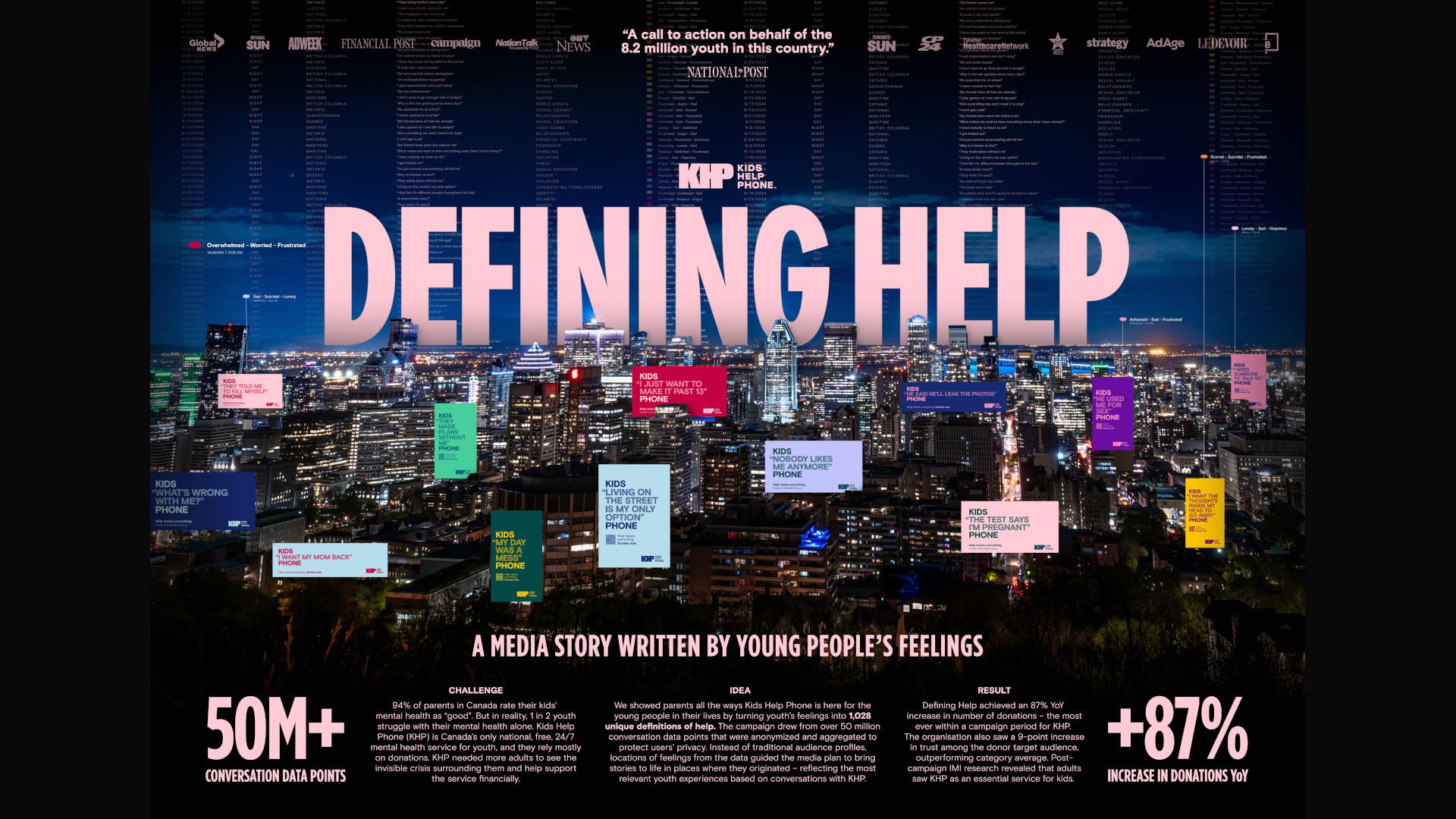
A third example: “Defining Help” by McCann Canada for Kids Help Phone, which won two Gold Lions at the Media Lions. The Canadian youth mental health organization used millions of real, anonymized call records from its counseling services for a campaign that reaches young people with the right messages where they actually are: through DooH placements near schools and shopping centers, combined with social media, gaming platforms like Roblox, and AI-powered targeting.
DooH isn’t the central focus of the idea here, but rather one component among many. Yet it’s a crucial one: It physically delivers the message to where the target audience lives, learns, and plays – and where the specific support topic addressed in the more than 1,000 different creative pieces has a disproportionately high likelihood of meeting a genuine need. Only DooH can deliver this message into public spaces for broad visibility and awareness – with pinpoint accuracy and backed by data.
The common thread among the three case studies: (D)ooH succeeds not because it’s the loudest medium in the space, but because it anchors an idea where people are actually out and about – in real life, among friends, in the daily lives of young people, or in their own storefronts. But above all: in public spaces, far removed from platform algorithms – even as a digital form of outdoor advertising.
Not limited to Outdoor
Is (D)ooH falling short of its potential in Cannes? There’s no simple answer to that. In the Outdoor category, creativity takes center stage. In many subcategories, you can’t even submit a case film, only the actual execution. This naturally makes it harder for (D)ooH to showcase all its strengths, such as data, interaction, and proof of effectiveness, within this single category.
But that’s no cause for concern. The category in which a case ultimately wins is secondary to the assessment. After all, a Lion is always a mark of creative excellence, regardless of the category label. A look back also illustrates this: In 2024, the Outdoor Grand Prix went to Pedigree’s “Adoptable”, an AI-powered DooH campaign that transformed shelter dogs into dynamic ads in real time and increased traffic to adoption websites sixfold. In other words: If (D)ooH is central to the idea as a medium, it can also win the top award. Aaron Starkman said that the best ideas are those that are “inevitable.” Pedigree demonstrates exactly that: Without DooH, the idea would not have been feasible.
Another example from this year illustrates just how fluid the boundaries between categories and media are: Mercado Libre’s “Discount Chants” campaign by GUT Buenos Aires used live audio analysis to identify which products fans mentioned in their stadium chants and triggered corresponding discounts in real time on digital billboards inside the stadium – winning a Silver award in the Outdoor category. Is this still considered traditional outdoor advertising if the display is located inside a stadium? That’s a matter of debate. For us, the case study demonstrates above all the immense potential of dynamic, data-driven (D)ooH displays – whether in a stadium or on the street.
The real point here isn’t that the potential of (D)ooH isn’t being fully realized. The point is that it must be creatively integrated to stand out. Heineken’s Global Chief Marketing Officer, Rob van Griensven, described it this way in Cannes, referring to the use of AI in creative work: If, in the end, all brands use the same tools, optimization engines, and media efficiency playbooks, there’s only one true differentiator left—the courage to do something different. That’s exactly what defines Cannes at its core: courage, being different, creativity. Without clever integration and scaling across genre boundaries, a campaign hardly stands out anymore today.
Full Circle Achieved
And now let’s go back to where we started: to learning from other people, brands, and media: We find the full power of DooH in Cannes, but often in other categories. Or even in entirely different fields.
And this is where the circle closes with Dark Mode Ads. The core of the idea comes from a completely different context: We all use Dark Mode on our smartphones to save battery life. Why shouldn’t what works on a small screen also work on a large DooH screen? That’s exactly what it’s all about: keeping your eyes open, soaking up inspiration, being curious, developing an awareness of your own everyday behavior – what do I do, why do I do it, what annoys me, why does it annoy me – and applying these observations to the challenges of your own brand or medium.
This is precisely the key takeaway we’re bringing back from Cannes 2026: (D)ooH is not underrepresented. But the medium’s best examples aren’t immediately obvious; rather, we discover them when we’re willing to look beyond our own horizons: Look beyond the obvious. Not just beyond the boundaries of the outdoor category, but also beyond the boundaries of our own industry. Because if you only look at yourself, you miss the chance to learn from others.