
As AI moves deeper into media planning, creative production and consumer decision-making, out-of-home advertising is gaining new strategic relevance. At Cannes Lions 2026, Adquick CEO Chris Gadek argued that physical media could become one of the last unfiltered ways for brands to reach real audiences.
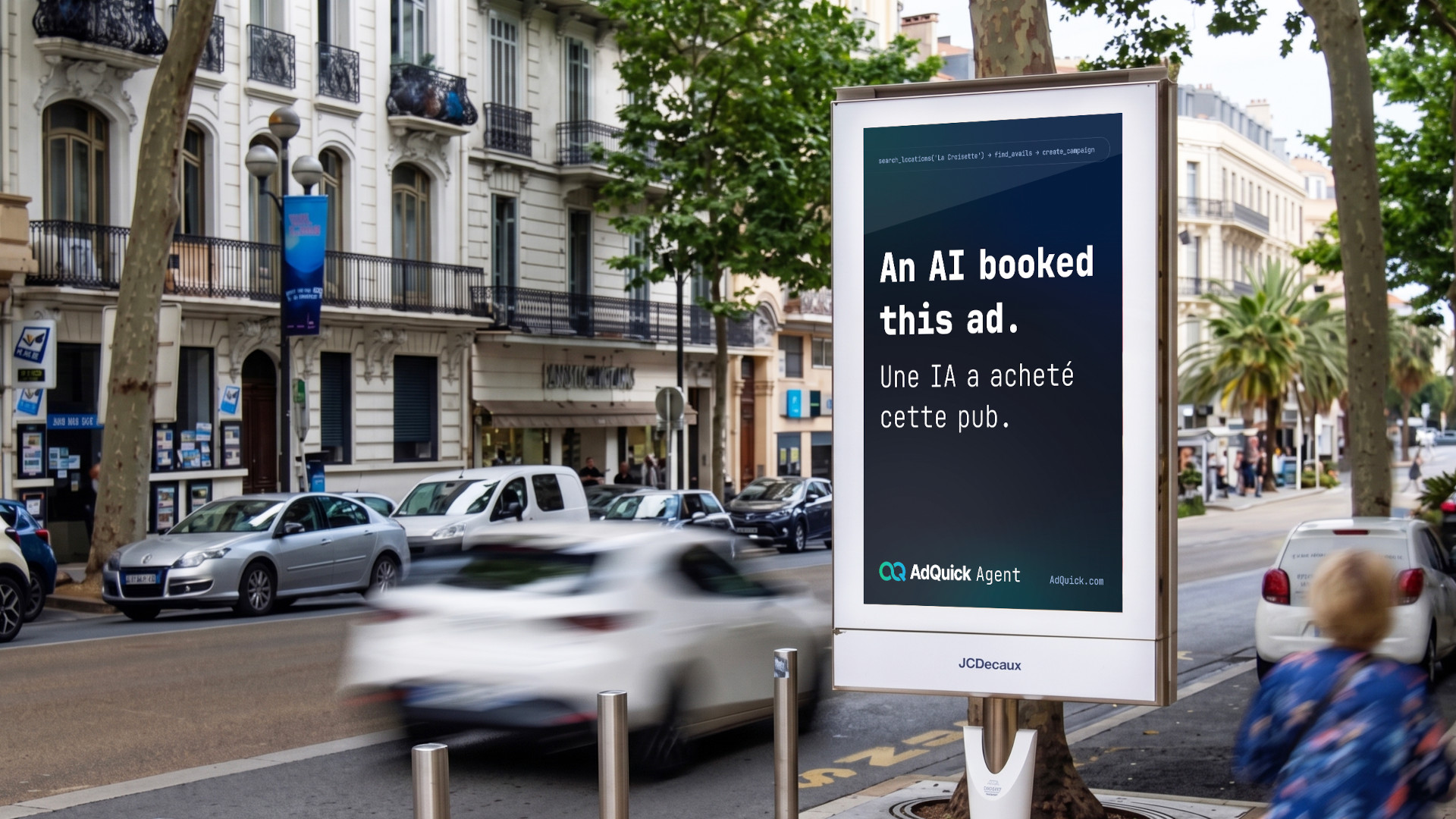
Cannes: In an AI-Driven Media World, OoH Gets Real
Cannes Lions 2026 was dominated by one question: what happens when artificial intelligence starts automating not only media buying, but advertising itself?
Meta presented its vision for an AI-powered end-to-end advertising platform combining data, creative generation, media planning and commerce. WPP is cooperating on the model, with Unilever among the first major advertisers exploring its potential.
At the same time, Omnicom CEO John Wren suggested that media operations could account for 58 percent of future agency revenues, while traditional creative services may shrink to just 18 percent. His conclusion was blunt: “Creativity is perishable in the environment we operate in.”
The rise of Agentic AI
For Chris Gadek, CEO of Adquick, the shift goes beyond creative automation. “We’re entering an agentic AI era,” he says. “Software agents will search, compare and make decisions on behalf of consumers.”
For marketers, that changes the basic logic of media planning. Campaigns will increasingly need to reach both human audiences and the AI agents shaping discovery, recommendations and purchase decisions.
“The media planner role is effectively splitting in two,” Gadek says. “Historically we optimized for human impressions. Going forward, we’ll need to think about both humans and agents.”
Search, comparison and transaction are already being reshaped by AI-generated answers. As digital journeys become more intermediated by software, one channel stands out: Out-of-Home.
Why the physical world matters more
Paradoxically, AI could make physical advertising more valuable. OoH remains one of the few media channels that cannot be filtered, skipped or blocked by AI systems.
“An AI agent can’t close your eyes to a billboard … yet,” Gadek says.
More importantly, real-world exposure remains a critical source of brand discovery. AI systems can recommend brands, but those recommendations need signals that the brand exists and matters.
“The physical world sits upstream of digital conversion,” Gadek explains. While digital channels increasingly function as conversion environments, OoH continues to create awareness and brand memory at scale.
The last unfiltered medium
Many advertisers are already feeling the impact of AI on digital visibility. Google AI Overviews reduce click-through traffic, publishers lose direct audience engagement and more interactions happen inside AI-generated interfaces.
“The one environment that doesn’t have an algorithm standing between the brand and the audience is out-of-home,” Gadek says.
That is why marketers are re-evaluating OOH in the media mix. In an increasingly algorithmic world, direct visibility becomes a scarce and valuable asset.
Solving advertising’s measurement problem
OoH’s historic weakness has been measurement. Adquick was founded to address that challenge by aggregating nearly all available US Out-of-Home inventory, both static and digital, alongside key international metropolitan markets.
“Our secret sauce is the plumbing,” Gadek says.
The company connects physical media exposure to measurable outcomes such as website visits, app activity, retail footfall and sign-ups. It combines exposure modeling, mobile data, geographic analysis and third-party methodologies in a privacy-conscious way.
The resulting data can be fed into marketing mix models, allowing advertisers to compare OoH performance with other channels. “When properly measured, the medium performs extremely well relative to its cost,” Gadek says.
Digital transformation accelerates
While Europe and Australia have led the digitization of OoH networks, the US market still contains a large share of static inventory. That is changing, particularly in Tier II and Tier III markets with fewer regulatory hurdles.
AI is also transforming OoH operations. Adquick uses the technology to understand billboard content, analyze performance patterns and identify creative characteristics linked to stronger outcomes.
Yet Gadek warns against excessive automation and what he calls advertising’s “slopification” — a flood of similar content produced at minimal cost. “Most people think AI is about prompting what they want,” he says. “But we spend 90 percent of the effort on prompting guardrails.”
Advertising’s human future
The irony of Cannes Lions 2026 is that while AI dominated the conversation, the physical world may become more important, not less.
As creative production, planning and optimization become more automated, direct human attention becomes harder to reach — and more valuable. That creates a compelling opportunity for Out-of-Home advertising. A billboard occupies real space, reaches real people and builds awareness that cannot be fully delegated to software.