
AI and robotics dominate CES 2026, but their implications extend well beyond automation and productivity gains. For the digital signage industry, autonomous robots are emerging as a new, mobile interface layer that challenges traditional ideas of fixed screens and static placements.
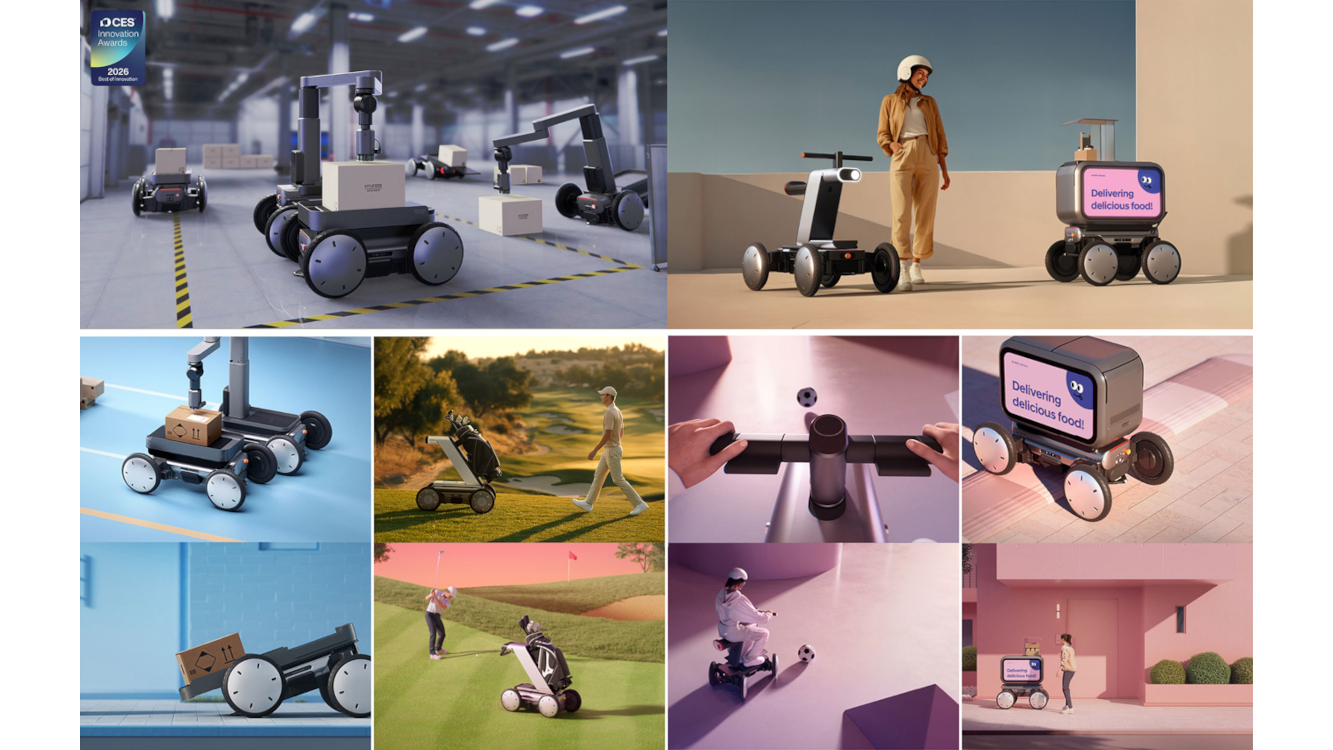
CES 2026: When Robotics Becomes a New Screen Strategy
While LED and display innovations continue to push visual performance, it was Hyundai that illustrated a more radical shift in Las Vegas. The Korean conglomerate – better known for automotive and heavy industry, and to some in the signage world for Hyundai IT displays – is now positioning robotics as a platform play. Following the acquisition of Boston Dynamics, the group’s robotics activities operate under the Hyundai Robotics Lab, where mobility, AI and interaction converge.
At CES, Hyundai and its US-based robotics teams unveiled MobED, a modular robotic mobility platform designed for both industrial and everyday environments. Built on the proprietary Drive and Lift (DnL) technology, MobED can navigate uneven terrain, curbs and inclines with stability – a prerequisite for real-world deployments beyond controlled environments. Its modular architecture supports multiple use cases, ranging from logistics and navigation to broadcasting and, notably, digital signage.
For the signage sector, the message is subtle but significant. Mobile, autonomous systems equipped with AI and displays can bring content to people rather than waiting for people to come to screens. As series production of MobED begins in early 2026, robotics may become a new digital platform – blurring the lines between display technology, DooH and physical mobility.