
The Swedish software specialist continues to execute on its SaaS strategy, but the bigger story is whether Scala can become the launchpad for Vertiseit's next phase of international expansion.
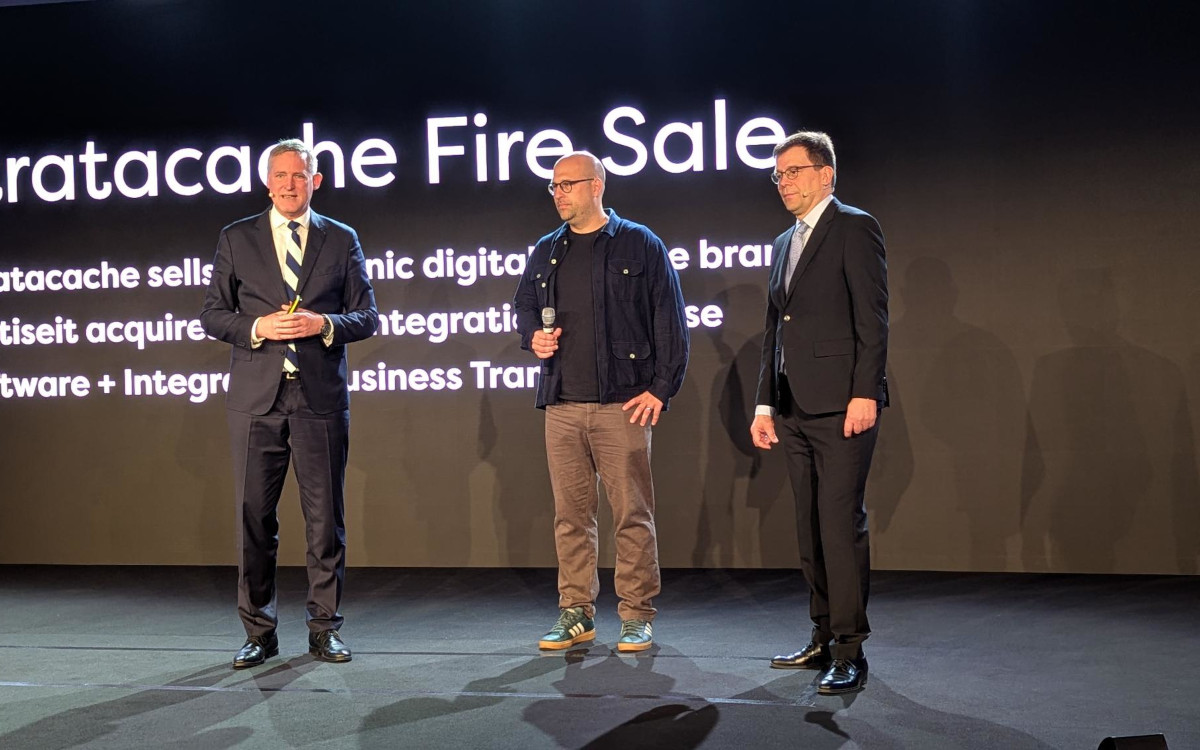
New ARR Record: Can Scala Turn Vertiseit Global?
Swedish digital signage platform provider Vertiseit delivered another strong quarter, underlining both the financial impact of the Scala acquisition and the growing importance of recurring software revenues in the digital signage industry.
Third-quarter revenue increased 45.4% year-on-year to SEK 219.2 million (€19.7 million), while adjusted EBITDA rose 80.9% to SEK 55.1 million (€5.0 million). The adjusted EBITDA margin improved to 25.1%, up from 20.2% a year earlier.
The key metric for investors remains Annual Recurring Revenue (ARR). At the end of September, ARR reached a record SEK 464.0 million (€41.7 million), an increase of 43.9% year-on-year at constant exchange rates. Even more importantly, ARR continued to expand organically, growing 3.5% sequentially from the previous quarter. Annualized, this corresponds to an organic recurring revenue growth rate of almost 15%.
SaaS remains the centerpiece
Vertiseit’s transition from a traditional digital signage vendor to a software-led platform company continues to gain momentum.
Quarterly SaaS revenue rose to SEK 118.2 million (€10.6 million), an increase of SEK 38.0 million year-on-year. Recurring revenues now form the backbone of the business, providing greater visibility, predictable cash generation and the type of revenue profile public market investors typically reward with higher valuation multiples.
The company has now more than doubled ARR compared with only a few years ago, an impressive achievement in a digital signage market where many competitors still rely heavily on project-based revenue.
Strong progress, but not a pure SaaS story
While ARR growth continues to dominate the investor narrative around Vertiseit, the company remains far more diversified than many software investors might assume.
Looking at the last twelve months, SaaS accounted for 45.4% of total revenue, slightly below the 46.1% reported for full-year 2025. The recent acquisition of Scala may have diluted the software mix in the short term.
That distinction matters. Unlike many privately owned independent software vendors (ISVs), Vertiseit is not a pure-play SaaS company. The group remains deeply embedded in the broader digital signage value chain, generating revenue from software, services, hardware-related activities, implementation and support.
The actual software share is likely somewhat higher than the reported SaaS ratio, as Vertiseit inherited legacy perpetual-license revenues through previous acquisitions, including Scala. Nevertheless, the figures highlight that the company’s transformation remains a journey rather than a completed destination.
Profitability improves despite transformation costs
Growth was impressive, but profitability improved even faster. Cash EBITDA more than doubled to SEK 48.8 million (€4.4 million), corresponding to a Cash EBITDA margin of 22.2%, compared with 15.1% in the same quarter last year.
The figures suggest management’s focus on operational efficiency is beginning to bear fruit. Margin expansion continued despite ongoing costs related to the Scala integration and preparations for Vertiseit’s move to the Nasdaq Main Market.
As with most acquisition-led growth stories, organizational optimization remains a constant exercise. The company has continued to streamline operations while integrating newly acquired businesses into a common structure.
Cash flow remains the one concern
The quarter was not entirely without challenges. Operating cash flow came in at negative SEK 23.4 million (€2.1 million), compared with negative SEK 2.7 million a year earlier. Management attributed the decline primarily to temporarily elevated working-capital requirements relating to the Scala transaction and integration activities.
Investors will likely monitor coming quarters closely to ensure that cash conversion normalizes as integration efforts mature.
Scala is about much more than revenue
The strategic significance of Scala extends well beyond its contribution to ARR and revenue growth. For decades, Scala was arguably the strongest global brand in digital signage software, with an ecosystem and partner network that many competitors envied. While the company’s market position weakened under previous ownership, the acquisition gives Vertiseit something it previously lacked: genuine global reach.
The immediate challenge is clear. The newly combined Scala-Dise organization must rebuild trust with parts of the legacy Scala ecosystem while accelerating the migration from perpetual licenses toward subscription-based SaaS offerings. Neither task will be easy.
Yet the real value of Scala may ultimately prove to be geographical rather than technological.
Vertiseit already enjoys a leading position in Europe. North America and Asia-Pacific, however, represent a different story. Outside a handful of partners in Australia and parts of Southeast Asia, Vertiseit’s footprint across APAC remains limited. The same applies to North America, the world’s largest digital signage market and also one of its most competitive.
Scala may change that equation.
The acquisition provides Vertiseit with an established global partner network, particularly in North America and parts of Asia where its own brands historically had little recognition. For a company that openly aspires to build the world’s leading in-store retail platform, international expansion is the logical next chapter.
invidis Analysis
Vertiseit continues to be one of the digital signage industry’s most closely watched companies. Partly because of its strong execution, but also because publicly listed software providers remain a rarity in a market dominated by privately held competitors.
The quarter demonstrates an organization that is successfully integrating a “transformational” acquisition while simultaneously improving profitability. ARR growth remains impressive and validates the strategic direction management has pursued for several years.
Vertiseit has proven that they can grow recurring revenue, but now its time to prove whether the Scala acquisition can become the catalyst for meaningful expansion beyond Europe.
If the Sweden-based company succeeds in converting Scala’s global footprint into sustainable SaaS growth, Vertiseit could emerge as one of the few genuinely global digital signage software platforms. If not, it risks remaining a highly successful European champion with limited influence in the industry’s largest growth markets.
For now, the numbers suggest management under CEO Johan Lind and Co-CEO/CFO Jonas Lagerqvist remains firmly on track. The difficult work of turning global ambition into global market share, however, is only just beginning.