
In his latest column, Dave Haynes is looking into the latest fuss about “invasive” DooH billboards.
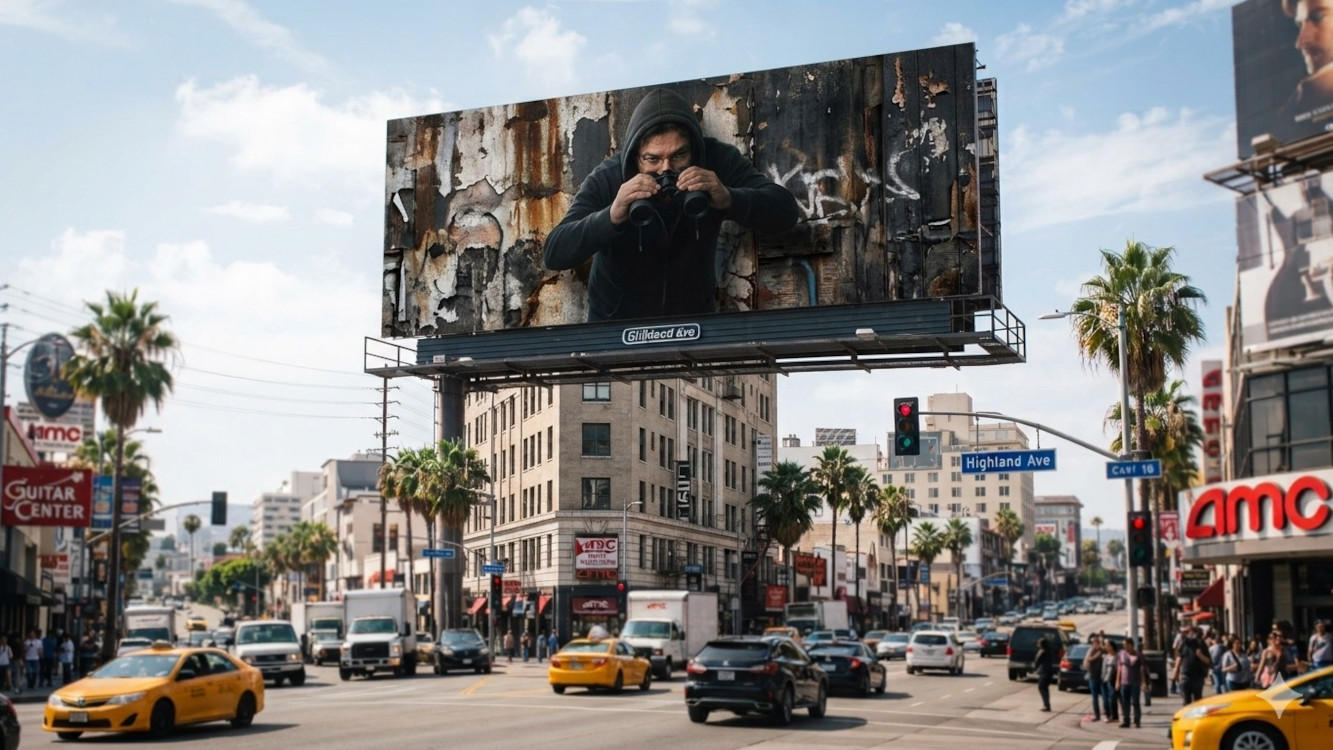
Haynes Column: DooH Analytics ‘Reports’ – Orwellian Nightmare Or Clickbait?
Pretty regularly, a story pops up about how DooH advertising is in some way egregiously invading the privacy of consumers passing by the screens.
And pretty regularly, it turns out there’s not a whole bunch to be genuinely fussed about.
In LA, a recent news story dug into a “viral” video suggesting digital billboards going up in Santa Monica, owned and operated by Orange Barrel Media, will be automatically connecting with the smartphones of passersby, and pushing targeted ads to the devices.
A guy in the video – unidentified – says the display’s computing syncs with the Lidar on phones and then pushes ads. The woman – a content creator/influencer – suggests advertising people can use the tech to see what’s on your phone and track you.
Small problem, though. That’s not what’s going on.
There have been many, many stories through the years of the general public being upset about Digital-out-of-Home networks that use anonymous video analytics to “spy” on people as they walk sidewalks or mall concourses. In just about every case, facial recognition systems have been conflated with pattern detection systems that use roughly the same tech stack, but do different things.
Facial recognition does what it says, and is used by police, border control systems and even for payments. Pattern detection just looks for the shapes of faces, roughly categorizes them, and comes up with analytics that characterize who might see a screen, when and how many.
The Instagram video suggests the big LED display in the background will be using Clear Channel Outdoor’s Radarconnect technology to “invade” the privacy of people coming within a defined range of the structure.
But Orange Barrel Media competes with Clear Channel, and doesn’t use that tech. A company VP says Orange Barrel doesn’t use any technology capable of detecting, tracking or communicating with nearby smartphones, nor does it harvest data from passing devices.
Radarconnect uses anonymized mobile location data it sources from third-party mobile apps, and plots GPS data points against a billboard location, and when an ads plays. Just about every major player in DooH uses mobile location data and what’s called device retargeting in similar ways. Outfront does. Lamar does. Same for JC Decaux.
And despite a seemingly confident assertion from the guy being interviewed, there is no involvement of Lidar in all of this. Lidar is perhaps most familiar as the light detection tech mounted on self-driving cars. And only a small percentage of phones – mostly super-premium iPhones – even have Lidar.
So this display – which based on the video wasn’t even lit up yet – is not the Orwellian nightmare the content creator is pretty shamelessly suggesting it may be. But nightmares can generate clicks, so …
That said, the ad industry is not populated by a bunch of innocents acting only in the public good. They are, of course, doing what they can to learn and relay as much as possible about viewing audiences to the brands that make ad placement decisions. The days of gross measurements like daily vehicle traffic aren’t generally enough to get media buyers onboard.
While what the DooH media companies are doing is anonymized, the tech is still using the unique mobile advertising IDs of consumer devices, harvested by mobile and online app firms. The harvesters are selling it. And there’s no real way, at least in the biggest ad market out there, for consumers to opt out of their activity being tracked and sold.
But … while this kind of tech is capable of tracking consumer movements, it is waaaay less invasive than mobile and online ad network tech. We have all looked for something like shoes on a specific site, and then started to notice a torrent of shoe ads while browsing or scrolling other, unrelated sites.
That tech can track search history, private messages, purchase history, precise app usage patterns, and even real-time keystrokes. But there is a degree of consent, when you get asked about accepting the cookies.
For years, media companies have had to sporadically address a public fuss that gets further fueled by news media who have to somehow – the same day – be experts on the subject. In my very distant days as a general assignment news reporter, I would do everything from cover a murder and then be sent the next day to interview a prima ballerina.
Winging it was normalized.
So I have sympathy for real journalists who have tried to make sense of these stories in the past, and ended up going with the privacy invasion thing because that’s what the angry or concerned, but not well-versed, interview subjects were saying.
Plus paranoia generates more interest than reasonable explanations.
The best thing, based on what I have seen with these “screens-invading-privacy” stories, is for media companies and their technology partners to be very clear and precise about what’s being used, and what it actually does. The companies that call what they do facial recognition (when it’s not) are just begging for trouble.
But in this case, we have a couple of people with what appears to be the most fleeting understanding of the tech, whipping it up in the pursuit of clicks and views. Because that’s the business.