
Record revenues, growing programmatic spend, and new measurement standards: the US and Canadian OoH markets are laying the groundwork for the medium’s next phase of growth.
DooH North America: Navigating the Next Growth Cycle
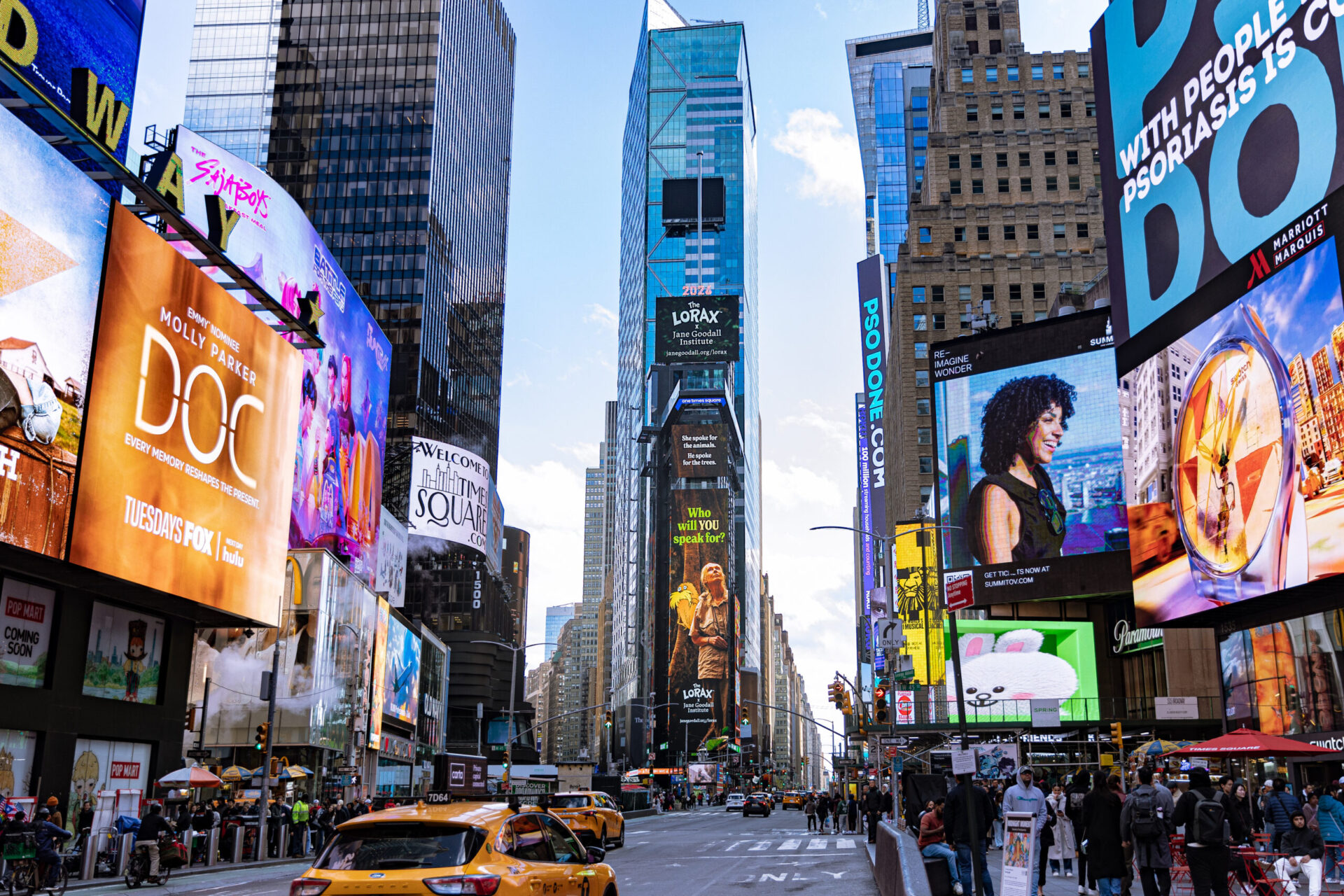
In both the US and Canada, Out-of-Home is outperforming nearly every other advertising sector. While much of the media industry is grappling with slowing growth, OoH stands out as one of the market’s rare success stories – a trend mirrored across much of the world. While traditional static inventory continues to prove resilient, Digital-out-of-Home is drawing growing attention from advertisers and investors.
The power of DooH lies in its ability to deliver contextual, highly relevant messaging without relying on personal data. Now, with AI and programmatic capabilities beginning to mature, the industry is moving closer to a long-promised breakthrough: the ability to personalize creative in real time, at scale.
The knowledge base for the industry
This article is part of the invidis Yearbook 2026 Americas Edition, which takes a deeper look at the American digital signage and DooH markets. Download a PDF copy of the edition in our download section.
Yet even before this vision is fully realized, the sector is already reaching new heights. In 2025, OoH revenues hit all-time highs in both the US and Canada. The US market reached US$9.46 billion, while the total revenue in Canada climbed to US$609 million (C$842 million). While Canada’s market remains only around 6.4 percent the size of the US, its pace of digital transformation is even more pronounced: In Canada, DooH already represents 58 percent of total OoH revenue. In the US, it accounts for 36.3 percent.
The push toward automation
A major driver of DooH growth is programmatic buying. DooH screens have a much higher yield because they are typically sold in 10–15 second slots, so their revenue growth far outpaces the rate of digitalization – and programmatic helps optimize screen occupancy even further. In the US, programmatic accounted for 24 percent of DooH spend in 2024, up sharply from 15 percent the previous year, and is projected to reach 65 percent by 2029.
Yet despite the acceleration, the market is not moving entirely away from traditional buying relationships. “The market remains a hybrid, with many buyers continuing to leverage direct relationships alongside programmatic channels,” says Anna Bager, president of the Out of Home Advertising Association of America (OAAA).
The transition is happening at equal speed in Canada, where programmatic represented 14.4 percent of DooH spending in 2025. For Lindsey Talbot, president of OAAA’s Canadian counterpart COMMB, the appeal is closely tied to today’s volatile market conditions. “In current economic times, budgets are a lot more volatile than we’ve seen in past years. Flexibility and speed to market is one of the key factors for client spending right now and they find it in DooH, especially in programmatic,” she says.
The importance of measurement
For both industry associations, measurement is a key priority. Both OAAA and COMMB are working toward a unified audience currency that can better integrate OoH into omnichannel planning and buying systems. While OoH has historically relied on standardized impressions and audience estimates, programmatic trading requires more interoperable measurement frameworks that align with digital media standards.
In the US, OAAA and measurement provider Geopath are working with Ipsos on an updated audience measurement system that combines mobility data with advanced modeling techniques. In Canada, COMMB launched “Roadmap” in 2025, a platform aggregating inventory from all COMMB member operators for cross-provider campaign booking.
Lindsey Talbot sees interoperability as critical for the medium’s future. Upcoming iterations of Roadmap are expected to include API integrations with AI-powered planning and buying tools used by agencies. “OoH must be included at the channel planning stage,” Talbot says, warning that otherwise the medium risks being excluded entirely from media plans. At the same time, she argues that the industry must address the rising costs of measurement and attribution. In some cases, she notes, the cost of a marketing mix modeling study now exceeds the value of the media campaign itself – an imbalance the industry will need to solve if advanced measurement is to scale sustainably.
Building the next generation of OoH
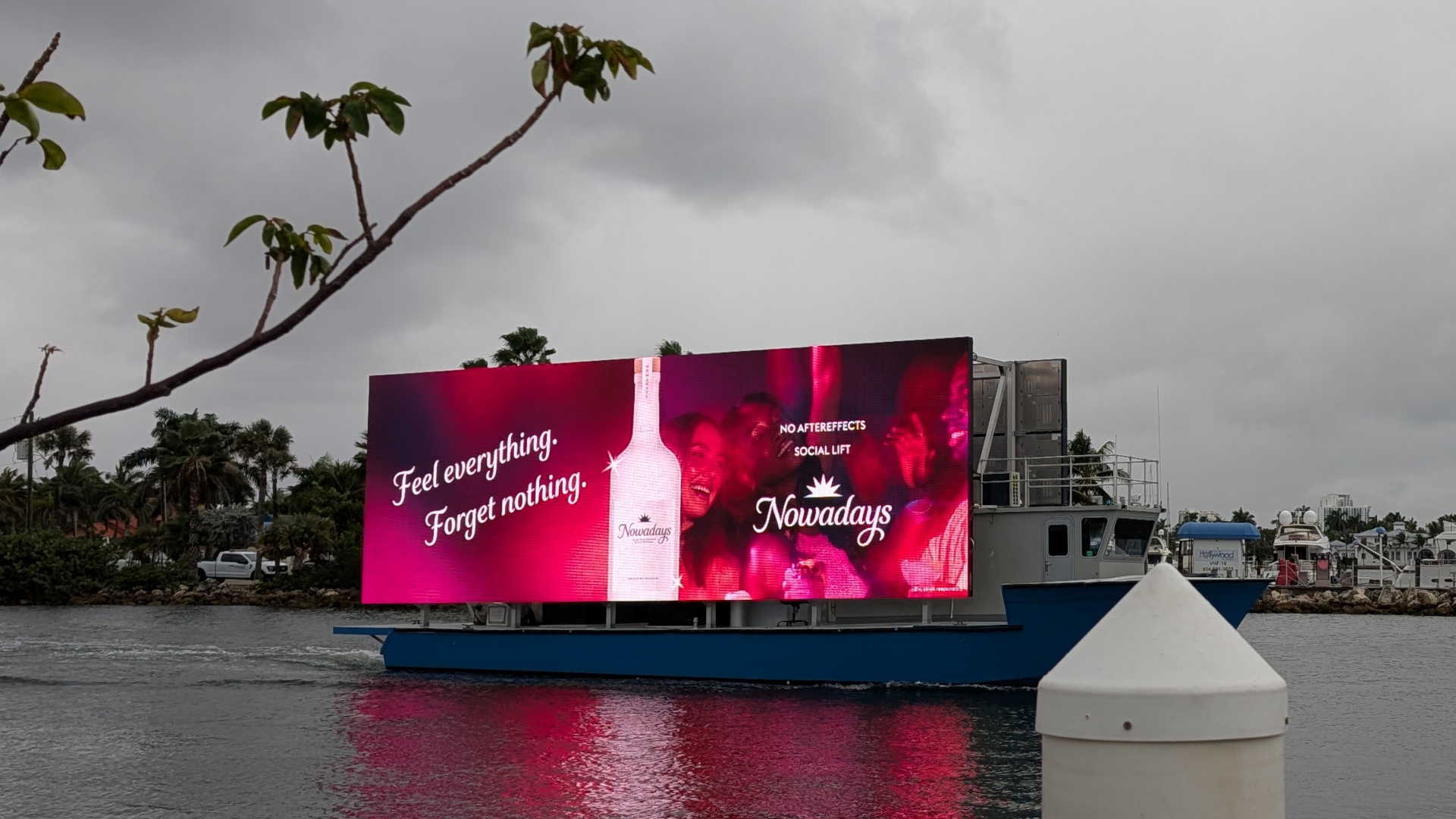
Structurally, both markets are highly consolidated, while still leaving room for emerging players. The US industry continues to be dominated by Lamar Advertising and Outfront Media, although major metropolitan areas also create space for newer entrants experimenting with premium digital formats such as Wow Media, as well as smart city screens that combine DooH with Wifi and city maps, such as OBM’s Ike Smart City Kiosks, or even LED boats floating around US coasts. Canada is led primarily by Pattison Outdoor Advertising and Astral, while still maintaining a significant ecosystem of independent operators. Notably, roughly 95 percent of the domestic OoH market remains Canadian-owned.

Another area attracting growing attention is retail media. Talbot believes in-store and place-based retail screens should increasingly be viewed as part of the broader OoH ecosystem because they are fundamentally place-based DooH environments. The debate around the categorization of in-store screens, she argues, stems from the fact that there are two parts to a retail media business. Apart from selling ad space in their stores, retailers also monetize anonymized shopper data. This customer data business usually operates outside the scope of OoH. Nevertheless, more retail media companies are joining COMMB, reflecting the common interests of OoH media owners and retail media network operators.
Looking ahead, both markets see the future of OoH becoming more dynamic, data-responsive, and integrated with other media channels. In the US, Bager sees deeper integration between OoH, mobile, and social channels, alongside continued programmatic growth.
In Canada, Talbot expects OoH to remain one of the few advertising sectors with meaningful growth potential in the current economic environment. As campaign flexibility, automation, and dynamic creative capabilities continue to improve, she believes both DooH and programmatic adoption will accelerate further – reinforcing the medium’s transformation from a traditional broadcast channel into a responsive, data-enabled component of modern media planning.