
Las Vegas | Proto helped define the digital human category – and now faces growing competition from slimmer spatial displays by the likes of Samsung. Yet instead of pushing back, chairman and founder David Nussbaum sees the new wave as validation—and an opportunity to scale Proto’s platform far beyond hardware.
Infocomm 2026: Proto Sees Opportunity in Spatial Display Boom
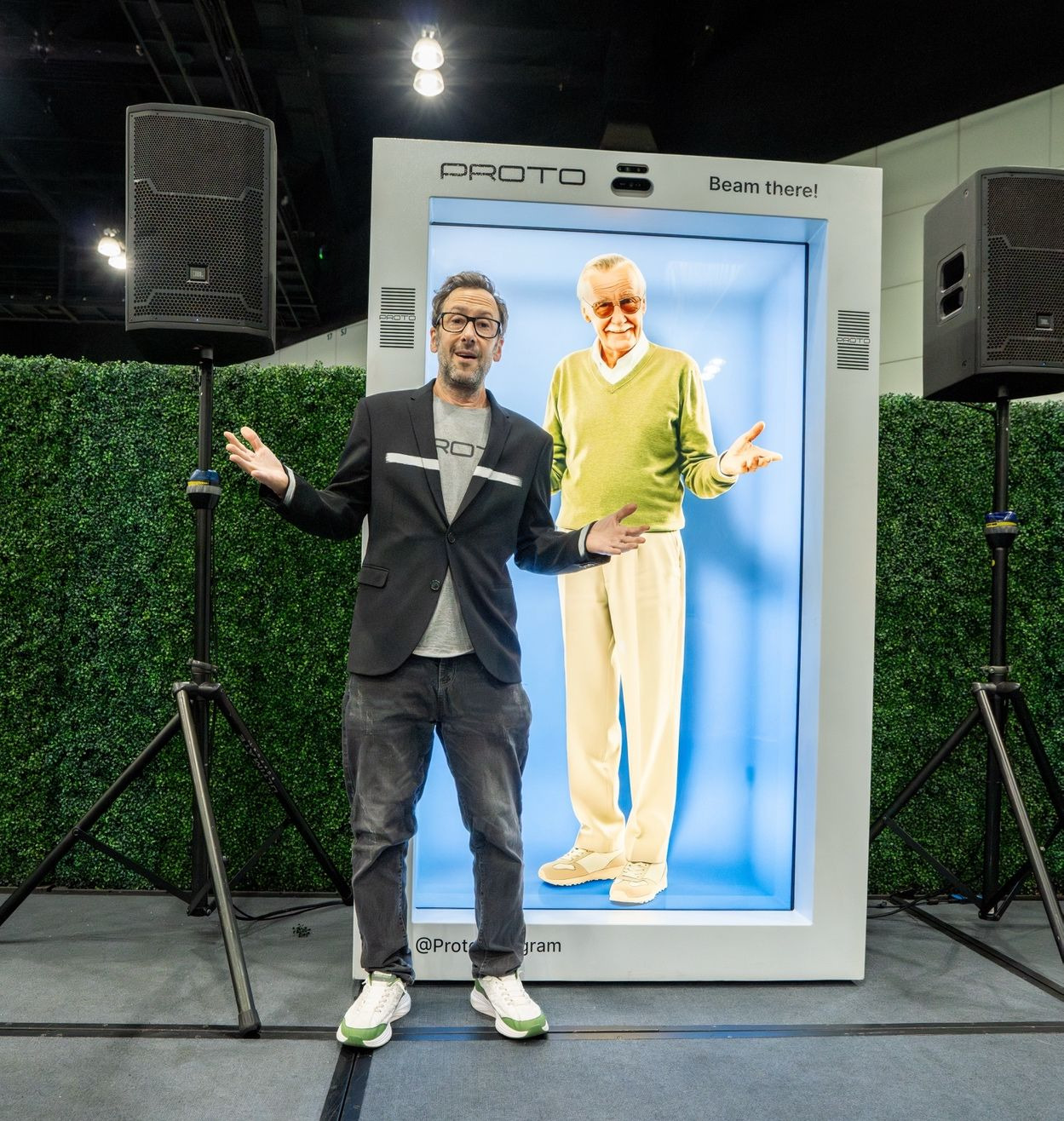
Proto is widely regarded as one of the pioneers of holographic avatars – now increasingly grouped under the broader category of “digital humans.” The company’s signature product, often jokingly referred to as the somewhat bulky, life-size “shower stalls,” has defied early skepticism to become a commercial success. Thousands of units have been deployed globally, effectively creating a new niche within the digital signage industry.
Now, however, Proto is facing a new generation of competitors. Major display manufacturers, most notably Samsung, are entering the space with significantly slimmer “spatial displays.” While these solutions may lack the deep holographic effect that defines Proto’s experience, they are more compact, scalable, and, crucially, “good enough” for many brand applications.
Yet Proto founder David Nussbaum remains unfazed.
Competition validates the category
In a conversation with invidis on the sidelines of Infocomm in Las Vegas, Nussbaum struck a pragmatic tone. Instead of perceiving Samsung and others as threats, he views their entry as validation of a category that Proto helped to establish.
“There is clearly momentum behind spatial displays and digital humans,” Nussbaum suggested. “That’s a good thing for everyone in the ecosystem.”
While Proto continues to emphasize the superior depth perception and presence enabled by its patented display technology, not every use case requires maximum immersion. For retail or corporate environments, slimmer displays may offer a compelling trade-off between visual impact, cost, and footprint.
More than hardware: an end-to-end ecosystem
Although Proto is most visible through its hardware, the company positions itself as a fully integrated platform. Its offering includes a proprietary operating system, content management system (CMS), and an in-house production studio for digital human content.
The Los Angeles-based company employs around 50 people, with roughly half focused on software and hardware development. Beyond product sales, Proto is heavily involved in events – supporting approximately 250 activations annually. Its service range spans from “No Glove” installations (hardware-only deployments) to “White Glove” offerings, including end-to-end content production, live operation, and on-site support.
This vertical integration has proven crucial in shaping the early market. Digital humans require not only hardware but also tailored content, interaction design, and operational expertise – areas where Proto has built a first-mover advantage.
A software-first vision
At its core, however, Nussbaum does not see Proto as a hardware company. “We are a software platform,” he emphasized.
This perspective opens up a broader strategic horizon. Long term, Nussbaum envisions Proto software running on third-party hardware – including that of its emerging competitors. Such a shift would mirror developments in other industries, where platform providers ultimately extend across multiple device ecosystems.
For now, Proto remains focused on expanding its own installed base while refining new use cases beyond its well-known “teleportation” experiences – where remote speakers appear live in holographic form.
Scaling into DooH and public spaces
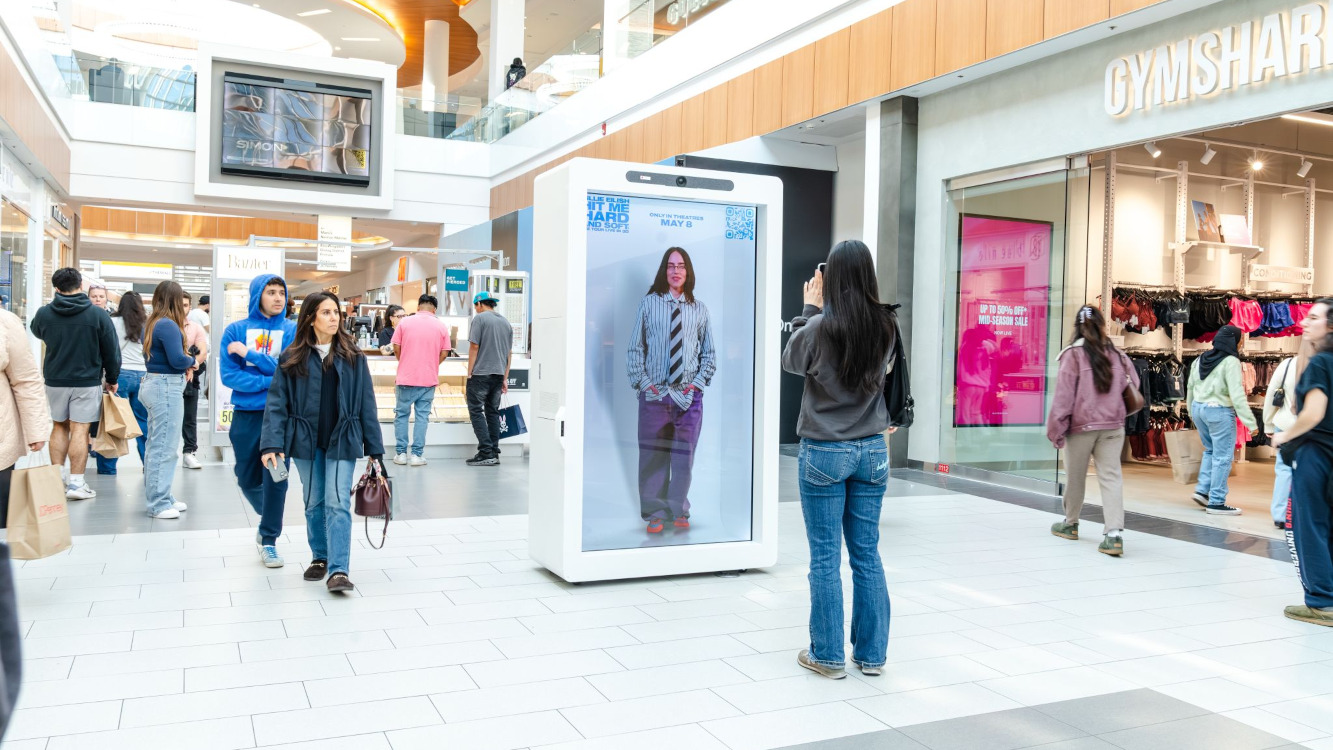
One of the more tangible proofs of scalability comes from the Hologram Media Network, which operates a Proto-powered DooH network in over 100 shopping malls. This deployment highlights the potential for digital humans beyond one-off events, positioning them as a repeatable, revenue-generating media format.
Typical applications are emerging in environments where human interaction is expected – yet often constrained by staffing limitations. Airports, hotel lobbies, and tourist attractions are increasingly adopting digital humans for wayfinding, greetings, and information services.
According to Nussbaum, the key advantage lies in user psychology: audiences feel less intimidated engaging with a digital human than with a real person behind a counter. This lowers the barrier to interaction and can increase engagement rates – an important metric for both customer experience and advertising effectiveness.
Healthcare: the next frontier?
Building on these insights, Proto is exploring entirely new verticals. Healthcare, in particular, represents a promising opportunity.
The concept: enabling patients in remote or underserved areas to consult with medical professionals via life-size digital human interfaces. Unlike traditional video calls, Proto aims to replicate the sense of a face-to-face consultation, potentially improving patient trust and communication.
“Remote health could be the game changer,” Nussbaum noted.
However, for telemedicine to become a significant growth driver, pricing remains a key challenge. While unit costs are gradually decreasing thanks to scale and production optimization, broader adoption will depend on reaching more accessible price points.
From niche to consumer vision
Perhaps most ambitiously, Nussbaum is thinking far beyond enterprise deployments. His long-term vision positions Proto as a consumer product – bringing lifelike, spatial communication into everyday homes.
The use case is straightforward but powerful: grandparents and grandchildren interacting as if they were in the same room, despite physical distance. “Having a consumer product is doable, we believe it’s a reasonable case.”
While this vision may still seem aspirational, Proto’s track record suggests a willingness – and ability – to transform niche concepts into viable markets.
A category still taking shape
As spatial displays and digital humans gain traction, the competitive landscape is rapidly evolving. New entrants like Samsung are broadening the market with alternative form factors and price points, while complex enterprise solutions such as Google Beam are pushing the boundaries of real-time volumetric communication.
In this context, Proto’s positioning is clear: premium experience, integrated ecosystem, and a strong bet on software as the ultimate differentiator.
David Nussbaum has repeatedly demonstrated a knack for identifying – and cultivating – new verticals where others see limitations. Whether it is DooH networks, healthcare applications, or even consumer products, He continues to expand the horizons of what digital humans can achieve. A refreshing mindset in a usually process oriented industry.
And if Nussbaum is right, the arrival of competition may finally unlock the potential of 3D Digital Humans in Signage.