
E Ink introduces Spectra 6 9-Color for smoother, more vivid images. The existing primary colors - black, white, red, yellow, blue, and green - are now complemented by orange, cyan, and light green.
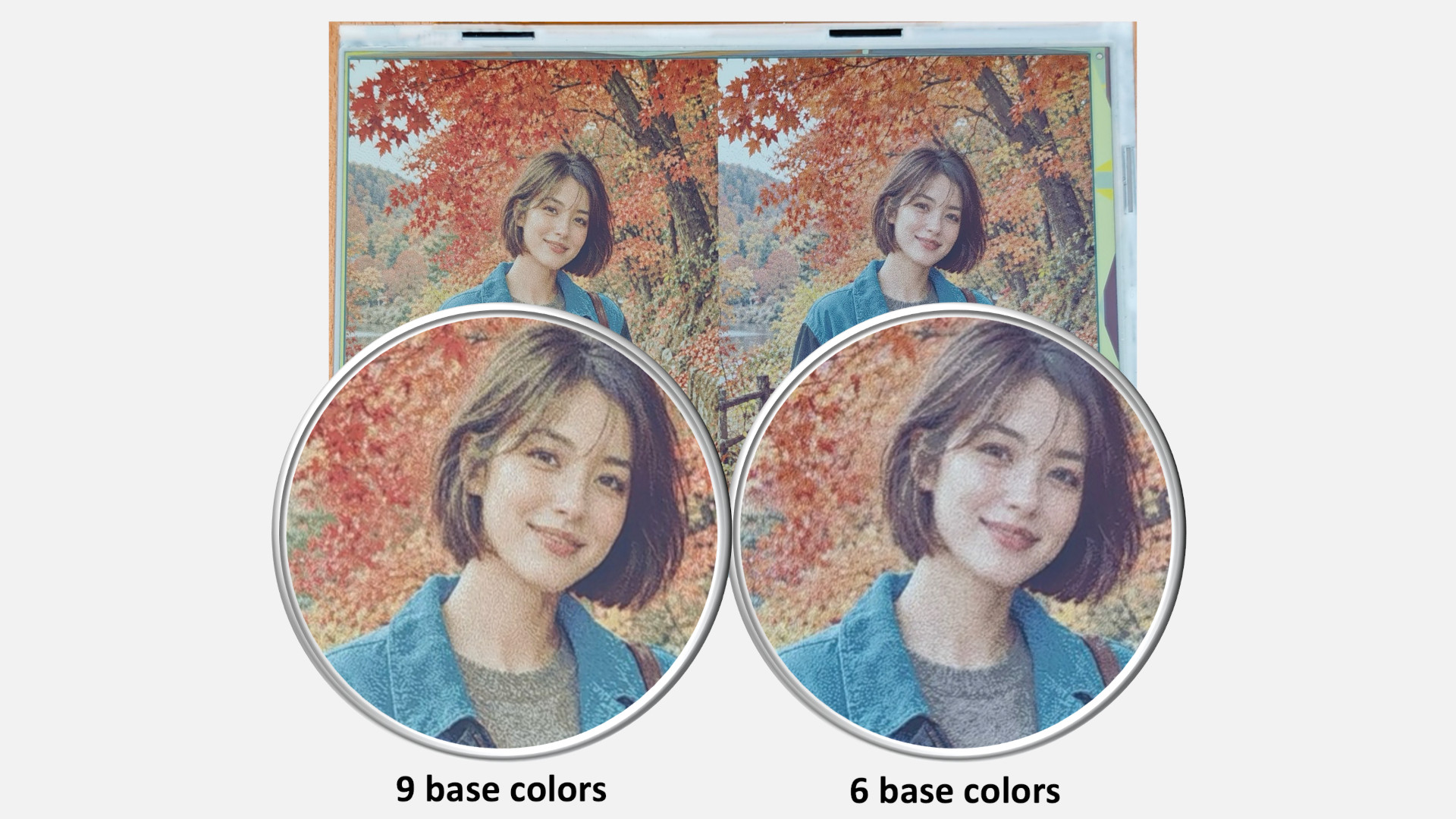
Spectra 6 9-Color: E Ink Upgrades Indoor E-Paper
The Spectra 6 technology is the flagship offering from E Ink, the leading e-paper panel manufacturer, when it comes to indoor color signage applications. Now, with Spectra 6 9-Color, the platform is getting an upgrade: a new color system that uses nine primary colors instead of six.
The existing primary colors, black, white, red, yellow, blue, and green, are now joined by orange, cyan, and light green. E Ink had announced this development some time ago. The expanded color palette enables smoother color transitions with less visible pixelation.
“When Spectra 6 first launched a few years ago, it established a new color standard in e-paper – color that rivaled the most advanced color paper printers on the market,” said JM Hung, president of E Ink Holdings. “Expanding six to nine base colors allows us to push that standard further and continue to make ePaper an appealing alternative to paper.”
Support via SoC
E Ink had previously introduced improvements for Spectra 6, primarily related to the driver software, such as E Ink Ripple. As invidis understands, the six primary colors are formed using four color particles: white, blue, red, and yellow. It remains to be seen to what extent a new ink and hardware structure will be required for the nine colors.
The more complex color scheme requires a powerful control system. E Ink therefore combines a SoC with what’s known as the E Ink Timing Controller, or Tcon for short. For now, the Spectra 6-9 panel will be available in a 10-inch size.
Ink 10 by Aura with Spectra 6 9-Colors
This display has already made its debut: Aura’s Ink 10 e-paper picture frame uses it. As a result—supported by the company’s proprietary dithering algorithm and 200 PPI—the displayed photos feature more even skin tones and richer textures.
“Spectra 6 9-Color makes a real difference for the images people put on their Aura frames most: photos of loved ones,” said Eric Jensen, CTO and co-founder of Aura. “With nine base colors, our dithering algorithm has more to work with, so it can better capture the subtle color transitions that make photos look their best.”
For the digital signage industry, it will be particularly exciting to see larger sizes on the roadmap. Realistic skin tones, for example, are a relevant feature, especially for high-end applications such as those in the luxury retail sector.