
A Montreal-based multimedia studio has partnered with one of Canada's biggest financial services providers to create an immersive simulation of life inside a beehive.
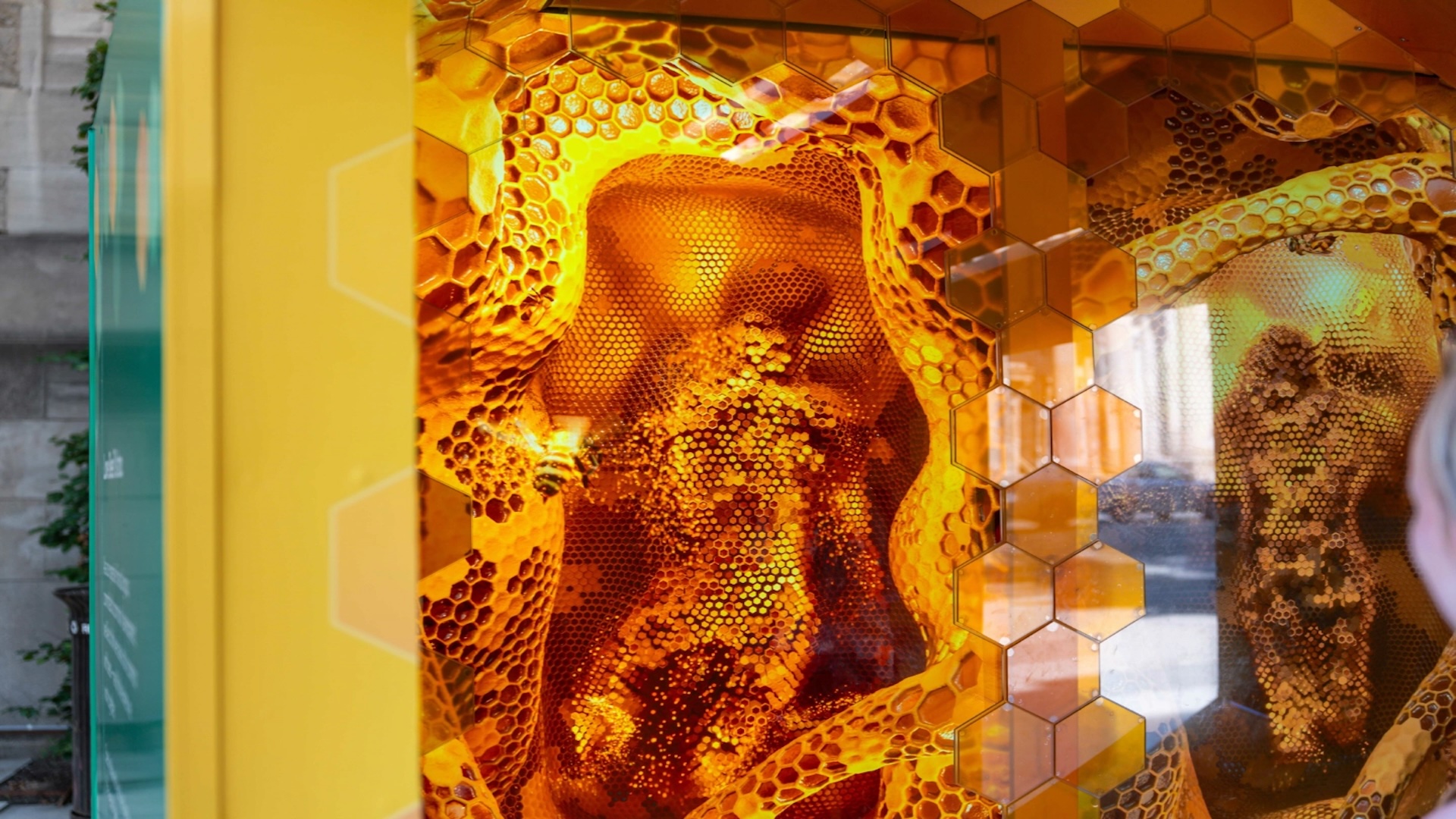
Royal Ontario Museum: Gentilhomme Realizes Interactive Beehive Experience
Gentilhomme, a multimedia studio headquartered in Montreal, created the installation as part of an exhibition that ran at Toronto’s Royal Ontario Museum (ROM) from May 16 to October 18. The exhibition, titled “Bees: A Story of Survival”, was conceived as an interactive exposition of what the official ROM program calls “120 million years of bee adaptation and survival, telling the epic tale of these incredible creatures and their relationship to us and the natural world.”
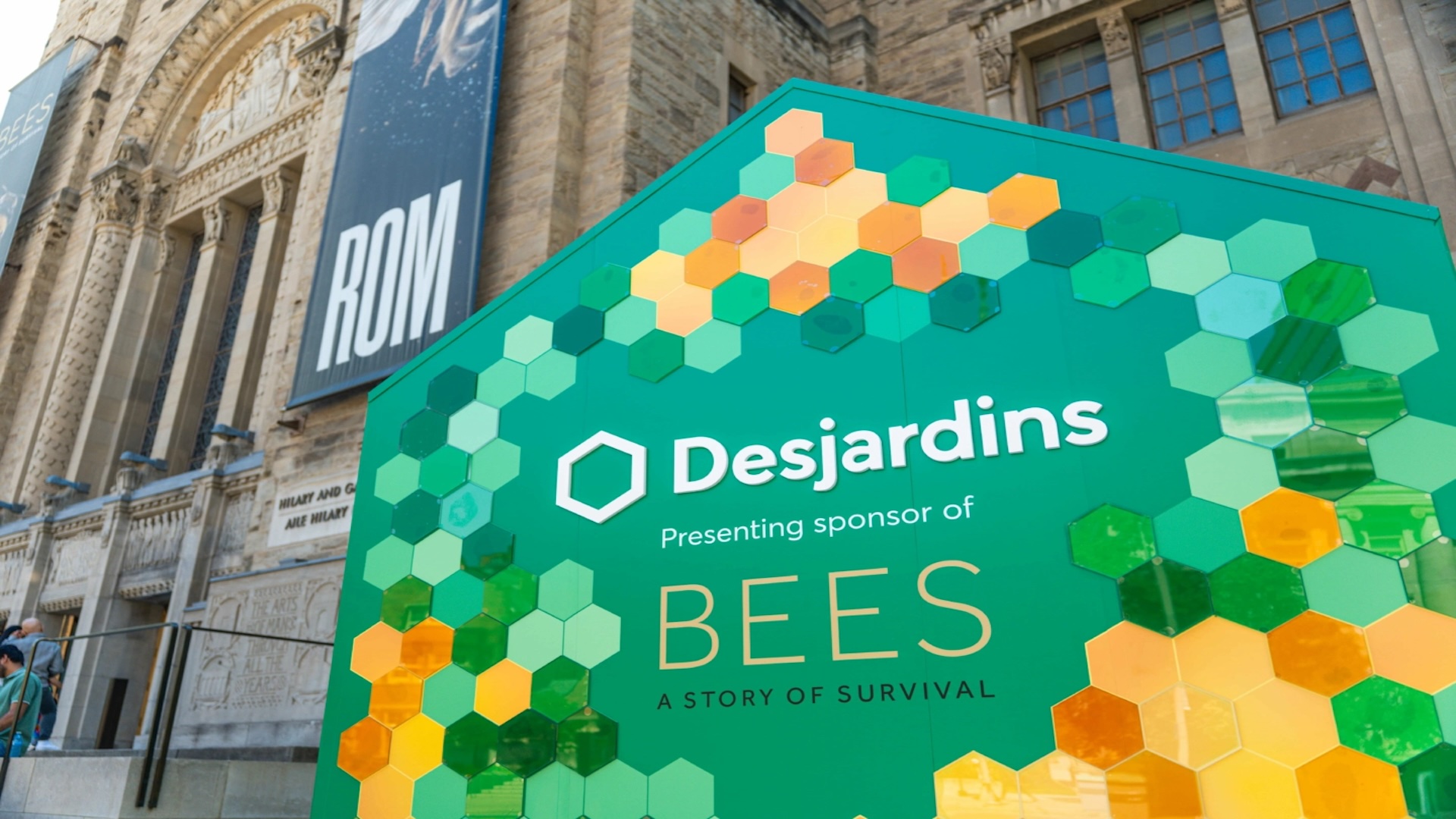
The ROM staged the exhibition with the support of Desjardins Financial Group. The museum and the financial services provider called upon Gentilhomme to create an extension of the exhibition – an interactive booth set up outside the building, inviting visitors to enter.
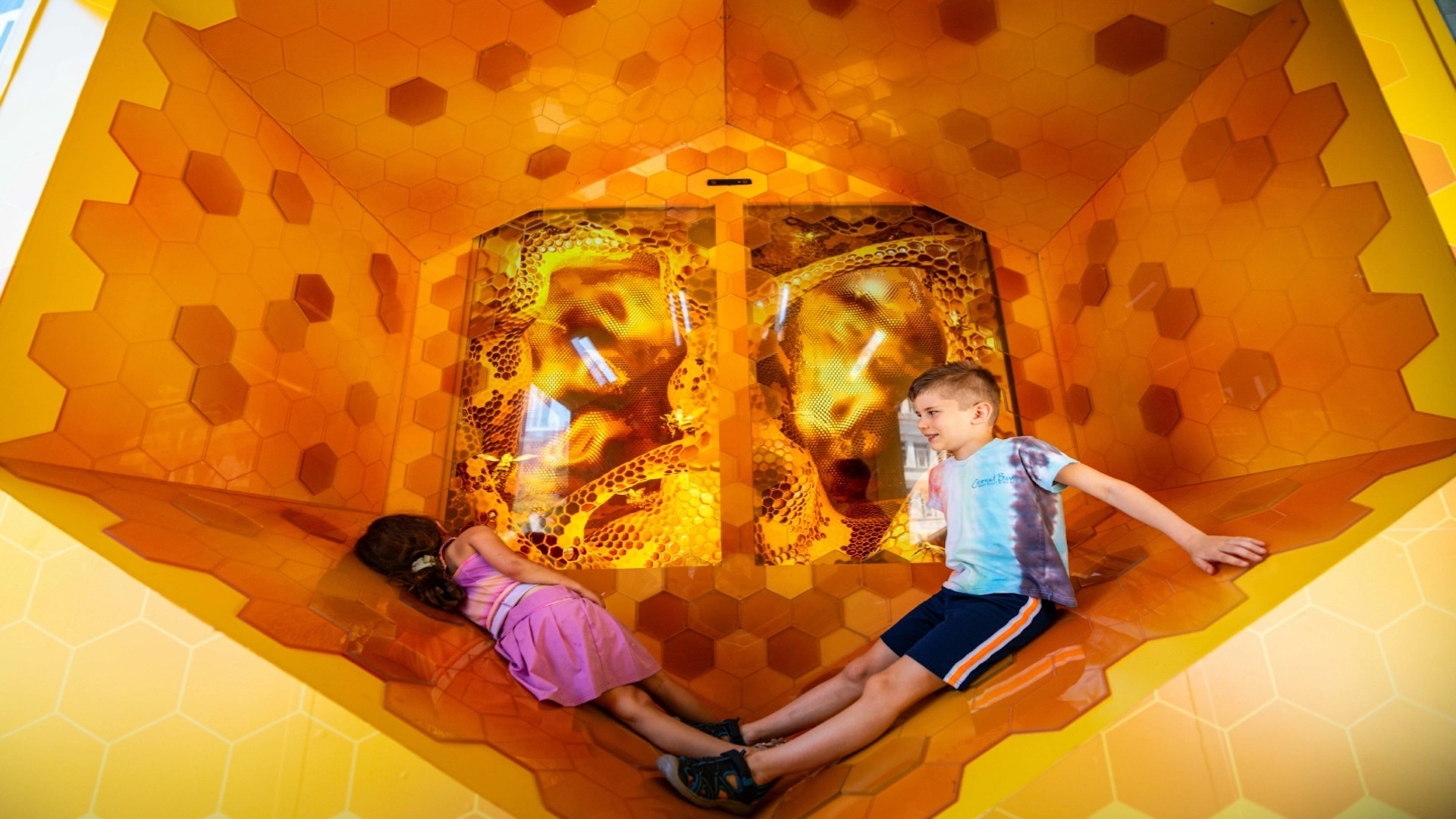
Inside the booth, digital display screens and floor-to-ceiling projectors recreated the interior of a beehive through continuous projection mapping. As soon as a visitor entered the booth, cameras inside the honeycomb-shaped installation captured their silhouettes and used them to transform the surrounding digital content in real time.
Dynamic digital particle systems
The screens in the installation displayed real-time, responsive digital particles. When a visitor stood in front of the displays, the cameras would map their shape and the projected artwork would split, swirl and flow around that outline. From the visitors’ perspective, their silhouettes would become glowing honeycomb forms inside the hive, with bees swarming around them in a choreographed dance.
According to Gentilhomme, the goal was to surprise ROM visitors with something playful and shareable. Since the exhibition was intended to showcase cooperation and collective strength, the studio explained, “we designed a hive at human scale, its cells enveloping visitors in a space that feels both institutional and organic. Every visitor who steps inside shapes it, together, as one hive.”