
WOO President Tom Goddard says growing concerns about social media, ad fraud and AI-generated content create an opportunity for OoH, but the industry must improve measurement and demonstrate its effectiveness.
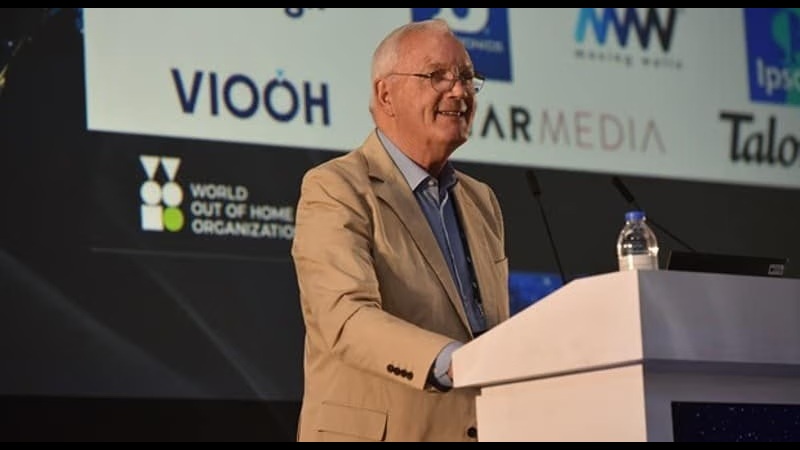
Industry Outlook: Trust Could Give OoH An Edge Over Digital Media
Growing concerns about misinformation, advertising fraud, and social media’s impact could create new opportunities for Out of Home advertising, according to World Out of Home Organization (WOO) President Tom Goddard.
Speaking at WOO’s Central Europe Forum in Warsaw, Poland, Goddard argued that OoH’s reputation as a trusted advertising medium could help the industry capture a larger share of global advertising spending over the next five years.
Although OoH continues to record double-digit growth, driven largely by digital Out of Home (DooH), it still trails online advertising in the global market.
Goddard believes changing attitudes toward social media could help narrow that gap.
Social media faces growing scrutiny
Goddard pointed to increasing regulatory scrutiny of major technology platforms, particularly over their impact on younger users. Several countries are considering restrictions similar to Australia’s social media ban for children under 16.
He also cited advertising fraud, including fake impressions, clicks and conversions, as a continuing problem for digital advertisers.
Meanwhile, the proliferation of low-quality AI-generated content is raising further questions about the credibility of online platforms and changing how consumers interact with search engines.
Against that backdrop, Goddard argued that OoH has an advantage because it reaches consumers in physical environments rather than through social media feeds.
He referenced consumer research, including a recent study from Outfront Media in the US, that ranked OoH highly for consumer trust.
Industry still faces challenges
However, Goddard acknowledged that trust alone will not be enough to secure a larger share of advertising budgets.
He identified four priorities for the industry: demonstrating advertising effectiveness, improving audience measurement, strengthening adtech connectivity and promoting OoH’s competitive advantages.
Proving effectiveness remains particularly important. Goddard said a major industry-wide initiative is being developed to provide stronger evidence of OoH’s advertising impact.
Audience measurement is another concern, with some markets still lacking comprehensive or unified systems.
Programmatic trading has made progress, but Goddard said much of the industry’s advertising transactions remain labor-intensive and fragmented. He called for greater consolidation among platforms and adtech providers to simplify buying and selling.
Finally, he urged stronger collaboration among media owners and national trade associations to communicate OoH’s advantages more effectively.
For Goddard, greater industry cooperation will be essential if OoH is to convert its perceived trust advantage into sustained growth and a larger share of global advertising spending.