
E Ink has unveiled Kaleido 4, the next generation of its color ePaper technology, promising brighter colors, higher contrast, and, for the first time, support for smooth video playback.
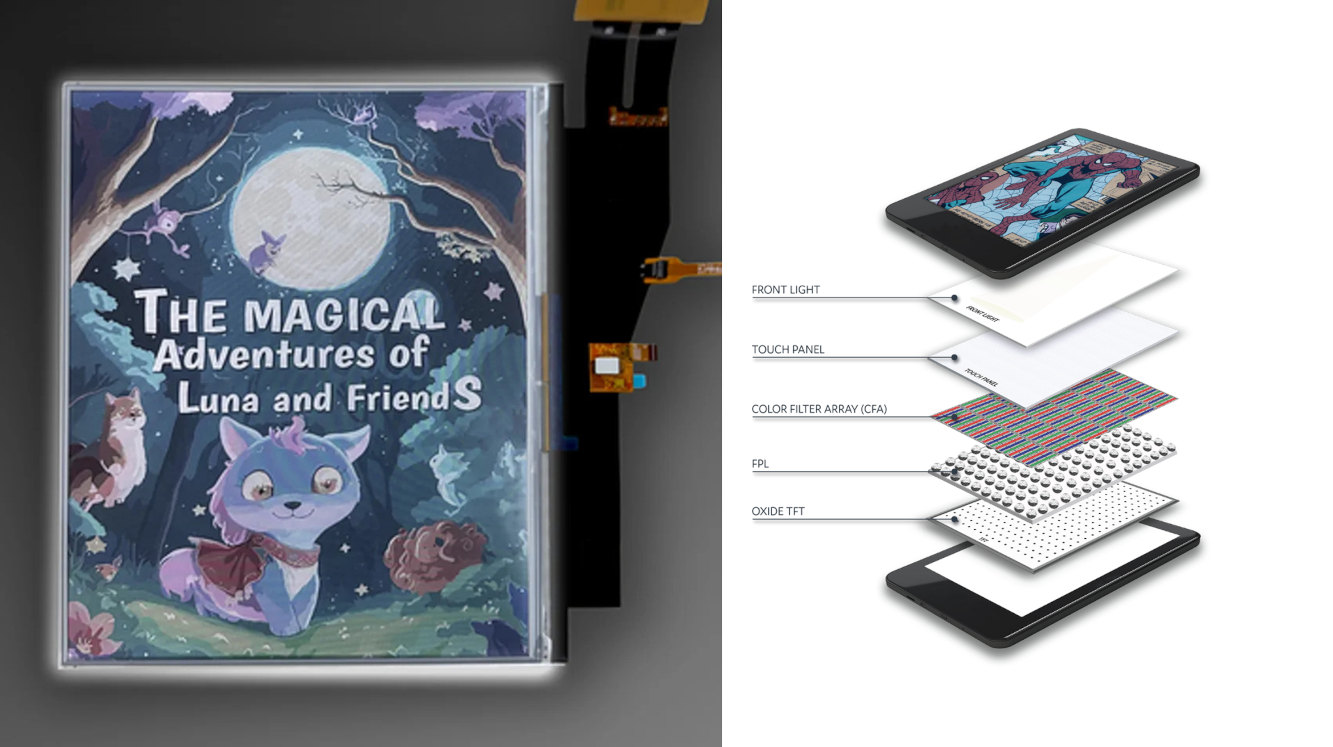
Color ePaper Grows Up: E Ink Launches Kaleido 4
The headline improvements are substantial: Kaleido 4 doubles the color gamut of its predecessor, increases white reflectance by 15%, and delivers 50% higher contrast. Together, these enhancements address the most common shortcomings of earlier color ePaper displays, which often struggled with muted colors, greyish backgrounds, and reduced readability.
Perhaps the most notable development is support for video playback at up to 18 frames per second. While still well below the 24-30 FPS delivered by conventional LCD and OLED displays, the higher refresh rate marks an important milestone for ePaper technology, expanding its potential beyond static content and simple page transitions.
At the heart of the upgrade is a new oxide TFT backplane, enabling faster refresh speeds and improved color reproduction. The new architecture gives electrophoretic particles greater responsiveness, allowing E Ink to simultaneously improve color saturation, contrast, and overall display performance.
The first commercial product featuring Kaleido 4 will be Hanvon’s M10C II eNote, initially launching in China. Beyond eReaders and digital note-taking devices, the technology could also benefit a growing range of retail, corporate communications, and digital signage applications where ultra-low power consumption remains a key differentiator.
invidis Comment
With Kaleido 4, E Ink delivers one of the most meaningful upgrades to color ePaper in recent years. The technology is steadily closing the gap to conventional display technologies by offering a richer and more engaging viewing experience while retaining the paper-like readability and ultra-low power consumption that make ePaper unique.
That said, the new video capability is unlikely to be the feature most sought after by the digital signage industry. Video playback inevitably increases power consumption, undermining one of ePaper’s strongest value propositions: the ability to operate independently of a power supply for weeks, months, or even longer. For most digital signage applications, the real breakthrough remains improved color performance and readability rather than higher frame rates. The sweet spot for ePaper continues to be highly energy-efficient signage, particularly in environments where battery-powered or solar-powered operation can significantly reduce installation and operating costs.