Fan expectations, broadcast requirements and the commercial value of digital displays are reshaping LED requirements in sports venues, according to a new Absen white paper.
Sports Venue Analysis: Fans Would Pay for Enhanced Experiences
Sports venue LED displays are increasingly being treated as part of a venue’s core technology infrastructure rather than simply large screens for scores, replays and advertising, says Absen.
The Sports LED Display Solutions White Paper identifies international event standards, changing fan expectations and the commercial value of digital displays as three forces influencing the development of stadium and arena LED systems.
The white paper comes as the LED display market continues growing. Citing Trendforce, Absen says the global LED display market is projected to reach US$8.1 billion in 2026, up 7.8% year over year.
Among the figures cited in the report, 76% of spectators say the display quality affects their decision whether to return to a venue, while 89% of Gen Z spectators favor digital interactive features. Sixty-eight percent of fans say they would be willing to pay a ticket premium for an enhanced in-venue visual experience compared with watching an event in 4K at home.
Absen also says dynamic perimeter LED and augmented reality advertising can increase advertising exposure value by 30% to 50% through broadcast coverage.
Five requirements for sports LED
The white paper proposes five areas that Absen believes should form the basis of next-generation sports LED systems: image quality, reliability, compliance, openness and lifecycle value.
Image quality increasingly needs to account for both spectators inside a venue and television cameras. Reliability covers factors such as redundancy and continuous operation during live events, while compliance addresses the technical and safety requirements imposed by sports governing bodies and major international competitions.
Absen defines openness partly through a display system’s ability to integrate with other venue technologies, including timing and scoring, audio, broadcast production, lighting and centralized control systems.
Lifecycle value includes energy use, maintenance and the cost of operating display infrastructure over the life of a system. Absen says its IDES dual-voltage technology can reduce energy consumption by 40% to 50% compared with conventional LED displays.
BC Place provides a real-world example
The white paper points to BC Place – a World Cup venue and home of the Canadian Football League’s BC Lions – in Vancouver, Canada, as one example of those principles in practice. Absen supplied a 612-square-meter (6,588-square-foot) center-hung LED display for the stadium, with the project progressing from design to commissioning in six months.
The company says the system can reach brightness levels of 10,000 nits while keeping daily electricity consumption below 1 kWh per display unit. Absen estimates the energy-efficient design could save roughly US$560,000 in electricity costs over 10 years.
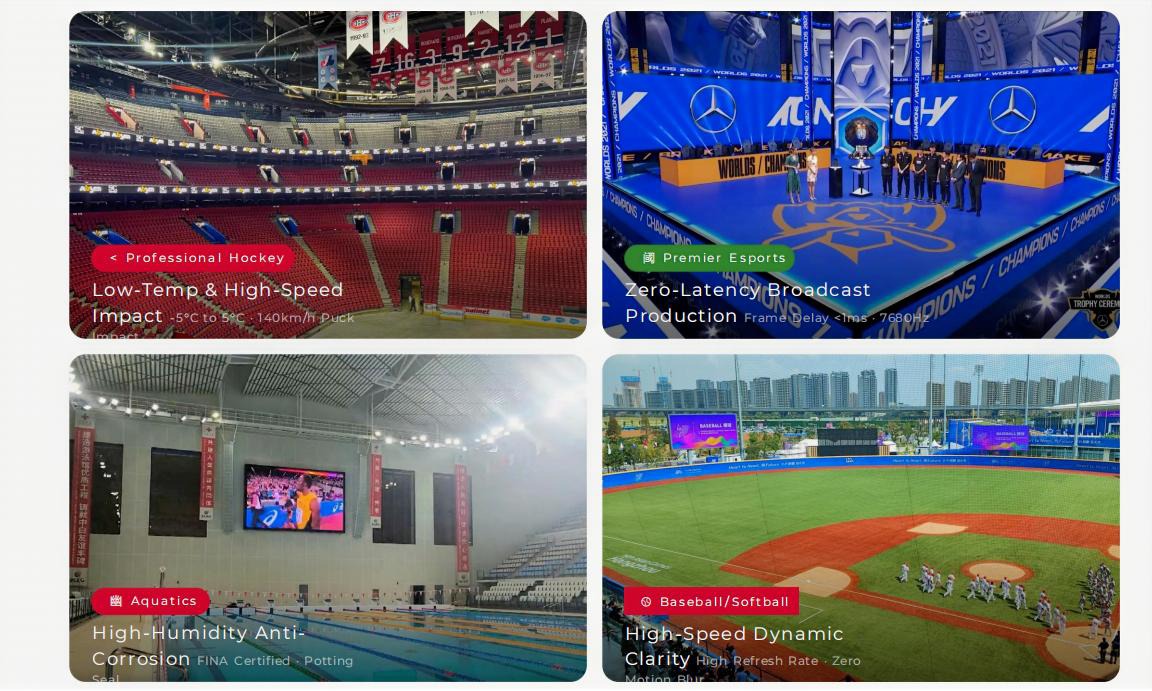
The report also examines differing display requirements for football stadiums, basketball arenas, ice hockey venues, aquatic centers and esports facilities, arguing that sports LED systems increasingly need to be designed around their particular venue and application rather than approached as a standard display installation.
Absen draws on experience from more than 65,000 projects worldwide for the white paper. The company says its global support network includes 40 regional service centers and more than 5,400 certified ACE engineers.
The White Paper is available here.