
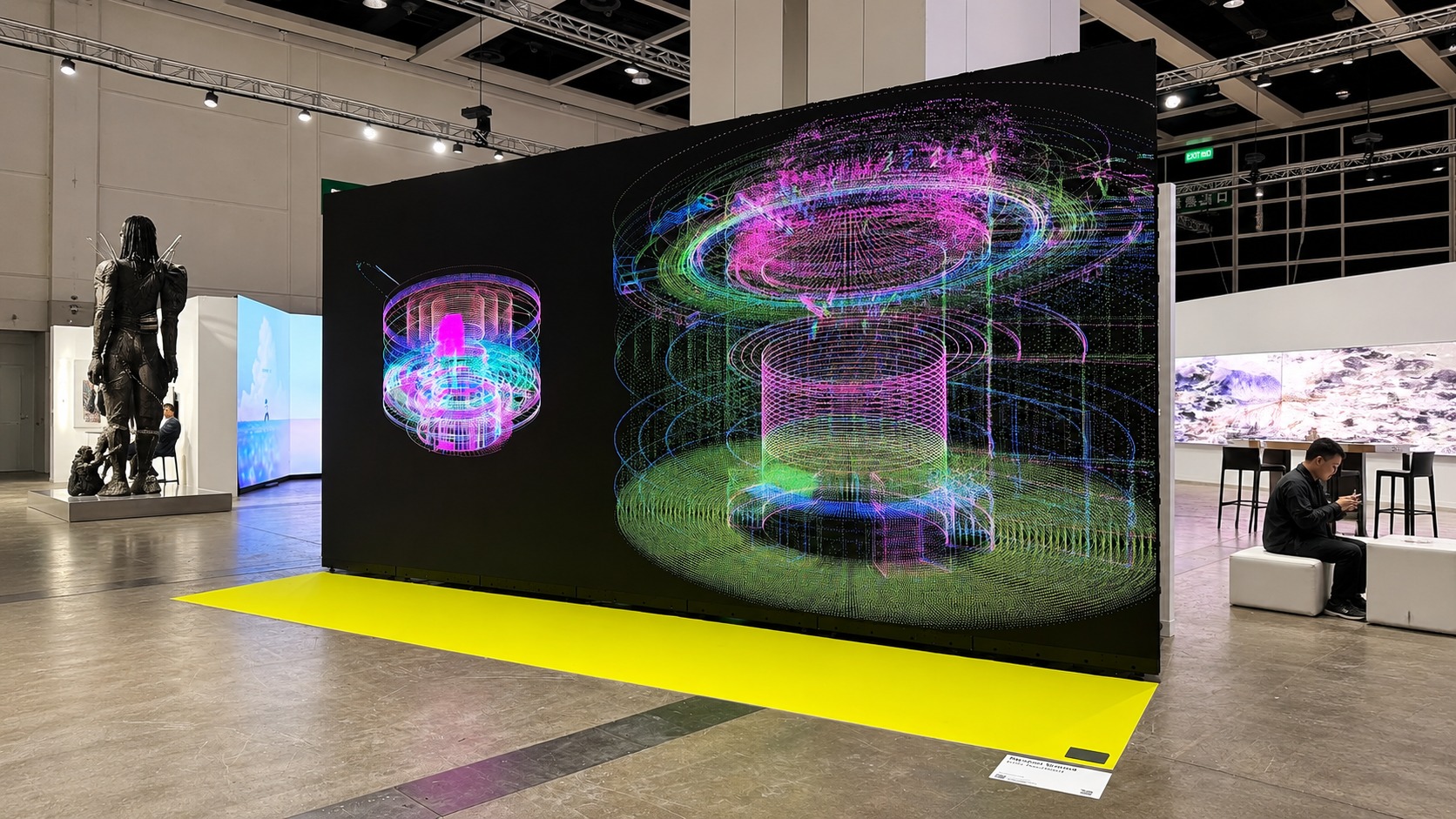
Kim Asendorf’s interactive Pxl Duo Pod was presented on adjoining Roe Visual LED screens, using Tessera processing to reproduce its evolving colors, individual pixels and deep black backgrounds.
LED: Brompton Processing Powers Art Basel Hong Kong LED Artwork
Brompton Technology’s Tessera LED processing powered a large-scale interactive installation by German digital artist Kim Asendorf at Art Basel Hong Kong.
Pxl Duo Pod was presented on two side-by-side ROE Visual Topaz LED screens with a 2.6 mm pixel pitch. Brompton Tessera SX40 4K processors and Tessera XD 10G data distribution units drove the displays.
The work places two evolving digital forms side by side, allowing their colors, movement, and pixel density to interact. Visitors could use a control pad to rotate the forms, zoom in and change the camera angle.
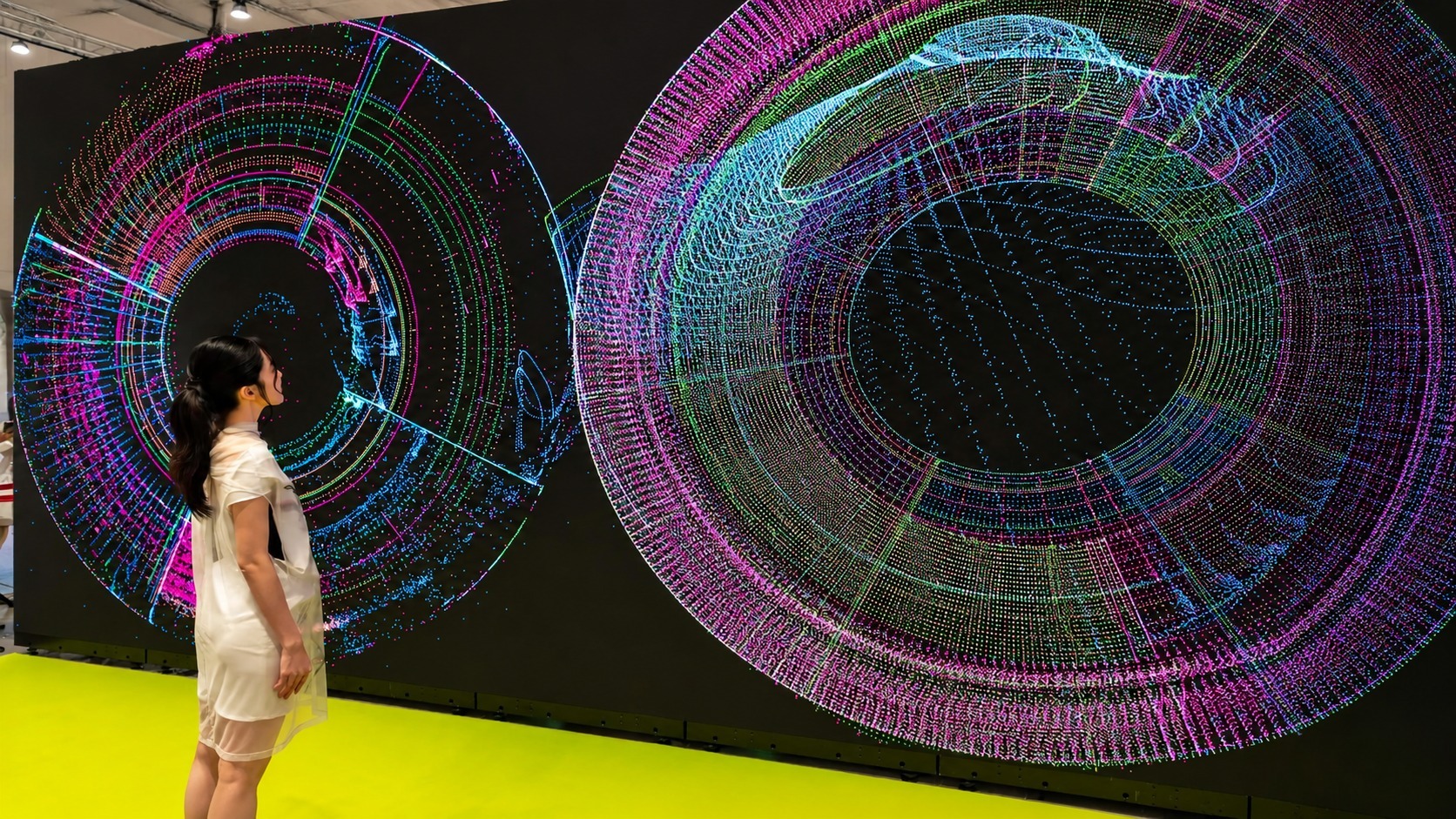
The LED setup reproduced the work’s individual points of light, carefully developed colors and deep black backgrounds while preserving the separation between pixels.
Presented by the Nguyen Wahed gallery, Pxl Duo Pod was part of Zero 10, Art Basel’s digital-art program.
“I care deeply about display quality, but what Brompton controllers bring to LED walls is almost surreal,” Asendorf said. “Now I have a first-choice setup.”
From Absen to Roe Visual
Brompton processing was also used for Asendorf’s Raster und Spektrum installation at Art Basel Miami Beach, where the artwork appeared on Absen LED panels.
Although different LED brands were used in each location, Brompton provided a common platform for maintaining the details central to Asendorf’s work.