
Austin Film Crew used Blackmagic Design cameras to create Texas Legacy in Lights, a live-action projection-mapping film designed specifically for the Gonzales Memorial Museum's façade.
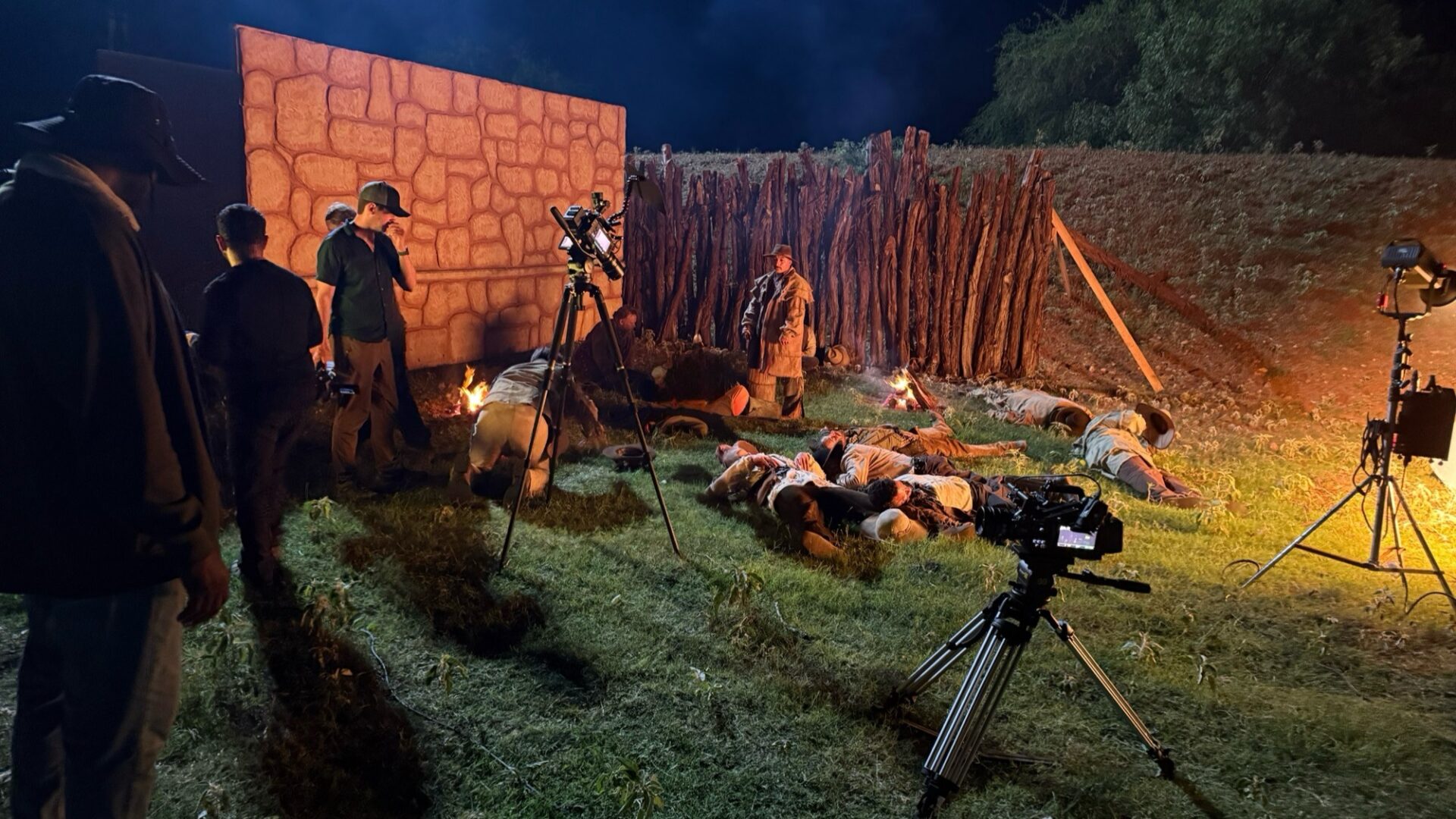
Projection Mapping: Blackmagic Cameras Capture Texas Museum Film
Director John Franklin Rinehart and Austin Film Crew used Blackmagic URSA Cine 12K LF and Blackmagic PYXIS 6K digital film cameras to produce Texas Legacy in Lights, a live-action projection mapping film created for the Gonzales Memorial Museum. The film is projected twice daily across the museum’s exterior, telling the story of the Texas Revolution through a purpose-built cinematic experience.
Unlike a conventional film destined for a flat screen, Texas Legacy in Lights was designed around the museum’s architecture. According to Rinehart, the production team divided the building’s façade into multiple storytelling zones, allowing different scenes to unfold simultaneously across the structure. That approach influenced everything from storyboarding and camera framing to post-production and projection mapping.
Rinehart worked closely with director of photography Alex Walker during the seven-day production, capturing footage in 12K to provide the resolution and flexibility needed for the large-format projection. Austin Film Crew then spent several weeks completing visual effects, editing and architectural projection mapping to ensure the imagery aligned precisely with the museum’s 96-foot-wide façade.
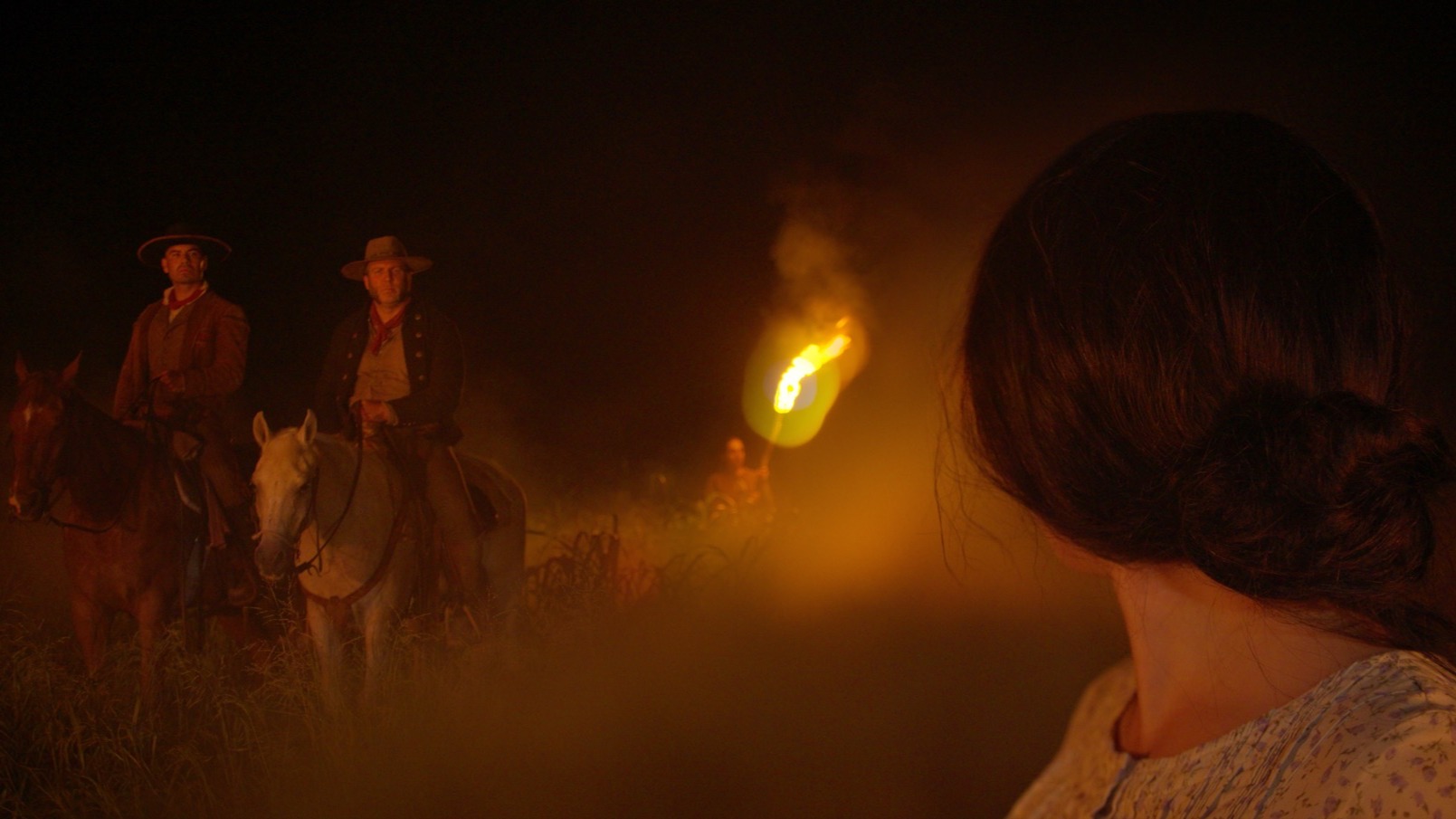
“The biggest challenge was imagining the final canvas while shooting,” Rinehart said. “When you’re shooting for projection mapping, you’re shooting for the architecture of the building itself. We picked different points in the building’s architecture and different surfaces that would house various parts of the story, with the plan to blend the images together so that you could see the whole narrative on one giant canvas. In a way, we were shooting multiple films simultaneously and then compositing them into a single experience.
“We had 42 layers of 12K footage being pushed through the timeline, which is an extraordinary amount for any system to handle. The fact that it could actually play back in real time blew my mind.”
According to Austin Film Crew, the project combined live-action filmmaking with large-scale architectural projection to create what it describes as the first narrative film developed specifically for permanent projection mapping on the Gonzales Memorial Museum. The installation is presented nightly as part of the museum experience.
Update: An earlier version of this article incorrectly described the production workflow and misidentified production credits. The article has been updated to correct those errors and accurately reflect the project’s production details.