I had to do some pondering when I cracked my travel laptop on the flight home from last week's Infocomm trade show in ever-ghastly Las Vegas. Tons of stuff, but the vast majority of it: better, versus truly new. So what’s my angle?
Haynes Column: Dave’s Return to Infocomm – Notes from the Las Vegas Showfloor
This was – guessing – my 17th or 18th Infocomm. It is a terrific showcase of ProAV tech, and an incredibly efficient event for informing and educating the ProAV community, as well as for getting important catch-ups with both suppliers and partners.
I was reliably told one of the big integration firms had some 150 people at the show, in the classrooms and conference sessions and on the floor.
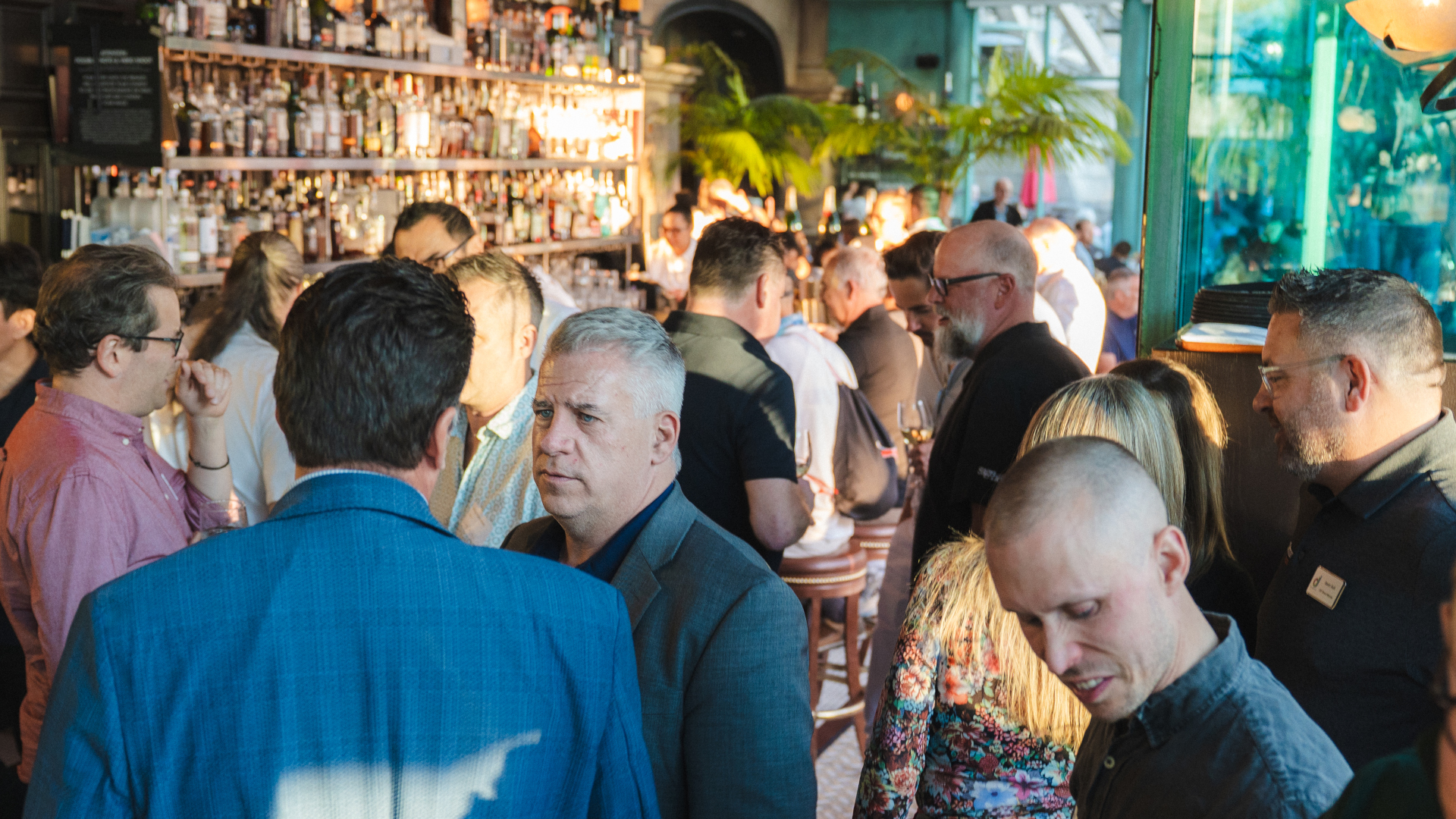
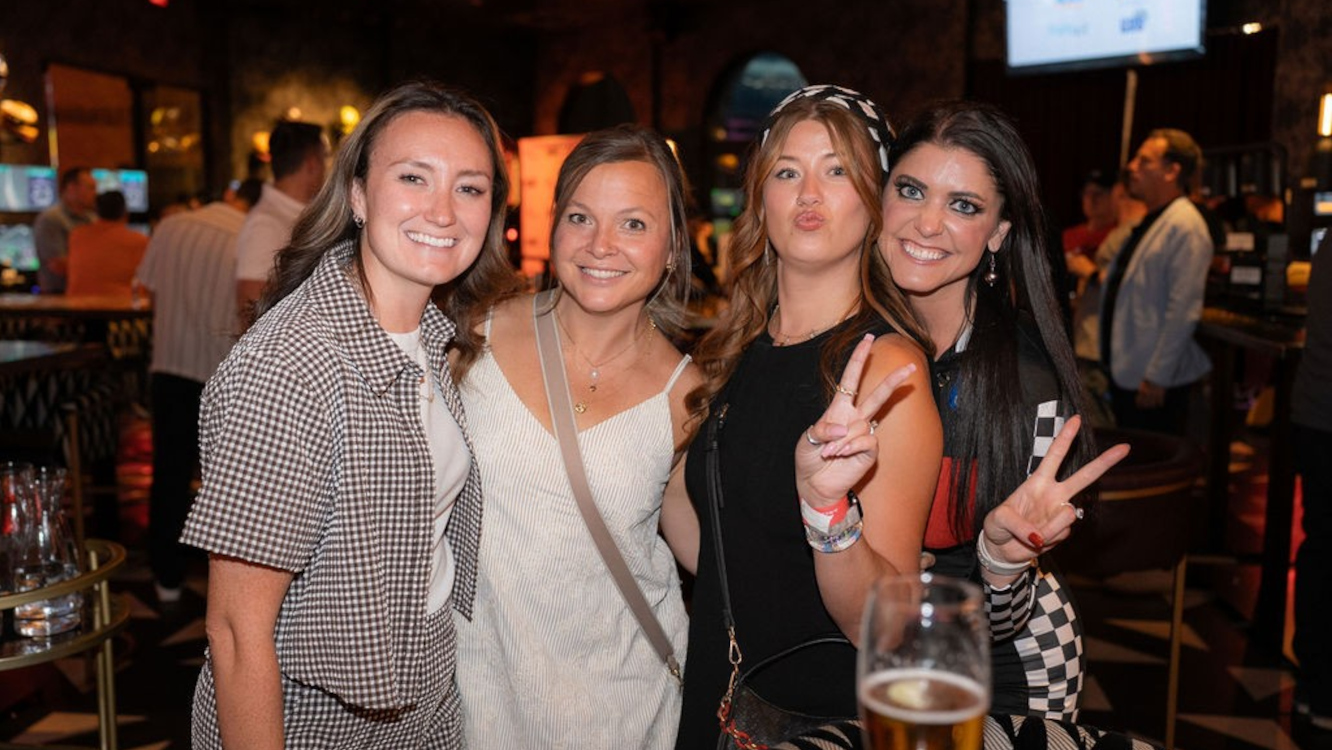
A huge part of what Infocomm is about is community and networking. Owned and directly run by the US-based trade association Avixa, Infocomm is the big annual event that pulls the North American ProAV community together – indicative in the volume of social events.
Peerless-AV had its massive annual party on the Resorts World rooftop (didn’t go – too old, and too easily led astray). But there were other planned parties and dinners all over town.
SignageOS has with invidis retained the Sixteen:Nine mixer, though they now purposefully keep the crowd count down and focus on senior and influential people.
Bryan Meszaros once again did one of his XUSC mixers, and people with more energy and sturdier livers went from that one to the 1980s disco-themed Peerless party.
I went for a quiet glass of Stags Leap instead, and called the night at 11. Three Infocomm nights and I was in bed before midnight on each of them. Very different. Not that I could sleep any better.
Probably way too much is made of attendance metrics when a show like Infocomm gets a post-mortem review. At 28k and change the show headcount was less than a third of what the somewhat related Integrated Systems Europe show pulled early in the year in Barcelona. ISE has been growing like crazy, while Infocomm has not.
While what’s on the show floors is very much the same between the two, the dynamics are very different. I don’t think it is possible to get a read on how Infocomm is really doing in the utterly nutty business and cultural climate of the US – between tariffs and immigration fears and the pinballing decisions and “policies” coming of that nation’s capital.
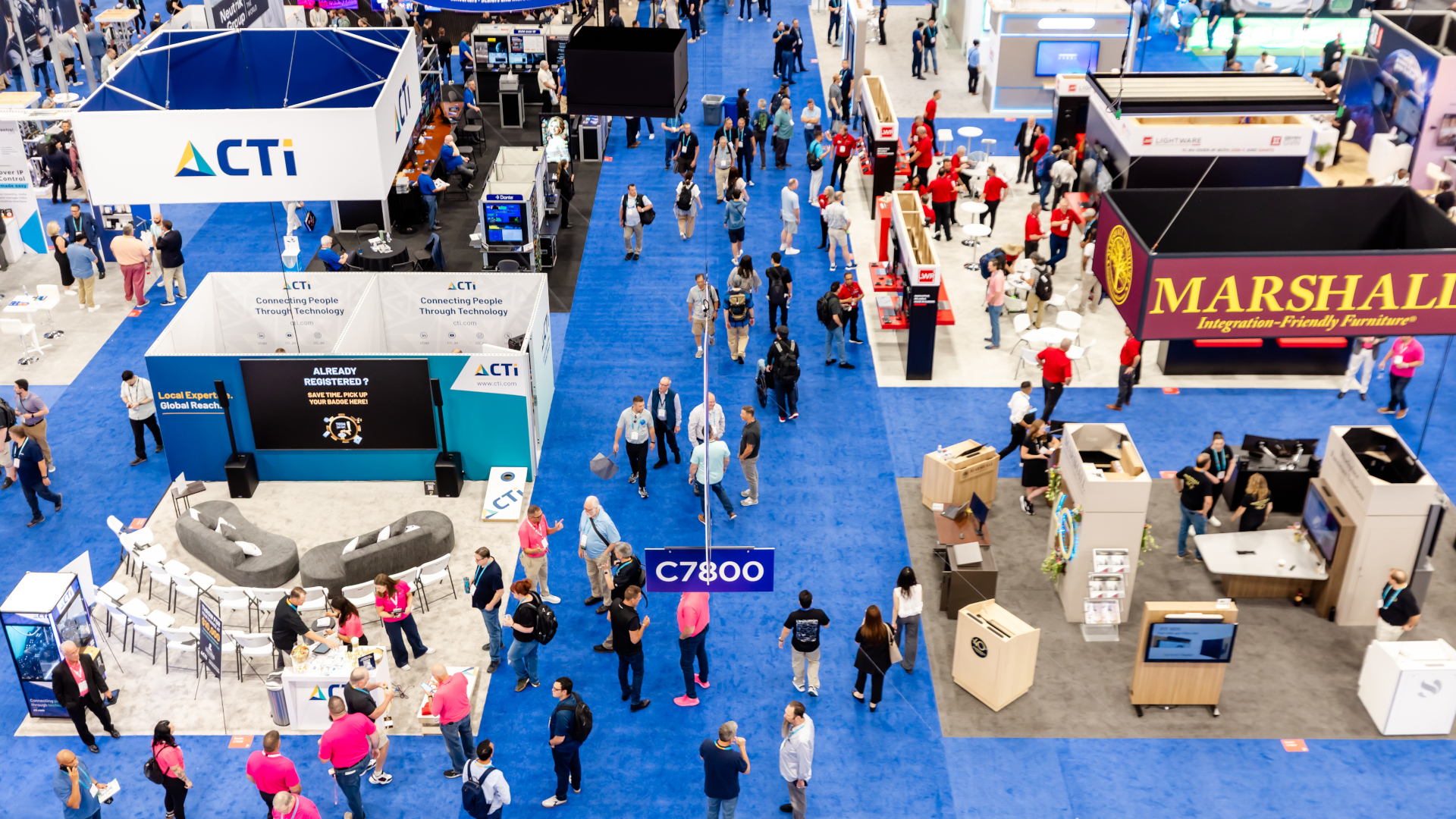
The LVCC show floors – over two halls – looked very busy to me on day 1 and day 2, but nothing like the mass of humanity seen in Barcelona a few months ago. While the overall number of eyeballs and tired feet was down, the important metric of end users was up – with Avixa in its post-show PR saying 37 percent attendees would be characterized as end-users aka people who buy stuff or influence purchasing.
A few things did strike me:
First, there was very little in the way of stupid shit. There may have been others, but the only (not in any way) hologram thing I saw was Samsung’s well done but business-no-hoper Spatial Signage unit. $20k for eye candy!
NYC-based Looking Glass also had its similar 86-inch “hololuminescent” display – which is also $20k. That is at least a company that is in the business of these specialized displays, while Samsung will probably drop this the way they have launched and dropped a number of products that didn’t generate the sorts of shipment volumes they expect and need.
I don’t recall even seeing any of those madly spinning LED light wand things, though I’ll concede I had all of maybe 2 hours in the north hall (most of the software and display stuff was in central hall). Maybe there was someone.
Second, the Chinese LED manufacturers have moved on from faux 3D anamorphic illusions as booth eye candy. I don’t think I saw any examples. The new thing is AI-generated video, and there were some godawful attempts at machine-made gallery-like motion visuals.
Just pay someone for creative, guys.
Third, with the notable exception of Sony, I’d say all the big footprint, big budget display manufacturer stands were smaller since the last time I was at Infocomm. The really mind-blowing thing was how Samsung was barely there.
The Korean giant for many years had a massive, very dominant exhibit. In 2026, it had some sort of retail showcase thing with a handful of vendors. I’m not sure why it was there, or why anyone would have felt compelled to spend time in it. It was really weird.
LG’s stand was maybe half the scale of recent years, but there was still a lot of product and a lot of people in there. There was no whiz-bang anchor feature at the exhibit gateway, but it at least felt like an LG stand.
The logical and obvious explanation for this is the rise of Chinese manufacturers. First it was LED. Now it is also flat panels. Hisense, BOE and TCL were all there directly or indirectly showcasing products they now sell as their own, or quietly make for the more familiar Japanese and Korean brands.
The visual quality of LED displays is now SO good that all the blabber about whether something is micro or mini, MIP, COB and on and on seems increasingly like tech marketing noise only gear-heads care about.
What matters – apart from price – is component quality, availability, manageability, and in-country service and support. For the US market, especially for things like military contracts, TAA compliance (not made in China) really matters for circuitry and software.
I saw no end of gorgeous Chip-On-Board displays that have the tight pixels, visual quality and durability that ticks boxes nicely for end-users and the consultants and specifiers who influence and decide on what gets used.
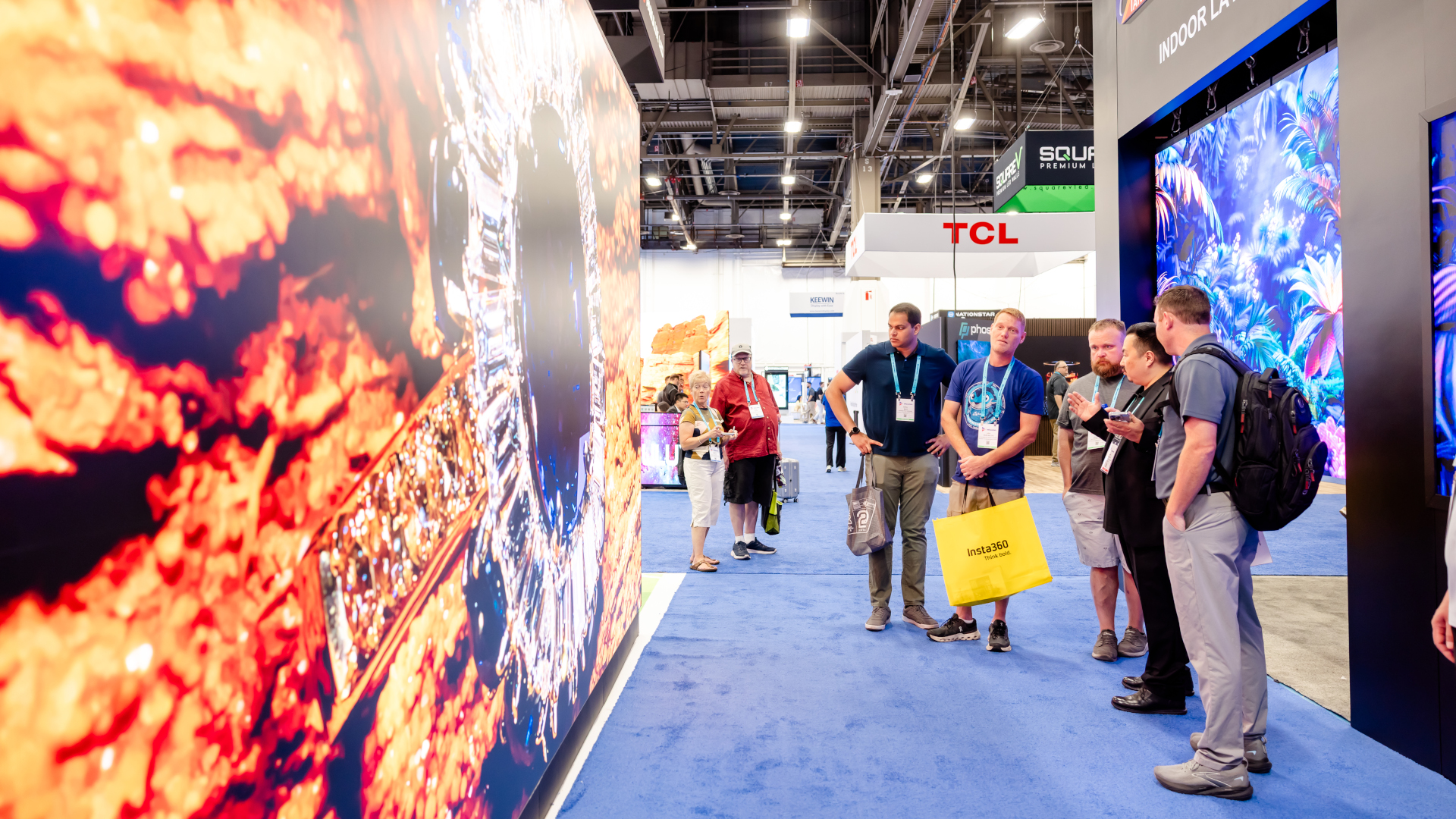
One of the interesting things I learned was how one company – which had a stand at Infocomm – white-label-manufactures the COB video walls peddled by about 50 percent of the brands out there. Never heard of VMTC, but just like AUO quietly makes LCD product for a pile of commercial and consumer display brands, VMTC does the same with COB LED.
As happens with all of these big shows, many to most of the display manufacturers launched new products that may or may not actually be ready to ship. I didn’t come across anything that seemed truly game-changing. As always, one or many of these things apply: brighter, faster, easier, smaller, tighter … you get the idea.
Planar had an impressive and busy stand and its big feature product was an MIP product called Cobra. It was lovely and quite interesting, in that it uses genuinely MicroLED dies that are doubled up. So if, let’s say, a red LED light emitter fails, there’s a redundant one that takes over. No dead pixels.
BUT … doubling up LED die doubles up component costs, so it might be cheaper to buy Ecuador than one of these things.
And the conventional COB display a few feet away – which wouldn’t cost anywhere near as much – looked pretty damn good.
LCD displays are still a thing and will be for a long time, for a lot of use cases. The resolution to cost formula just works. But there’s not much new to do with displays that are a very mature technology. You see companies highlighting things that are VERY nuanced, like anti-reflection capabilities.
I did spend some time with Geephon, a Chinese manufacturer that’s taking a run at Taiwan’s Dynascan and the more specialized manufacturers making high brightness product for the DooH and QSR markets. Instead of just trying to be cheaper, these guys have invested a pile of R&D into producing DooH and QSR displays that are brighter and will last.
I won’t name brands, but there’s no end of stories and evidence of big brands peddling outdoor-rated flat panels that looked awful or even died within months of deployment.
The big thing that impressed me was how Geephon has engaged North American grey-haired guys who genuinely know the business and needs, instead of trying to just hiring aggressive, younger sales people who’d work mainly on best price.
I had a long visit with E Ink, and will write that up in a future column. Suffice to say the company clearly sees signage as a growth market, and the products are getting better in terms of color capabilities and form factor. I saw one R&D poster product – not yet on the market – that was just the E Ink layer on a flexible plastic substrate, suspended from some sort of overhead box I assume house the electronics. Think poster laminated in plastic.
I also really like how some of the higher-end E Ink products like Spectra 6 now do much more graceful, stylized transitions. For many years, these products looked like they were having medical emergencies glitching out as images changed.
I also chatted with a Chinese firm called E-Paint, that makes cholesteric LCD displays – which is basically LCD technology that is reflective. So it uses available light instead of power-hungry backlights. The benefit is full LCD-level color support, but with e-paper power usage.
The challenge is: reflective has been around for ages and has never really caught on. I asked, and the numbers of E-Paint units in the field is still very low.
Now … software.
It is so hard to write about CMS software because the market is very mature and very overcrowded.
What was interesting, though, was the more considered usage of AI. Instead of jazz-handsy stuff like quick and dirty image creation, I saw demos from companies like Korbyt and Brazil’s Onsign that use AI to watch and error check content.
Onsign, interestingly, does the AI work at the network edge – on the actual media players. The demo I saw used the neural processing units (NPUs) embedded in Brightsign media players.
I know Poppulo also does software work that does things like error checking, and Navori launched a “composable architecture” that unifies content management, data integration, AI-connected workflows and other key bits inside a single software solution stack.
My point is that the software guys have moved on from the gimmicky stuff to applying AI for the important bits that aren’t seen.
I could go on and on but this is turning into a long read. So I will get my notes and recordings together for some future posts that drill into some specific things.
It was fantastic to see a buncha people for the first time in ages. Anyone working in digital signage should be going to this show – to get current, but also to connect and re-connect.
Thank you to the people who hosted events, drinks and dinners – like Sony, MOTV, SignageOS, Openeye Global, Assured Systems, Easescreen and Giada. Much enjoyed and appreciated.
Next year’s event is back in steamy Orlando.