
A generative nine-story LED installation at Berczy Square was designed as part of the building itself rather than a conventional display.
LED: Toronto Atrium Screen Blurs Line Between DooH and Architecture
A 90-foot LED installation inside Toronto’s Berczy Square is raising bigger questions about where digital signage ends and architecture begins.
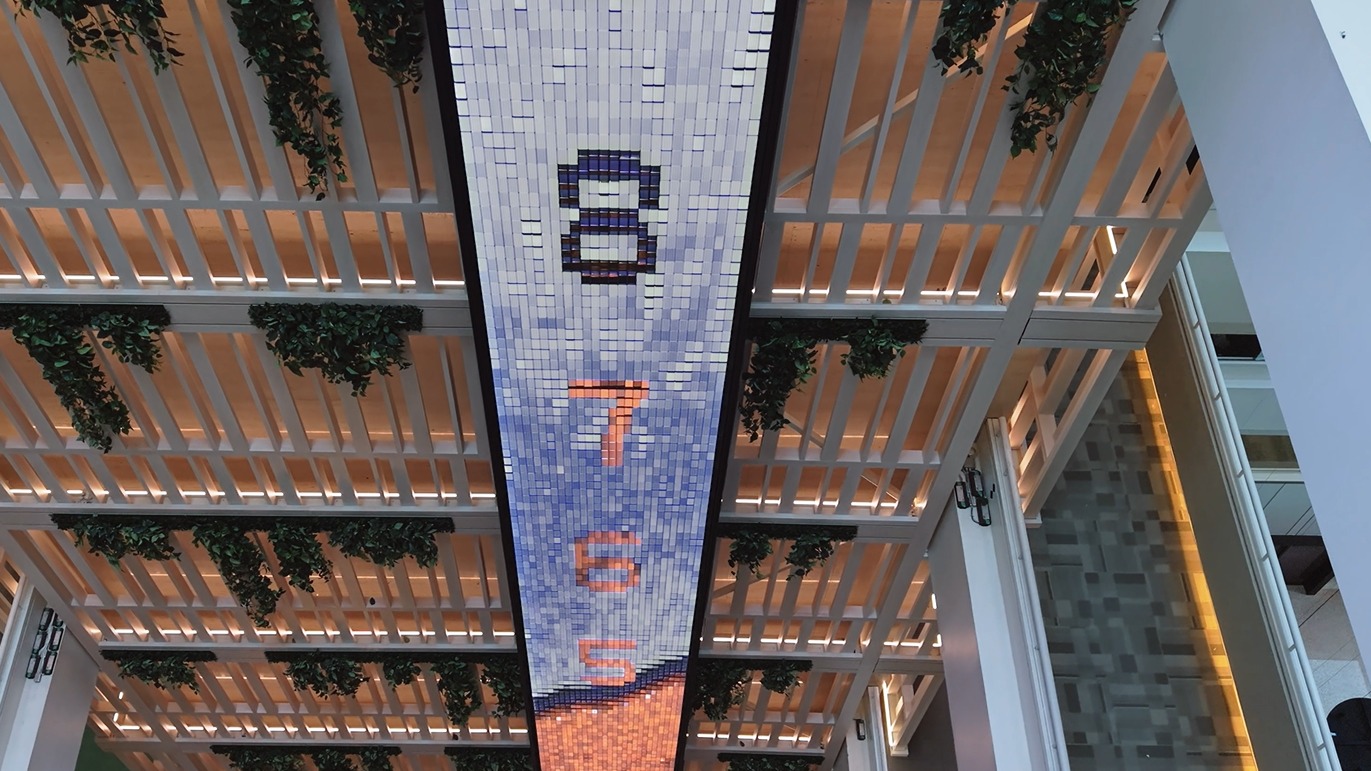
The nine-story vertical screen anchors the atrium lobby of the renovated office tower at 33 Yonge Street, displaying generative content that continuously evolves using real-time data, including weather conditions, time of day, seasonal changes, and local sports schedules.
Created by Montreal-based studio Gentilhomme, the installation was designed to function less as a traditional digital signage display and more as a living architectural element embedded in the building experience. The studio collaborated with DTS Inc. and The Fury on the project’s technical design.
Rather than relying on scheduled playlists or looped video, the system generates evolving visual sequences designed for long-term daily viewing. One scene gradually grows a digital tree across changing seasons, while another uses cascading objects inside a surreal hourglass motif to visualize the passage of time. Additional visual “easter eggs” appear based on live data inputs.
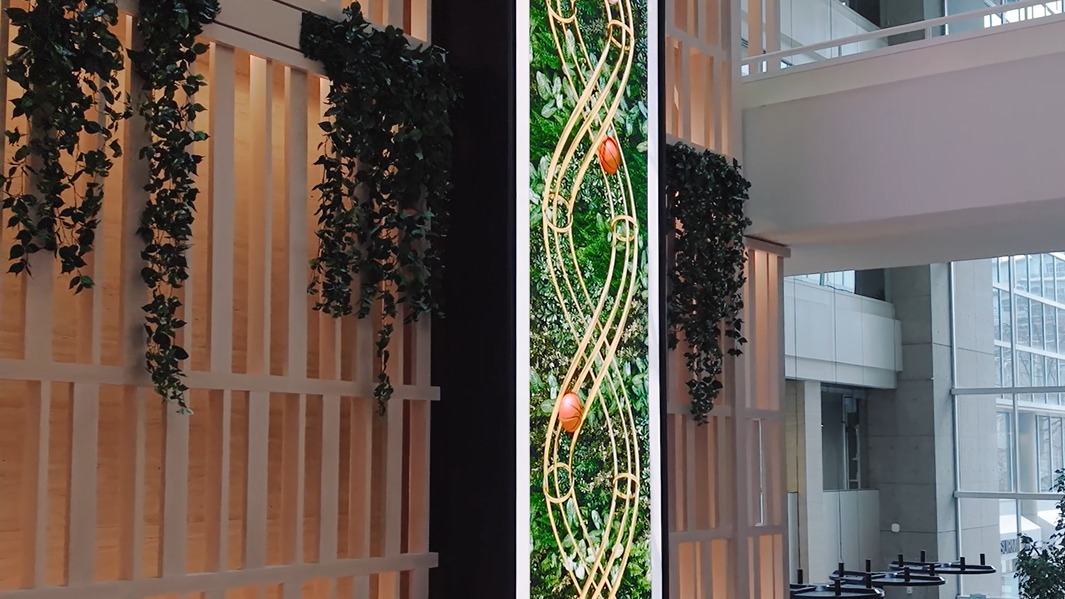
Architecturally, the installation was integrated directly into the atrium redesign led by Dialog, with the surrounding structure developed to preserve original building features, including the building’s Travertine stone wall, while creating a vertical focal point through the center of the lobby.
“We approached the screen as an architectural element rather than a display surface,” said Thibaut Duverneix, founder and executive creative director of Gentilhomme. “The goal was to create something that lives with the building, a form of atmospheric content that reveals itself over time.”
The project also shows a broader shift in commercial real estate and experiential design, in which digital media is increasingly treated as part of the spatial environment itself rather than purely as signage, advertising, or information delivery. At Berczy Square, the installation is intended to shape how occupants experience the lobby — influencing movement, dwell time, and visual attention within the public space.