
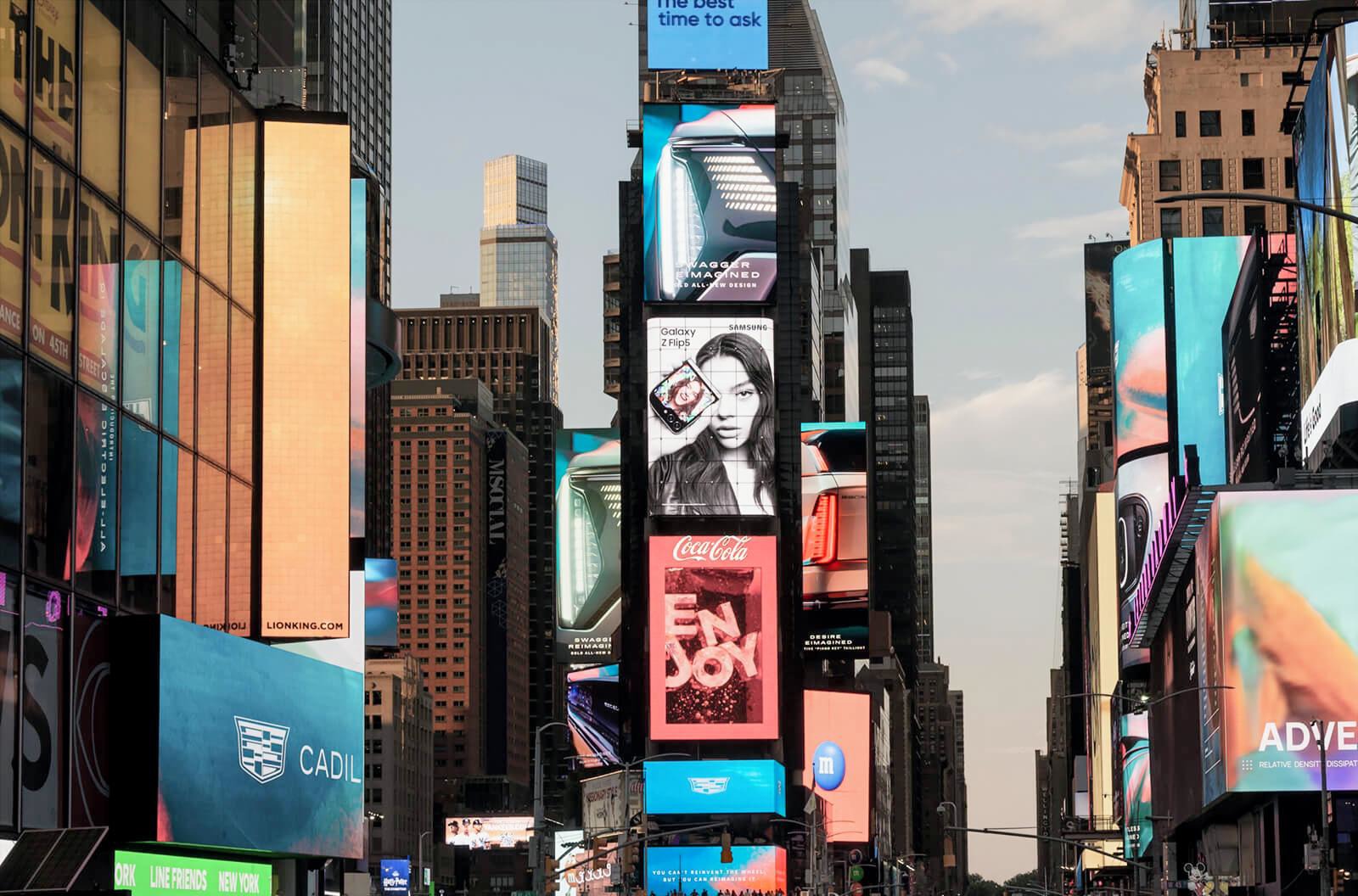
The Out of Home Advertising Association of America (OAAA) has released a new guide that seeks to frame digital out-of-home as a form of video media, introducing the term Video Out-of-Home (VooH) to describe advertising delivered through digital signage networks.
The document, titled The State of Video OOH Guide, is aimed at agencies and brand marketers looking to adapt video creative originally produced for television, streaming platforms, and online video campaigns for use on digital out-of-home screens.
OAAA’s use of the VooH label is largely about positioning. By framing DooH inventory as a form of video media, the association encourages agencies to treat digital signage screens as an extension of broader video campaigns across television, connected TV, and online platforms, rather than as a standalone out-of-home format.
In that sense, the guide reflects a broader shift in how digital out-of-home is being sold to media buyers. As high-resolution LED billboards and large-format displays become more common, advertisers increasingly use motion-based creative rather than static messages, allowing DooH placements to mirror the look and feel of video advertising used elsewhere in a campaign.
The guide positions Video OoH as a subset of digital out-of-home, rather than a replacement for it. While standard DooH campaigns may use static creative or simple animation within rotating screen loops, VooH refers specifically to short-form video spots designed to deliver motion-driven storytelling in public environments where viewers are often in transit.
According to the association, these video-style placements can complement television, streaming and social video campaigns by extending brand messaging into physical spaces such as roadside billboards, transit hubs, retail environments and entertainment venues.
The guide also emphasizes that creative designed for DooH environments must account for the realities of out-of-home viewing – including short attention windows, looping content, and audiences that may only see a screen for a few seconds.
At the same time, the “VooH” label may be more about marketing language than a fundamentally new format. Digital out-of-home screens have supported motion and video creative for years, and many campaigns already reuse shortened versions of TV or online video assets. The guide instead appears aimed at helping agencies think about those placements within the broader ecosystem of video advertising.
OAAA says the guide is intended as a practical reference for agencies and brands experimenting with video-led creative on digital out-of-home networks – and part of a broader push to ensure DooH is considered alongside TV, streaming, and online video when media buyers plan campaigns.
The full report can be found here.
(Image: Outfront Media)