
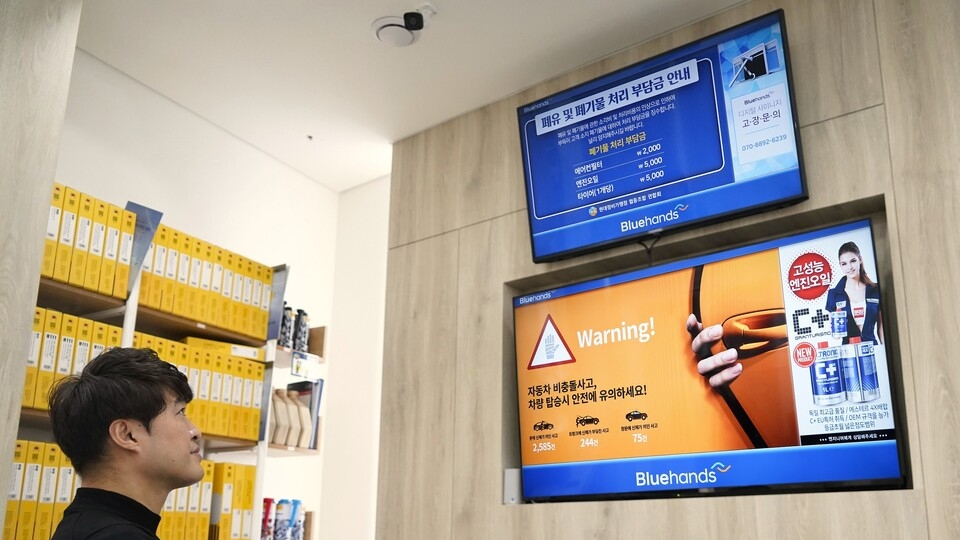
While telecom operators have periodically explored using IPTV platforms to power digital signage networks, relatively few large-scale deployments have actually materialized.
Sixteen:Nine founder Dave Haynes has written about how IPTV providers have occasionally looked at extending television distribution platforms into commercial display networks.
And, a new rollout in South Korea offers a glimpse of how that model can work in practice.
Telecom operator SK Broadband is deploying a digital signage service across Hyundai Motor Company’s nationwide network of service centers, known as Bluehands, covering roughly 814 locations.
The service, called B TV On-Ad, builds on SK Broadband’s existing B TV IPTV platform. Instead of relying on dedicated digital signage media players, the system uses IPTV set-top boxes, typically deployed to stream television services to homes.
Traditional digital signage networks typically rely on specialized content management systems and media players designed for scheduling and managing displays. IPTV systems, by contrast, distribute broadcast and on-demand video across broadband networks.
By adapting its IPTV platform for signage, SK Broadband can use existing infrastructure and hardware to distribute advertising and informational content across hundreds of sites without installing a separate signage technology stack at each location. That approach could potentially allow telecom providers to extend video distribution platforms beyond residential television and into advertising and information networks in commercial venues.
At Hyundai Bluehands service centers, the displays are expected to deliver service information alongside advertising and promotional content while customers wait for their vehicles to be serviced.
SK Broadband is also deploying the B TV On-Ad platform in senior community centers across South Korea as part of a program designed to provide information services for elderly residents.