
Hong Kong | Most brands hide renovation work behind scaffolding and printed hoardings. Louis Vuitton does the exact opposite. Once again, the luxury brand has transformed a construction site into a story, proving that retail theatre does not stop when a flagship store closes its doors.
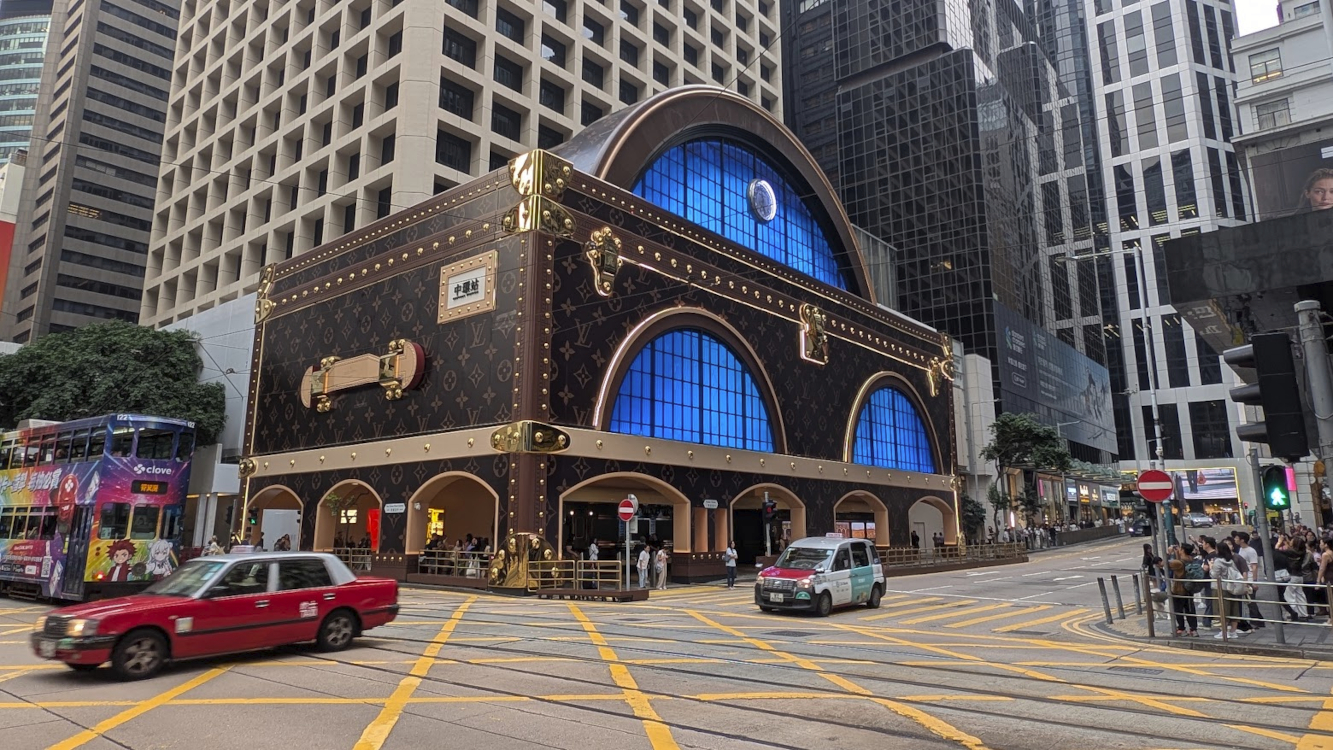
Louis Vuitton: The Store Is Closed. The Show Goes On
When it comes to brand storytelling in the public realm, few companies can compete with Louis Vuitton. The brand’s spectacular retail landmarks have become destinations in their own right, from the ship-inspired The Louis concept in Shanghai to the many iconic Maison stores around the world. Yet what truly sets Louis Vuitton apart is not only the way it designs stores, but also how it treats the spaces in between.
From construction site to social media magnet
The blueprint was established in New York. During the renovation of its Fifth Avenue flagship, Louis Vuitton famously transformed the entire construction site into a gigantic luxury trunk. The installation became a global social media phenomenon, attracting visitors long before the store reopened. Now Hong Kong is getting its own version of that playbook.
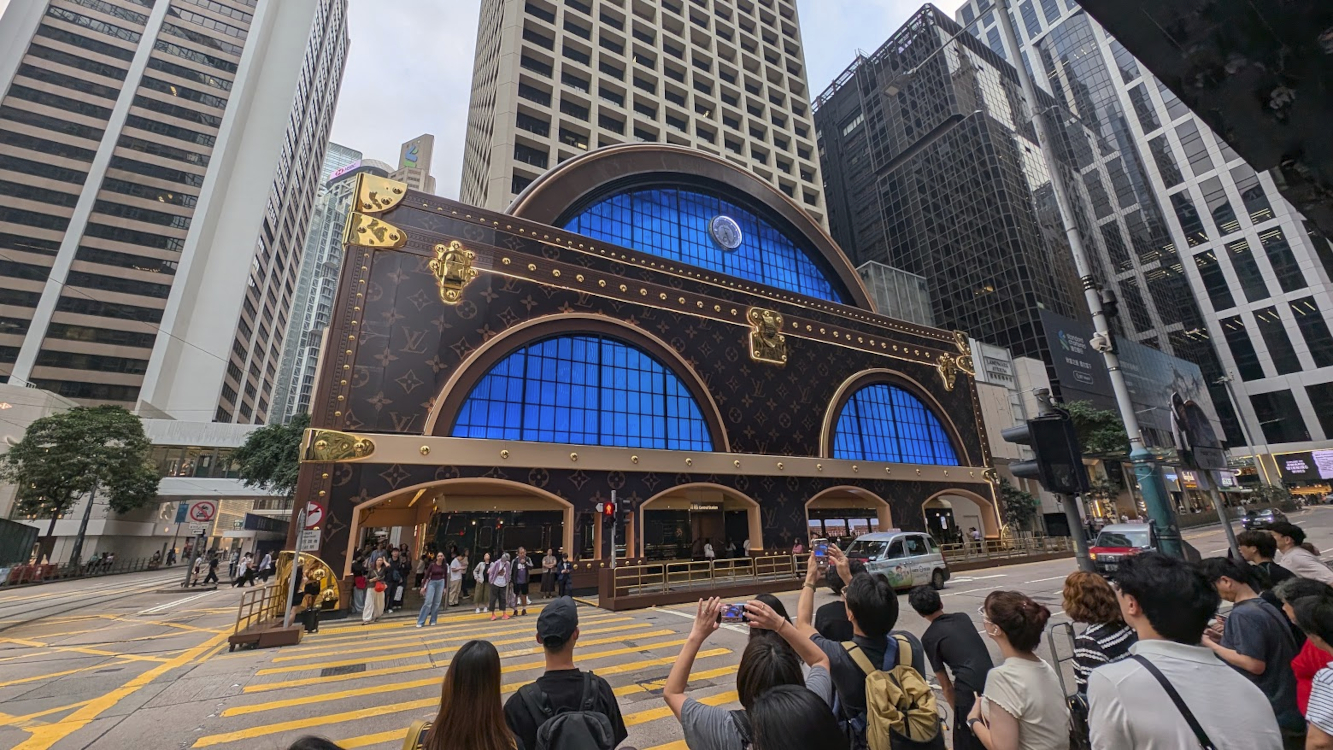
Louis Vuitton’s flagship on Hong Kong Island, famous for its location along the route of the city’s historic double-decker trams, has temporarily closed for a major refurbishment. Rather than covering the building with conventional construction barriers, the luxury house has created a complete transportation-themed installation that already draws crowds of visitors.
All aboard Louis Vuitton
The temporary façade resembles a grand railway terminal. Designed architectural elements and indirect lighting create an illusion of depth, making the structure appear far more substantial than a simple construction hoarding. The real magic, however, happens at street level.
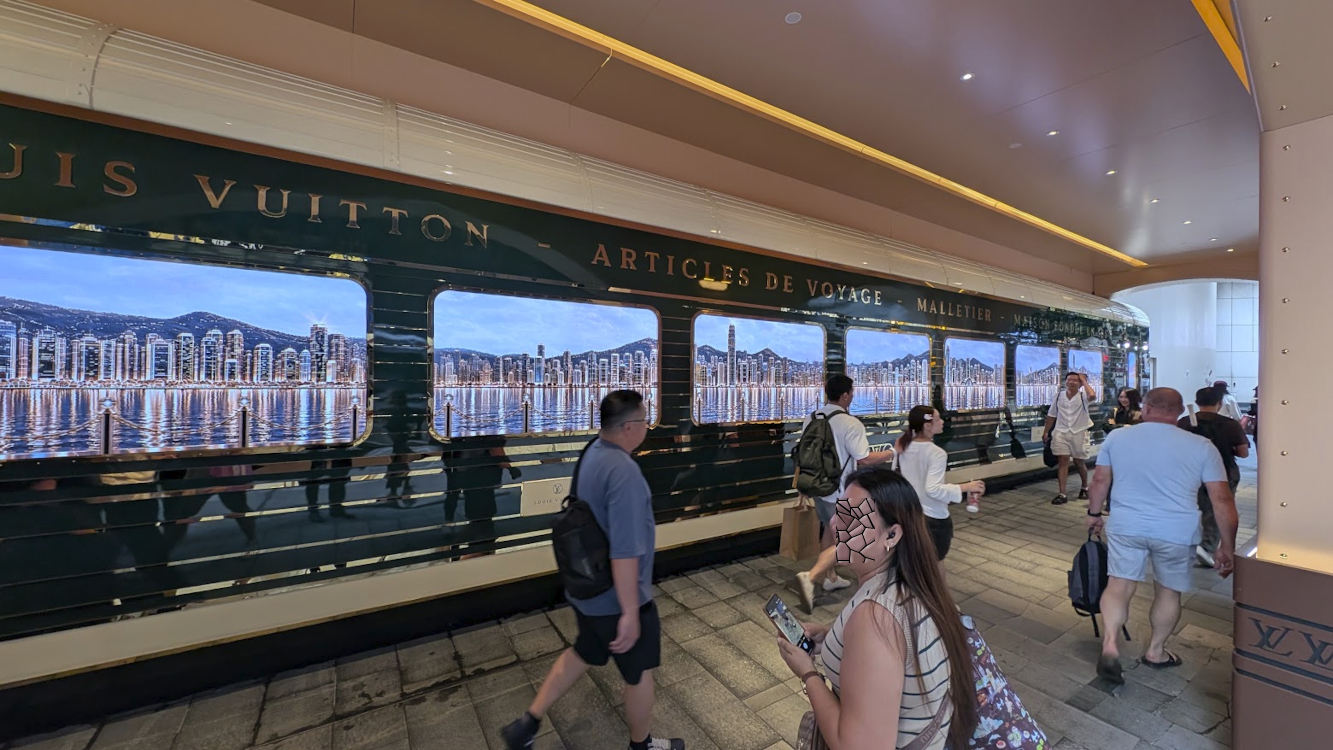
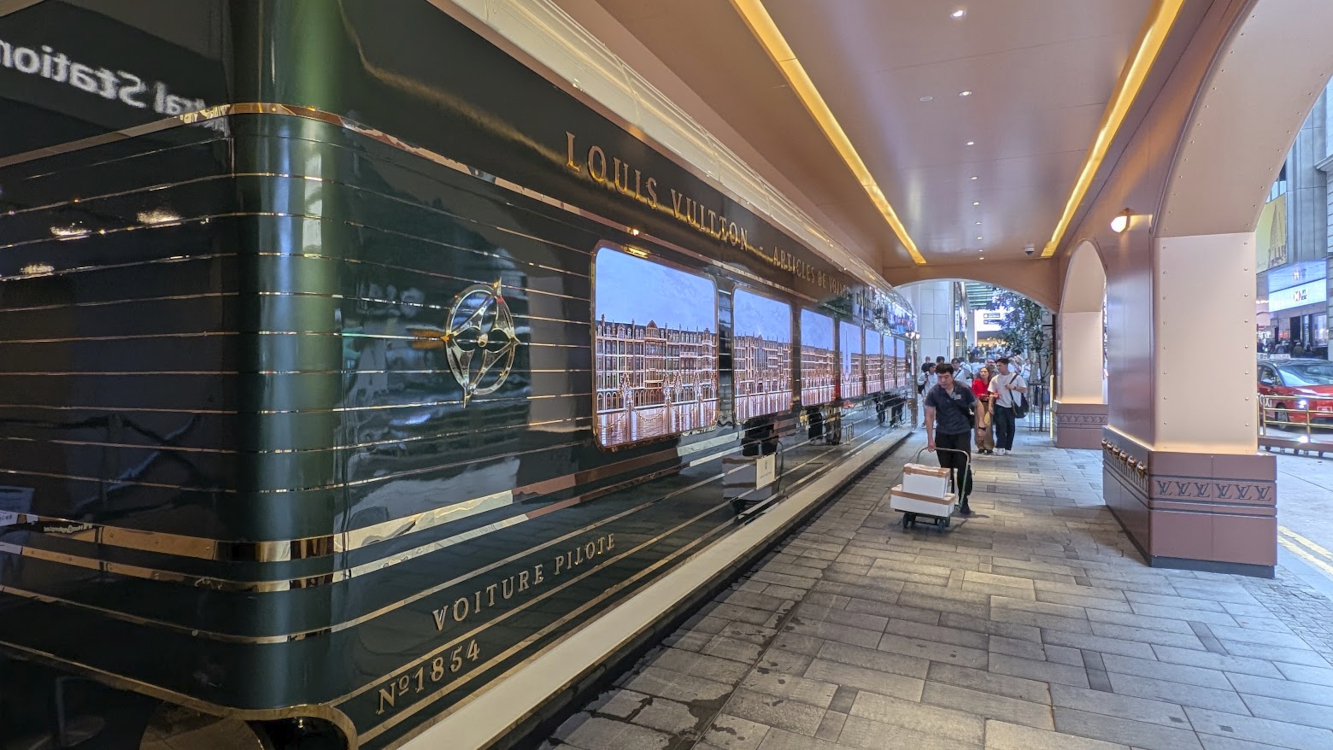
Here, Louis Vuitton’s attention to detail becomes apparent. A stylized locomotive pulls a long train of passenger carriages stretching along the site. The carriage windows have been transformed into digital storytelling canvases, using LED video walls to showcase animated visual content and brand narratives. Instead of hiding the renovation, the façade celebrates it.
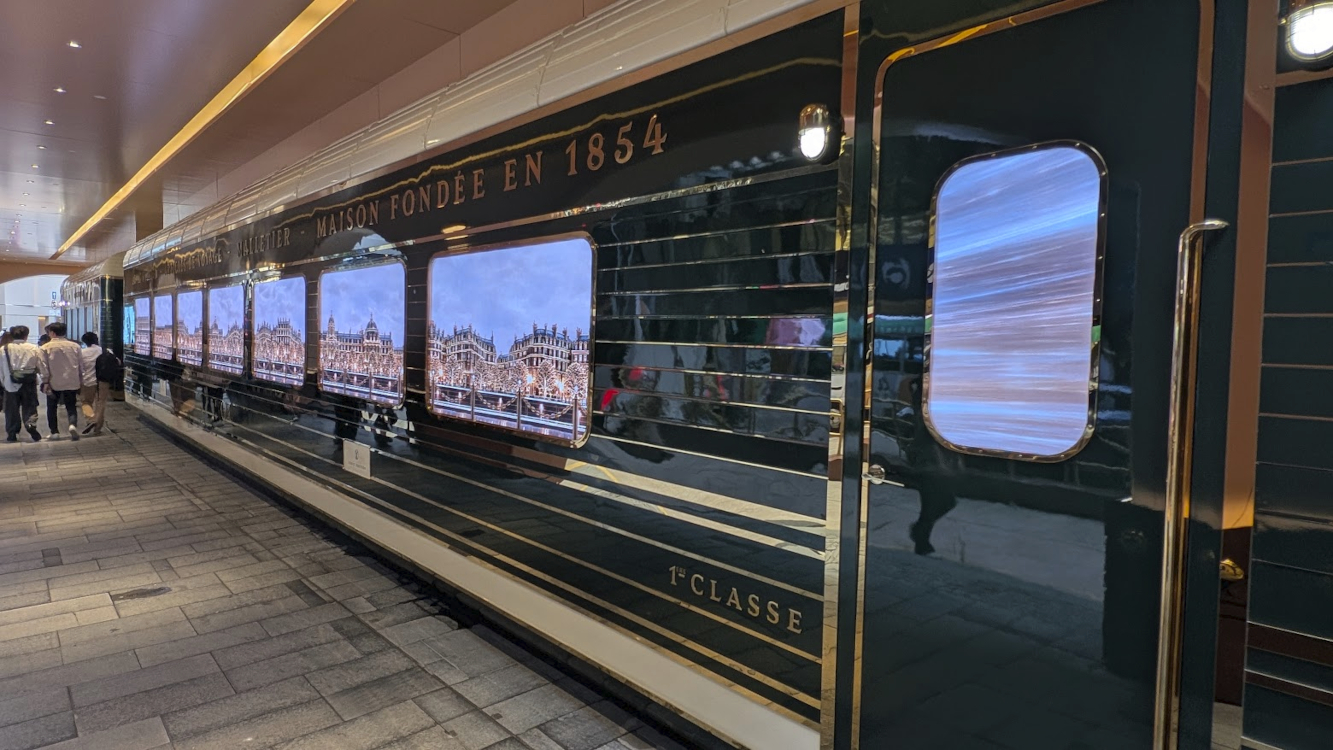
When the façade becomes the attraction
The installation has quickly become an attraction in its own right. Visitors gather outside to capture photos and videos, often searching for the perfect selfie angle as Hong Kong’s iconic trams pass in front of the temporary railway station backdrop.
It is a reminder that the best out-of-home experiences do not necessarily start with screens or technology. The digital elements are important, but they are only part of a larger narrative designed to spark curiosity, encourage sharing, and create emotional engagement.
A lesson for retail and digital signage
For the digital signage industry, the Hong Kong project highlights an often-overlooked principle: storytelling comes first, technology second.
Many retailers would have approached a closed store as a problem to be hidden. Louis Vuitton treats it as another opportunity to tell a story. The LEDs embedded in the train windows enhance the experience, but they are not the experience itself. That distinction is what elevates the installation from a construction fence to a piece of urban theatre.