
Digital signage is often treated as the final layer of an interior project, added shortly before a building opens its doors. More decoration than infrastructure, screens are typically installed after the architecture has been completed. A recent office transformation in Montreal shows what happens when that thinking is turned upside down.
Law Office: When Signage Becomes Building Material
For the redesign of its headquarters in Place Ville Marie, one of Canada’s most iconic office towers, law firm Lavery placed digital technology at the center of a new workplace concept. The result is a compelling example of how digital signage can evolve from a communications tool into a genuine architectural material.
Reinventing an icon
Designed by I.M. Pei & Associates and inaugurated in the 1960s, Place Ville Marie remains a landmark of North American modernist architecture. Lavery’s challenge was not only to modernize its workspace for a post-pandemic generation of legal professionals, but also to consolidate offices previously spread across multiple sections of the building.
The new workplace occupies the 35th and 40th floors and was designed by Montreal-based architecture firm ACDF Architecture. One of the biggest challenges was the building itself. While the perimeter benefits from spectacular views over Montreal, large sections of the floorplate in the center lack direct access to natural daylight.
Technology as a building material
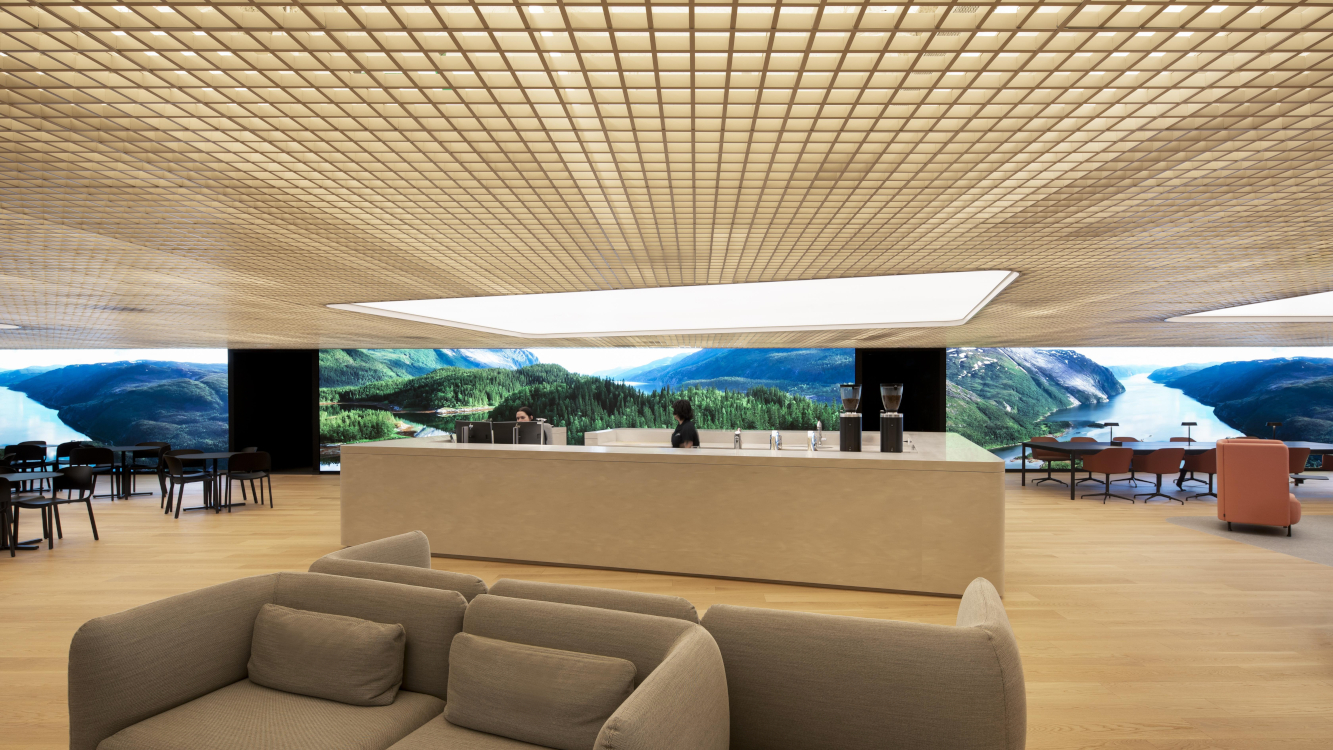
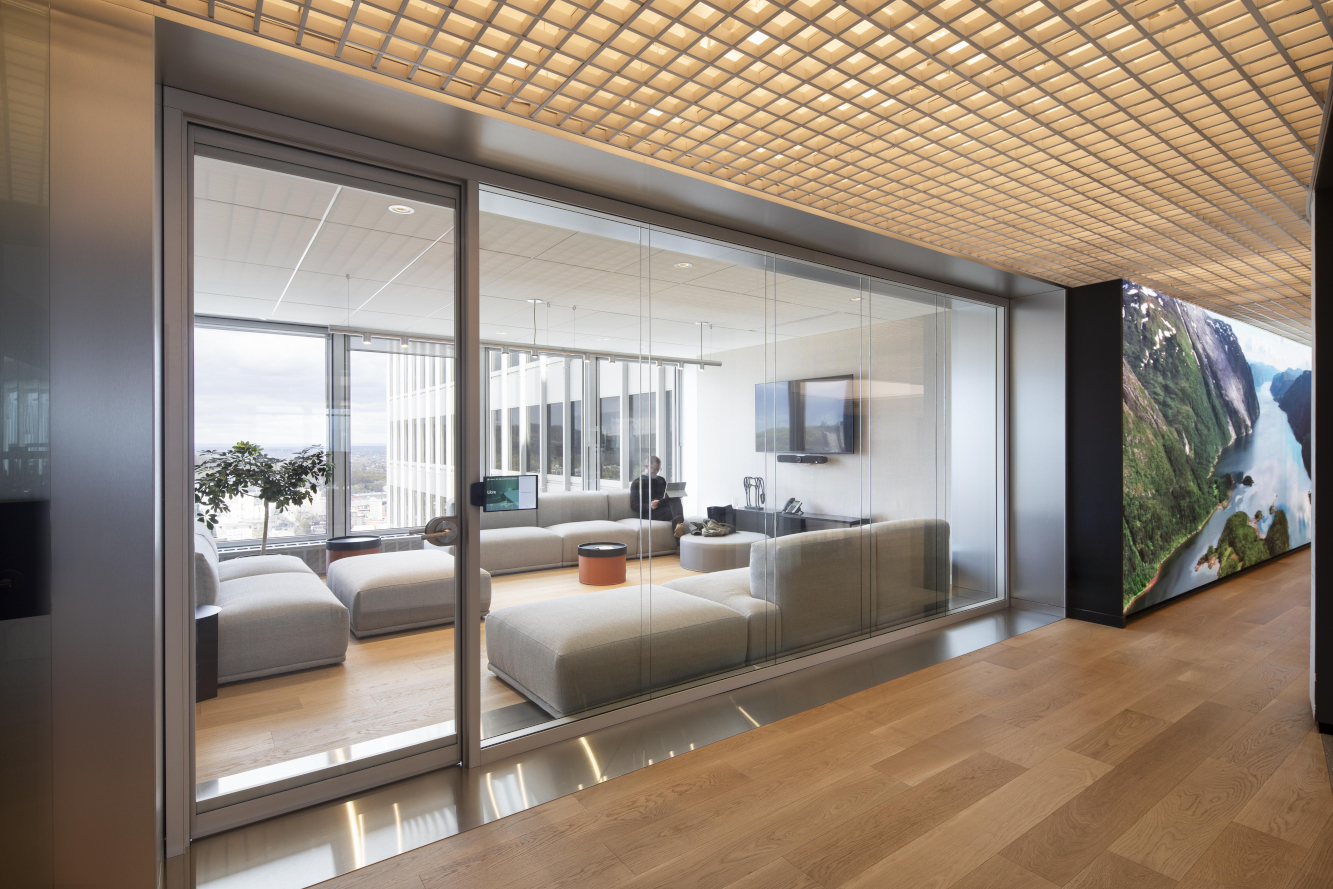
Rather than treating digital displays as standalone information screens, ACDF incorporated them into the very fabric of the office. At the center of the workspace, the architects created a large communal hub where employees, clients, and visitors gather.
To transform the windowless core of the building, ACDF partnered with local AV specialists Moog Audio Pro to develop an immersive digital installation built directly into the architecture.
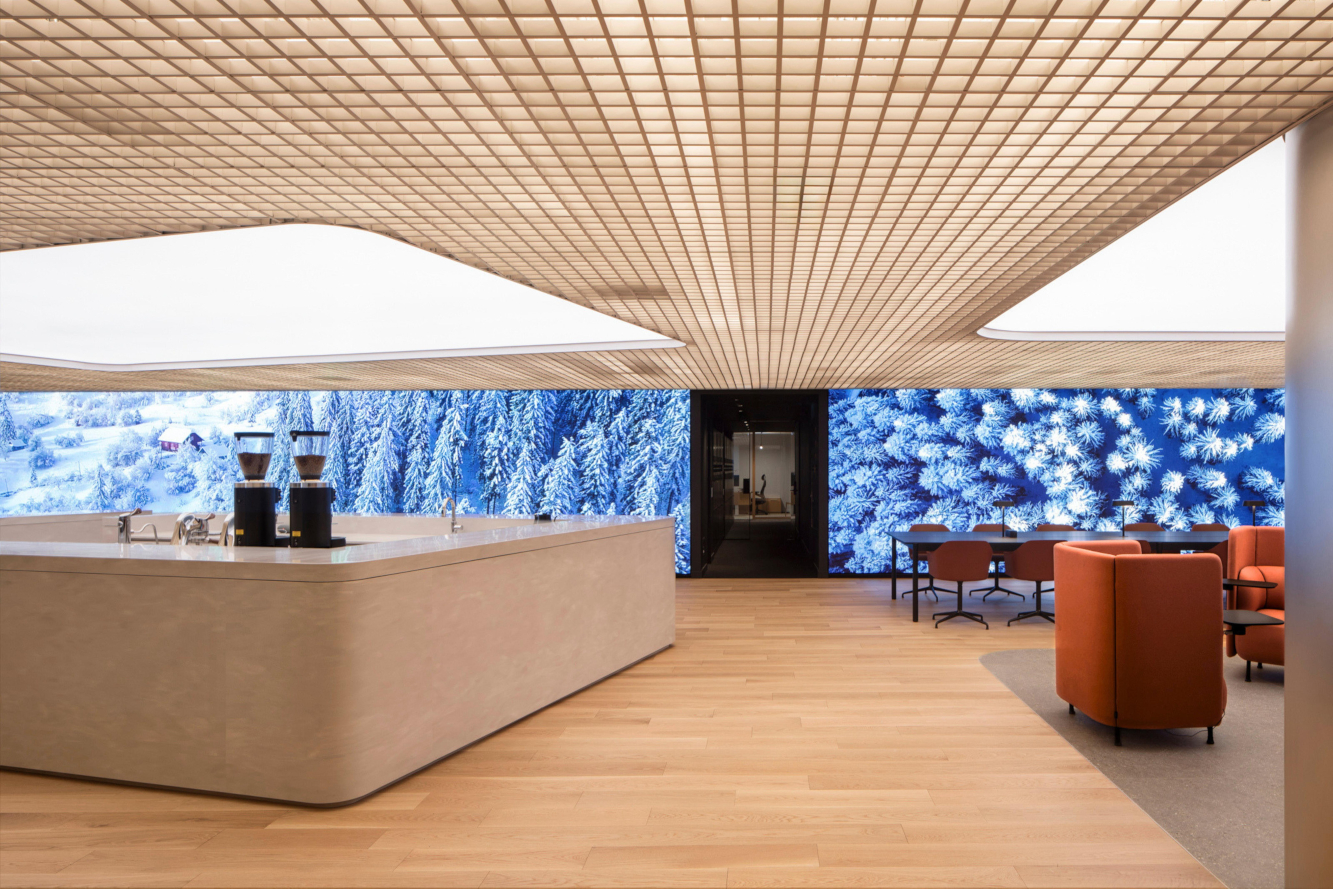
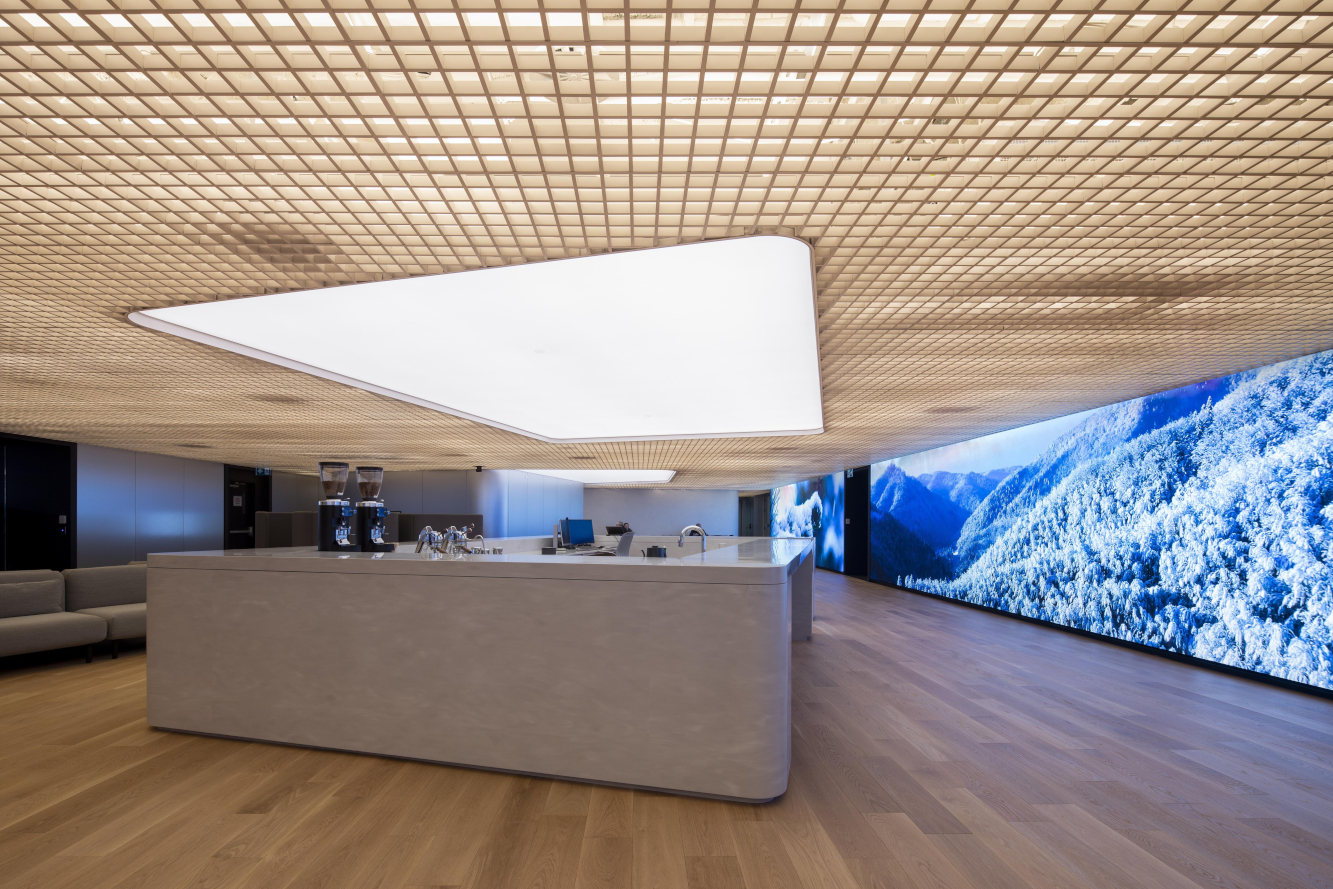
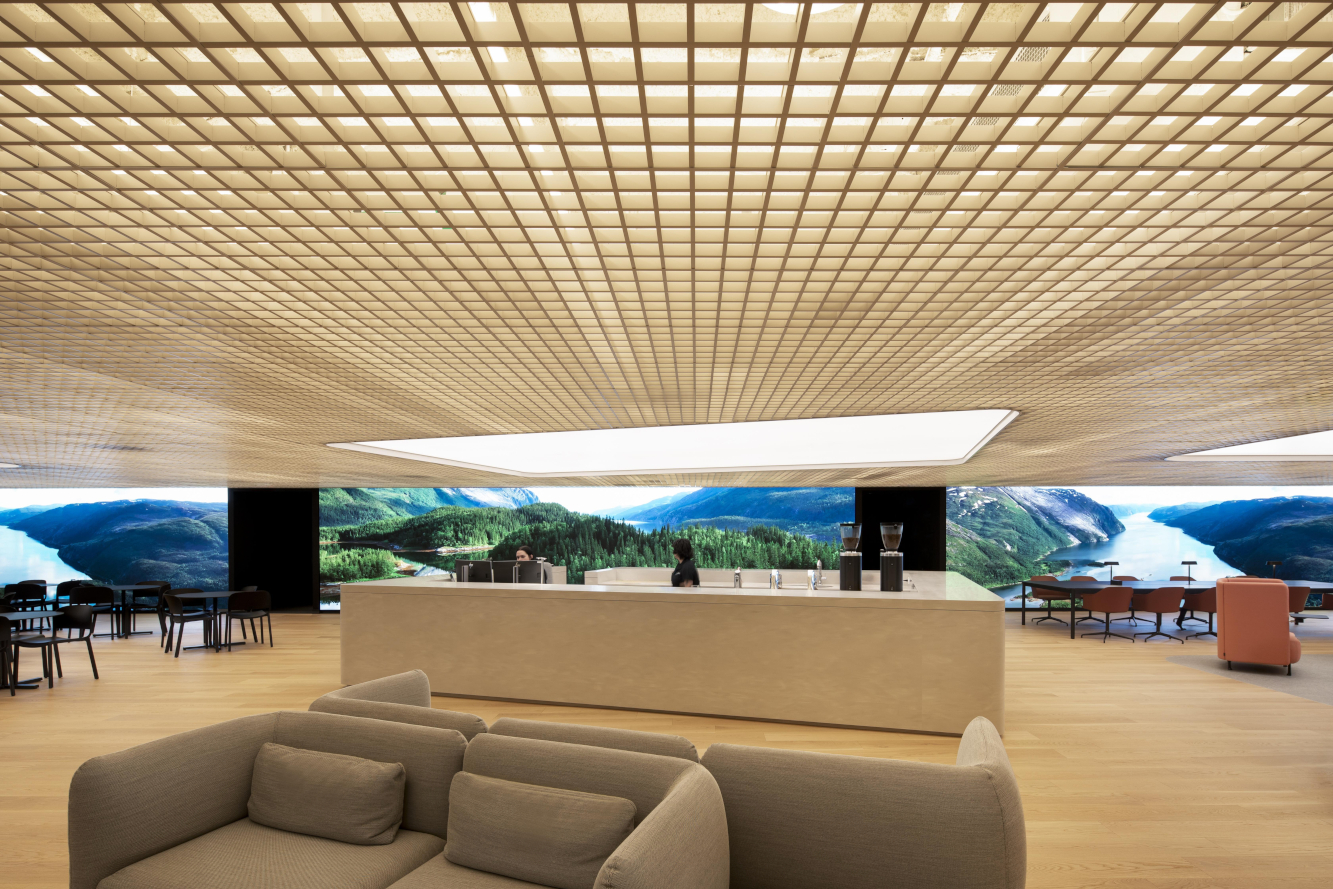
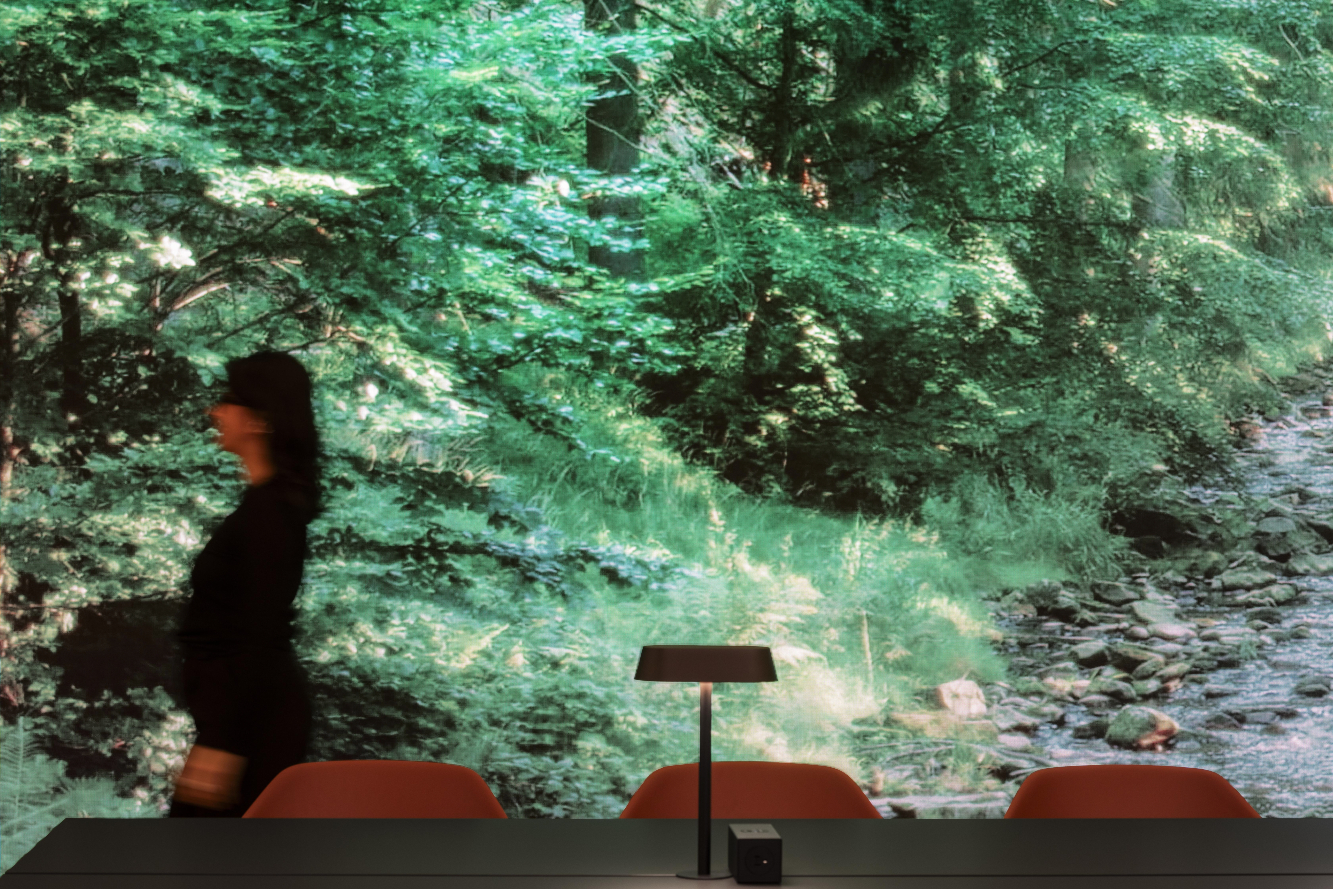
The centerpiece is a floor-to-ceiling LED video wall consisting of three displays, each measuring approximately 30 by 9 feet (9m x 2,75m). Combined, the installation spans roughly 120 linear feet (36,5m diagonal) of display surface, creating what the architects describe as a series of “digital windows” within the building’s interior.
The displays feature a 2.5mm pixel pitch, enabling comfortable close-range viewing and ensuring the visual quality required for immersive content experiences.
From blank wall to living experience
What makes the project remarkable is not the scale of the screens alone, but the way they are integrated into the space.
Instead of displaying static corporate messaging, the video wall transforms the office environment itself. High-resolution content developed in collaboration with creative studio Creative Film turns the displays into dynamic architectural elements capable of changing the atmosphere of the workspace throughout the day.
The installation can showcase immersive landscapes, artistic content, information feeds, and corporate communications. It can also support large-scale Microsoft Teams meetings with participants around the world or broadcast major events, including games of Montreal’s beloved Canadiens hockey team.
To guarantee seamless playback across all three displays, the project team selected a Mac Pro media server platform capable of driving the enormous canvas with the precision required for synchronized content presentation.
By transforming a traditionally undesirable windowless zone into the social heart of the office, the LED installation contributes not only visual interest but also employee wellbeing and interaction. The space becomes a destination rather than a corridor, a place designed for collaboration, gathering, and engagement.
That approach reflects a broader shift in workplace design. As organizations ask employees to return to the office, architecture increasingly needs to offer experiences that cannot be replicated remotely.