
A new whitepaper examines how distributed media playback can cut equipment and installation costs, freeing up more budget for immersive content and experiences.
Immersive AV: Panasonic and Hive Highlight 80% Potential Infrastructure Savings
Panasonic Projector & Display and Hive Media Control have published a joint whitepaper examining how distributed media architecture could reduce infrastructure costs for immersive AV installations by up to 80 percent.
The publication, The Future of Immersive Deployments: Why Distributed Architecture is the Next Evolution of Immersive Experiences, challenges the traditional reliance on centralized, rack-mounted media servers for large-scale immersive environments.
In conventional installations, media servers typically operate from dedicated equipment rooms, requiring extensive fiber cabling, cooling systems and specialist installation work. These supporting systems can consume a substantial portion of project budgets without contributing directly to the visitor experience.
Distributed architecture takes a different approach by placing media playback capabilities directly within compatible projectors and displays. This reduces the need for centralized equipment and associated infrastructure while simplifying installation and potentially lowering ongoing operating costs.
According to Panasonic and Hive, replacing conventional rack-mounted systems with distributed playback can deliver savings of up to 80% in media playback and infrastructure costs. The companies argue that these efficiencies allow operators to direct more of their budgets toward content development, creative design and audience engagement.
“Ultimately, greater efficiency creates more opportunities to invest in creativity, content and audience engagement,” says Felix Kleisen, Sales Engineer at Panasonic Projector & Display EMEA.
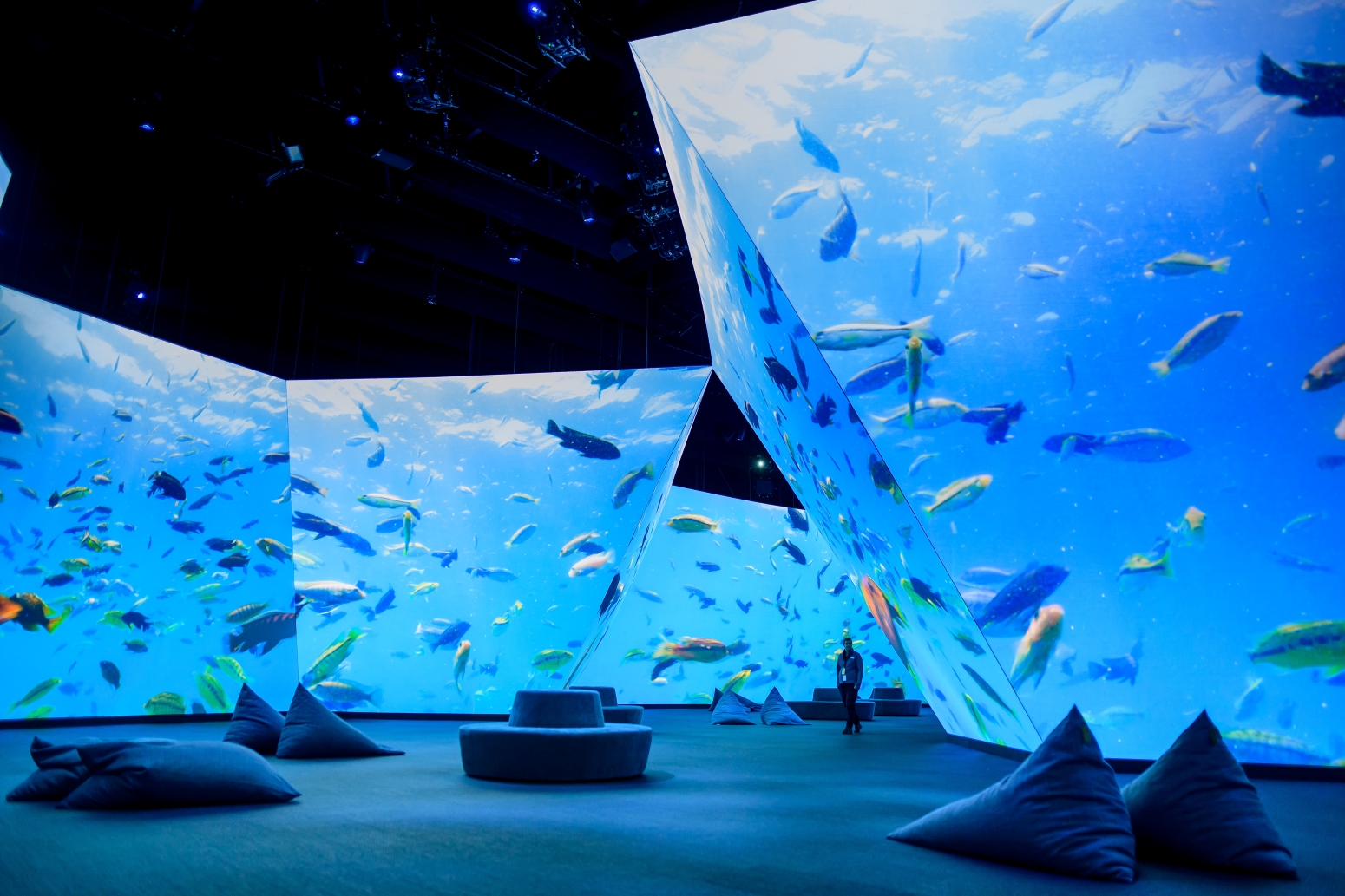
The whitepaper draws on projects including the BBC Earth Experience in Melbourne and the National Museum of Qatar to examine the financial and operational implications of distributed architecture. It also explores scalability, deployment flexibility and potential environmental benefits across permanent attractions and touring exhibitions.
The publication follows Panasonic’s acquisition of Hive, although the media control specialist emphasizes that its technology remains available to the broader professional AV industry.
“Importantly, Hive remains committed to being vendor-agnostic following our acquisition by Panasonic,” says Dave Green, CEO of Hive Media Control.
Green adds that Hive will continue supporting customers and integration partners using equipment from other manufacturers, positioning distributed media architecture as an approach that extends beyond Panasonic’s own projector and display portfolio.