
Netflix turned a Sunset Boulevard billboard into a living room with a real performer inside. The stunt drew crowds and headlines for three days.
OoH: Netflix Puts a Man Inside Sunset Strip Billboard
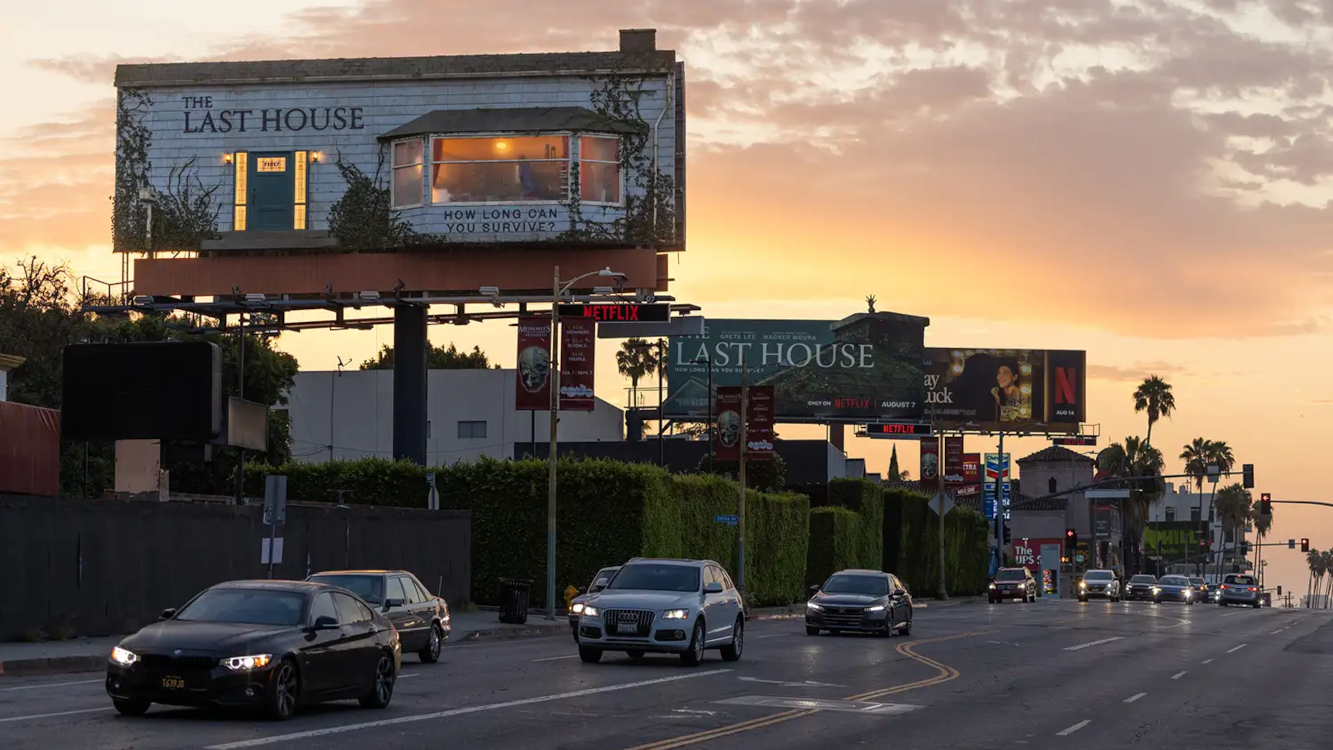
Netflix turned a Sunset Boulevard billboard into a temporary home, placing a live performer inside the installation to promote its new sci-fi thriller The Last House.
The three-day activation recreated the film’s central premise while drawing crowds, social media attention and plenty of questions from people passing below.
Los Angeles has no shortage of unusual billboards, but Netflix found a fairly straightforward way to get people looking up: put somebody inside one.
To promote its new sci-fi thriller The Last House, the streaming company transformed a billboard above Sunset Boulevard into a furnished living room and installed a live performer roughly 30 feet (9 meters) above the street.
The activation ran from Aug. 6-8 near the intersection of Sunset Boulevard and Selma Avenue in West Hollywood, coinciding with the film’s Aug. 7 Netflix debut.
Bringing the movie into the street
The film stars Greta Lee and Wagner Moura as parents whose family becomes mysteriously sealed inside its home and must survive as resources dwindle.
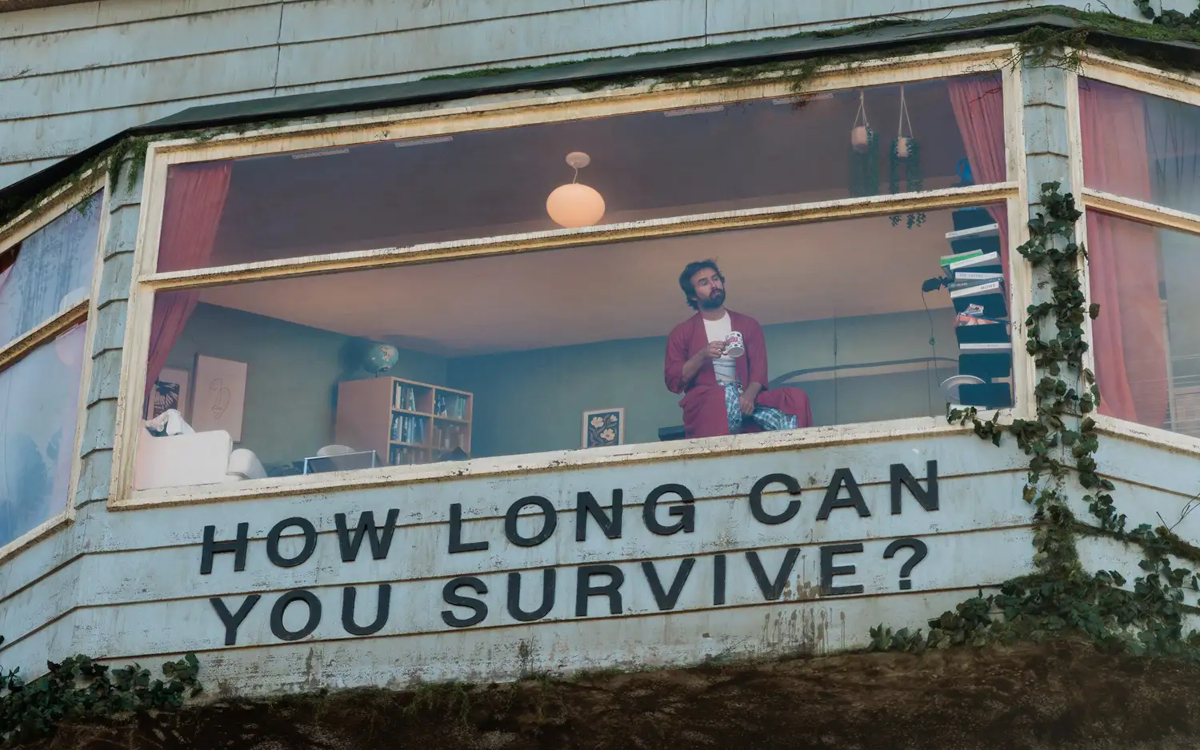
The billboard recreated that sense of confinement with a glass-fronted room containing furniture, bookshelves, plants, paintings and curtains. The performer spent his time reading, drinking coffee, looking through binoculars and interacting with people below using a dry-erase whiteboard.
Below the room, the billboard asked passersby, “How long can you survive?”
A billboard becomes the attraction
The unusual execution quickly became more than roadside advertising.
The Los Angeles Times reported that residents and tourists gathered below the installation to take photos and try to catch a glimpse of its temporary resident. Videos circulated on social media, while questions about how the performer was actually living inside the structure – including whether he had air conditioning or a bathroom – became part of the spectacle.
The room was air-conditioned, according to the newspaper.
More importantly for Netflix, people who had previously known little about the film told the Times that seeing the billboard made them curious enough to watch it.
It is a great example of experiential OoH working beyond the physical footprint of the installation. The billboard was visible to people traveling along Sunset Boulevard, but its stranger-than-fiction setup also gave pedestrians something to photograph, social media something to circulate, and traditional media something to cover.
For three days, the billboard wasn’t simply advertising The Last House. It became part of the entertainment.