
The digital signage industry is beginning to feel the cumulative effects of several global pressures converging at the same time: rising tariffs, supply chain disruptions, memory component price spikes, and geopolitical instability tied to the ongoing conflict involving Iran.
One of the first visible signs in North America may now be emerging from one of the sector’s biggest players.
Ohio-based Stratacache has confirmed layoffs at its headquarters in Dayton, a move that CEO Chris Riegel recently acknowledged in comments to the Dayton Daily News.
“We are doing some layoffs to reduce costs,” Riegel said. “The continued challenges with tariffs and the global memory spike/supply chain availability difficulties are certainly headwinds.”
The company did not disclose specific figures, stating only that layoffs at its Ohio operations remain below the 50-employee threshold that typically triggers formal reporting requirements for large workforce reductions in the United States. However, signs across the industry suggest the reductions may extend beyond a single office.
Over the past week, companies throughout the digital signage ecosystem have reported receiving a wave of job applications from former employees connected to Scala, the long-established signage software platform acquired by Stratacache in 2016. About 50 percent of the workforce is said to have been affected.
One example surfaced publicly on Linkedin when a senior technical architect who had been with Scala for three decades, posted that he was seeking new opportunities after being caught in a recent reduction in force.
Sources say his situation may be far from unique.
According to accounts circulating within the industry, the latest round of cuts appears to have affected multiple Scala teams across the United States, with roles spanning engineering, development, and creative services. Some estimates suggest significant staff reductions, though exact figures have not been confirmed.
What is clear is that the layoffs are occurring against a backdrop of increasingly difficult macroeconomic conditions for hardware-centric technology businesses.
Global Tensions Begin Affecting Digital Signage
The digital signage sector relies heavily on global manufacturing networks, semiconductor components and international logistics. That makes it particularly vulnerable to geopolitical disruptions.
According to an analysis published by invidis, the ongoing conflict involving Iran and potential disruptions to global shipping routes are already beginning to ripple through technology supply chains.
At the same time, tariffs introduced by the Trump administration on certain imported technology components are raising costs for companies that depend on overseas manufacturing.
Memory component prices have also surged in recent months, adding another layer of pressure for companies producing media players, displays, and infrastructure hardware.
For digital signage vendors that operate across the entire technology stack — from hardware to software to network services — those pressures can compound quickly.
Retail Media Reality Check
The industry is also undergoing a recalibration around one of its biggest recent growth narratives: retail media networks.
Retailers have been investing heavily in in-store screens and digital advertising platforms designed to monetize shopper attention. Stratacache has positioned itself as a major infrastructure provider in that market, building networks of displays and analytics platforms for retail brands.
But the pace of that expansion appears to be moderating.
Across the advertising sector, analysts say the initial surge of enthusiasm around retail media networks is giving way to more cautious investment as retailers and brands reassess budgets, return on investment, and long-term strategies.
That shift may be contributing to tighter spending and restructuring across parts of the digital signage supply chain.
A Bellwether Moment?
For Stratacache, the layoffs do not necessarily signal deeper financial distress. The privately held company remains one of the largest and most influential firms in the digital signage industry, with global operations spanning hardware manufacturing, software platforms, advertising technology, and retail media infrastructure.
Stratacache has previously indicated that its global business generates roughly $1 billion in annual revenue, highlighting the company’s scale even as broader economic and geopolitical pressures begin to affect the sector.
However, the recent workforce reductions do illustrate how even established players are not immune to the economic forces now shaping the industry.
Tariffs, component costs, geopolitical instability, and shifting market expectations are all converging at once, creating a difficult combination for companies built around global hardware ecosystems.
For companies across the digital signage ecosystem — from CMS software providers to hardware manufacturers and integrators — the situation is a reminder of how quickly external forces can reshape the market. Rising component costs, shipping uncertainty and cautious customer spending are beginning to affect project timelines and investment decisions across multiple segments of the industry.
For the broader digital signage community, the development may serve as an early indicator of a more challenging market environment ahead.
If the past decade was defined by rapid growth and ambitious expansion, the next phase may require a different playbook: one focused on cost discipline, supply chain resilience, and adapting to a rapidly changing global landscape.
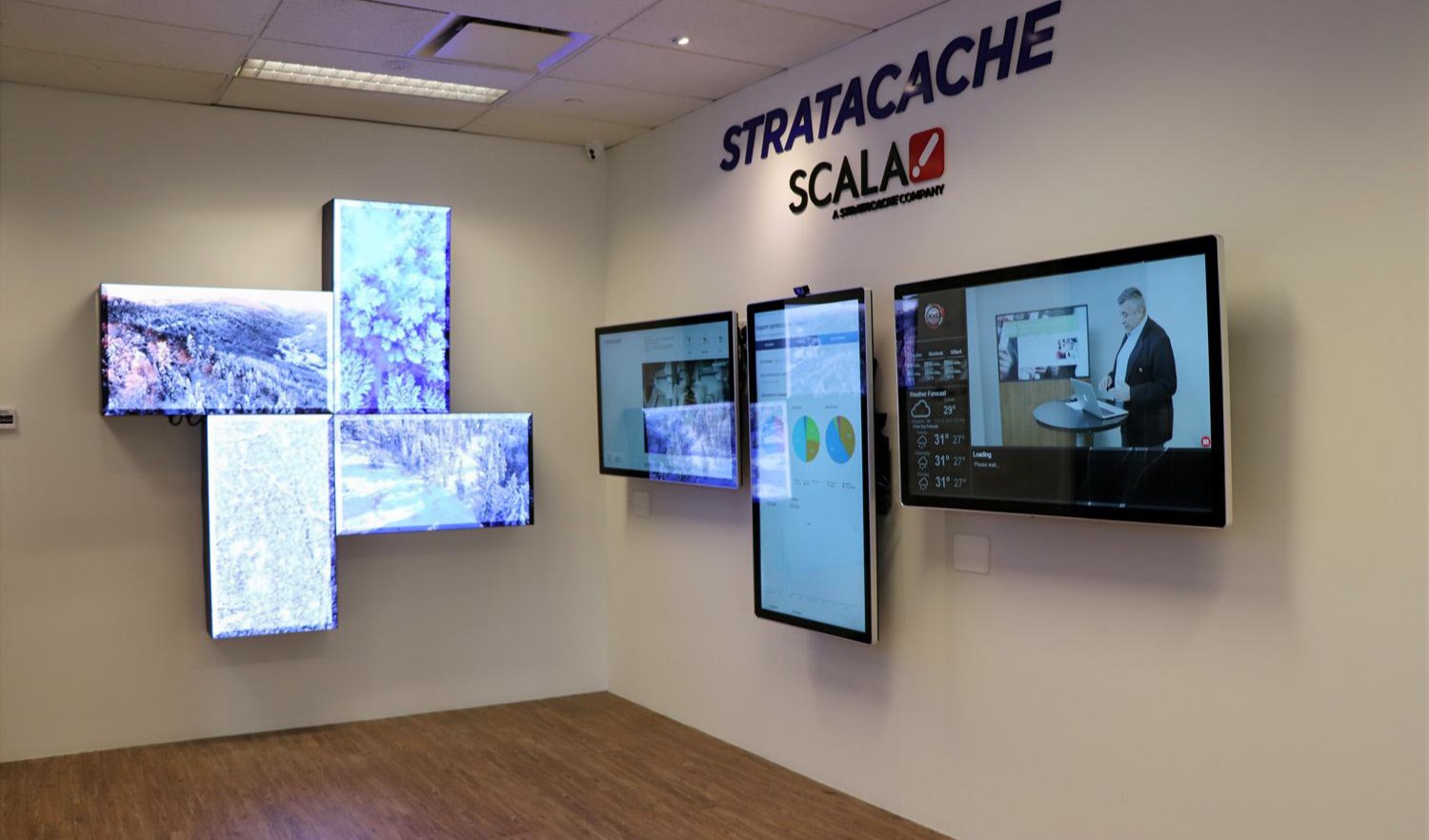
(Image: Stratacache)