
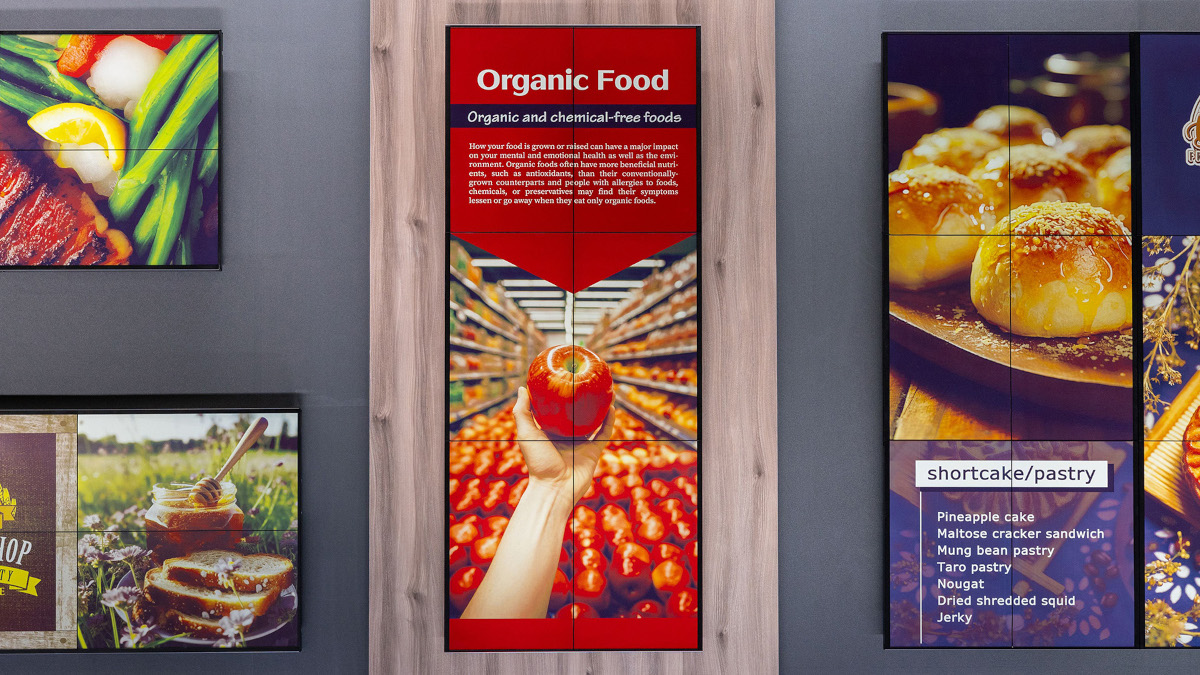
Taiwan-based display technology firm E Ink is ramping up investment in large-format e-paper displays amid growing demand for energy-efficient alternatives to conventional digital signage.
As reported by Tapei Times, the company communicated its investment plans in a recent earnings call: It plans to spend between NT$5 billion and NT$8 billion (US$157 million to $251 million) this year to expand production capacity, including new manufacturing lines focused on electronic shelf labels and large-format signage displays.
E Ink chairman Johnson Lee said the company is bullish on the future of outdoor digital signage applications.
“Some customers have become more willing to install outdoor digital signage lately,” Lee said, noting that rising electricity and energy costs are pushing organizations to consider lower-power display technologies.
Second large-format production line soon to be put into operation
The company is scaling up production lines dedicated to larger-format e-paper panels, including its H5 manufacturing line, which entered volume production late last year and now produces displays such as 32-inch and 55-inch e-paper panels used in signage applications.
A second production line, called H6, is expected to further expand capacity and begin contributing revenue in the coming years as demand grows.
Unlike traditional LED or LCD displays, e-paper screens can hold an image without continuous power and only consume electricity when the content changes. This allows static content to remain visible without ongoing energy use, making the technology particularly attractive for applications where updates occur infrequently, such as transit information boards, outdoor advertising displays and retail signage.
While the technology is not designed to replace LED video displays used for dynamic advertising or entertainment, it is increasingly being evaluated for information-based signage where power consumption and operating costs are critical considerations.
E-paper as the winner of energy crises
Energy efficiency has become a key selling point for e-paper. During earlier spikes in global energy prices following the Russian invasion of Ukraine, interest in ultra-low-power display technologies increased significantly. Industry observers say renewed pressure on global energy markets could once again highlight technologies that dramatically reduce power consumption compared with conventional digital signage.
ESLs remain growth driver
E Ink’s financial results suggest the strategy is gaining traction as demand for e-paper technology continues to expand across multiple sectors.
The company reported record net profit of NT$10.52 billion (about US$329 million) in 2025, up 18.6 percent from the previous year, while revenue climbed 12.3 percent to NT$36.12 billion (about US$1.13 billion).
Electronic shelf labels remain a major growth driver, with global installations expected to reach 600 million units this year, up from 500 million in 2025, as large retailers such as Walmart, Lidl, and Tesco expand deployments.
However, the company expects some of the fastest growth to come from larger displays used in digital signage, which remains a relatively small but rapidly expanding segment of the overall e-paper market.
Industry analysts say the technology is increasingly being evaluated for applications such as transit displays, retail media networks, outdoor advertising and public information systems where power consumption, readability in sunlight and maintenance costs are critical considerations.
E-paper in public infrastracture
As previously reported by Sixteen:Nine, several cities and transportation agencies have begun pilot deployments of large-format e-paper signage as part of broader efforts to reduce energy consumption in public infrastructure.
With additional production lines under construction and new manufacturing facilities planned in Taiwan and the United States, E Ink is positioning itself to capture that emerging segment of the digital signage market.
If adoption continues to grow, large-format e-paper could become an increasingly visible part of future smart-city and transit information networks.
(Image: E Ink)